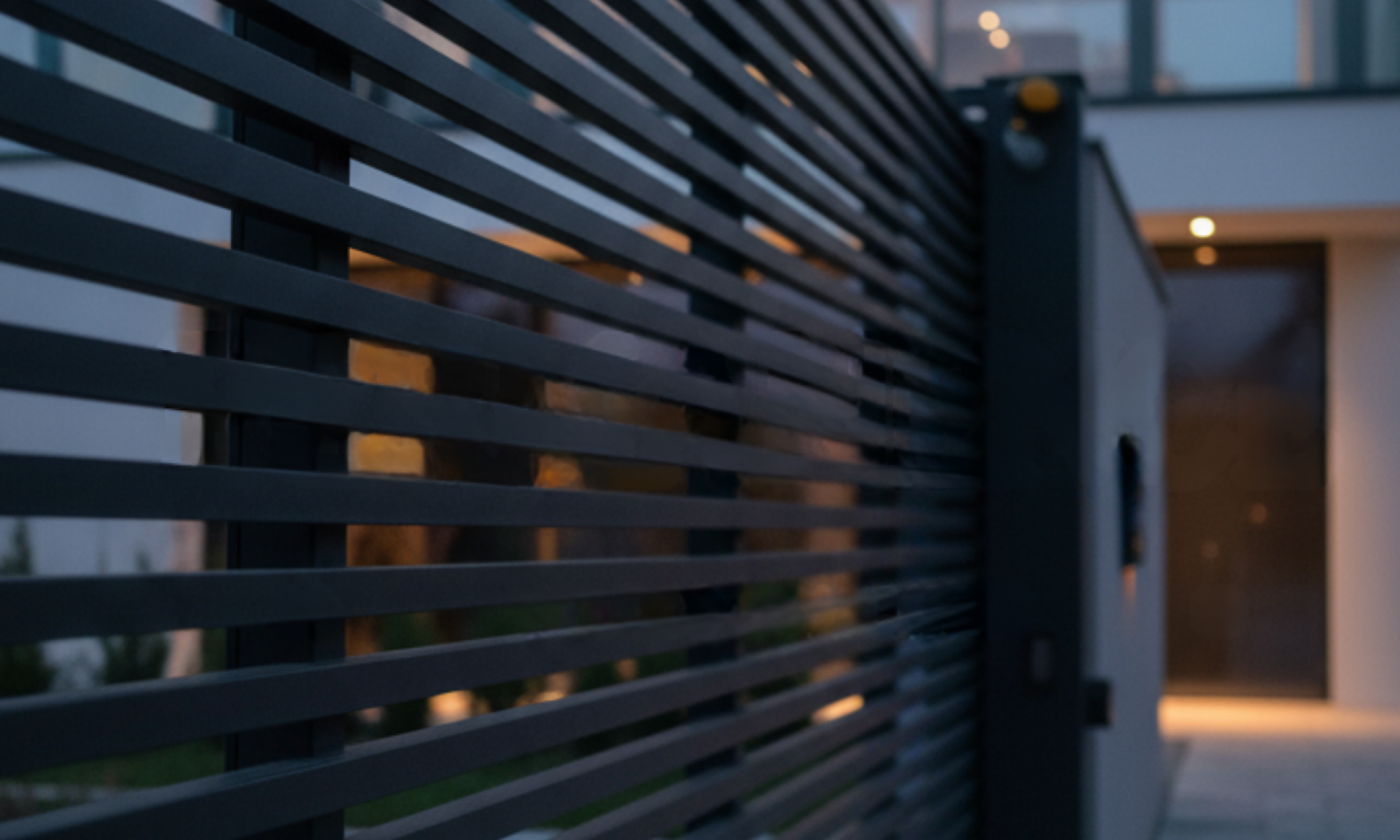

A full driveway gate is not always the right answer. Some properties need clearer boundaries without restricting access, some need a lower upfront cost, and some simply do not have the space or layout for swing or sliding gates. If you are looking for an alternative to driveway gates, the best option depends on what matters most to you – security, appearance, convenience, planning constraints or budget.
For some owners, the real issue is not whether they want a gate at all. It is whether a gate solves the problem they actually have. A family home may need privacy from the road. A commercial site may need traffic control rather than a decorative entrance. A developer may want a smart frontage that is easy to maintain across multiple plots. Once you look at the reason behind the enquiry, the right solution becomes much easier to identify.
When an alternative to driveway gates makes sense
Driveway gates are a strong choice for many homes and commercial premises, but they are not universal. A steeply sloping drive can make swing gates impractical. A short drive may leave little room for a vehicle to wait safely while gates open. On busy roads, stopping outside the entrance can be awkward. In other cases, customers want the visual definition of an entrance without the full enclosure of a gate.
There is also the question of maintenance and use. Timber gates can need regular treatment. Heavier steel systems can be harder to handle. Automated systems add convenience, but they also add components that need proper specification and installation. For customers who want a simpler perimeter solution, alternatives can offer a better balance.
The main alternatives to driveway gates
Fencing and railings with an open entrance
One of the most practical alternatives to driveway gates is to frame the boundary clearly with fencing or railings while leaving the driveway entrance open. This works well when the goal is to define the perimeter, improve appearance and discourage casual access rather than fully control it.
For residential properties, aluminium railings or fencing can create a neat, finished frontage with very little upkeep. This is often a good fit for homes where vehicles come and go frequently and the inconvenience of opening and closing gates would outweigh the benefit. You still gain structure and kerb appeal, but with unrestricted access.
For developers and commercial premises, open entrances combined with consistent perimeter railings can also help with site presentation. It gives the property a professional edge without creating bottlenecks at entry and exit points.
Rising bollards or fixed bollards
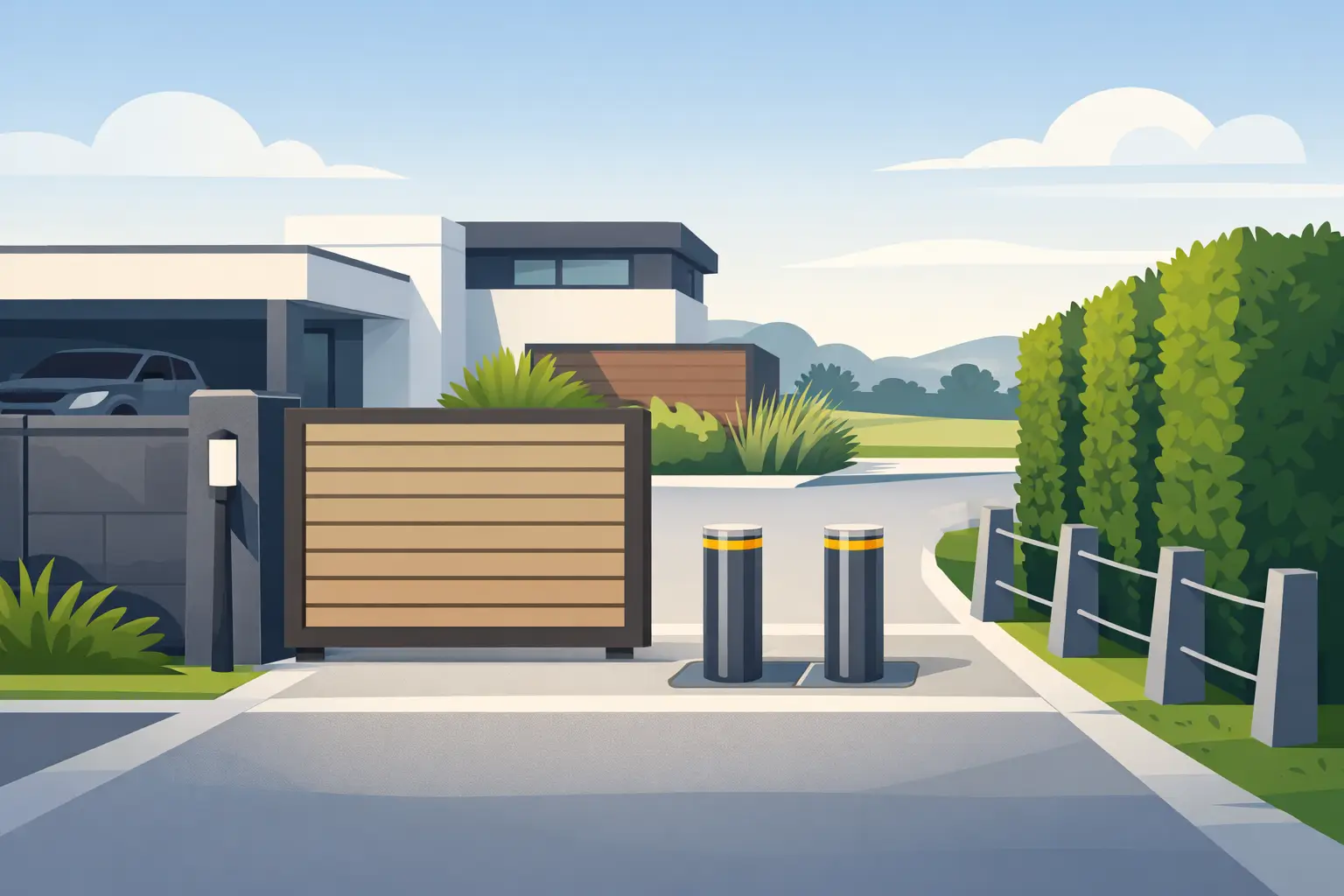
If vehicle control is the main concern, bollards may be a better fit than a gate. Fixed bollards can prevent unauthorised vehicle access while keeping the entrance visually open. Removable or telescopic bollards allow occasional access for approved vehicles. Automated rising bollards are more advanced again and tend to suit commercial settings, flat schemes or higher-security sites.
The advantage here is clarity. Bollards deal directly with vehicle access, which is often the real requirement. They do not provide the same visual impact or privacy as a gate, but they can be very effective where space is limited or where a full-width gate would be excessive.
Barriers for managed access
For commercial sites, private roads and some shared residential developments, a barrier can be the most efficient alternative to driveway gates. Barriers are designed around traffic flow. They open quickly, work well with intercoms and access systems, and are often easier to integrate where there is regular vehicle movement.
That said, barriers are more functional than decorative. They control entry, but they do not usually enhance the frontage in the same way as a well-designed gate and railing system. If appearance matters as much as access control, this trade-off should be considered early.
Walls, piers and landscaping
Sometimes the best alternative is not a mechanical product at all. A low wall, brick piers, planters or structured landscaping can create a stronger sense of arrival and boundary without installing gates. This approach suits homes where security is a lower priority but visual definition is still important.
The benefit is simplicity. There are no moving parts, no automation options to consider and very little day-to-day interaction. The drawback is obvious enough – this approach does not stop vehicles or pedestrians in the same way that a gate, barrier or bollard system can.
Choosing the right option for your property
The right alternative to driveway gates depends on how the entrance is used in practice. If your property is open most of the day and ease of access matters most, open-front railings or fencing may be all you need. If the concern is preventing vehicle theft or deterring unauthorised parking, bollards are often more relevant. If you manage a site with regular authorised traffic, barriers may make more operational sense.
Appearance should not be treated as a secondary issue. The entrance is one of the first things people see, whether that is visitors arriving at a home or clients visiting a commercial site. A practical solution that looks out of place can reduce the overall finish of the property. This is why material choice matters.
Aluminium is often worth considering even when you are not choosing a full gate. It offers a clean appearance, strong corrosion resistance and very low maintenance compared with timber or mild steel. For customers who want the front boundary to stay smart without ongoing painting or treatment, that can be a significant advantage over time.
Security versus convenience
This is where many decisions come down to reality rather than preference. A full gate generally gives the strongest visual signal that access is controlled. An open entrance with railings does less to physically restrict movement, but it is easier to live with day to day. Bollards can stop vehicles but do not necessarily affect pedestrian access. Barriers manage traffic efficiently but can feel more commercial than domestic.
In other words, there is no single best answer. A homeowner on a quiet lane may be perfectly well served by decorative railings and an open driveway. A house on a main road may benefit more from a sliding gate because safe vehicle holding space matters. A warehouse yard may need automation and intercom integration rather than an ornamental frontage.
The strongest outcomes usually come from matching the product to the actual risk and the actual pattern of use. Over-specifying can waste budget. Under-specifying can leave the entrance failing at the one job it needed to do.
Cost, upkeep and long-term value
Budget often starts the conversation, but it should not end it. A cheaper entrance treatment may cost less to install while offering less control, less privacy or a shorter lifespan. Equally, paying for a full automated gate system when a simpler perimeter arrangement would do can be unnecessary.
Long-term upkeep matters just as much. Timber features can look attractive at first but typically need ongoing treatment in the British climate. Steel can be strong, but if coatings fail, rust becomes a concern. Aluminium products appeal to many customers because they stay looking good with very little intervention, which can shift the value equation over several years.
This is especially relevant for landlords, developers and commercial buyers managing multiple properties. Reduced maintenance is not just convenient. It affects labour, future replacement planning and whole-life cost.
A gate may still be the better choice
It is worth saying plainly that an alternative is not automatically better. In many cases, a driveway gate remains the most complete solution because it combines access control, boundary definition and visual impact in one product. If privacy, security and presentation all matter, a properly specified gate can justify itself quickly.
The key is not to choose against gates on principle. It is to assess whether a different solution fits the property more naturally. Where customers need advice on that balance, specialist guidance can save time and prevent expensive mistakes. At Aluminium Gates Direct, this often means discussing the entrance layout, the level of security required, preferred appearance and whether automation or intercom access is likely to be needed now or later.
If you are weighing up an alternative to driveway gates, start with the practical question: what must this entrance do every day? Once that is clear, the right solution usually follows – and it is far easier to invest confidently when the product matches the job.