
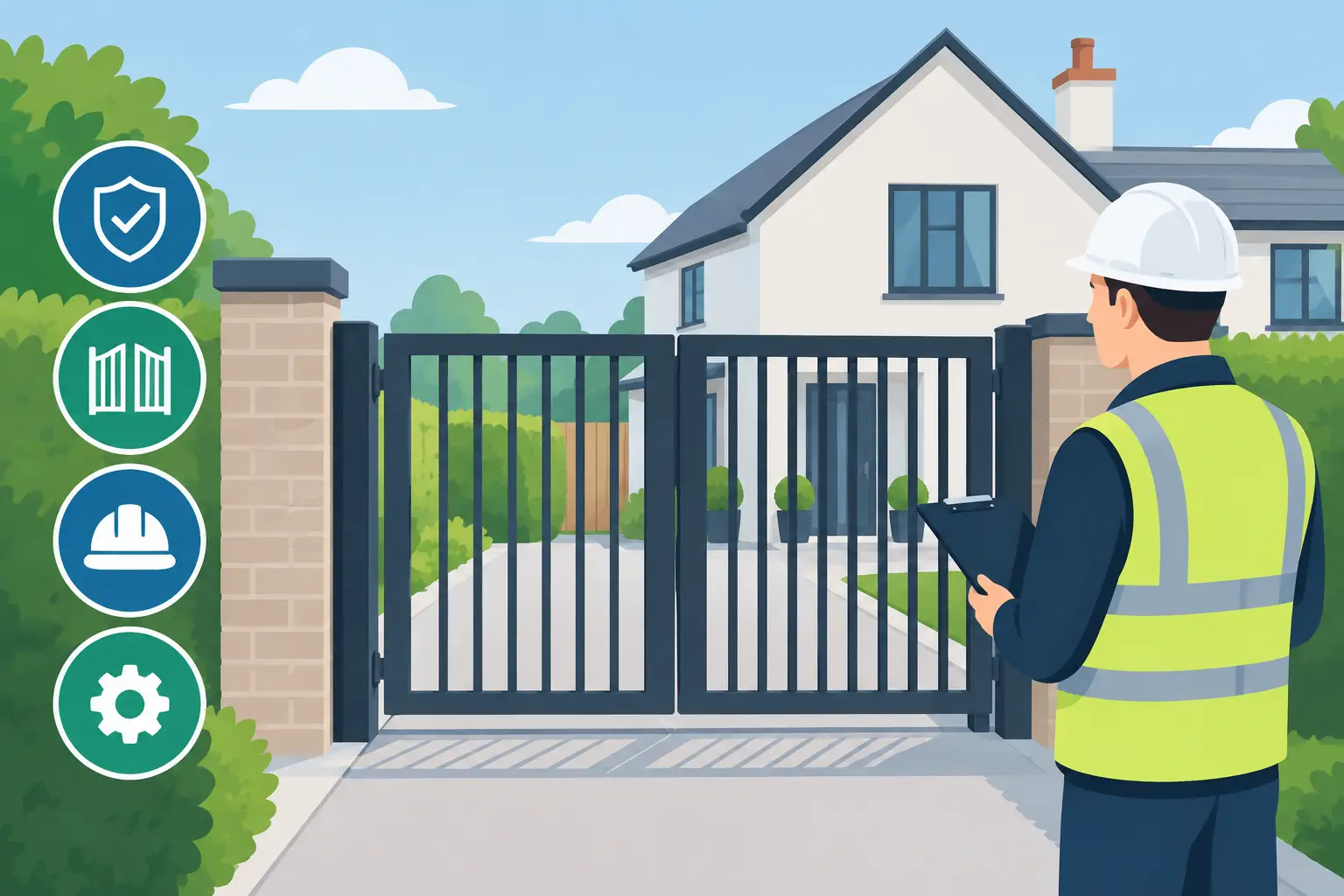
A gate should make a property feel secure, not create a hidden risk at the entrance. That is why gate safety regulations matter well beyond the point of purchase, particularly where a swing or sliding gate is automated. A well-specified system considers the gate’s weight, movement, control equipment, users and surroundings together – not as separate items fitted at different stages.
For homeowners, developers and site managers, the practical question is simple: can the gate operate safely every time, including when children, visitors, delivery drivers or staff are nearby? The answer depends on correct design, installation, testing and ongoing maintenance.
What UK gate safety regulations require
There is no single document headed “gate safety regulations” that covers every domestic and commercial installation. Instead, legal responsibilities and technical standards overlap. The level of duty also changes according to where the gate is installed and who may use it.
A powered gate is machinery. When it is supplied and installed, it must be safe for its intended use and supported by the appropriate technical documentation, risk assessment and conformity process. In Great Britain, this is generally considered under the Supply of Machinery (Safety) Regulations 2008. The installer or party placing the completed automated gate system on the market has significant responsibilities, because the gate, motors, safety devices and controls form one machine once combined.
For workplaces, shared premises and commercial sites, the Provision and Use of Work Equipment Regulations 1998, commonly called PUWER, can also apply. Duty holders must ensure equipment is suitable, maintained and used safely. That makes routine inspection and recorded servicing particularly relevant at managed developments, schools, warehouses and business premises.
Technical standards help demonstrate a safe approach. BS EN 12453 and BS EN 12445 are widely used for the safety in use and testing of power-operated gates. They are not a substitute for a site-specific assessment. A gate on an open rural driveway faces different risks from one beside a public pavement or serving a busy commercial yard.
The risk assessment comes before automation
The gate’s appearance and opening style matter, but safety starts with a proper survey. This should identify every potential trapping, crushing, shearing, drawing-in and impact point as the gate moves.
A sliding gate may create a hazardous gap between the moving leaf and a fixed post, wall or fence. A swing gate can trap someone between its leading edge and a wall, vehicle or opposing gate leaf. Hinges, rollers, racks and exposed drive mechanisms also need attention. The aim is not simply to fit a pair of photocells and assume the job is complete. Protection must address the actual hazards present at that property.
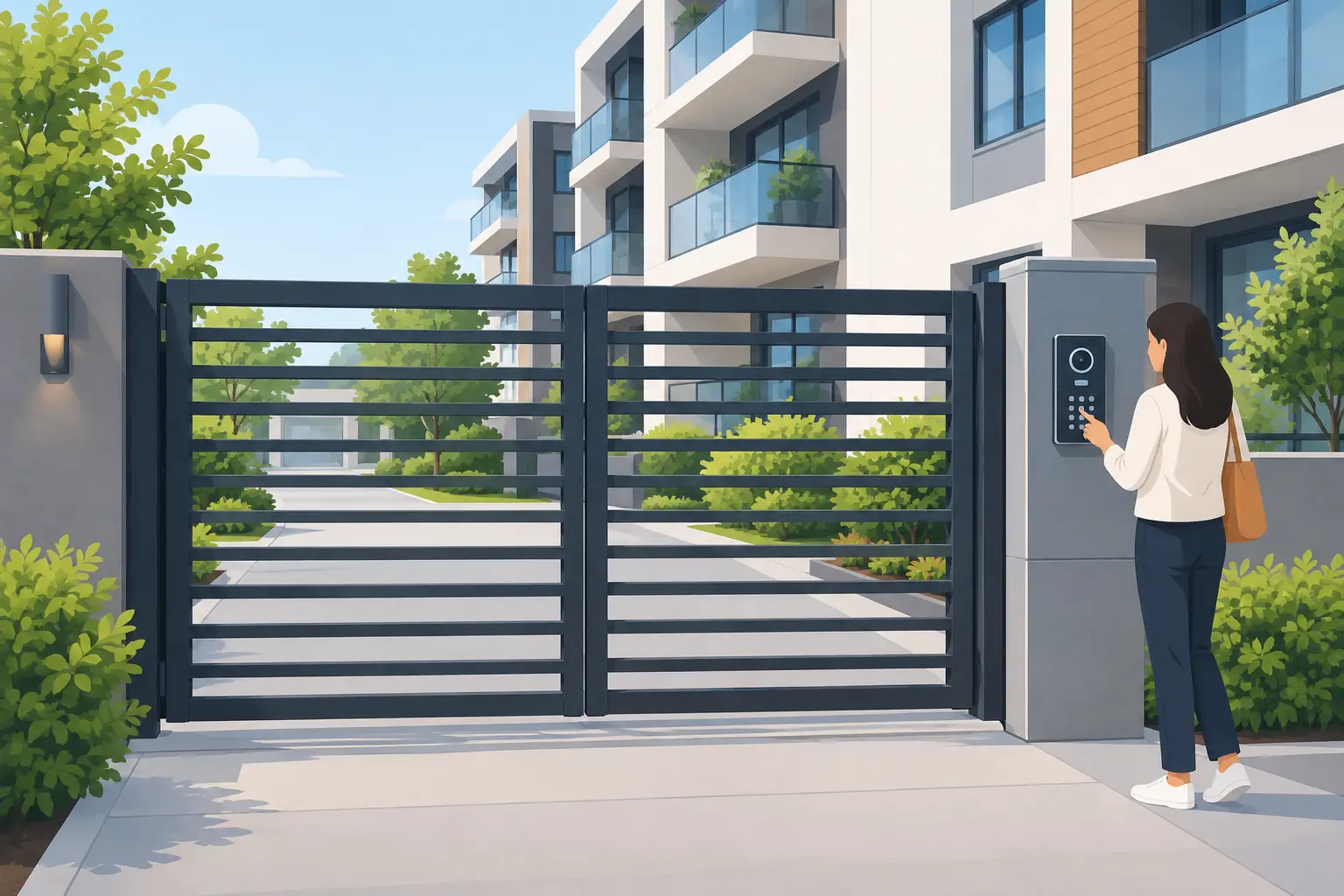
The assessment should consider who uses the entrance. Is it a private driveway used by informed adults, or a communal access point where pedestrians, children and contractors may approach from either side? Is there room for a vehicle to wait safely off the road while the gate opens? Can a person on foot reach the controls without standing in the path of the gate?
Gate size, infill design and wind loading all affect the choice of automation. Aluminium gates are a practical option because they are lightweight, strong and resistant to corrosion. Their lower operating weight can reduce demand on the automation compared with a heavier steel or timber design. However, lightweight does not remove the need for correctly selected safety equipment, secure foundations and suitable posts.
Safety devices should match the hazard
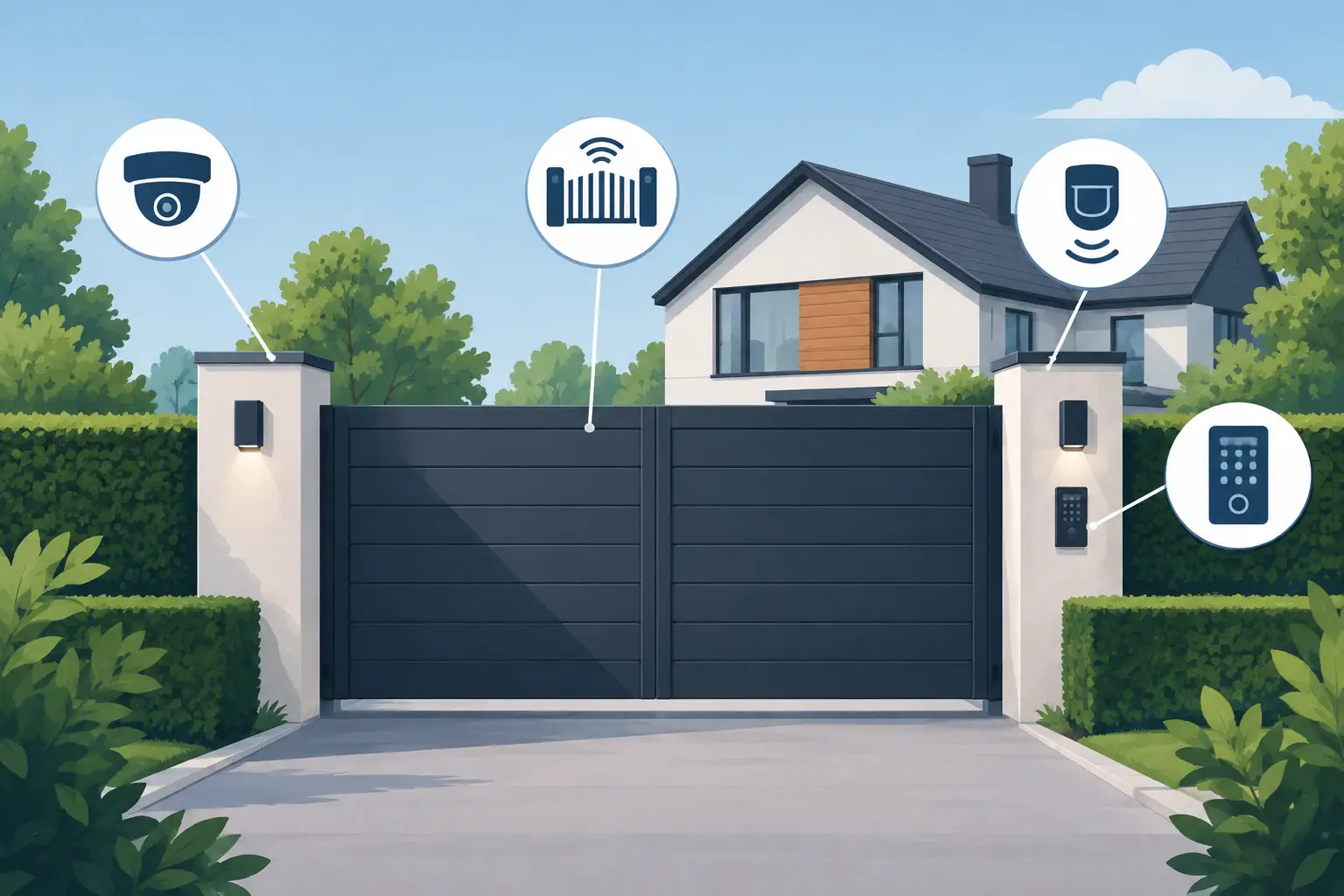
Most automated gates need more than one layer of protection. The precise arrangement depends on the risk assessment, gate type and operating environment, but devices commonly include photocells, safety edges, force limitation and emergency release mechanisms.
Photocells use an infrared beam to detect a person, vehicle or object in the gate’s path. They are useful, but a single beam cannot protect every pinch point or detect every person, particularly a small child close to the gate. Safety edges are pressure-sensitive strips fitted where contact could otherwise cause injury. If compressed, they signal the operator to stop or reverse.
Force limitation monitors the resistance encountered during movement. It can help reduce impact risk, but it should not be relied upon as the sole measure where a person could be trapped or crushed. Physical guarding may be needed around hinges, rollers, racks and gaps that cannot be made safe by controls alone.
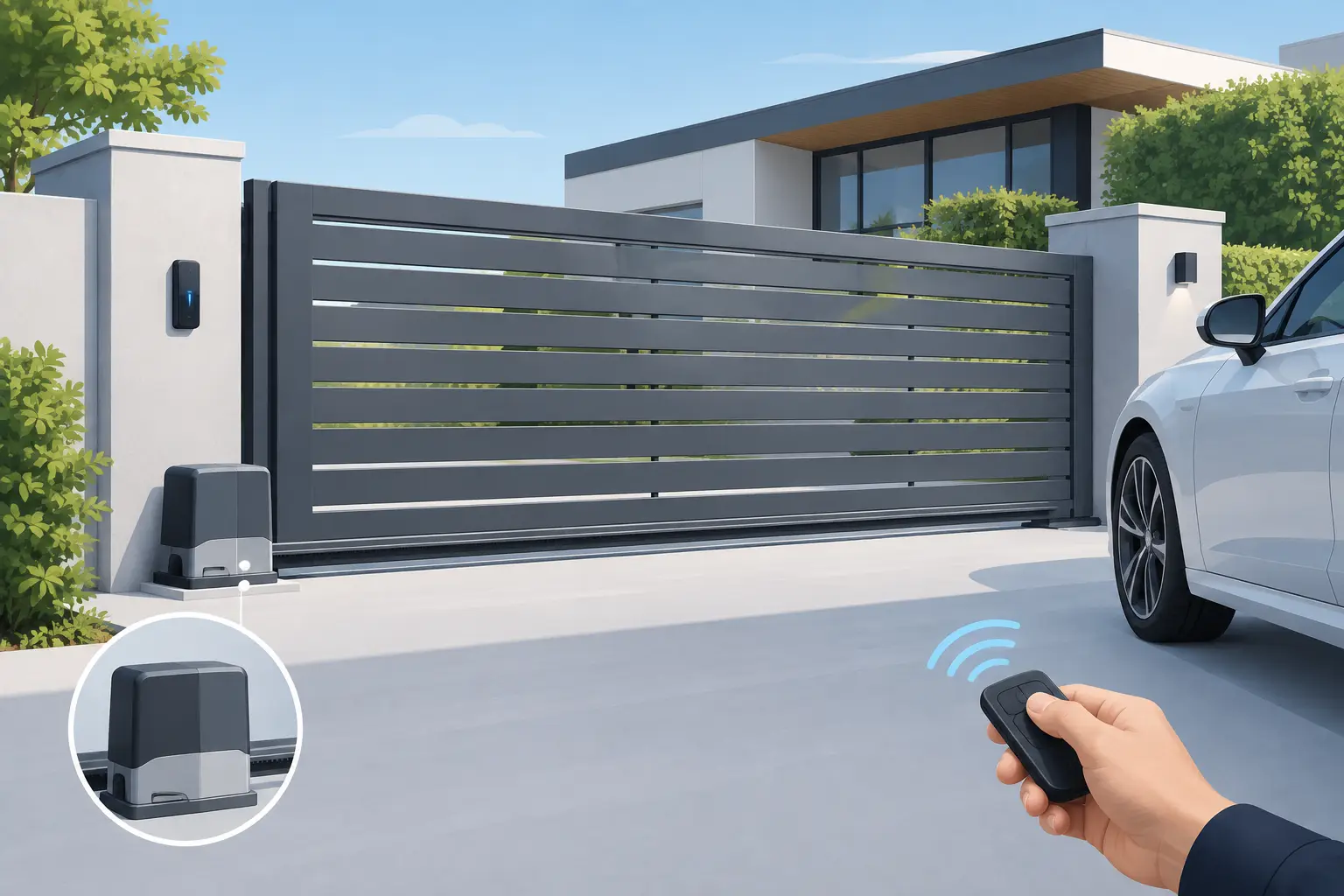
Controls also need careful placement. A key switch, keypad or intercom should allow users to operate the gate from a safe position with a clear view of the entrance. A hold-to-run control may be appropriate in certain higher-risk situations because the gate moves only while the control is actively held. Remote controls are convenient, yet they do not provide the same direct view of the gate area.
Manual release and emergency access
Every automated gate needs a reliable manual release so it can be operated during a power failure or fault. The release should be accessible to authorised users, explained at handover and tested as part of servicing. On commercial sites, managers should also consider how emergency services gain access and whether a failure could obstruct an evacuation route.
Installation details that affect safety
A safe gate is not created by the operator alone. Posts, hinges, track systems, foundations, stops and fixings must be designed for the gate’s dimensions and expected loads. Poor alignment can lead to excessive force, unreliable operation and premature wear.
Sliding gates require a stable, clear travel path and appropriate protection at both ends of travel. Cantilever designs avoid a ground track, which can be useful where debris, leaves or uneven surfaces would otherwise interfere with movement. They still need suitable end supports and guarded areas around moving parts.
For swing gates, the direction of travel is critical. Gates should not open outwards across a public footway or carriageway. Where space is limited, an inward-opening swing gate or a sliding gate may be the safer and more practical choice. This is one reason a site survey should happen before a design is finalised.
The electrical installation also matters. Outdoor equipment must be installed appropriately for its environment, with cabling protected from damage and work completed by a competent person. An automated gate should be fully tested before handover, including the safety functions, limits, obstacle detection and manual override.
Documentation is part of a safe handover
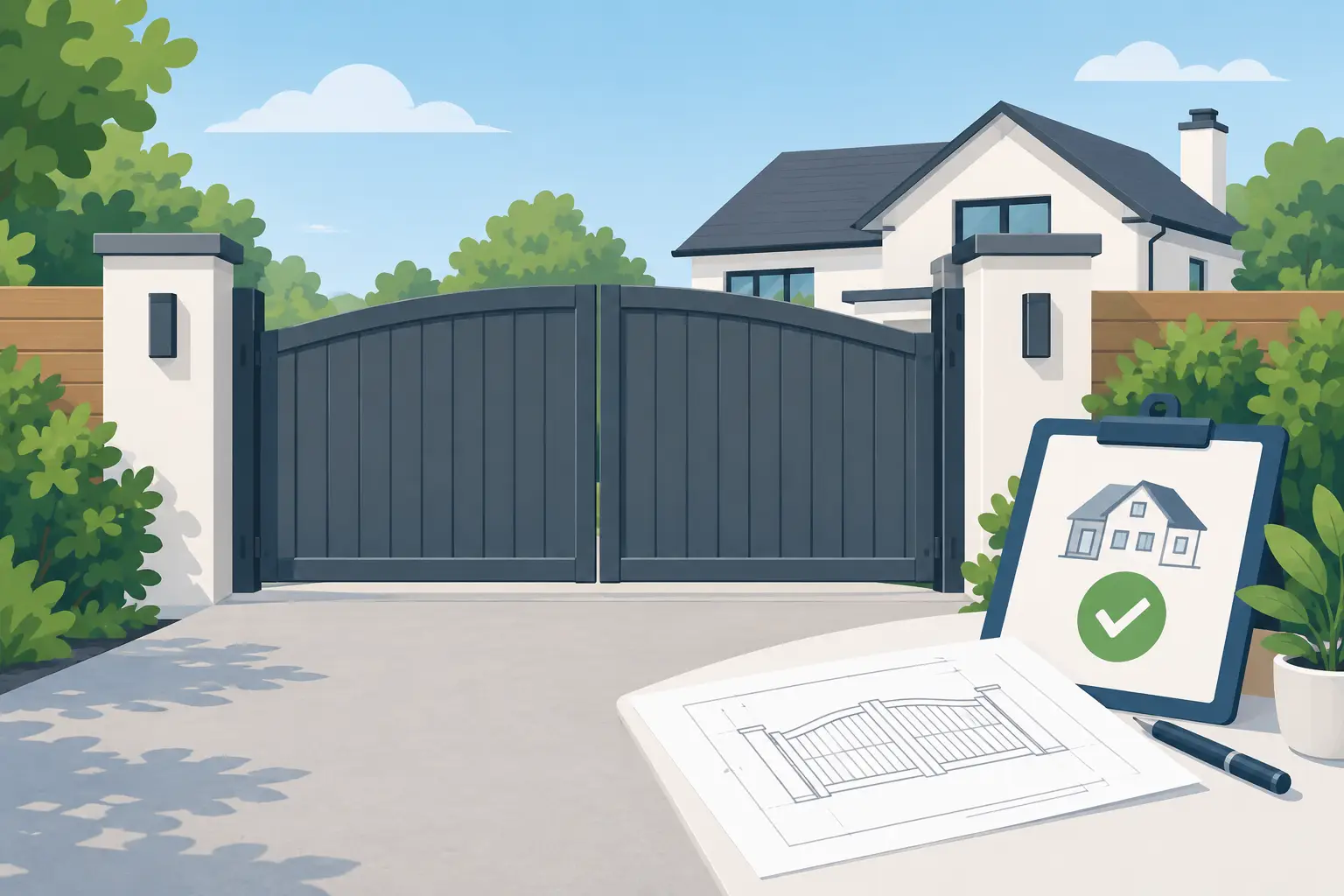
A completed automated gate installation should not be handed over with only a remote control and a quick demonstration. The customer should receive clear operating instructions, safety information, maintenance guidance and details of what to do if the gate fails.
For machinery compliance, the completed system should be supported by a declaration of conformity or declaration of incorporation where applicable, along with relevant technical records. The exact documents depend on the equipment and installation arrangement, but the principle is consistent: the person responsible for the completed machine must be able to show that safety has been considered and verified.
Keep these documents with service records. They are useful when selling a property, managing a commercial estate or arranging future repairs. They also help a new maintenance provider understand how the gate was intended to operate.
Maintenance is not optional
Weather, ground movement, accidental knocks and everyday use can all alter how a gate performs. A photocell can become misaligned, a safety edge can be damaged, and a track can collect debris. A gate that was safe at commissioning may no longer be safe if faults are ignored.
Homeowners should carry out simple visual checks and stop using an automated gate if it behaves unexpectedly. Warning signs include jerky travel, unusual noise, failure to stop or reverse, visible damage, loose fixings, damaged cables or a gate that no longer closes squarely. Do not bypass safety devices to keep the gate running.
Commercial and shared-use locations usually need a more formal maintenance plan, with inspection frequency based on traffic levels, environment and risk. High-use gates may require more frequent professional attention than a private driveway gate used a few times a day. Records should show what was checked, what faults were found and how they were resolved.
Choosing the right route for your project
A ready-made aluminium gate can suit a straightforward opening where dimensions and access are predictable. Bespoke gates are often the better option when there is a slope, unusual opening width, existing walls, an integrated pedestrian gate or a specific automation requirement. Neither route is automatically safer – the best choice is the one that allows the gate, structure and safety measures to work together properly.
For a new driveway or commercial entrance, involve the gate supplier and installer early. Aluminium Gates Direct can help customers consider gate style, dimensions, automation and access control as one planned system, with installation support available through its partner network nationwide.
The safest gate is usually the one that has been designed around the property rather than forced to fit it. A careful survey and competent installation may cost more than a basic fit-out at first, but it gives owners something far more valuable: an entrance that looks right, works reliably and protects everyone who passes through it.