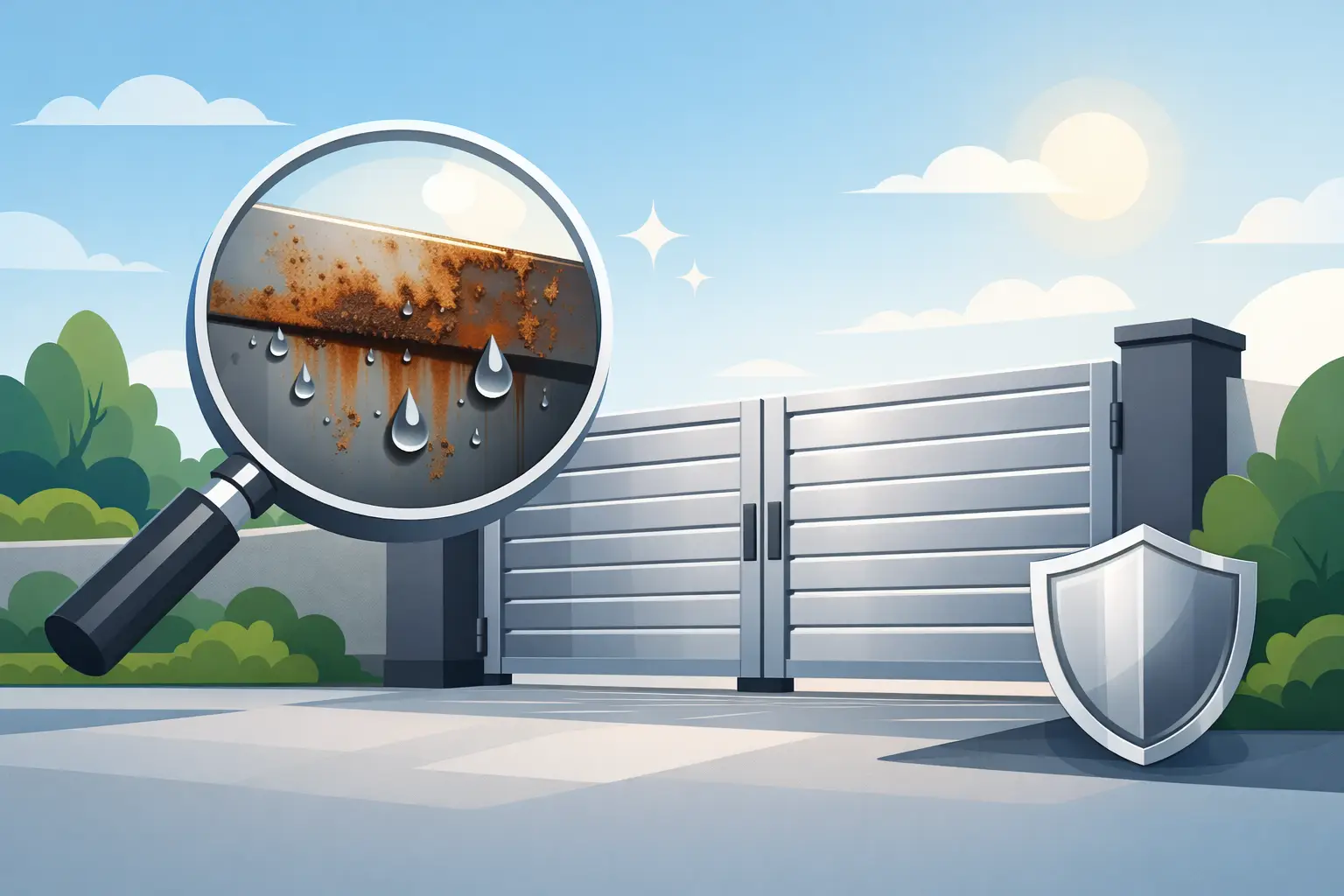
If you are comparing gate materials for a driveway, garden entrance or commercial perimeter, one question usually comes up early – do aluminium gates rust? The straight answer is no. Aluminium does not rust in the way iron or steel does, which is one of the main reasons it has become such a popular choice for low-maintenance gates across UK homes and sites.
That said, there is a bit more to it than a simple yes or no. While aluminium will not develop the red-brown rust you see on untreated steel, it can still react to weather, pollution, salt and general wear over time. Understanding that difference helps you choose the right gate and look after it properly.
Do aluminium gates rust or corrode?
Aluminium gates do not rust because rust is a specific form of corrosion that affects iron and steel. Aluminium contains no iron, so it cannot produce rust in the traditional sense.
What aluminium does instead is form a very thin oxide layer when exposed to air. This happens naturally and, unlike rust on steel, that oxide layer actually helps protect the metal underneath. In practical terms, that means the surface creates its own barrier against further deterioration.
This is one reason aluminium is so widely used outdoors. It is well suited to UK weather, where gates have to cope with rain, frost, changing temperatures and damp conditions for much of the year. For homeowners and site managers who want something that keeps its appearance without constant upkeep, that built-in resistance is a real advantage.
Why aluminium performs differently from steel
Steel is strong, but unless it is properly treated and maintained, moisture can get through scratches or damaged coatings and start the rusting process. Once rust begins, it can spread, stain surrounding areas and weaken the material if left unchecked.
Aluminium behaves differently. Its protective oxide layer forms quickly and helps slow further corrosion. That makes it a reliable option for gates, railings and fencing where long-term outdoor exposure is unavoidable.
This does not mean every aluminium gate is identical. The quality of the aluminium, the fabrication, the finish and the installation all affect how well it performs over time. A well-made powder-coated gate from a specialist supplier will generally offer much better long-term appearance and durability than a poorly finished product built to a lower standard.
What can happen to aluminium gates over time?
Although the answer to do aluminium gates rust is no, aluminium is not completely immune to surface change. Over the years, you may see signs of weathering depending on location and exposure.
In most cases, this is cosmetic rather than structural. Dirt can build up. The finish may dull slightly if it is not cleaned. In coastal areas, airborne salt can be harder on any external metalwork, including aluminium. In industrial areas, pollutants can also leave deposits on the surface.
If the gate has a powder-coated finish, which is common for modern aluminium gates, the coating plays an important part in protecting the look of the gate. A high-quality powder coating helps resist fading, chipping and general wear. If that finish is damaged through impact or improper handling, the underlying metal can become more exposed to the elements, though it still will not rust like steel.
There are also specific cases where corrosion can occur, especially if aluminium is placed in contact with incompatible metals in the presence of moisture. This is known as galvanic corrosion. It is not usually a problem in a properly designed and installed gate system, but it is one reason expert specification matters.
Powder coating makes a difference
For most buyers, the finish is just as important as the base material. Aluminium gates are often powder coated in a wide range of colours and styles, from simple contemporary designs to more traditional and ornate options.
A good powder-coated finish does three jobs. It improves appearance, adds another layer of protection and reduces maintenance demands. It also allows customers to choose a gate that suits the property rather than settling for the limited look of a purely functional product.
However, not all finishes are equal. Thicker, better-applied coatings with proper pre-treatment tend to last longer and perform more consistently. If a gate is being installed in a harsher setting, such as a coastal property or an exposed commercial site, it is worth discussing that environment before ordering. The right specification at the start usually saves time and cost later.
Are aluminium gates really maintenance-free?
You will often see aluminium described as maintenance-free, and in comparison with timber or untreated steel, that is broadly fair. You do not need to sand it, stain it or deal with recurring rust treatment. For many customers, that is a big part of the appeal.
Still, low maintenance is not the same as no maintenance at all. Any external gate benefits from occasional cleaning and routine checks. Dust, grime, traffic film and organic matter can collect on the surface, especially in busy or exposed areas. Washing the gate down with mild soapy water and a soft cloth every so often is usually enough to keep it looking smart.
It is also sensible to inspect hinges, fixings, locks, automation components and track systems if fitted. In many cases, the moving parts of a gate need more attention than the aluminium panels or frame themselves.
Where aluminium makes the most sense
For residential driveways and garden gates, aluminium is a strong all-round choice because it combines appearance, durability and reduced upkeep. It works particularly well for customers who want a smart finish without the ongoing work associated with timber or mild steel.
For commercial properties, schools, developments and managed sites, the benefits are often even clearer. A lighter gate can help reduce strain on automation systems, while corrosion resistance supports a better long-term appearance at entrances and perimeters. Where security and presentation both matter, aluminium can offer a practical balance.
That said, the right gate is always about more than material alone. Size, usage level, privacy needs, style preference and whether the gate is manual or automated all need to be considered. A wide driveway gate used several times a day has different demands from a small side access gate, even if both are made from aluminium.
Common concerns buyers have
Some buyers worry that because aluminium is lightweight, it must be weak. In reality, well-designed aluminium gates are both lightweight and strong. That lower weight is often an advantage, especially for larger gates and automated systems.
Others assume that if aluminium does not rust, it will never mark or age. That is not quite right either. Like any outdoor product, it still needs sensible care and a good-quality finish. The benefit is that you are far less likely to face the kind of recurring repair cycle associated with rust-prone materials.
There is also the question of cost. Aluminium can cost more upfront than some basic alternatives, but many buyers find the lower maintenance and longer service life make it better value over time. When you factor in painting, repairs and replacement cycles, the gap often narrows.
So, do aluminium gates rust in the UK climate?
No, aluminium gates do not rust in the UK climate. They are well suited to British weather because they resist the moisture-related problems that affect iron and steel. Rain, cold temperatures and damp air are much less of a concern with aluminium than with more rust-prone materials.
What matters more is choosing the right product for the setting. A gate for a sheltered suburban driveway may not need the same finish or hardware specification as one installed near the coast or on a busy commercial site. Good design, correct finishing and proper installation are what turn a good material into a reliable long-term solution.
This is where specialist advice is useful. Whether you need a bespoke driveway gate, a readymade garden gate or an automated entrance solution, it helps to work with a supplier that can match the product to the site rather than offering a one-size-fits-all answer.
At Aluminium Gates Direct, that usually means talking through size, style, usage and environment before recommending the best option. It is a practical approach, and it tends to lead to better results.
If you are weighing up materials, the main thing to remember is simple. Aluminium does not rust, and that alone removes one of the biggest long-term headaches of owning an outdoor gate. Choose a well-made gate with the right finish, look after it sensibly, and it should stay attractive and dependable for years.