

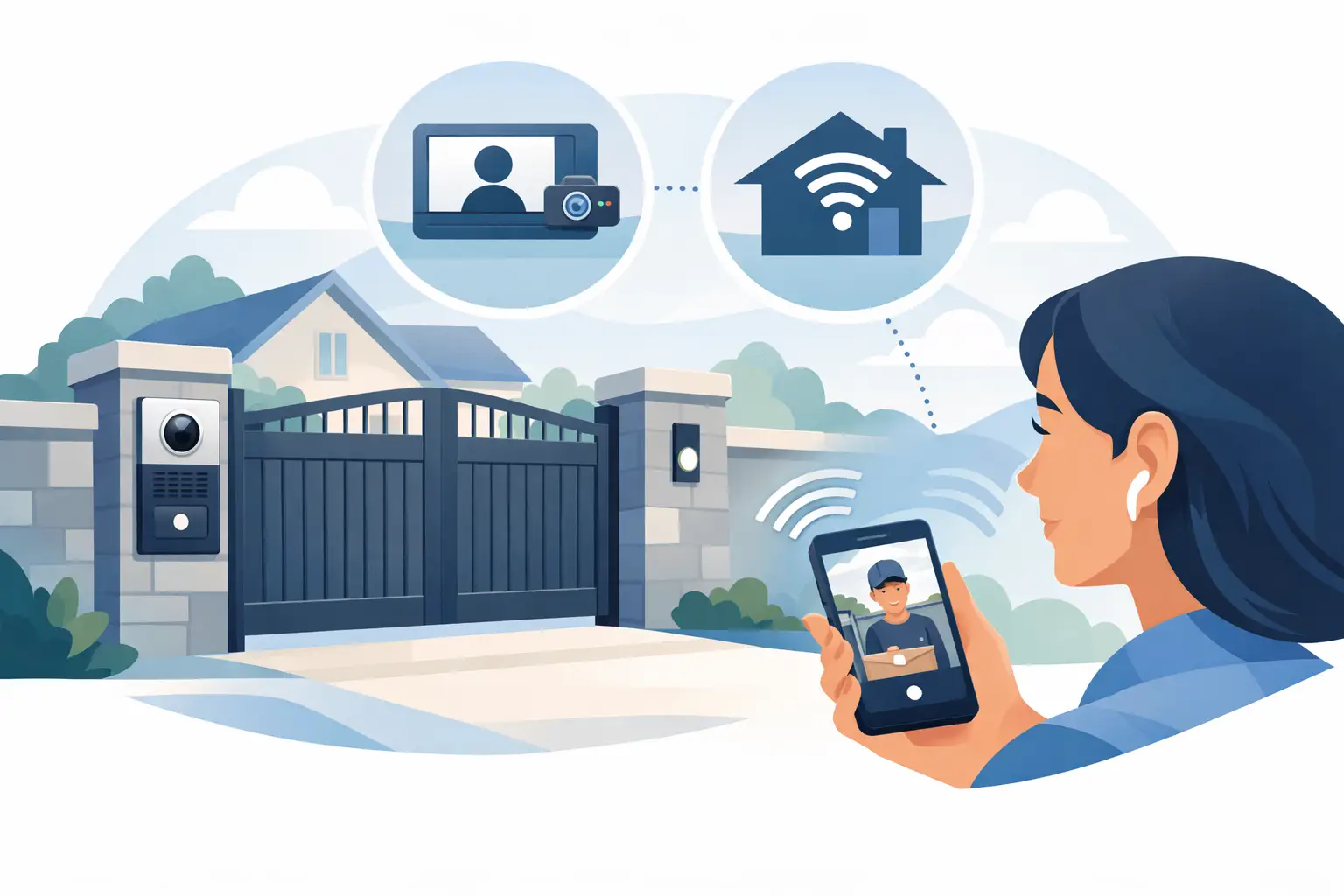
A gate can look the part, protect your boundary and improve privacy, but it only does half the job if you still have to walk outside every time someone arrives. That is where gate intercom systems for homes make a real difference. They add control at the entrance point, help you manage visitors more confidently and can turn a good gate setup into one that feels practical every day.
For many homeowners, the decision is not simply about security. It is also about convenience, especially on larger driveways, busy family properties or homes where deliveries and visitors are frequent. For developers and specifiers, the intercom is often the detail that helps bring the whole access control package together.
Why gate intercom systems for homes matter
A gate intercom gives you a way to identify who is outside before granting access. That sounds straightforward, but the right system can change how a property works on a daily basis. Instead of relying on chance, sightlines from the house or separate phone calls, you have a dedicated method of communication at the entrance.
For some properties, audio is enough. If the driveway is short and visibility is good, speaking to a caller may be all that is needed. In other cases, video is the better fit. A longer driveway, a solid boundary wall or regular parcel deliveries often make visual verification more useful. Families with children, older residents and owners of more secluded homes also tend to value that extra reassurance.
There is also a design and specification point to consider. A gate, automation and intercom system should work together as one access solution, not as separate products chosen at different times. When these elements are planned together, you are far more likely to end up with reliable operation, a cleaner finish and a setup that suits the property rather than being added on as an afterthought.
Choosing gate intercom systems for homes
The best choice depends on how the gate is used, who needs access and how much control you want from inside the house or remotely. There is no single answer that suits every property.
Audio or video
Audio intercoms are often the more budget-conscious option. They can be perfectly suitable for straightforward residential use, particularly where the entrance is close to the house and the homeowner mainly wants a simple way to speak to visitors before opening the gate.
Video intercoms offer more certainty. You can see who is calling, which is especially useful when the person at the gate is unknown, when deliveries are left regularly or when background noise makes speech less clear. For many homeowners, video quickly becomes the preferred option once they consider how often they will actually use it.
Wired or wireless
Wired systems are generally chosen where reliability is the priority and cabling can be planned during installation. They are often well suited to new gate projects, major refurbishments or properties where trenching and power supply are already part of the works.
Wireless options can reduce disruption and may suit certain retrofit situations, but they are not always the easiest answer people expect. Signal strength, gate position, wall construction and distance to the house all matter. On larger plots, a wireless system may need more planning than a wired one.
Smartphone access or internal monitor
Some homeowners want a simple internal screen in the hall or kitchen. Others want to answer the gate from anywhere using an app on their mobile phone. Remote access can be particularly useful if you are expecting deliveries, tradespeople or family members while away from home.
That said, remote control should be set up carefully. Convenience is valuable, but so is making sure permissions, notifications and user access are managed properly. A good system should make life easier without feeling overcomplicated.
Matching the intercom to the gate itself
An intercom cannot be specified properly without considering the gate type and how it opens. A pedestrian gate, a pair of driveway swing gates and a sliding gate can all require a slightly different approach.
With swing gates, visitor positioning is important. The caller should be able to reach the intercom comfortably and stand clear of the gate movement. Sliding gates also need careful placement so the entry panel remains practical and protected. On pedestrian gates, the intercom may be doing most of the access-control work, so reader location, latch release and user flow matter even more.
Material and finish also come into play. A well-designed aluminium gate has a clean, modern appearance and low maintenance appeal, so the intercom should complement that rather than look bolted on. The best installations feel integrated from the start, with hardware, automation and entry control working visually as well as technically.
What to look for in a home intercom system
Security and convenience tend to drive the initial search, but day-to-day usability is what determines whether a system feels worth the investment.
Clear audio quality matters more than many people expect. If sound is distorted by traffic, wind or poor speaker performance, the intercom becomes frustrating quickly. Video quality should also be good enough to identify visitors properly, not just detect movement at the gate.
Night use is another practical point. A camera that works well in daylight but struggles after dark is a common disappointment. If your gate is used in the evening or during winter afternoons, low-light performance should be considered from the outset.
Durability is equally important. Outdoor entry panels need to cope with British weather, regular use and exposure over time. A system may look good in the brochure, but build quality and suitability for external use make all the difference once it is fitted.
Ease of use should not be overlooked either. A homeowner should not need a manual every time they want to admit a visitor. If there are multiple household members, cleaners, dog walkers or tradespeople using the system, simple operation becomes even more important.
Installation considerations that affect performance
A good intercom system can still disappoint if the installation is poorly planned. This is one reason specialist advice matters.
Power supply, cable routes, internet connectivity, gate automation compatibility and safe access positions all need to be checked early. On an existing property, there may be practical constraints that change the ideal specification. Long driveways, brick piers, limited ducting or established landscaping can all influence what will work best.
There is also the question of future use. A homeowner may initially want a basic call point and gate release, then later decide they want app control or additional user access. Choosing a system with sensible expansion potential can save time and cost later on.
This is where working with a supplier who understands gates, automation and intercoms together is valuable. At Aluminium Gates Direct, that joined-up approach helps customers choose systems that suit the gate design, the property layout and the level of access control required, rather than simply selecting a standalone unit.
Budget, value and where to spend wisely
Intercom pricing varies widely, and the cheapest option is rarely the best value if it causes frustration or needs replacing early. A more useful way to think about budget is to weigh the system against how often it will be used and what level of control the property actually needs.
If your gate is the main entrance to the home and used several times a day, reliability and ease of use deserve more weight. If it is for occasional visitor access on a secondary entrance, a simpler specification may be perfectly sensible.
Video, smartphone functionality, multiple indoor monitors and advanced access features will increase cost, but not every household needs every feature. The right specification is usually the one that feels proportionate to the property. A large automated driveway gate on a premium home often justifies a more capable system. A modest side entrance may not.
Getting the specification right from the start
The most successful home gate projects usually begin with a few clear questions. Who needs access? How far is the gate from the house? Do you want to see visitors, speak to them, or both? Will the gate be automated now, or later? Are you prioritising security, convenience, appearance or a balance of all three?
Once those points are clear, the specification becomes far easier. You can narrow down whether you need audio or video, wired or wireless, internal monitor or mobile app access, and how the intercom should integrate with the gate and automation.
A gate intercom should not feel like a gadget added for the sake of it. It should make the entrance to your property easier to manage, more secure and better suited to the way you actually live. If you choose with that in mind, you are far more likely to end up with a system that still feels right long after the installation is complete.
If you are planning a new gate or upgrading an existing entrance, it is worth taking the time to look at the whole picture. The right intercom is not just about answering a call at the gate. It is about creating an entrance that works properly, looks right and gives you confidence every time someone arrives.