
A pedestrian gate often gets used more than any other entrance on a property. It is the gate visitors see up close, the one you pass through every day, and the detail that can either tie a frontage together or make it feel unfinished. That is why aluminium pedestrian gates deserve the same level of thought as a driveway gate or full perimeter scheme.
For many UK homeowners and commercial buyers, the appeal is straightforward. Aluminium gives you a gate that looks smart, stays looking smart, and does not ask for the ongoing upkeep that comes with timber or the rust concerns often associated with steel. But choosing the right gate is not only about material. It is about proportion, access, privacy, security and how the gate will work in day-to-day use.
Why aluminium pedestrian gates are such a practical choice
The biggest advantage of aluminium is that it suits real life. British weather is rarely kind to external joinery or metalwork, and a gate that looks good on installation day needs to cope with rain, frost, bright sun and general wear over time. Aluminium is naturally resistant to corrosion, which makes it a strong option for front gardens, side access points, residential developments and commercial entrances.
It is also lightweight compared with many alternatives, which matters more than people often expect. A lighter gate can reduce stress on posts, hinges and supporting hardware, especially on a frequently used access point. That does not mean it feels flimsy. A well-made aluminium gate still offers strength and stability, but without the unnecessary weight that can affect long-term performance.
Low maintenance is another major reason buyers choose aluminium. There is no regular sanding, staining or repainting cycle to keep on top of. In most cases, occasional cleaning is enough to keep the finish looking presentable. For busy homeowners, landlords and site managers, that can make a real difference over the years.
Where a pedestrian gate fits into your overall scheme
A pedestrian gate should not be treated as an afterthought. On some properties it is a standalone feature, but on others it forms part of a wider run of fencing, railings or matching driveway gates. Getting that relationship right helps the whole frontage feel considered.
If your property already has aluminium railings or a driveway gate, a matching pedestrian gate creates continuity in line, finish and design. That is often the best route when kerb appeal matters. On the other hand, if the pedestrian entrance sits to the side of a house or at a rear access point, the priority may be practicality rather than visual impact. In that case, a simpler design may be the better fit.
For commercial settings, the gate often needs to balance presentation with control. A staff entrance, bin store access point or side passage gate may need a more functional design, but it still needs to look appropriate to the rest of the site.
Design choices that affect both appearance and function
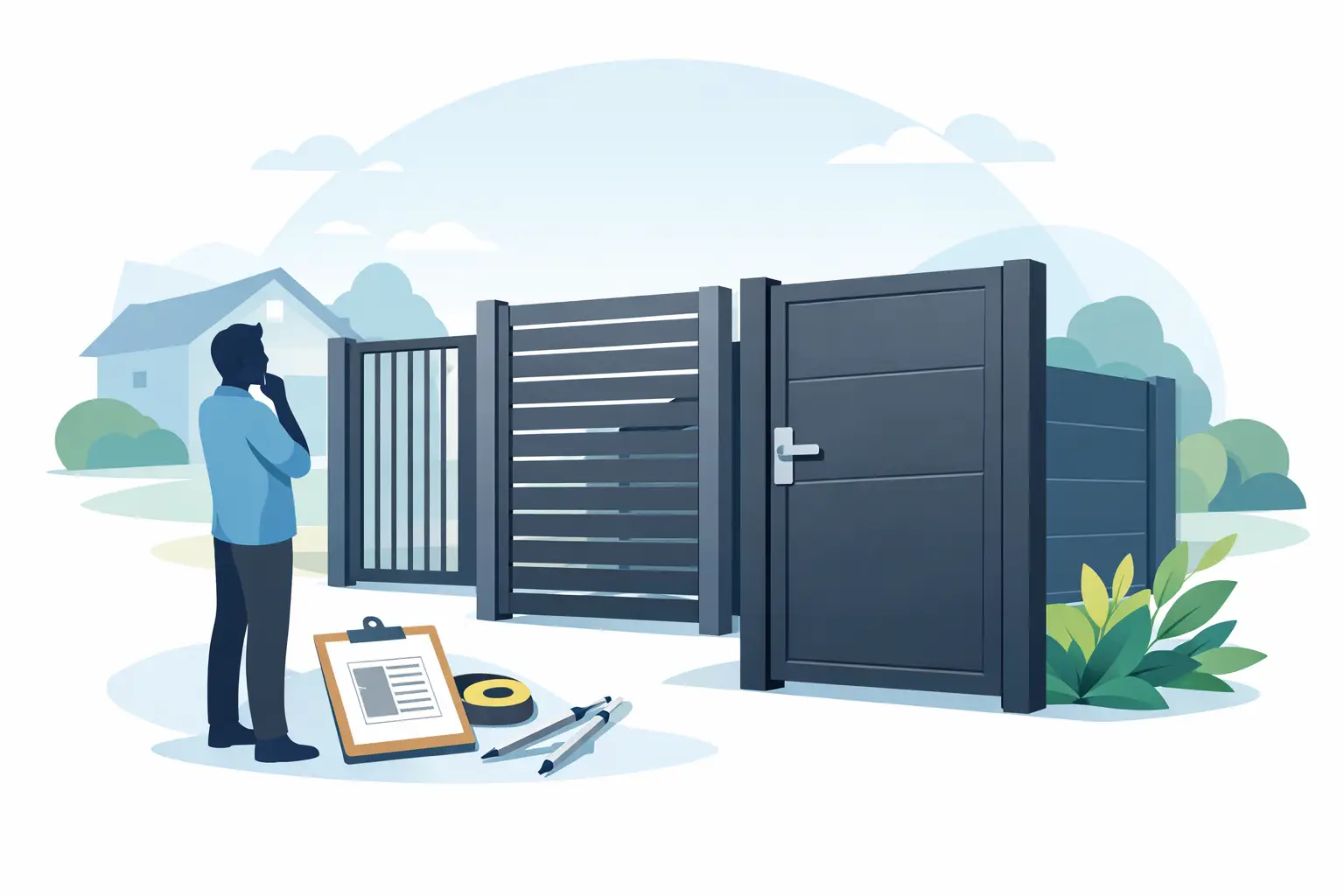
Style matters, but it should always be tied to how the gate will be used. A fully boarded or infill-style gate can offer a higher level of privacy, which suits side access areas, garden entrances and properties on busy roads. An open design, such as vertical bars or decorative railings, can feel lighter visually and may be a better match for homes where openness is part of the frontage design.
Height is another important decision. A lower gate can be welcoming and attractive at the front of a property, particularly when paired with matching railings. A taller gate may be more suitable where security and screening are higher priorities. Neither option is automatically right. It depends on whether you want to create a visual entrance feature, protect a private side passage, or restrict unauthorised access.
Colour and finish also have a big effect. Many buyers choose anthracite grey, black or other neutral tones because they suit both modern and traditional properties. That said, bespoke colour options can work well if you are trying to match existing metalwork, windows or architectural details. The key is to choose something that will still feel right in a few years’ time, not just on the day it is fitted.
Bespoke or readymade?
This usually comes down to timescale, budget and how specific your requirements are. A readymade gate can be an efficient option if you have a straightforward opening and want a quicker route to installation. Bespoke gates make more sense when you need precise sizing, a particular design, or a coordinated look across multiple elements.
For developers, architects and trade buyers, bespoke supply can also help when a project has planning considerations, fixed opening widths or a wider perimeter package that needs consistency. For homeowners, the value of a made-to-order gate is often in getting a better fit both visually and practically.
Security, access and the details that matter
A pedestrian gate needs to do more than swing open and shut. The locking method, latch position, hinge quality and post arrangement all affect how secure and convenient the gate feels to use.
For a residential side gate, a simple lockable setup may be enough. For front access, you may want a more refined latch and handle arrangement that feels easier for daily use. On commercial sites or larger homes, access control can be part of the specification from the start, especially where the gate needs to work with intercoms or controlled entry systems.
The surrounding structure matters too. A strong gate fitted to weak posts or poor boundary details will never perform as well as it should. That is why it helps to look at the whole opening rather than the gate panel alone. Ground levels, post fixing positions, wall conditions and clearance space all need to be considered before manufacture or installation.
Manual or automated access?
Most pedestrian gates remain manual, and for many applications that is exactly right. They are simple, reliable and cost-effective. However, there are situations where a more controlled access arrangement makes sense, particularly on commercial premises, flat schemes or high-spec residential projects.
If the gate forms part of a wider automated entrance setup, integrating it with intercom or access control systems can improve convenience and site management. This is especially useful where you need to manage visitor access without compromising perimeter security. The right solution depends on traffic levels, the type of users and whether the gate is part of a broader entrance package.
Installation considerations buyers should not overlook
Even a well-made gate can underperform if the installation is rushed or the opening has not been assessed properly. Accurate measurements are the starting point, but they are not the whole job. You also need to think about hinge clearance, the direction of swing, finished ground levels and whether the gate will open freely in all weather conditions.
On side paths and narrower access points, space can be tight. A gate that looks ideal on paper may be awkward in practice if it clashes with steps, bins, walls or sloping ground. This is where product guidance and installation planning become valuable. Small specification decisions made early can prevent expensive adjustments later.
For buyers managing larger projects across multiple plots or units, consistency is another issue to address. Matching heights, finishes and ironmongery across a scheme helps maintain a professional result and can simplify ongoing maintenance.
Cost, value and what you are really paying for
Price always matters, but the cheapest gate is not necessarily the most cost-effective choice over time. With aluminium, part of the long-term value is in reduced maintenance and durability. A gate that does not need frequent treatment, respraying or repair can work out better value than a lower-priced alternative that demands more attention.
Specification affects cost as well. Bespoke sizing, upgraded locks, decorative detailing, automation compatibility and premium finishes can all increase the price. That is not a reason to avoid them. It simply means the gate should be matched to the property and the budget with clear priorities in mind.
Some buyers want the cleanest and most economical solution for a side entrance. Others need a pedestrian gate that makes a design statement at the front of a home or complements a larger architectural scheme. Both are valid. The right choice is the one that fits the job properly.
Making the right choice with confidence
The best aluminium pedestrian gates are the ones that solve the practical need while still looking right for the setting. That might mean a simple, secure side gate with minimal maintenance. It might mean a bespoke entrance gate designed to match railings and driveway gates across a full frontage. In either case, the details matter.
At Aluminium Gates Direct, that usually starts with a straightforward conversation about the opening, the design preference, the level of privacy required and whether the gate needs to work as part of a wider entrance or perimeter solution. Once those points are clear, choosing becomes much easier.
A good pedestrian gate should feel like a natural part of the property from day one – secure, well-proportioned and easy to live with for years to come.