When driveway space is tight or a site entrance needs reliable, controlled access, aluminium sliding gates are often the most practical answer. They open sideways rather than swinging in or out, which makes them well suited to sloping driveways, busy entrances and properties where every metre counts. For homeowners and commercial buyers alike, that combination of security, appearance and ease of use is hard to ignore.
The real advantage is not just the opening method. It is what aluminium brings to the gate itself. Compared with heavier materials, aluminium gives you strength without unnecessary weight, which helps with day-to-day operation and supports smoother automation. It also avoids the regular upkeep that comes with timber and the corrosion concerns that can affect untreated steel.
Why choose aluminium sliding gates?
A sliding gate needs to work consistently. It has to move cleanly, withstand regular use and continue looking smart at the front of a property or business premises. Aluminium suits that job particularly well because it is lightweight, durable and naturally resistant to rust.
For residential properties, that means a driveway gate that improves kerb appeal without creating a maintenance project for years to come. For commercial settings, it means a perimeter solution that can handle frequent operation while maintaining a professional appearance. In both cases, the lower weight of aluminium can reduce strain on automation systems when compared with heavier gate materials.
That said, the right gate is never only about material. Layout, opening width, ground conditions, privacy needs and the level of access control all matter. A well-specified sliding gate should match the property, not simply fill an opening.
Where sliding gates work best
Sliding gates are especially useful where swing gates are restricted by space or terrain. If a driveway rises sharply from the road, a pair of swing gates can become awkward very quickly. A sliding system avoids that issue because the gate travels across rather than needing an arc to open.
They are also a strong option for wider entrances. On larger domestic driveways, private roads and commercial yards, a sliding gate can provide a clean, controlled opening without the visual bulk of oversized swing leaves. If automation is part of the project, sliding systems often feel more predictable in daily use, particularly on high-traffic entrances.
There are trade-offs. A sliding gate needs lateral run-back space, so there must be enough clear room along the fence line or boundary wall for the gate to travel. If that space is limited, a cantilever or alternative gate design may need to be considered. This is why early measurement and proper advice matter.
Design options for aluminium sliding gates
One of the most common assumptions is that sliding gates look purely functional. In reality, modern aluminium sliding gates can be specified in a wide range of styles, from simple horizontal designs to more traditional or decorative layouts.
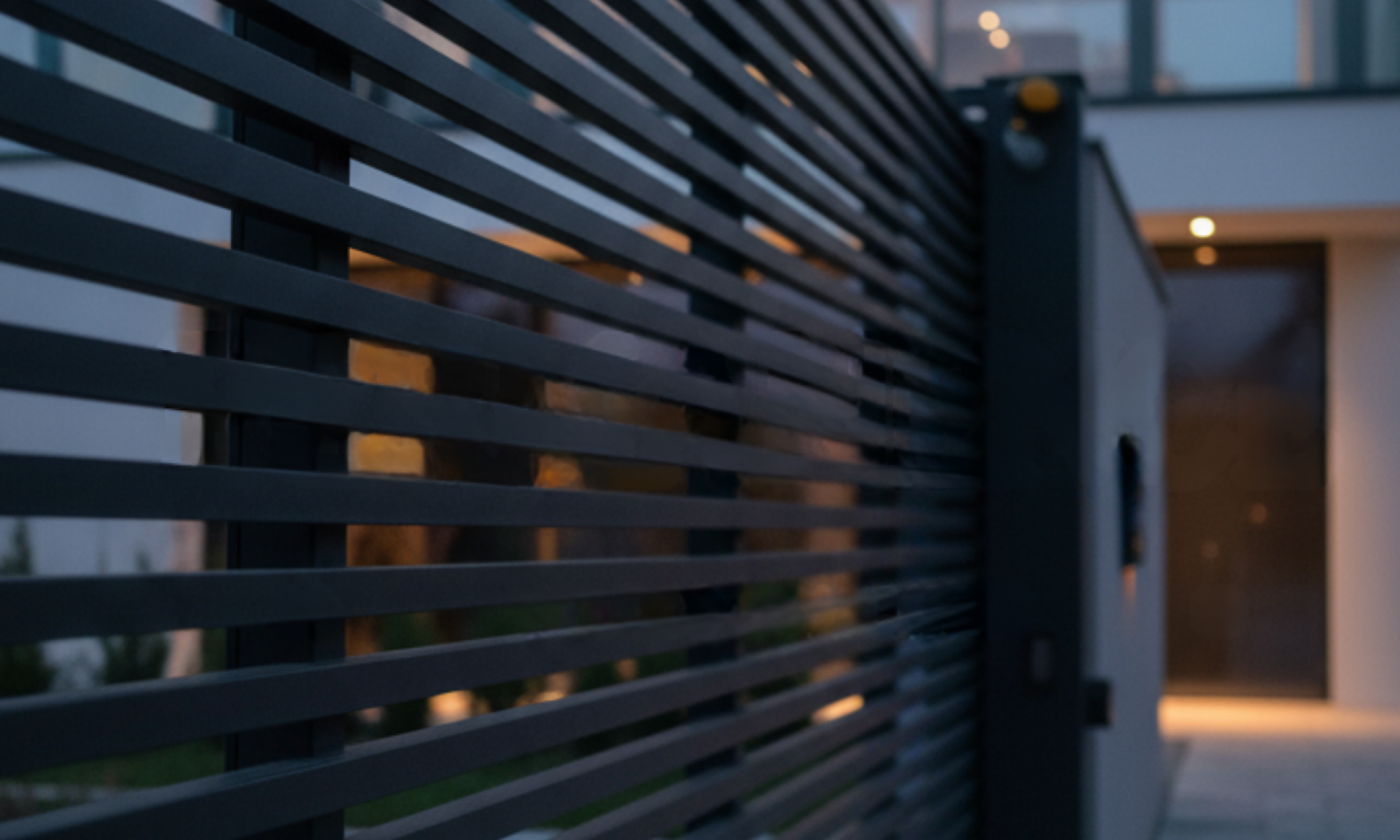
For homeowners, privacy is often a priority. A close-board effect or solid infill design can reduce visibility from the road while creating a sharp, contemporary finish. Other customers prefer spaced rails or open-bar styles that keep the entrance lighter in appearance and preserve visibility. The right choice depends on the balance between privacy, security and the character of the property.
For developers and architects, the appeal is often consistency. Aluminium allows gate and fencing designs to be coordinated across a project, creating a more complete perimeter solution. On commercial sites, appearance still matters, but practical considerations such as visibility, access control and frequency of use usually lead the specification.
Colour also plays a bigger part than many buyers expect. Anthracite grey remains a popular choice for modern homes and commercial premises, but bespoke powder-coated finishes can help a gate sit comfortably against brick, render, cladding or existing metalwork. A made-to-order gate can therefore feel integrated rather than added as an afterthought.
Security and automation considerations
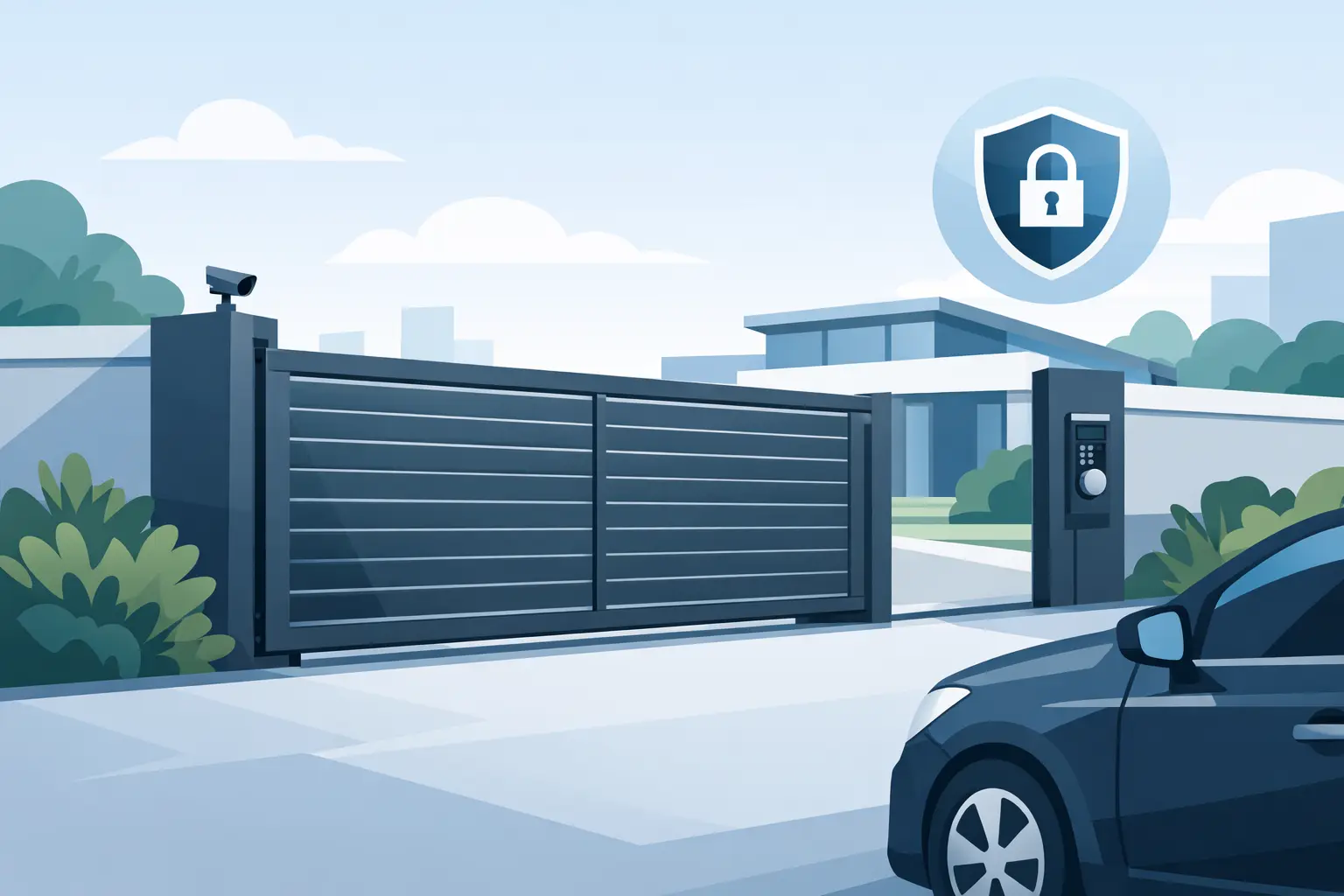
A gate should make access easier for the right people and harder for everyone else. That sounds obvious, but it is where many projects succeed or fail. The gate itself is only one part of the system. Track design, motor choice, safety features, intercom access and site usage all need to work together.
For domestic properties, automation is often about convenience as much as security. Being able to open the gate from the car, manage visitor access and avoid stepping out in poor weather makes a real difference in daily use. Intercom systems can add another level of control, particularly on larger plots or properties set back from the road.
On commercial sites, priorities are often different. Access may need to be managed for staff, delivery vehicles and visitors at different times of day. The gate may be opening far more frequently than a domestic installation, which makes duty cycle and system durability more important. Safety edges, photocells and reliable controls are not optional extras in these environments – they are part of a sensible specification.
This is also where aluminium’s lower weight can be beneficial. A lighter gate can support efficient automation and smoother performance, although the final setup must still be matched properly to the opening size, usage level and site conditions.
Bespoke or readymade?
Not every project needs a fully bespoke gate, but many benefit from one. If you have a standard opening and straightforward access requirements, a readymade solution may be the quickest and most cost-effective route. It can still deliver the key benefits buyers want from aluminium – strong construction, low maintenance and a smart finish.
Bespoke sliding gates become more valuable when the brief is more specific. That might mean an unusual width, a sloping site, a requirement to match existing fencing, or a design that needs to complement the style of the property. It can also mean integrating automation and access control from the outset rather than treating them as add-ons later.
For trade buyers and developers, bespoke supply often makes more sense because it reduces compromise across a wider project. For individual homeowners, it often comes down to whether appearance and fit are just as important as function. In many cases, they are.
What to consider before buying
The most straightforward gate projects still benefit from asking the right questions early. How much run-back space is available? Is the entrance level, sloped or uneven? Do you need privacy, or is visibility more useful? Will the gate be manually operated or automated from day one?
It is also worth thinking about how the gate will be used over time, not just on installation day. A family home may later need more convenient visitor access. A commercial site may add traffic flow demands or tighter access control. Choosing a gate with the right structure and support for future automation can save cost and disruption later.
Budget matters too, but a sliding gate should be judged on whole-life value rather than headline price alone. A cheaper option that requires more upkeep, offers limited design flexibility or is not properly matched to the site can prove more expensive in the long run. Fair pricing is important, but so is getting a gate that genuinely fits the job.
Installation support matters
Even the best gate product depends on correct installation. Alignment, track preparation, support posts, automation setup and safety calibration all affect how a sliding gate performs. A gate that looks right on paper can become problematic if the groundwork or fitting is poor.
That is why buyers often benefit from working with a specialist supplier that can guide specification and support installation through experienced partners. For customers across the UK, this makes the process easier to manage, especially where automation and access control are part of the project. Aluminium Gates Direct supports customers in exactly that way – helping them choose a suitable gate solution and connect product supply with practical installation requirements.
Aluminium sliding gates as a long-term investment
A gate sits at the front line of a property. People notice it first, use it regularly and rely on it to do its job in all seasons. Choosing aluminium is not simply about buying a modern-looking product. It is about reducing maintenance, improving everyday access and investing in a gate that keeps performing.
For some customers, the priority is a smarter driveway with less upkeep. For others, it is secure commercial access with dependable automation. In both cases, the best result comes from matching gate design, site conditions and system specification properly from the start.
If you are weighing up options for a residential or commercial entrance, it helps to treat the gate as part of the wider perimeter solution rather than a standalone purchase. A well-chosen sliding gate should feel right every time it opens, and still feel like the right decision years later.