
A gate that is 50mm too narrow or slightly out of proportion can turn a straightforward project into a long list of compromises. That is why made to measure aluminium gates are often the better choice for properties where appearance, fit and day-to-day practicality all matter. Whether you are upgrading a driveway, securing a side entrance or specifying a gate for a commercial site, a tailored solution usually saves time and avoids the awkward adjustments that come with trying to force a standard size into a non-standard opening.
Why made to measure aluminium gates are worth considering
The main advantage of a made to measure gate is simple – it is designed around your opening, your property style and the way the gate needs to work. That matters because very few entrances are truly standard once you factor in posts, walls, levels, access width and clearance.
With aluminium, you get more than a custom fit. You also get a material that is lightweight, strong and built for low maintenance. For many UK homeowners, that means no regular sanding, staining or painting, and no ongoing battle with rust. For developers and commercial buyers, it means a product that is easier to specify for long-term performance and easier to manage across multiple properties or sites.
There is also a visual benefit. A gate that has been sized and styled properly looks intentional. It complements the building rather than looking like an afterthought. On a front driveway, that can improve kerb appeal. On a commercial perimeter, it can help create a cleaner and more professional site entrance.
What makes a gate truly made to measure?
Not every gate described as bespoke offers the same level of flexibility. In practical terms, made to measure aluminium gates are built to suit the dimensions and design requirements of a specific project. That usually includes the width and height, of course, but it can also extend to frame design, infill style, colour, privacy level, opening configuration and automation compatibility.
For example, one homeowner may need a pair of driveway gates that follow a sloping drive without losing privacy. Another may need a single pedestrian gate to match existing fencing. A site manager may require a sliding gate with automation and intercom integration for controlled access. These are very different requirements, and a made to measure approach allows the gate to be specified properly rather than adapted poorly.
This is where expert guidance matters. A good supplier should help you work through the detail, including how the gate will be used, what level of privacy or visibility you want, whether you need manual or automated operation, and what budget you are working to.
Where custom sizing matters most
Some openings are clearly unusual, but even fairly typical entrances can benefit from custom sizing. Older properties often have inconsistent brickwork or existing pillars that are out of square. New builds may need gates to tie in with a wider landscaping plan. Garden and side access points are often tight on space, making hinge clearance and swing direction important.
Driveway entrances are one of the most common examples. If the opening width is close to a standard size but not quite right, choosing a made to measure option can avoid visible gaps, reduce installation work and produce a neater result. The same applies when the gate needs to sit alongside matching fencing or railings.
Commercial settings bring another layer of complexity. Vehicle access, frequency of use, safety requirements and automation all affect the specification. In these cases, standard gates can quickly become a false economy if they need site modifications or fail to meet the practical demands of the entrance.
Design options without the upkeep
One reason aluminium has become so popular is that it offers design flexibility without the maintenance demands associated with timber or untreated steel. That makes it well suited to buyers who want choice, but not extra work.
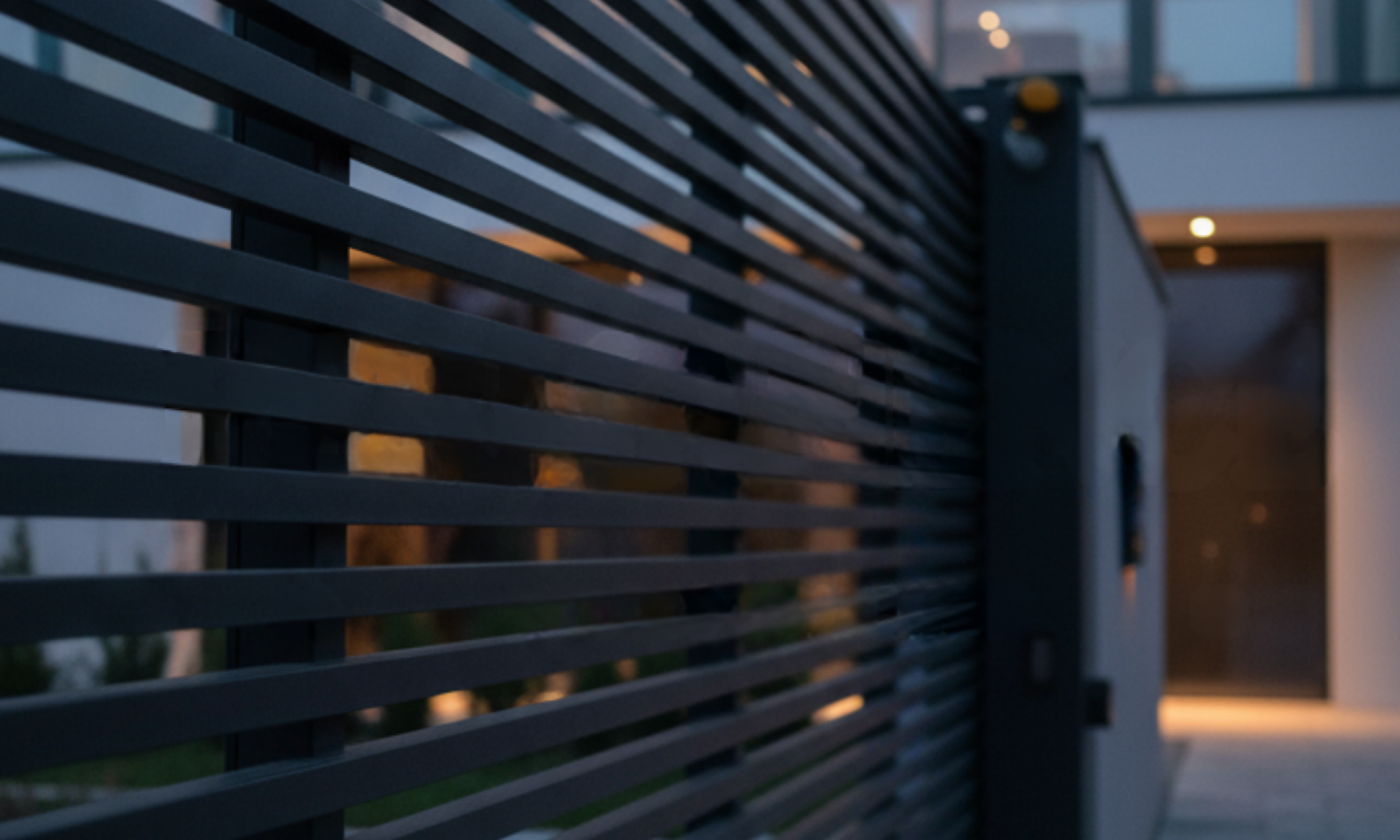
You can choose from modern horizontal styles, more traditional vertical designs, privacy-focused boarded effects and more decorative looks depending on the property. Powder-coated finishes are available in a wide range of colours, so it is easier to match windows, doors, fencing or wider exterior schemes. For some properties, a simple contemporary finish works best. For others, especially period homes or higher-end developments, a more ornate or tailored design may be the better fit.
The key point is that custom design should still be practical. A solid gate may offer more privacy, but it can also increase wind loading. An open style can feel lighter visually, but may reduce screening. There is no single right answer. The right design depends on the site, the use of the gate and the look you want to achieve.
Made to measure aluminium gates for automation
Many buyers start by thinking about the gate itself and only later consider automation. In reality, these decisions should be made together. If you know from the outset that you want electric operation, intercom access or smart entry control, the gate should be designed with that in mind.
Aluminium is particularly well suited to automation because of its strength-to-weight ratio. A lighter gate generally puts less strain on motors and hardware than a heavier alternative, which can support smoother operation and more efficient performance over time. That does not remove the need for proper specification, but it does make aluminium an appealing option for both residential and commercial automated entrances.
For homeowners, automation can add convenience and security, especially on busy roads or larger driveways. For commercial sites, it can support controlled access and help manage entry points more effectively. The important thing is to make sure the gate, hardware and access system are all considered as part of one solution, not separate purchases.
Budget, value and the standard-vs-bespoke question
Cost is understandably one of the first questions buyers ask. Made to measure usually costs more than an off-the-shelf product, but that does not automatically make it expensive in the broader sense. It depends on what problems it solves and what costs it helps avoid.
A readymade gate can be a very good option when the opening is standard, the design brief is simple and timescales are tight. But if the gate needs resizing on site, additional framing work, non-standard posts or visual compromises, the gap in value can narrow quickly. A tailored gate may cost more upfront while delivering a better fit, cleaner finish and less installation friction.
The same logic applies over the longer term. Aluminium gates are chosen by many customers because they are durable and low maintenance. When you combine that with a product that has been designed correctly for the opening, you are investing in fewer headaches later. Fair pricing matters, but so does buying the right gate the first time.
What to check before ordering
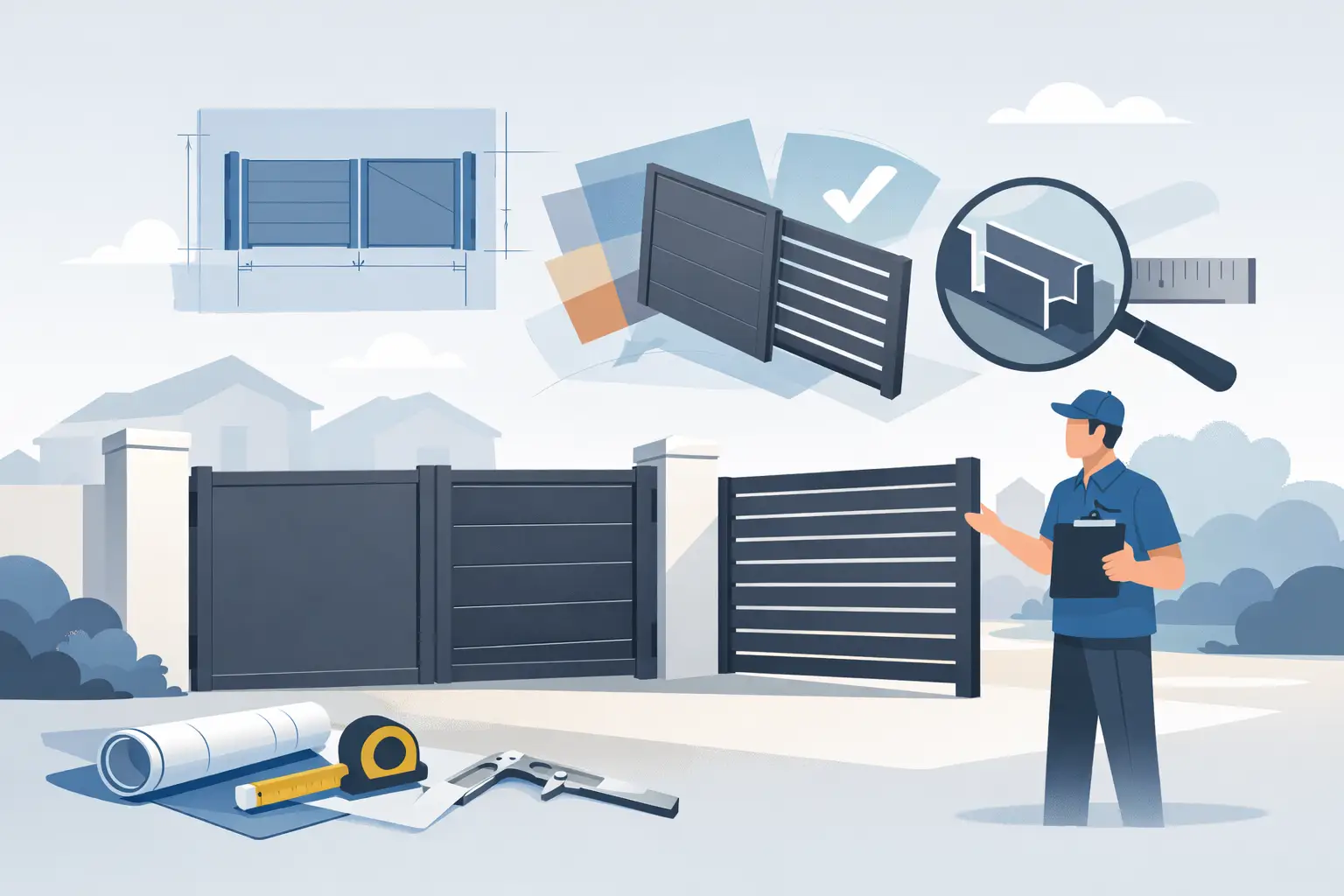
Accurate measuring is essential, but dimensions alone are not enough. You also need to consider ground levels, post positions, hinge side, latch position, swing arc, clearance and whether the gate will open inwards or outwards. If automation is planned, cable routes and power supply should be part of the conversation early on.
This is one area where first-time buyers often benefit from speaking to a specialist rather than trying to piece the specification together alone. An experienced supplier can help identify issues before manufacture starts, which is far easier than trying to solve them during installation.
It is also worth thinking about how the gate relates to the wider boundary. A beautifully made gate can still look out of place if it clashes with existing fencing, railings or the frontage of the property. Matching elements where appropriate usually produces a stronger overall result.
Choosing the right supplier for made to measure aluminium gates
A custom gate is only as good as the support behind it. Buyers should look for clear advice, transparent pricing and a supplier that understands both product specification and real installation requirements. That is especially important for projects involving multiple gates, automation or commercial access control.
At Aluminium Gates Direct, the focus is on helping customers choose a solution that fits the property, the practical brief and the budget rather than pushing a one-size-fits-all answer. That matters because some projects need full bespoke design, while others are better served by a more straightforward option.
If you are comparing suppliers, ask how much design flexibility is actually available, what support is provided during specification, and whether installation or automation can be coordinated if needed. The strongest suppliers make the process feel clear, not complicated.
A made to measure gate should do more than fill an opening. It should look right, work properly and continue doing its job with minimal fuss for years to come. When those are your priorities, a tailored aluminium gate is often the most sensible place to start.