A gate often looks like a simple choice until you start using it every day. The difference between manual or automated gates is not just how they open. It affects convenience, security, installation, long-term running costs and how well the gate suits the way a property actually operates.
For some homes, a manual gate is the right answer because it keeps things straightforward and cost-effective. For others, automation quickly proves its value, especially on busy driveways, larger entrances or commercial sites where access control matters. The best option depends less on what sounds more advanced and more on how the gate will be used in real life.
Manual or automated gates – what is the real difference?
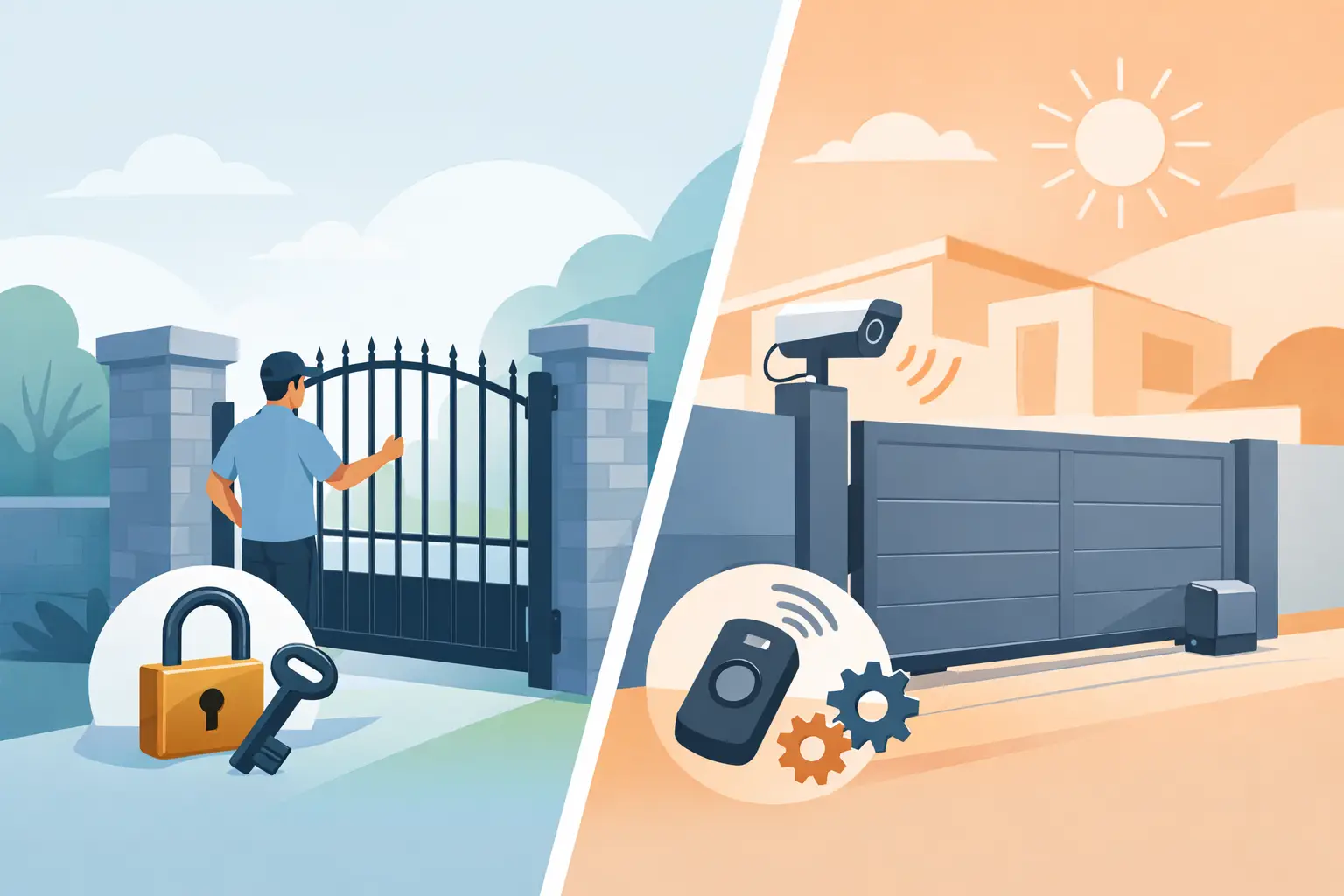
At the most basic level, manual gates are opened and closed by hand, while automated gates use motors and control systems to do the work for you. That sounds obvious, but the practical difference is much wider than that.
A manual gate is usually chosen for simplicity. There are fewer components involved, no motors, no control board and no access devices unless they are added separately for locking or entry management. That can make the initial purchase more affordable and reduce the number of technical elements to consider.
An automated gate adds a system around the gate itself. That may include underground or above-ground motors, safety devices, remote controls, keypads, intercoms and vehicle access features. In the right setting, those additions do far more than save you from getting out of the car in the rain. They can improve site control, make access easier for residents or staff and create a smarter entrance overall.
When manual gates make the most sense
Manual gates remain a strong option for many residential properties, side entrances, gardens and lower-traffic driveways. If the gate is only used occasionally, or if the entrance is short and easy to access on foot, manual operation can be entirely practical.
They also suit buyers who want a clean, durable entrance without adding automation costs at the outset. This can be especially relevant for customers who are prioritising a high-quality gate leaf and posts first, with the option to automate later if the design and layout allow for it.
For some period-style homes or private gardens, manual gates also feel more natural to use. If there is no regular need for controlled vehicle access, adding automation may not deliver enough day-to-day benefit to justify the extra spend.
That said, manual does not always mean basic. Material quality, fabrication, finish and design still matter. A well-made aluminium gate can give a property strong kerb appeal, reliable performance and very low maintenance, whether it is manually operated or not.
When automated gates are worth the investment
Automation becomes more attractive when a gate is used frequently, serves a longer driveway or forms part of a broader security setup. If you arrive home several times a day, manage visitor access regularly or need to control entry onto a private or commercial site, automation starts to solve real problems rather than simply adding a feature.
For homeowners, the biggest benefit is usually convenience. Opening the gate remotely from the car is easier, quicker and more comfortable, particularly in poor weather or on roads where stopping and getting out can be awkward. For families, it can also make daily routines smoother when multiple users need access.
For commercial premises, flat developments and managed sites, the case is often stronger still. Automated gates can be integrated with intercoms, access controls and safety systems to help manage who comes in and when. That level of control matters where traffic is regular, security is important or the entrance forms part of the site’s professional presentation.
Automation also suits larger or heavier gate systems that would be less convenient to move manually. Aluminium is especially useful here because its lighter weight helps reduce strain on motors and hardware while still delivering strength and durability.
Cost is important, but so is value
The price gap between manual and automated gates is real, but it should be looked at in context. A manual gate will usually cost less to buy and install because there are fewer parts, less wiring and less commissioning involved. If the gate meets the property’s needs, that can be the right financial decision.
Automated gates carry higher upfront costs because you are buying more than a gate. You are investing in motors, controls, safety equipment and installation expertise. Depending on the site, you may also need groundwork, power supply planning and access control equipment.
Still, lower upfront cost does not always equal better value. If a manual gate becomes inconvenient within a few months, or if the property really needs controlled access from the start, the cheaper option can become a compromise. In the same way, automation only represents good value if it is suited to the layout, usage and expectations of the customer.
This is why specification matters. The right advice at the beginning can prevent under-buying or over-buying.
Security and access control considerations
Many buyers assume automated gates are automatically more secure. Sometimes that is true, but not always.
A manual gate with strong construction, reliable hinges, quality locking and the right height can provide effective physical security for a home or side access point. If the main requirement is to mark a boundary, deter casual access and improve privacy, a manual gate may be completely sufficient.
Automated gates come into their own when security needs to be actively managed. Remote opening, coded entry, audio or video intercoms and timed access can all help control movement more effectively. This is particularly useful for shared entrances, commercial yards, offices, schools and higher-value residential properties.
However, any automated setup must be specified and installed properly. Safety devices, operating logic and access equipment need to match the site and the expected users. A gate that opens automatically but is awkward for visitors, delivery drivers or staff can create as many access issues as it solves.
Property layout can decide the answer
The layout of the entrance often has more influence than people expect. A short level driveway near the house may work well with either option. A sloping entrance, limited run-back space, heavy traffic flow or an awkward position near a public road can make one option clearly better than the other.
Swing and sliding gate designs also affect the decision. Some layouts are better suited to automated sliding gates because they manage space and traffic more efficiently. Others are ideal for swing gates, either manual or automated, depending on width, usage and the available opening area.
This is one reason why off-the-shelf assumptions can be unhelpful. The same gate style can perform very differently from one property to the next. A proper assessment of dimensions, opening direction, ground conditions and access patterns is usually what leads to the right specification.
Maintenance and long-term ownership
Manual gates are generally simpler to look after because there are fewer moving parts outside the gate hardware itself. With aluminium, maintenance is already low compared with timber or traditional steel, so a manual aluminium gate can be a very straightforward long-term option.
Automated gates add servicing requirements. Motors, hinges, safety edges, photocells and control equipment should be checked routinely to keep the system working safely and reliably. That does not make automation a poor choice, but it does mean owners should expect some ongoing attention rather than a fit-and-forget arrangement.
The good news is that aluminium remains a smart material choice in both cases. It does not rot, it will not rust in the same way as steel and it offers strength without excessive weight. Those qualities are valuable for manual use and even more so for automation, where lower weight supports smoother operation.
Choosing the right option for your property
If you are deciding between manual or automated gates, start with usage rather than appearance. Ask how often the gate will open each day, who needs access, whether security needs to be controlled, how the entrance is laid out and what budget is sensible for both installation and ongoing ownership.
A manual gate is often the better fit where simplicity, lower upfront cost and occasional use are the priority. An automated gate is often the better fit where convenience, regular access and controlled entry justify the added investment.
Neither option is universally better. The right answer depends on the property, the people using it and the level of performance expected over time. At Aluminium Gates Direct, that is exactly why gate selection should start with practical advice, not guesswork.
A good gate should feel right every time you use it, not just look right on the day it is installed.