
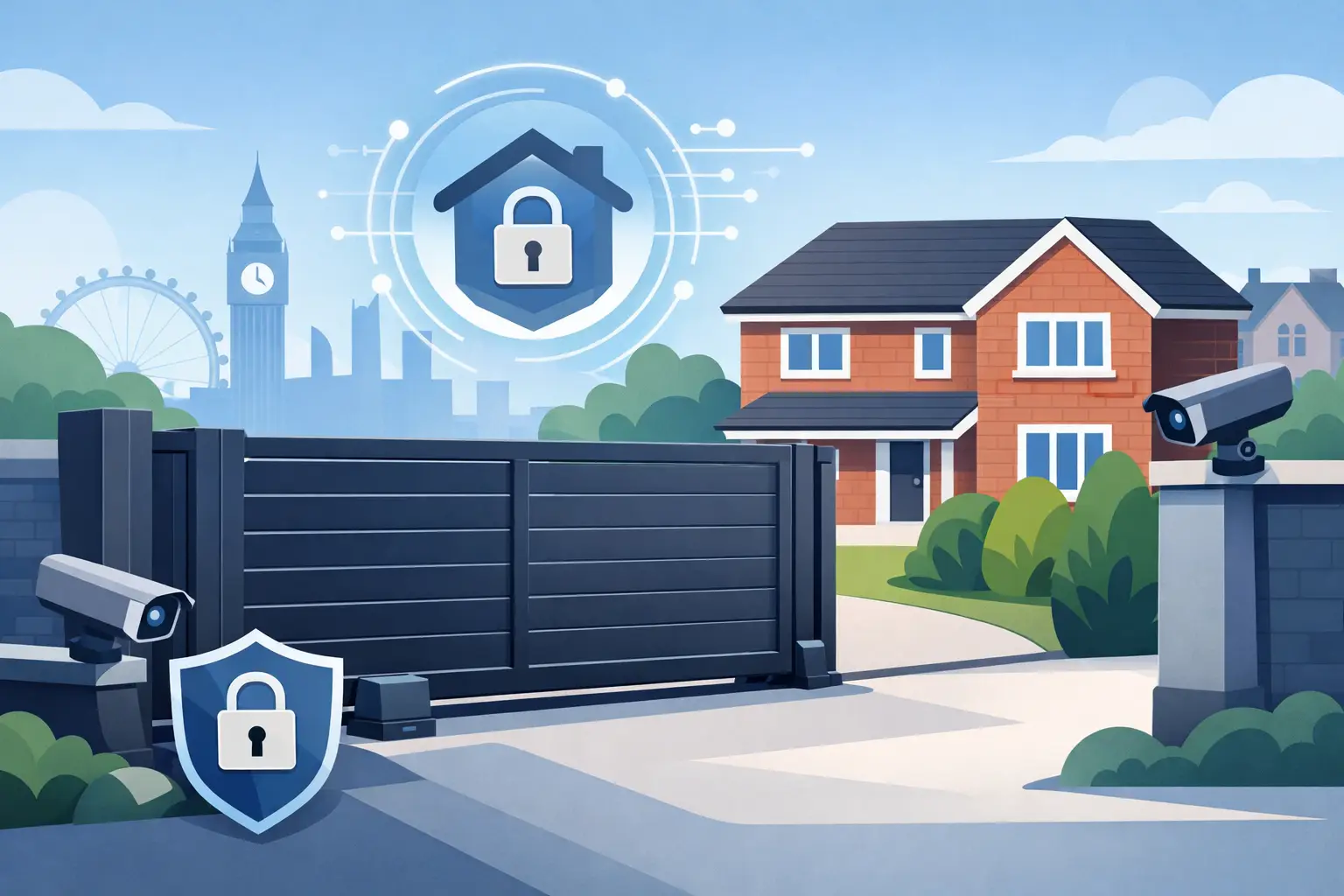
A driveway gate has a difficult job: it needs to look right at the front of the property while also creating a meaningful barrier to unwanted access. So, are sliding gates secure? When they are correctly specified, installed and fitted with suitable access controls, they can be an excellent security choice for homes, developments and commercial sites.
The key is to view security as a complete system rather than a feature you add at the end. The gate panel matters, but so do the track or cantilever arrangement, posts, foundations, motor, locking, access control and the way the gate is used every day. A well-designed sliding gate makes it harder to enter a site quickly, quietly or without permission.
Are sliding gates secure in practice?
Sliding gates are inherently well suited to securing a wide entrance. Instead of swinging into the driveway or towards the road, the gate travels horizontally along the boundary line. This makes them particularly practical where a sloping drive, limited set-back or parked vehicles would make swing gates unsuitable.
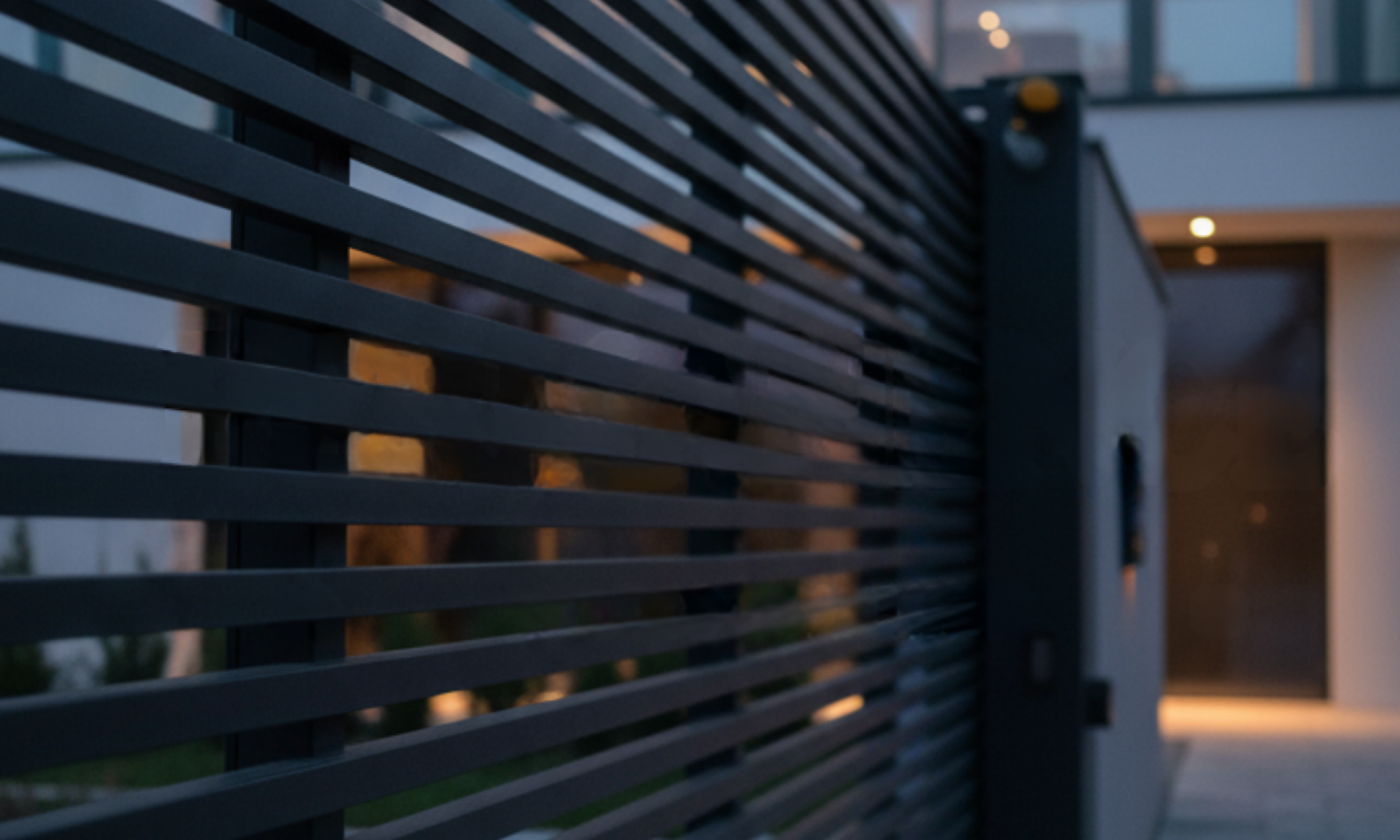
From a security point of view, a sliding gate can offer a controlled, continuous physical barrier across the entrance. A solid or closely boarded aluminium design also restricts views into the property, while a slatted design can balance privacy, airflow and a more open appearance. The right choice depends on whether your priority is privacy, visibility or architectural style.
However, no gate is secure simply because it slides. A lightweight gate on weak posts, poor foundations or an incorrectly aligned track can be vulnerable to damage and forced movement. Equally, an automated gate without controlled entry can still be opened by anyone with access to a remote control. Security comes from getting the full specification right.
What makes a sliding gate harder to breach?
A secure installation starts with a strong gate structure and a support system designed for its size, weight and operating method. Aluminium is a useful material here because it is strong for its weight and does not suffer from rust in the way untreated steel can. This helps the gate remain easier to operate over time, especially in exposed UK weather conditions.
The gate should be mounted on suitably engineered posts and foundations. These components transfer the loads created when the gate opens, closes and meets resistance from wind. They are not the place to compromise on cost. For a larger driveway or commercial opening, the foundation design and ground conditions should be considered before the gate is ordered.
For tracked sliding gates, the ground track must be securely fixed, correctly levelled and kept clear of debris. A poorly installed or neglected track can affect smooth operation and, in severe cases, allow the gate to be forced out of alignment. Cantilever sliding gates avoid a ground track altogether, using a counterbalanced gate that runs on support rollers. They are often chosen for uneven surfaces, locations with loose gravel or leaves, and entrances where a clear opening is needed for frequent traffic.
Anti-lift protection is another valuable detail. This prevents the gate from being lifted from its running gear or guide system. End stops, guide rollers and a secure receiving point at the closed position all contribute to making the gate more resistant to tampering.
A gate should also close firmly against a suitable closing post or catch. A gap large enough to reach through, release hardware or pass tools can weaken an otherwise good design. During planning, consider the gaps below, above and beside the gate as carefully as the panel itself.
Automation, locking and controlled access
An automated sliding gate is usually more secure than a manual gate that is regularly left open for convenience. It can be closed immediately after a vehicle enters, reducing the chance of an open driveway becoming an easy route onto the property.
Most automated systems use a motor with a gearbox that resists manual forcing when the gate is shut. Depending on the system and level of risk, further locking can be specified, such as an electric lock or magnetic locking arrangement. The best option depends on the gate design, wind exposure, traffic levels and how the entrance will be used.
Access control is where a gate becomes a managed entrance rather than just a barrier. A simple remote control is suitable for many private driveways, provided controls are kept secure and removed when occupiers or staff change. Keypads, proximity fobs, GSM calling and video intercoms provide more control where several people need access or visitors regularly arrive.
For homes, an intercom lets residents check who is at the entrance before releasing the gate. For flat developments, offices, yards and managed sites, it allows access rights to be issued, changed or removed without replacing physical keys. Akuvox intercom systems, for example, can combine visitor communication with video verification and gate release, helping property owners manage entry with greater confidence.
It is worth thinking about pedestrian access separately. If people routinely walk through the vehicle gate opening, the gate may be left open more often and experience unnecessary wear. A matching pedestrian gate with its own lock or access control can improve daily convenience and keep the main entrance closed.
Safety equipment supports reliable security
Gate safety and gate security are closely connected. An automated gate that frequently stops, reverses or is taken out of service will often be left open, defeating its purpose. Safety equipment helps the system work predictably while protecting people, vehicles and pets.
Photocells detect an obstruction in the gate opening, while safety edges can stop or reverse the gate if contact is detected. Warning lights and clear operating areas help users understand when the gate is moving. The exact safety package should be based on a site assessment, particularly on shared driveways, commercial premises and locations used by children or delivery drivers.
A professional installation partner will also allow for emergency release in the event of a power cut or motor fault. This must be accessible to authorised users but should not create an obvious weakness from the public side. Battery back-up can be worthwhile where uninterrupted access is essential, although it should be regarded as an additional measure rather than a substitute for a sensible emergency plan.
Choosing the right level of privacy and visibility
A solid sliding gate can make a property feel more private and can prevent opportunistic callers from seeing vehicles, equipment or activity beyond the entrance. For many homeowners, that is a genuine benefit. The trade-off is that a fully enclosed design can reduce sightlines when leaving the drive, particularly onto a narrow road or pavement.
Slatted aluminium gates offer a middle ground. The spacing, angle and orientation of the slats can be chosen to provide varying levels of screening while retaining a lighter visual appearance. Where visibility is important, a more open design may be appropriate, combined with good exterior lighting and an intercom so visitors do not need to approach the property itself.
Commercial sites may need a different balance. A site storing valuable stock may favour a taller, more enclosed gate and fencing system. A customer-facing premises may require controlled access without presenting an unwelcoming frontage. Bespoke manufacture gives more scope to match the gate height, infill style, colour and access equipment to the purpose of the site.
Common weaknesses to avoid
The most common issue is treating a sliding gate as a stand-alone purchase. Even a premium gate can underperform if the surrounding boundary is easy to bypass, the opening is wider than necessary, or the controls are poorly managed. Consider the whole perimeter, including side paths, fencing, walls and pedestrian entrances.
Avoid selecting a motor purely by price. It needs to be rated for the gate’s weight, length and expected number of daily cycles, with sufficient allowance for wind loading and real-world use. An undersized motor may struggle, suffer premature wear and leave the gate unreliable.
Routine checks are also worthwhile. Keep the running area clear, inspect the guides and safety devices, and arrange servicing in line with the automation manufacturer’s recommendations. Aluminium panels require very little upkeep compared with timber, but moving equipment still benefits from planned maintenance.
Finally, do not rely on a gate to solve every security concern. Lighting, visible signage where appropriate, sensible landscaping and secure building access all play a part. A sliding gate is strongest when it forms one layer within a considered security plan.
Getting a secure sliding gate specification
Before choosing a design, establish the clear opening width, available run-back space, ground levels and whether the gate will be manual or automated. Then consider who needs access, how frequently vehicles enter and leave, and whether visitors require a call point or video intercom. These answers determine whether a tracked or cantilever system, solid or slatted infill, and a particular automation package are the right fit.
For larger or more complex projects, it is sensible to involve an experienced supplier early. At Aluminium Gates Direct, sliding gate options can be tailored around the property, the required level of privacy and the practical demands of installation, with support available through nationwide installation partners.
The most reassuring gate is not necessarily the tallest or most expensive one. It is the one designed for the entrance, fitted properly and simple enough for the people using it to keep closed, controlled and dependable every day.