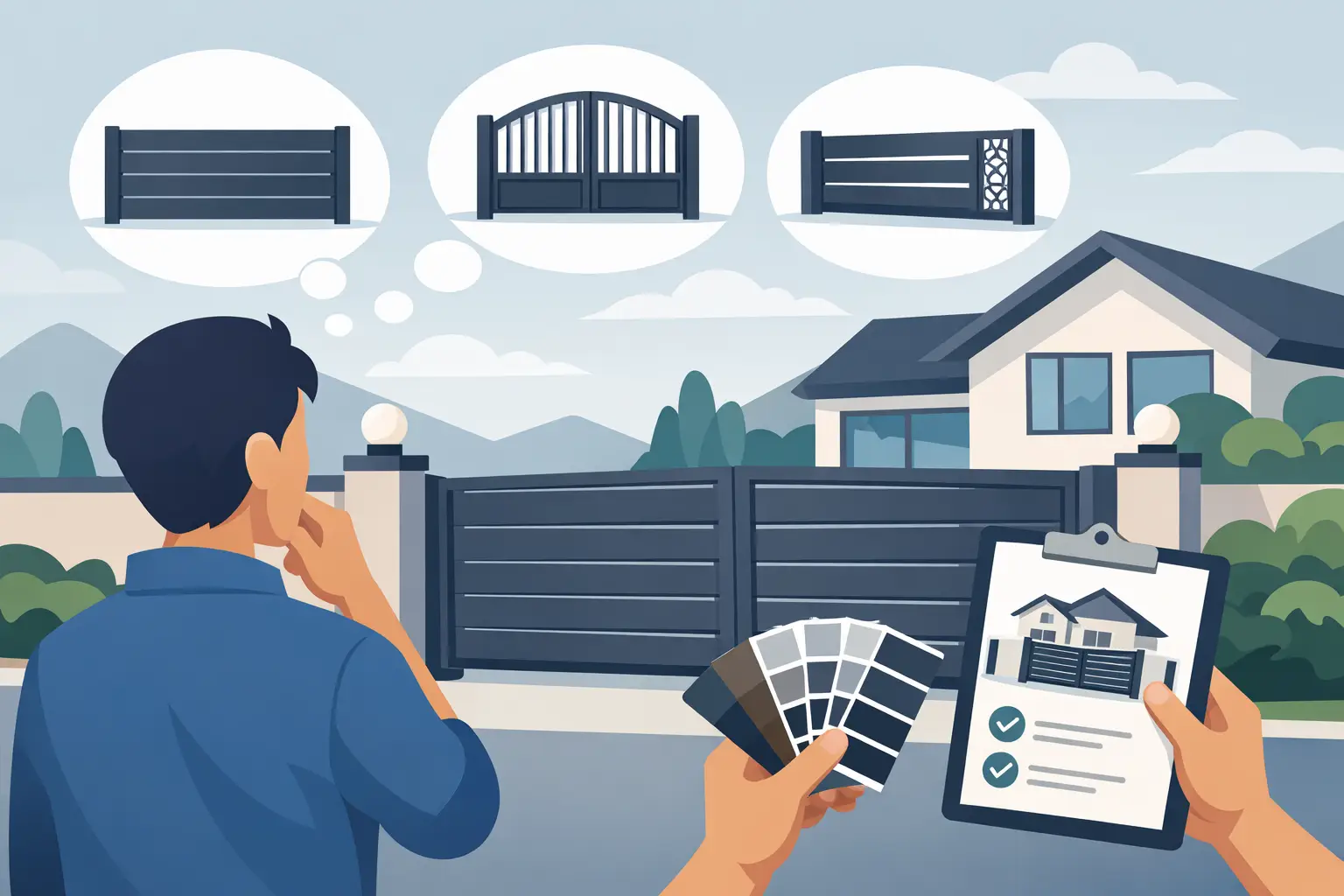
A driveway gate can improve security, change the look of your frontage and make day-to-day access easier – but only if you choose the right one. If you are working out how to choose aluminium driveway gates, the best place to start is not colour or style. It is how the gate needs to work for your property, your access needs and your budget.
Many buyers begin with appearance and then discover practical limits later. A design that looks right on paper may be too heavy in feel for a narrow entrance, unsuitable for sloping ground or awkward to automate. Aluminium gives you more flexibility than timber or steel because it is lightweight, strong and low maintenance, but the right specification still depends on the details.
How to choose aluminium driveway gates for your property
The most useful question is simple: what do you need the gate to do every day? For some households, the priority is privacy from the road. For others, it is safer access for children and pets, a smarter entrance for a renovation project or reliable automated entry for a busy driveway. Commercial buyers may put security, access control and repeated daily use at the top of the list.
Once that function is clear, the rest of the decision becomes easier. Gate type, height, infill style, automation and access control should all support the way the entrance is actually used, rather than just how it looks in a brochure.
Start with the opening width and site conditions
Measurements matter more than most people expect. The clear opening width, the available space behind the gate, the position of walls or piers, the driveway gradient and the road approach all affect what is possible. A pair of swing gates may suit a level entrance with good clearance, while a sliding gate may be the better choice where depth is limited or frequent access is needed.
Sloping driveways need particular care. A standard swing gate can become impractical if the ground rises sharply behind it. In that situation, a tracked or cantilever sliding gate may offer a cleaner solution, although it requires room to one side for the gate to travel. There is no one-size-fits-all answer here. The right option depends on how much space the site gives you and how the entrance is approached in real use.
Decide how much privacy and visibility you want
This is where style and function meet. Solid or closely boarded aluminium driveway gates offer stronger privacy and a more enclosed look. They can work well for homes on busy roads or for customers who want to screen parking areas from view. Open designs, including railings or decorative patterns, create a lighter appearance and allow visibility through the gate.
Neither is automatically better. A fully private gate can look striking, but on some properties it may feel too enclosed, particularly at the front of a smaller driveway. An open design can improve sightlines and feel more welcoming, but it provides less screening. Often, the best result sits somewhere in the middle – enough coverage for privacy, with enough openness to suit the property style.
Matching aluminium driveway gates to the building
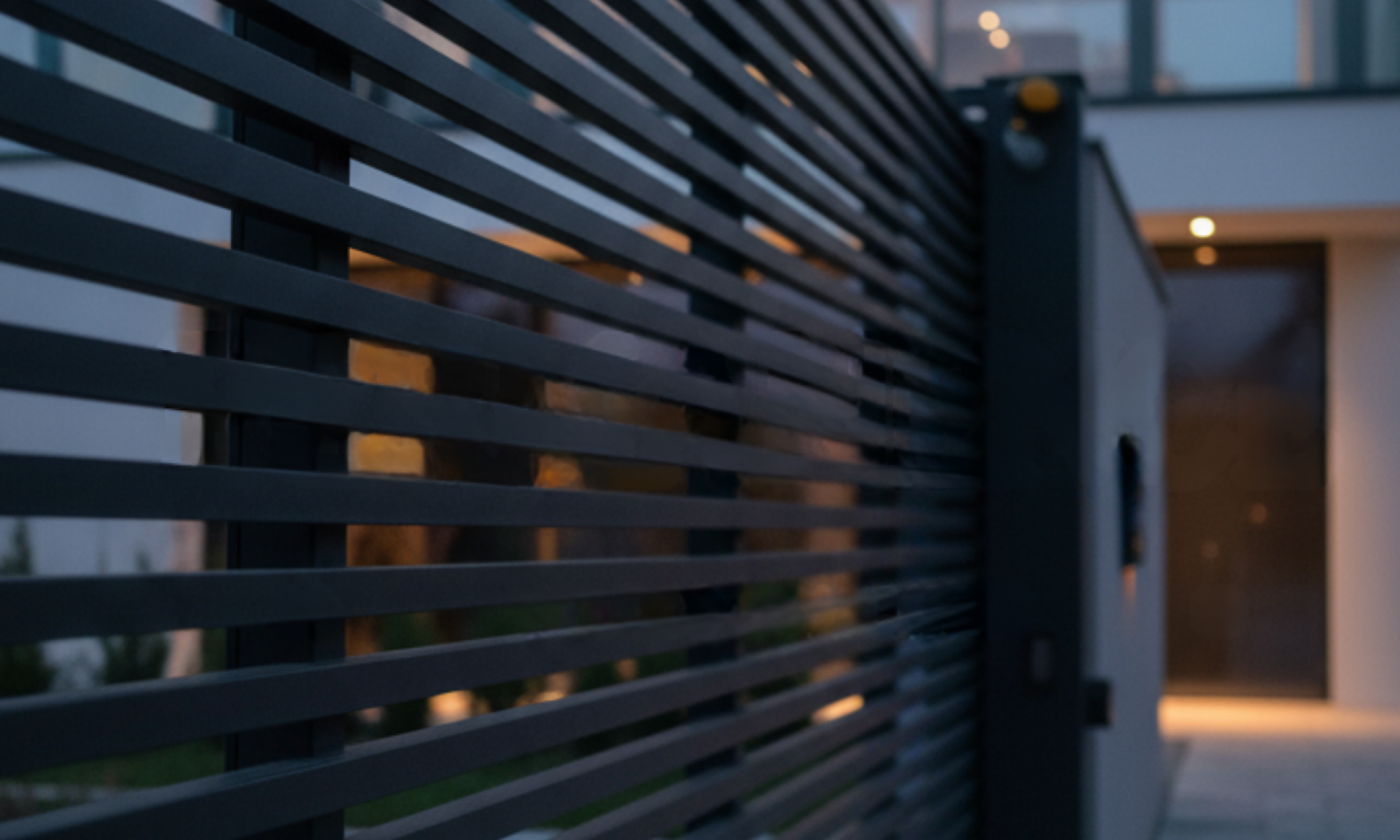
A gate should look like it belongs to the property, not like an afterthought. Modern homes often suit clean horizontal lines, simple framing and contemporary powder-coated finishes. Period or traditional properties may benefit from more decorative detailing, softer lines or an ornate design that complements existing brickwork, railings or boundary walls.
Colour also carries more weight than many buyers realise. Black, anthracite grey and other darker tones remain popular because they suit a wide range of properties and give a crisp, architectural finish. Lighter or bespoke colours can work very well too, especially where windows, doors or fencing are part of a coordinated exterior scheme. The key is consistency. The gate does not need to match everything exactly, but it should sit comfortably alongside the wider frontage.
If you are replacing an older timber or wrought iron gate, it helps to decide whether you want a similar look in a more durable material, or a complete change in style. Aluminium can do both. Some customers want a traditional appearance without the maintenance issues of painted timber or steel. Others want to modernise the entrance entirely.
Readymade or bespoke
This is often one of the biggest buying decisions. Readymade aluminium driveway gates can be a very good option when your opening size is standard, your design preferences are straightforward and speed matters. They can offer good value and a simpler route to installation.
Bespoke gates are usually the better fit when the entrance is an unusual size, the project has specific planning or design requirements, or you want a gate that ties closely into the architecture of the property. For developers, architects and commercial buyers, bespoke specification is often the practical choice rather than a luxury. It allows the gate to be designed around the site instead of asking the site to adapt to the gate.
How to choose aluminium driveway gates with the right level of security
Security means different things depending on the property. For a private driveway, it may be about creating a clear boundary and deterring casual access. For a larger home, flat development or commercial entrance, security may need to work alongside automation, intercom entry and controlled vehicle access.
Height, design and locking method all play a part. Taller gates generally offer greater security and privacy, but they also create a stronger visual impact. A lower gate may be enough in a quiet residential setting where the main goal is boundary definition and kerb appeal. If security is a priority, think about the full entrance package rather than the gate alone. Posts, hinges, locking systems, access control and automation all need to be specified properly.
That is one reason aluminium is often a sensible long-term choice. It gives you strength without the unnecessary weight that can complicate handling and automation. Lightweight construction can also reduce strain on motors and hardware when the system is used regularly.
Think carefully about automation
Manual gates are still the right answer for some entrances, especially where use is occasional or budget is tight. But many buyers now see automation as part of the core specification rather than an upgrade. If you are arriving home in poor weather, managing deliveries or controlling access to a shared or commercial site, automated opening quickly becomes more than a convenience.
The important point is to decide early. Retrofitting automation later is possible in some cases, but it is usually better to choose a gate that is designed with automation in mind from the start. The opening style, hinge arrangement, power supply and safety requirements all need consideration. If intercom access is required, that should also be planned at the same stage so the system works as one joined-up entrance solution.
Budget, maintenance and long-term value
Price matters, but the cheapest gate on day one is not always the best value over time. Aluminium typically costs more upfront than some lower-spec alternatives, yet it can save money and hassle in the years ahead because it does not rust like steel and does not need the regular painting, staining or repair work often associated with timber.
That low-maintenance benefit is one of the main reasons homeowners and trade buyers move to aluminium. For residential customers, it means less upkeep and a smart appearance that lasts. For developers and commercial sites, it means reduced maintenance demands across multiple properties or high-use entrances.
It is worth looking at the total package when comparing costs. Product quality, finish, customisation, delivery, installation support and automation options all affect value. A gate that fits properly, performs reliably and needs very little attention can be the more economical choice even if the initial spend is higher.
Do not overlook installation support
Even a well-made gate can disappoint if it is badly fitted or poorly specified for the site. That is why advice at the selection stage matters. Buyers often focus on style and dimensions, but professional support around measurements, opening method, posts, hardware and automation can prevent expensive mistakes.
For customers buying nationwide, the best suppliers do more than sell a product. They help shape the right solution and, where needed, connect the project to suitable installation support. That is especially valuable for bespoke gates, automated entrances and commercial applications, where performance depends on the whole system working properly together.
A good supplier should be clear about what is included, what is optional and what depends on the site. Transparent pricing and honest guidance are often a better sign of value than a headline figure that leaves too many questions unanswered.
If you are weighing up designs, sizes and access options, take a step back and think about everyday use first. The right aluminium driveway gate should suit the property, stand up to the weather, work smoothly and feel like a sensible long-term investment rather than a compromise made in haste. If you are unsure where to start, speaking to a specialist such as Aluminium Gates Direct can help turn a wide set of choices into a clear, practical recommendation.