
A gate that looks the part but slows down daily life soon becomes frustrating. That is why home gate access control needs to do more than add security. It should suit how your household actually arrives, leaves, receives visitors and manages deliveries, while working reliably in all weathers and without adding unnecessary complexity.
For some homes, a simple keypad and electric gate are enough. For others, video intercom, app-based entry, timed access and integration with pedestrian gates make far more sense. The right choice depends on the layout of the property, who uses the entrance, how often access is needed and how much control you want when you are away from home.
What home gate access control really needs to do
At its most practical, home gate access control has three jobs. It should help you manage entry, improve security and make access more convenient for the people who belong there. The balance between those three points matters.
A family home on a busy road may prioritise quick vehicle access and clear visitor screening. A larger rural property may need long-range communication from the gate to the house and reliable operation over a greater distance. A development project may focus on a smarter appearance, lower maintenance and a system that future owners can use without a learning curve.
That is where many buying decisions go wrong. People often start with the control method – keypad, fob, intercom or app – before looking at the gate itself, the opening style and the day-to-day use case. In reality, the access control system should be specified as part of the wider gate setup, not added as an afterthought.
Matching home gate access control to the gate type
The way a gate opens has a direct effect on the access control options that are practical. Swing gates and sliding gates can both be automated and controlled remotely, but site conditions shape what works best.
Swing gates are often a good fit for driveways with enough clearance and a traditional residential look. They work well with intercom entry, keypads and remote controls, and they can be designed to suit both contemporary and more ornate properties. Sliding gates are often chosen where space is tighter, where the entrance is on a slope, or where a more compact opening movement is needed.
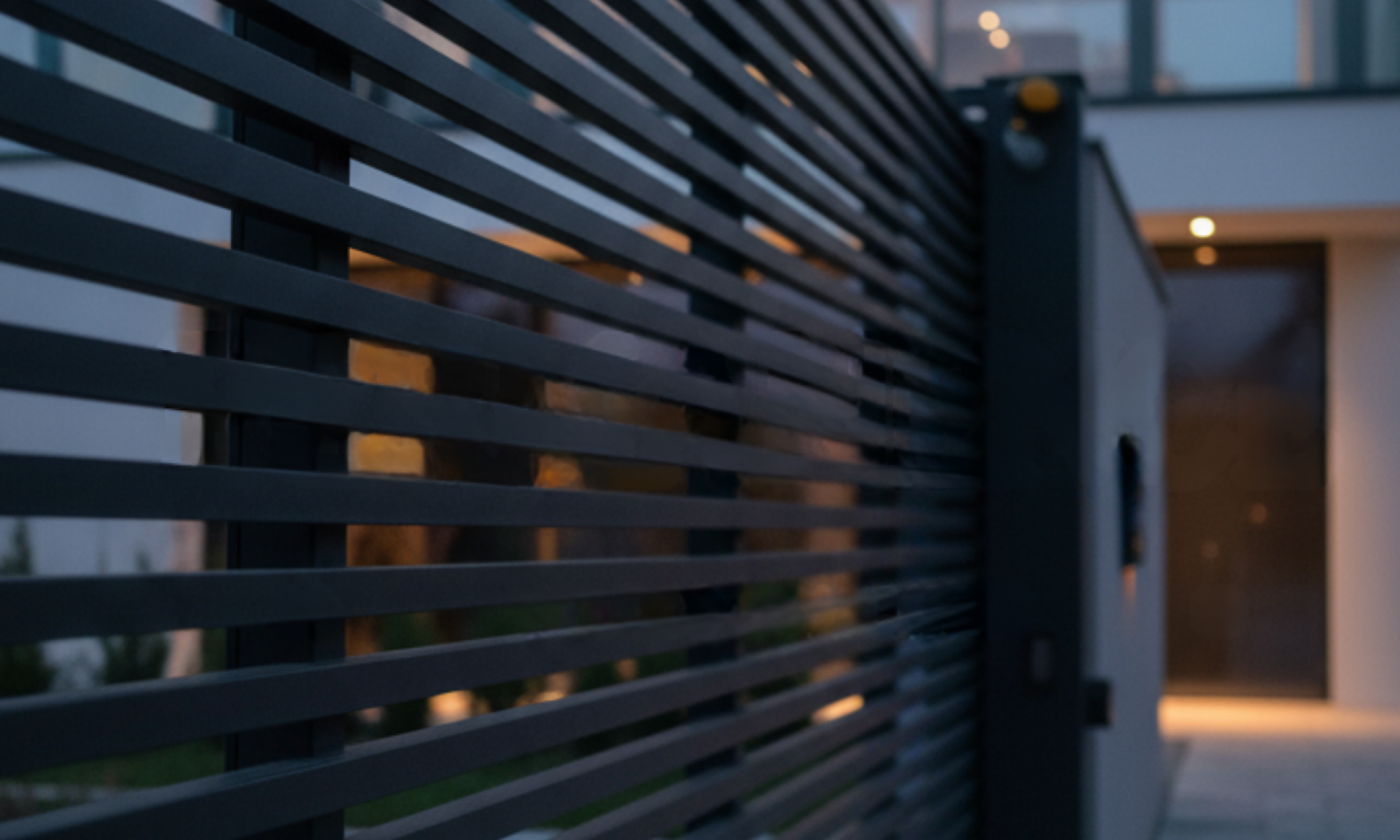
The gate material matters too. Aluminium is particularly well suited to automated access because it is lightweight, strong and low maintenance. That lower weight can reduce strain on automation components over time compared with heavier alternatives, while still giving a high-end finish. For homeowners and developers, that usually means a better long-term balance between appearance and practicality.
The main types of home gate access control
There is no single best system for every property. The better question is which method gives you the right level of control without making everyday access awkward.
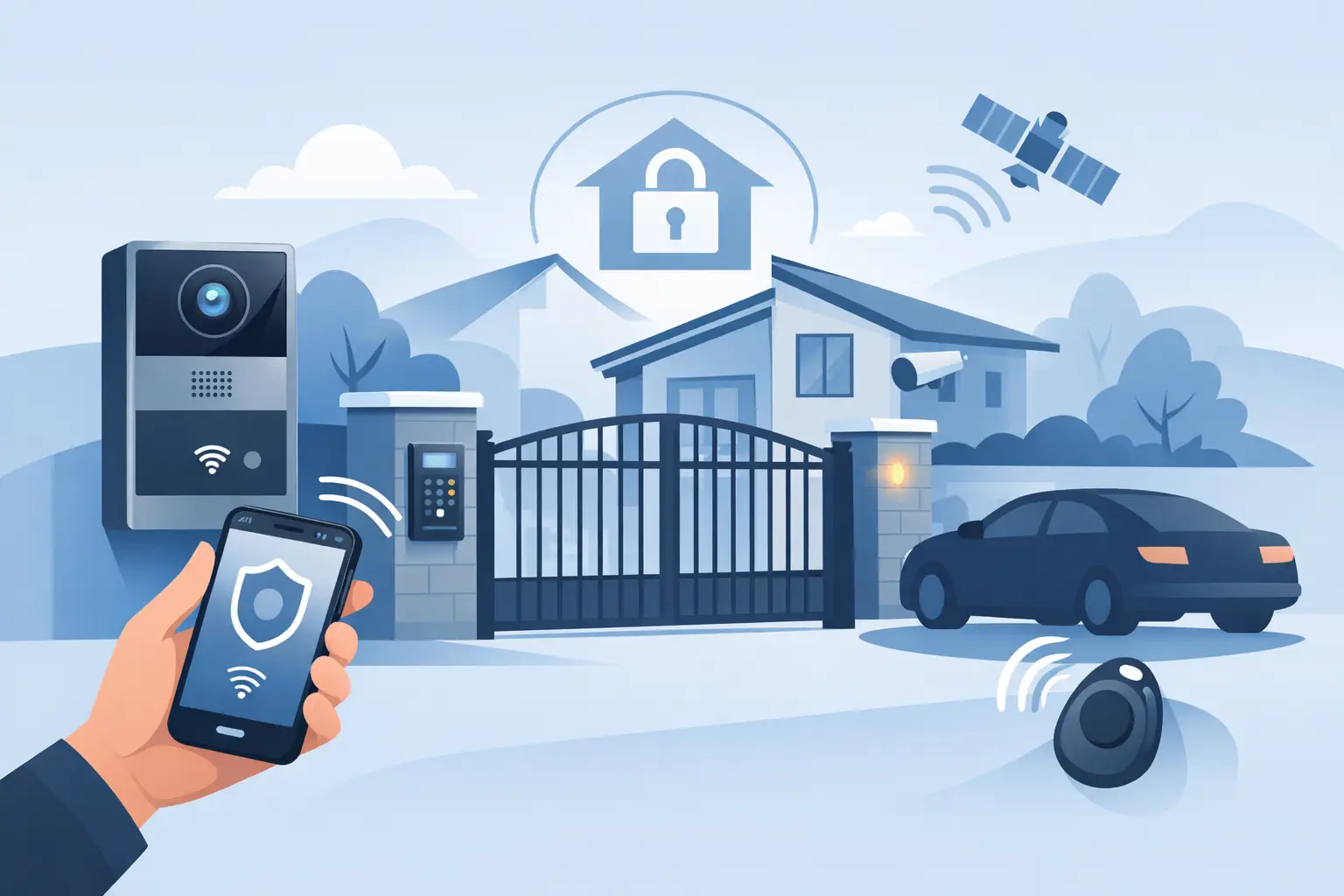
Keypads and coded entry
A keypad is one of the simplest and most familiar options. It allows residents or approved visitors to enter using a code, which makes it useful for households that do not want to hand out multiple remotes or keys.
The advantage is straightforward access and relatively simple operation. The trade-off is that codes can be shared more easily than physical credentials, so they may need changing from time to time, especially if builders, cleaners or short-term visitors have used them.
Remote controls and fobs
Remote entry remains popular because it is fast and convenient, particularly for regular vehicle access. Pressing a button from the car is still one of the easiest ways to use an automated driveway gate.
The downside is that remotes can be lost, damaged or left in the wrong vehicle. They are often best used as part of a wider setup rather than as the only access method.
Audio and video intercoms
An intercom system adds a more controlled layer of access. Instead of simply entering a code, visitors can call through to the house and request entry. Video intercoms go further by letting you see who is at the gate before opening it.
For many homeowners, this is where convenience and security meet properly. It is especially useful for deliveries, unknown callers and homes where the gate is some distance from the front door. Akuvox intercom systems, for example, are often specified where customers want a more modern and dependable way to manage visitors.
App-based and smart access
Smart access systems let you open the gate from your phone, receive alerts or manage entry when you are not at home. This can be very useful if children arrive home before you, a delivery is expected, or access needs to be granted to a contractor.
It can also introduce extra reliance on connectivity and user confidence with technology. For that reason, smart access is usually best when paired with a backup method such as a keypad, remote or manual release.
Where homeowners should be careful
Good home gate access control is not about choosing the most advanced kit on the market. It is about avoiding the points where inconvenience, poor specification or weak installation create problems later.
One common issue is underestimating usage. A gate used a few times a day has different demands from one opening constantly for family members, visitors and deliveries. Another is overlooking the need for safe, separate pedestrian access. If people are regularly walking through the main driveway gate because there is no better option, the setup may not be working as well as it should.
There is also the question of power, cabling and communication. Long driveways, older properties and retrofit projects can all affect the installation approach. Wireless options can help in some cases, but they are not always the right answer. It depends on the site, the distances involved and how reliable the system needs to be over the long term.
Safety, compliance and day-to-day reliability
Any automated gate setup needs to be treated seriously from a safety perspective. Access control is only one part of the picture. The gate, motor, control equipment and safety devices all need to work together correctly.
That means proper specification, suitable safety features and professional installation. Photocells, safety edges and obstacle detection are not optional extras in a well-planned system. They are fundamental to safe operation.
Reliability matters just as much. A system that looks impressive on day one but becomes temperamental in winter or awkward for guests will not feel like a good investment. Low-maintenance materials, quality automation components and sensible control choices usually outperform overcomplicated setups.
Cost versus value in home gate access control
Budget matters, but the cheapest route is not always the most economical. A lower-cost gate with basic control may be right for one property, while another may benefit from a bespoke aluminium gate, integrated automation and video entry from the start.
The real value comes from choosing a system that suits the property and reduces compromise. If access is easier, the entrance looks better, maintenance is minimal and the equipment is built to last, the investment tends to make more sense over time.
This is especially true when the gate is a visible part of the frontage. Security is one factor, but so is presentation. A well-designed automated aluminium gate can improve kerb appeal while giving homeowners far better control over who enters the property.
Getting the specification right from the start
The best results usually come from asking practical questions early. Who needs access every day? How many vehicles use the entrance? Is there a separate pedestrian route? Do you want to answer calls from inside the house only, or remotely as well? Is the gate primarily for privacy, security, appearance or all three?
Those answers shape the right system far better than choosing equipment based on trends. They also help determine whether a readymade option will do the job or whether a bespoke gate and access control package is the better fit.
For customers planning a new entrance or upgrading an older one, expert guidance makes the process far more manageable. Aluminium Gates Direct supports homeowners, developers and trade buyers with product selection, automation options and installation support through a nationwide partner network, helping each project land on a solution that fits both budget and site requirements.
A well-chosen access control system should feel easy from the first week and stay that way years later. If the gate suits the property, the controls suit the people using it and the installation has been properly planned, you are far more likely to end up with an entrance that works as well as it looks.