

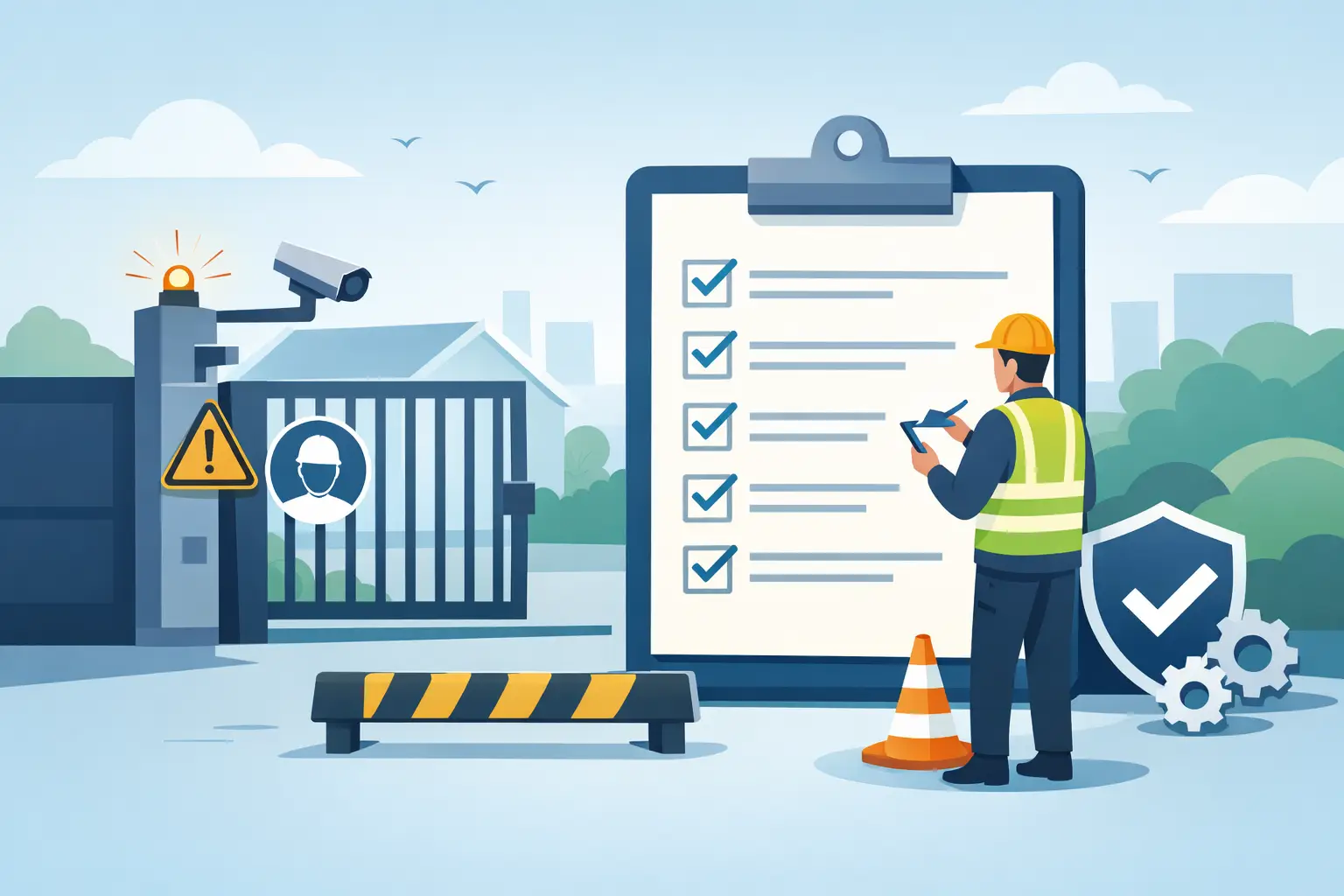
A gate that looks right on paper can still create problems on site. We see this most often when a manual or automated gate is chosen for appearance first, then the safety details are left until installation day. A proper gate safety compliance checklist helps avoid that. It gives homeowners, developers and site managers a clearer way to assess risk, meet UK expectations and choose a gate system that works safely in daily use.
Why a gate safety compliance checklist matters
Gate safety is not just about whether the gate opens and closes. It is about how it moves, who uses it, what sits around it, and what could go wrong when the gate is in operation. That applies to residential driveways, shared developments, schools, commercial yards and managed properties alike.
The main issue is that every site is slightly different. A domestic driveway with occasional use has different demands from a busy commercial entrance with delivery traffic, pedestrians and access control. That is why a checklist matters. It turns a broad safety duty into practical questions that can be answered before a gate is ordered, automated or handed over.
For many buyers, the safest route is to think about compliance at the specification stage, not after the gate has been manufactured. Material choice, gate size, hinge positions, automation type and control systems all affect the finished result.
Start with the type of gate and how it will be used
The first part of any gate safety compliance checklist should cover the basics of the opening. Is the gate manual or automated? Is it a swing gate or a sliding gate? How often will it be used, and by whom?
Those questions sound simple, but they shape almost every other safety decision. A manually operated pedestrian gate may need little more than sound construction, stable posts, suitable hinges and safe latch positioning. An automated driveway gate serving multiple users needs much more careful planning, especially where vehicles and pedestrians share the same space.
Usage matters as much as gate style. A private gate used by one household is different from a gate at a block entrance, a warehouse yard or a school. Higher traffic levels usually mean greater wear, more chance of misuse and a stronger need for controlled access and routine maintenance.
Site layout is where many risks begin
Before installation, the physical environment should be checked properly. This includes the width of the opening, available run-back space for sliding gates, ground levels, drainage, wall positions and any nearby structures.
For swing gates, you need to know whether the leaves can open safely without entering a public footpath or creating a hazard for parked vehicles. For sliding gates, the travel area must be clear and designed so fingers, hands or clothing cannot become trapped.
Pedestrian routes deserve special attention. If people are likely to walk near or through the same entrance used by vehicles, separation should be considered wherever possible. In some cases, a separate pedestrian gate is the safest option. It often improves convenience as well.
Visibility is another point that is easy to overlook. If drivers cannot see approaching pedestrians, cyclists or road users clearly, the gate layout may need rethinking. Safety is not only about the gate leaf itself. It is also about what users can and cannot see while the gate is operating.
The gate structure must be fit for purpose
A compliant installation starts with a gate that is suitable for the opening and the level of use. The frame, infill, posts, hinges, track system and fixings all need to be strong enough for the job.
This is one reason aluminium is often a practical choice. Its lighter weight can reduce strain on hinges, posts and automation equipment when compared with heavier materials, while still providing strength, durability and low maintenance. That does not remove the need for proper design, but it can support a safer, more manageable installation over time.
Attention should also be paid to sharp edges, gaps and climbing points. Decorative features may suit the design of a property, but they should not introduce unnecessary risk. The same applies to gate height and infill spacing, particularly where children may be present.
Automated gates need a higher level of checking
If the gate is powered, the safety review becomes more detailed. Automation introduces moving forces, control systems and the potential for impact, crushing, trapping or shearing hazards. A gate should never be automated as an afterthought without reviewing whether the original design is suitable.
A practical gate safety compliance checklist for automated systems should look at hazard zones across the full travel of the gate. That includes hinge areas, closing edges, run-back areas, support posts and any points where a person could be drawn in, trapped or struck.
The control method matters too. Keypads, fobs, intercom entry, push buttons and timed closing all affect how safely the gate is used. For example, an automatic closing feature may be convenient, but if the site has slow-moving pedestrians or regular delivery access, settings and safety devices need to reflect that reality.
Safety devices should be selected based on the actual risks present. Depending on the system, this may include photocells, safety edges, force limitation and emergency stop arrangements. The right combination depends on the gate type and site conditions. There is no single setup that suits every entrance.
Installation quality is part of compliance
Even a well-made gate can become unsafe if it is installed poorly. Posts set incorrectly, misaligned hinges, inadequate foundations or badly positioned motors can all create safety issues from day one.
That is why installation should be treated as part of compliance, not a separate practical step. Gates need to be fitted squarely, supported properly and tested through their full movement. Automation equipment should be commissioned carefully, with safety devices checked and settings verified.
For commercial and higher-risk sites, documentation is especially important. Buyers should expect clarity on the system supplied, the safety measures included and the responsibilities for ongoing inspection and maintenance. A reliable supplier and installation partner should be able to explain this in plain English.
Maintenance and inspection cannot be ignored
Compliance does not end once the gate is installed. Wear, weather, impact damage and changes in site use can all affect safety over time. A gate that was suitable at handover can become unreliable if maintenance is delayed.
Manual gates should be checked for movement, hinge wear, loose fixings, latch function, post stability and signs of distortion or corrosion on associated components. Automated gates require a broader inspection that includes motors, controls, safety devices and operating forces.
The more heavily a gate is used, the more important a planned maintenance routine becomes. Commercial sites, multi-user developments and managed properties should not rely on a reactive approach. Regular servicing is a practical way to reduce risk and protect the life of the system.
It is also sensible to record inspections and repairs. This is particularly relevant where duty of care sits with a landlord, managing agent, employer or site operator.
A practical gate safety compliance checklist for buyers
When reviewing a new or existing installation, the key questions should be straightforward. Is the gate type right for the opening and traffic levels? Is the structure suitable for safe daily use? Have pedestrians been considered properly? Are pinch points, crushing areas and other hazards identified and addressed? If the gate is automated, are the control methods and safety devices appropriate to the site? Has the system been installed and tested correctly? Is there a realistic plan for maintenance and inspection?
If any of those answers are uncertain, more review is needed before moving ahead. That is particularly true where a gate is being retrofitted with automation or where site use has changed since the original installation.
Compliance is easier when specification comes first
Many safety problems begin with a mismatch between the gate, the opening and the way the entrance will actually be used. Choosing a system purely on style or price can lead to compromises later, especially if automation, access control or heavy daily use is involved.
A better approach is to specify the gate around the site. That means considering width, clearance, gradients, frequency of operation, user type, privacy, access control and maintenance expectations before final design decisions are made. It often saves time and cost in the long run because fewer changes are needed once installation starts.
At Aluminium Gates Direct, that early-stage thinking is a big part of getting the right result. Whether the project is a domestic driveway gate or a commercial entrance with automation and intercom access, the safest option is usually the one that has been matched properly to the site from the outset.
If you are reviewing a gate project now, treat the checklist as a decision tool rather than a paper exercise. The right questions asked early can make the whole installation safer, simpler and more dependable for years to come.