If you are planning a new entrance gate or upgrading an existing one, one question usually comes up early – can aluminium gates be automated? The short answer is yes. In many cases, aluminium is an excellent material for gate automation because it is lightweight, strong and resistant to rust, which helps the system work efficiently over time.
That said, successful automation is not only about the gate material. The gate style, opening method, site layout, ground levels, usage levels and access control all affect what is possible. A well-made aluminium gate can be a very good candidate for automation, but the right setup still depends on the property and how the gate will be used.
Why aluminium gates work well with automation
One of the main reasons aluminium gates are so often paired with automation is weight. Compared with many steel gates, aluminium gates are lighter, which can reduce strain on motors, hinges, rollers and support posts. That can be especially helpful on wider domestic driveway gates or on entrances that are used several times a day.
Lighter does not mean flimsy. A properly designed aluminium gate can still offer the strength and rigidity needed for secure, long-term use. For homeowners, that means the gate can look smart and operate smoothly without the ongoing upkeep that often comes with timber or untreated steel. For commercial sites, it can mean a practical combination of appearance, durability and dependable access control.
Another benefit is low maintenance. Automation systems rely on consistent movement. When gates begin to swell, warp, corrode or drag, motors have to work harder and faults become more likely. Aluminium avoids many of those common issues, which makes it a sensible long-term option when automation is part of the plan.
Can aluminium gates be automated on any property?
In principle, yes, but the better answer is that automation needs to be matched to the site. Some properties are straightforward. Others need more planning.
A level driveway with good pillar positions, clear opening space and a nearby power source is usually simple to automate. A sloping drive, restricted entrance, exposed coastal setting or high-traffic commercial site may require a more tailored approach. That does not mean automation is off the table. It means the gate and motor system need to be chosen properly from the start.
This is where many buyers benefit from specialist advice. The gate itself might be suitable, but the wrong operator, poor hinge geometry or unsuitable access controls can create unnecessary problems later.
Swing or sliding – which automated aluminium gate is right?
Automated aluminium swing gates
Swing gates are a popular choice for residential driveways and private entrances. They can be automated with above-ground motors, underground motors or articulated arm systems, depending on the gate design and the available space.
They work best where there is enough room for the gates to open freely and where ground levels allow smooth movement. If the driveway rises sharply behind the gate, this may affect the opening arc and the type of automation that can be used. In some cases, opening outwards may be considered, but that depends on the site and must be assessed carefully.
For many homeowners, swing gates offer a traditional appearance with straightforward automation. Aluminium makes them easier for motors to handle, particularly on larger leaf sizes.
Automated aluminium sliding gates
Sliding gates are often the better option where space is tight or where a driveway slope makes swing gates impractical. Instead of opening inwards or outwards, the gate runs across the entrance on a track or cantilever system.
For commercial premises, larger properties and sites with frequent vehicle movement, sliding gates can be very effective. They are often chosen for their practical operation and controlled access. Aluminium is well suited here too, as reduced gate weight can support smoother travel and efficient motor performance.
The key consideration is side room. A sliding gate needs enough space to retract fully, so the layout of walls, fencing and landscaping matters.
What is needed to automate an aluminium gate?
If you are asking can aluminium gates be automated, it helps to understand what the full system includes. The gate is only one part of it.
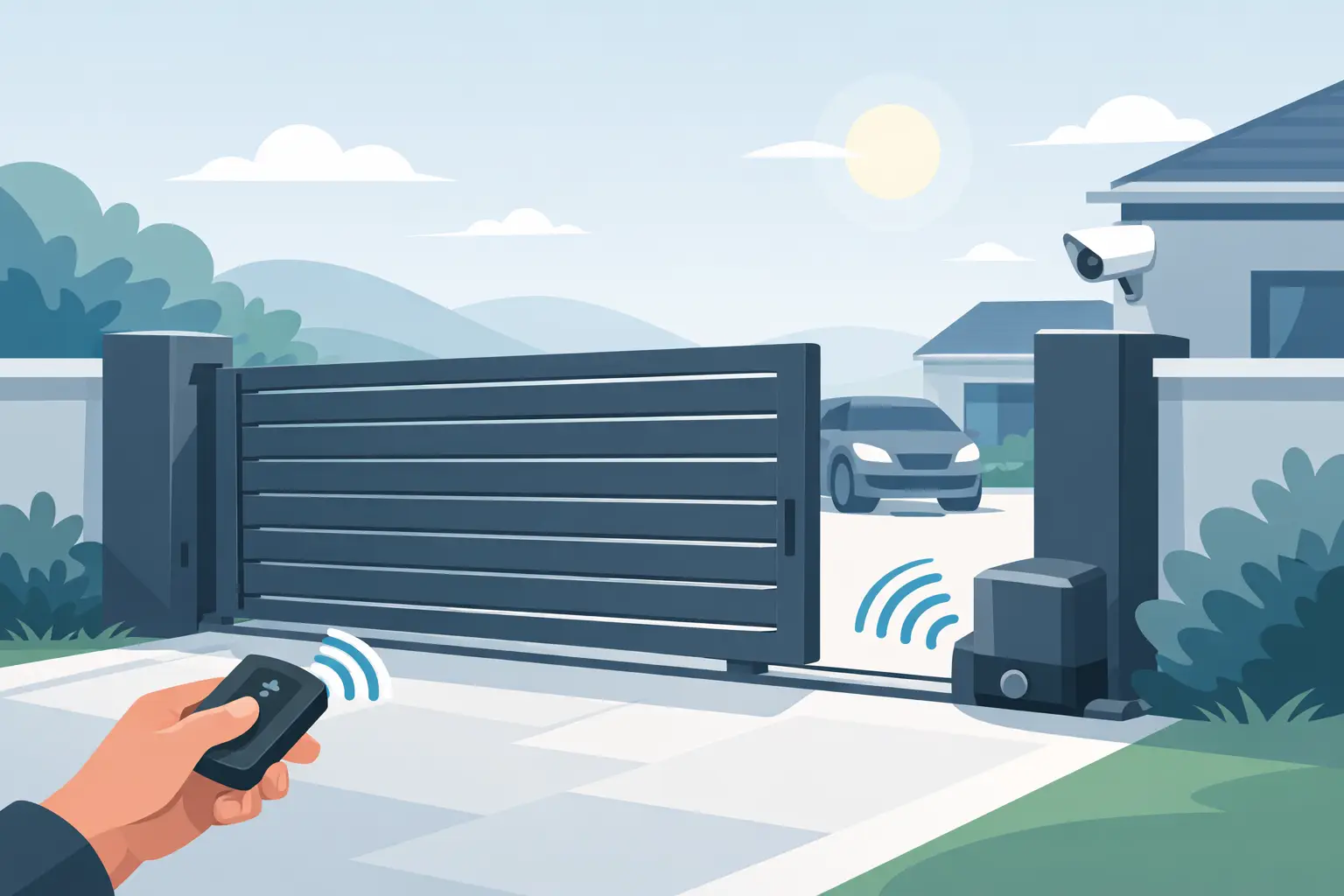
A typical automated setup will involve the gate leaves or gate panel, the posts or support structure, hinges or track hardware, motors, control board, safety devices and a method of entry. That entry method could be remote controls, keypad access, GSM entry, fobs or an intercom system.
Power supply is another key factor. Mains-powered automation is common, but solar can be considered on some sites if conditions are right and usage is suitable. Solar is not always the best option in the UK, especially where gate use is frequent or sunlight is inconsistent, so it needs realistic assessment rather than guesswork.
Safety is essential. Automated gates should include the correct safety measures, such as photocells, obstacle detection and force settings that meet current requirements. This is not an area for shortcuts.
Retrofitting automation to existing aluminium gates
It is often possible to automate existing aluminium gates, provided the gates are in good condition and were made or installed with automation in mind. The posts need to be secure, the gates must be aligned correctly and the hardware must be suitable for powered operation.
If an existing gate is too light in structure, poorly braced or badly fitted, adding motors may not solve the real issue. In those cases, replacing the gate or adjusting the support structure may be the better long-term choice.
This is particularly relevant when buyers already have manual gates and want to upgrade later. Retrofitting can work well, but it depends on build quality and site preparation. A proper assessment is worth having before ordering automation equipment.
Access control options for automated aluminium gates
Automation is not only about opening and closing the gate. It is also about how people use it day to day.
For a private home, simple remote controls may be enough. If parcels, visitors and deliveries are common, an audio or video intercom can make access more convenient and secure. On larger homes or multi-user properties, keypad entry, app-based access or GSM calling systems may be more useful.
For commercial sites, access control usually needs more planning. Staff entry, timed access, delivery management and visitor screening can all shape the specification. A gate that looks right but lacks the right control system can become frustrating very quickly.
That is why gate design and automation should be considered together. The best result is usually a complete entrance solution, not separate parts chosen in isolation.
Common concerns about automating aluminium gates
One concern is whether aluminium is strong enough for heavy-duty use. In practice, well-manufactured aluminium gates are used successfully across residential and commercial settings. The strength comes from the design, fabrication and installation, not just the raw material alone.
Another question is whether automation makes maintenance more complicated. In reality, aluminium can make gate ownership simpler because the gate itself needs very little routine upkeep. The automation system still requires servicing and occasional checks, but the gate is less likely to create avoidable issues through rust or movement.
Buyers also ask about appearance. Some worry that automated gates will look overly industrial. That depends entirely on the design. Aluminium gates can be modern, traditional, ornate or minimal, and automation can often be integrated without spoiling the overall look.
When automation may need a more bespoke approach
Some entrances are straightforward and others are not. Very wide openings, uneven ground, heavy commercial use, awkward brickwork or exposed rural locations can all affect the final specification. In those situations, bespoke aluminium gates are often the better route because dimensions, infill style, frame strength and automation compatibility can all be designed to suit the site.
This is one of the main advantages of working with a specialist supplier. Instead of trying to force a standard gate into an unsuitable opening, the gate and automation can be planned around the actual requirements. For buyers across the UK, that can save time, reduce installation problems and lead to a better result overall.
At Aluminium Gates Direct, this is usually the most practical way to approach automation – start with the property, the usage and the customer’s budget, then match the gate type and control system accordingly.
So, can aluminium gates be automated reliably?
Yes – and very often they can be automated very effectively. Aluminium is one of the most practical materials for automated gates because it combines strength with lower weight and minimal maintenance. That gives both homeowners and commercial buyers a strong starting point.
The key is making sure the gate is properly specified for the opening, the automation is suited to the way the entrance will be used, and the installation is handled correctly. If you get those parts right, an automated aluminium gate can offer convenience, security and a clean, durable finish for many years.
If you are weighing up manual versus automated options, the best next step is not guessing based on the gate alone. It is looking at the full entrance setup and choosing a system that fits your property properly from day one.