
A side entrance that sticks, rusts or drags on the paving becomes a daily frustration far sooner than most buyers expect. That is why aluminium pedestrian access gates are often one of the most practical upgrades for homes, shared developments and commercial sites alike. They give you a secure, smart-looking access point without the upkeep that comes with timber or the corrosion concerns that can affect steel in exposed locations.
For many buyers, the challenge is not whether to have a pedestrian gate but which type will work best for the property, the people using it and the level of security required. A gate that suits a private garden path may be very different from one needed for a bin store, a side alley, a school entrance or a managed commercial perimeter. Getting the basics right early tends to save time, cost and compromise later.
Why choose aluminium pedestrian access gates?
The main appeal of aluminium is straightforward. It is lightweight, strong and designed for long-term outdoor use with very little maintenance. In practical terms, that means no regular sanding, staining or repainting, and far less concern about warping, rot or heavy corrosion.
That combination matters in the UK climate. Gates have to cope with rain, frost, changing temperatures and everyday use. A material that stays stable and presentable with minimal effort is a sensible choice for busy homeowners and for site managers who do not want ongoing maintenance to become another line on the job list.
Appearance also plays a part. Aluminium pedestrian gates are available in a wide range of styles, from clean modern lines to more decorative designs, so they can complement contemporary homes, period-style properties, flat schemes and commercial premises. Powder-coated finishes help maintain a consistent appearance over time, which is especially useful where the gate forms part of a broader fencing or railing scheme.
Where aluminium pedestrian access gates work best
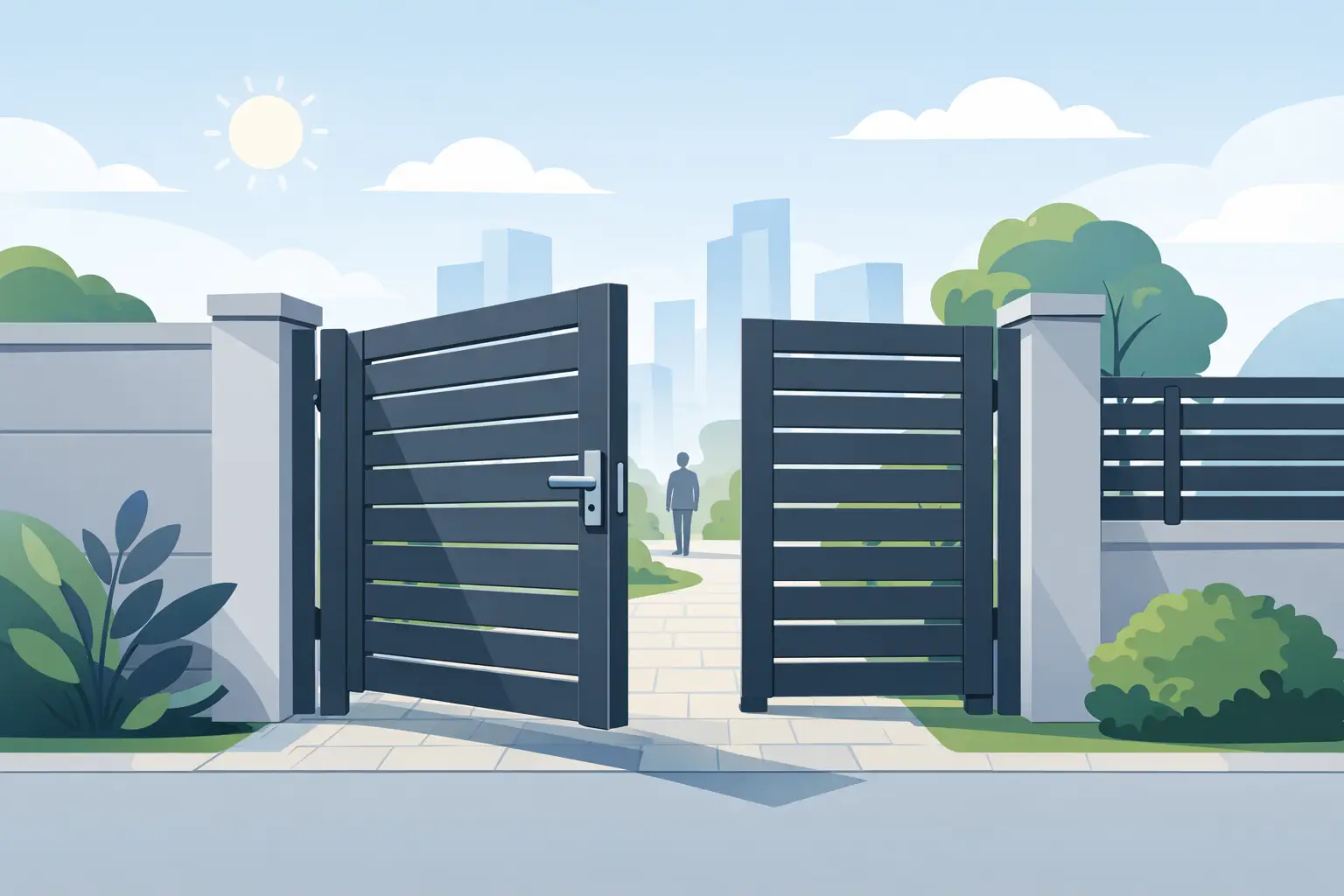
These gates are a good fit wherever controlled foot access is needed. On residential properties, they are often used for side passages, garden boundaries, rear access routes and entrances between driveway gates and fencing. They help create a clear boundary while making daily entry and exit simple.
For developers and trade buyers, pedestrian gates are often specified as part of a complete perimeter package. This could include fencing, railings, larger vehicle gates and access control equipment. Using aluminium across the scheme can help achieve a consistent finish while keeping future maintenance demands low.
Commercial settings bring slightly different priorities. Security, durability and ease of use tend to lead the decision. A pedestrian gate for a school, office, industrial yard or housing development may need to handle frequent traffic, controlled entry and a more formal specification. In those cases, the right gate is usually one that balances presentation with practical performance.
What to consider before you buy
The first question is how the gate will be used. If it is for a private side entrance, you may be focused on privacy and appearance. If it is for a shared or commercial entrance, you may need stronger access control, self-closing hardware or integration with an intercom system.
Size is another key factor. A pedestrian gate needs to feel proportionate to the opening and easy to use, but it also needs enough clearance and the right hinge and post arrangement to operate properly. This is one reason made-to-measure options are often worth considering. Openings are not always perfectly square, and a tailored product can avoid awkward compromises on fit.
You should also think about visibility. Some customers prefer solid or semi-solid infill for privacy, especially on residential boundaries. Others want a more open style that preserves sightlines and feels less enclosed. There is no single right answer here – it depends on the setting, the level of privacy needed and the visual character of the property.
Style, finish and matching the wider project
A pedestrian gate rarely sits in isolation. In most cases, it forms part of the first impression of a property or site. That is why style should be considered alongside function, not afterwards.
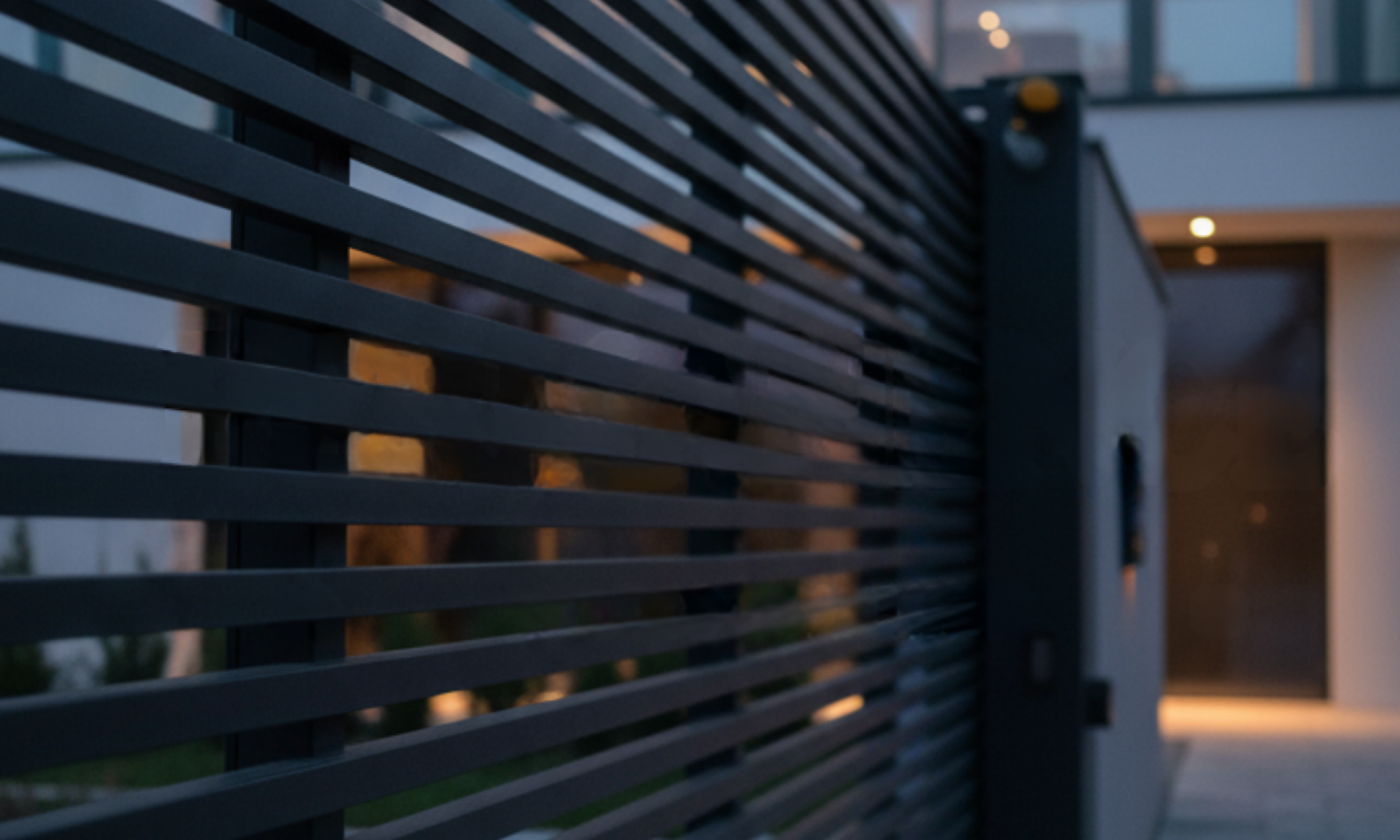
Modern slatted designs remain popular because they offer a clean look that works well across many property types. More traditional or ornate styles may be a better fit for period homes, heritage-inspired developments or customers who want stronger visual detail. The benefit of aluminium is that it allows for both approaches without forcing a trade-off on maintenance.
Colour choice has a practical effect as well as a visual one. Anthracite grey, black and other standard shades are commonly chosen because they pair well with windows, doors, railings and fencing. Bespoke colours can be useful where the gate needs to match an existing scheme or satisfy a planning or design brief. For larger projects especially, that flexibility can make specification much easier.
Security and access control options
Not every pedestrian gate needs the same security level. For a domestic garden gate, a reliable latch and lockable mechanism may be enough. For side access to a home, many buyers want a stronger locking arrangement to help deter opportunistic entry.
On commercial or multi-occupancy sites, requirements are often more advanced. A gate may need to work with keypad access, fob entry, magnetic locks or an intercom. In some settings, automation is also worth considering, although this depends on traffic levels, access needs and budget. The important point is to think about access control at the same time as the gate itself. Retrofitting later can be possible, but it is not always the most efficient route.
This is where specialist advice can be particularly useful. Hardware, posts, hinges and control equipment all need to work together, and the gate must be suited to the expected usage. A gate that looks the part but is under-specified for the site will not be the best long-term value.
Bespoke or readymade?
For some buyers, a readymade gate is the quickest and most cost-effective option. If the opening is standard, the design is straightforward and timescales are tight, this approach can make sense. It keeps decisions simple and can help move a project along faster.
Bespoke aluminium pedestrian access gates are often the better choice where dimensions are unusual, the design needs to match existing gates or fencing, or the project has specific privacy, access or branding requirements. Bespoke does not have to mean overcomplicated. In many cases, it simply means getting the right fit, finish and function from the start.
Budget naturally plays a part. A made-to-measure gate may cost more upfront than an off-the-shelf option, but it can also reduce adaptation work, improve the overall finish and provide a better result over the life of the installation. The right value is not always the lowest purchase price.
Installation matters more than many people realise
Even a well-made gate can disappoint if it is poorly installed. Alignment, post stability, hinge positioning, ground levels and latch setup all affect how the gate performs day to day. A pedestrian gate should open smoothly, close properly and feel secure without requiring constant adjustment.
On sloping ground or uneven surfaces, installation becomes more technical. The gate design may need to account for clearance and swing direction, and sometimes the most practical solution is not the most obvious one. This is another reason why support from a specialist supplier is useful, particularly for buyers managing wider site works or coordinating multiple trades.
A joined-up approach can also help when the pedestrian gate is part of a larger package that includes driveway gates, fencing, railings or access systems. Keeping specification and installation considerations aligned usually leads to a cleaner process and a better finished result.
A practical long-term investment
One of the strongest reasons buyers choose aluminium is that it keeps ownership simple. Once installed, the gate should need very little beyond occasional cleaning and routine checks of hinges, locks and fixings. That is good news for homeowners who want a smart boundary feature without ongoing work, and for commercial buyers responsible for multiple access points.
At Aluminium Gates Direct, that is often the real value of the product. It is not just that aluminium looks smart on day one. It is that it continues to perform, continues to look presentable and continues to support the way a property functions without demanding constant attention.
If you are weighing up options for a side entrance, garden access point or managed site boundary, the best choice is usually the one that matches how the gate will actually be used. Get the dimensions, style and security level right, and an aluminium pedestrian gate can be one of the simplest improvements you make for both appearance and peace of mind.