

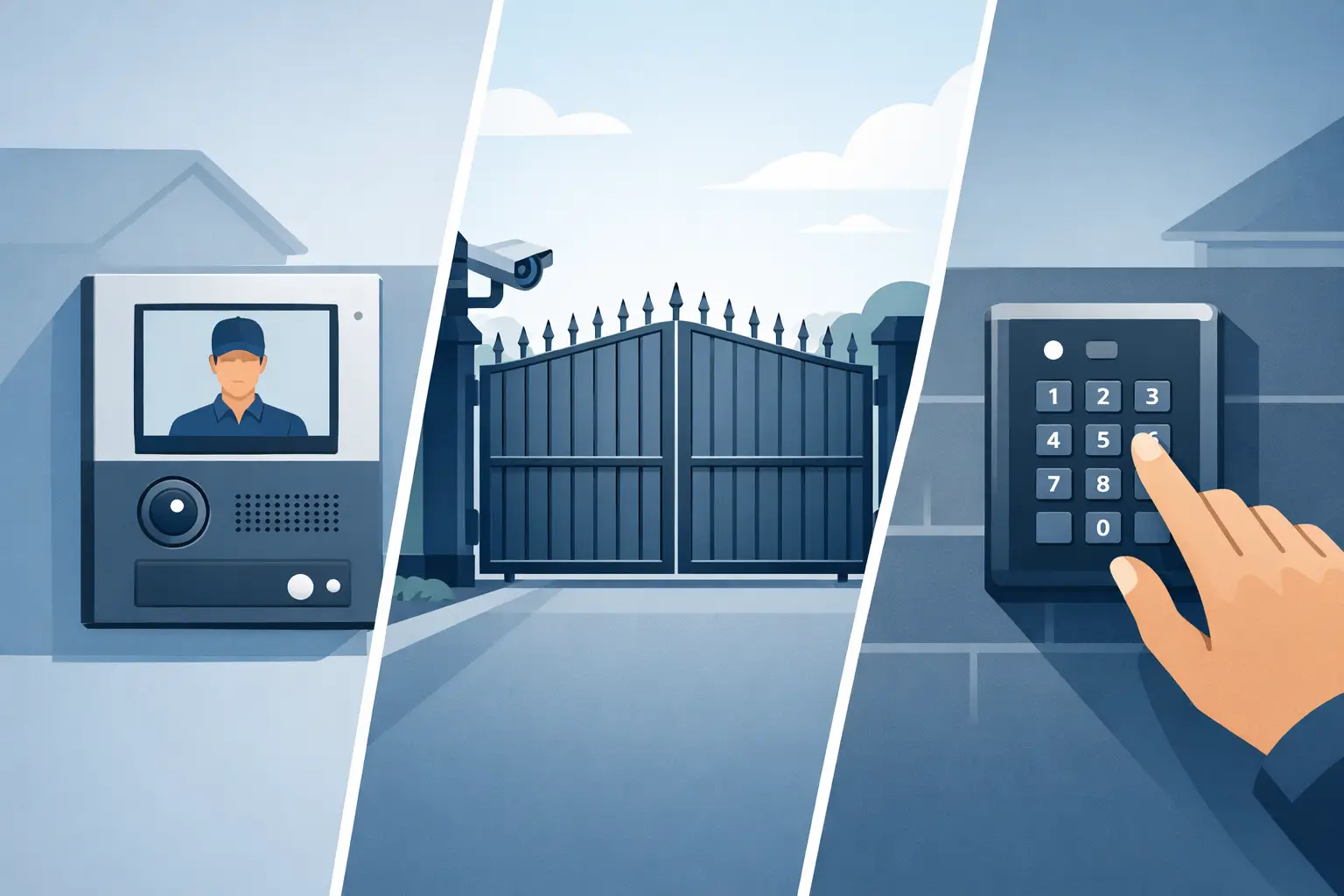
A gate can look exactly right and still create daily frustration if access control has not been properly considered. When comparing intercom systems vs keypads, the best choice is rarely about choosing the most advanced option. It is about how residents, visitors, deliveries and tradespeople need to enter the property, and how much control you want over that process.
For some homes, a simple keypad is the sensible, cost-effective answer. For others, particularly properties with a longer driveway, frequent visitors or stronger security requirements, an audio or video intercom provides far better visibility and reassurance. The right system should work reliably with your automated swing or sliding gate while complementing the way the property is used.
What is the practical difference?
A keypad opens an automated gate when the correct PIN code is entered. It is a straightforward form of access control, usually fitted on a post, wall or gate pillar near the entrance. Keypads can be wired or wireless, and many can be programmed with several codes for household members, staff or regular contractors.
An intercom system allows a visitor to call the property before access is granted. A basic audio intercom provides two-way conversation, while a video intercom adds a camera and screen or smartphone app so the resident can see who is at the gate. Systems such as Akuvox can also offer app-based management, remote opening and, depending on the specification, call routing to more than one device.
The key difference is simple: a keypad assumes the person at the gate already has permission, while an intercom lets the person inside decide whether to grant access at that moment.
Intercom systems vs keypads: security and control
A keypad provides good everyday control when codes are managed carefully. It removes the need to issue physical keys or remote fobs to everyone who requires access, and a code can be changed if it is shared with the wrong person. This makes keypads particularly useful for side gates, staff entrances, small commercial yards and households where a number of people need regular access.
However, a keypad cannot tell you who is entering. If a code has been passed on, written down or observed, the gate will open for anyone who knows it. This does not necessarily make a keypad unsuitable, but it does mean the code should be updated periodically and immediately when a contractor, tenant or employee no longer needs access.
An intercom gives a higher level of decision-making at the entrance. With a video model, you can identify a visitor before releasing the gate, speak to delivery drivers and refuse access without walking to the gate. This is valuable for homes set back from the road, properties with young children, shared entrances and commercial premises where visitors need to be checked before they enter.
Video intercoms are not a substitute for sensible perimeter security. The quality of the gate, fencing, locking arrangement, lighting and installation all matter. But they do prevent the common problem of opening a gate based only on a doorbell press or a call from an unknown visitor.
Convenience for everyday arrivals
The convenience of a keypad is hard to beat for people who arrive regularly. A family member can enter with a PIN rather than carrying another remote control. Gardeners, cleaners or tradespeople can be given a temporary code, and the gate can be opened without anyone needing to answer a call. On a busy household or working site, that can save considerable time.
The drawback is that visitors without a code cannot get in. A delivery driver may need to phone, wait outside or leave a parcel elsewhere. If the property has regular deliveries, healthcare visits, guests or short-notice contractors, this can become inconvenient.
Intercoms are designed for these situations. Rather than sharing a general access code, you can answer a call and open the gate only when it is appropriate. App-connected systems are especially useful if nobody is near the internal handset. You may be in the garden, working upstairs or away from home, yet still be able to speak to a caller and manage the gate.
There is a trade-off. An intercom relies on someone being available to answer. If the property is often empty, or calls are routinely missed, it may not solve access for regular visitors on its own. Many customers choose a combined approach: an intercom for visitors and a keypad for trusted users.
Installation requirements matter
The most suitable system can depend on the route for cables as much as the features you want. A wired intercom usually offers a dependable long-term installation, particularly where power and communication cables can be run during gate construction, landscaping or driveway works. Planning it early often produces the neatest result and avoids lifting finished surfaces later.
Wireless and network-connected options can reduce disruption in some circumstances, but signal strength, distance from the house and the construction of walls or gate pillars must be assessed properly. A long driveway, stone boundary wall or weak Wi-Fi connection can affect performance. It is better to establish these limitations before choosing equipment than to expect a wireless solution to overcome every site condition.
Keypads are generally simpler to install, although they still need careful positioning. They should be easy for a driver or pedestrian to reach without creating an obstruction, and they must be installed at an appropriate height and distance from the moving gate. For vehicle access, consider whether a person can safely stop, enter a code and move through without blocking the road or driveway.
For both options, the access control equipment must be compatible with the gate automation controls, safety devices and electric locking arrangement where fitted. This is why gate automation should be treated as a complete system, rather than a collection of separate products.
Cost: look beyond the initial price
A keypad will usually cost less to supply and fit than a video intercom, especially where no new cabling is required. It is a sensible choice when the goal is controlled access for known users and the budget needs to remain focused on the gate, automation and groundwork.
An audio intercom sits between the two, offering visitor communication without the additional cost of video hardware and screens. A video intercom requires a greater initial investment, particularly if it includes multiple internal monitors, smartphone connectivity or extensive cable runs. Yet its value can be clear where identifying visitors is a priority or where managing access remotely avoids missed deliveries and unnecessary trips to the gate.
There can also be ongoing considerations. Keypad codes need administration. Intercom apps may require internet connectivity and occasional software updates. Any automated gate system should be serviced and checked at appropriate intervals to keep safety features and access controls operating as intended.
Which option suits your property?
A keypad is often the right fit for a straightforward residential driveway where household members need quick entry and visitor traffic is limited. It also works well on pedestrian gates, garden access points and commercial sites where authorised staff need reliable, uncomplicated entry.
An intercom is generally the better option for a main driveway entrance with regular visitors, deliveries or a long distance between the gate and the house. Video is particularly worthwhile when you want to see callers before opening, whether you are at home or away.
For larger homes, developments and business premises, using both can offer the most practical arrangement. Residents or staff use a keypad, fob or remote for routine entry, while visitors call through the intercom. This keeps access convenient without giving a widely shared code to every person who may need to visit.
Questions to answer before you choose
Before specifying either system, consider who will use the gate each week, not just who uses it today. Think about family members, tenants, staff, delivery drivers, gardeners, cleaners, contractors and emergency access. Also consider whether the gate is visible from the house, how reliable the mobile and Wi-Fi signal is at the entrance, and whether the system may need to support additional users later.
The style of gate matters too. A bespoke aluminium driveway gate can be designed alongside automation, access controls, posts and safety features, creating a more considered finish than adding equipment as an afterthought. Aluminium Gates Direct can help customers match gate design, automation and entry controls to the layout, budget and day-to-day demands of the property.
Choosing between an intercom and keypad does not need to be a fixed, all-or-nothing decision. Start with the people who need access, the visitors you want to screen and the cabling your site can accommodate. From there, the right access control solution becomes much easier to specify with confidence.