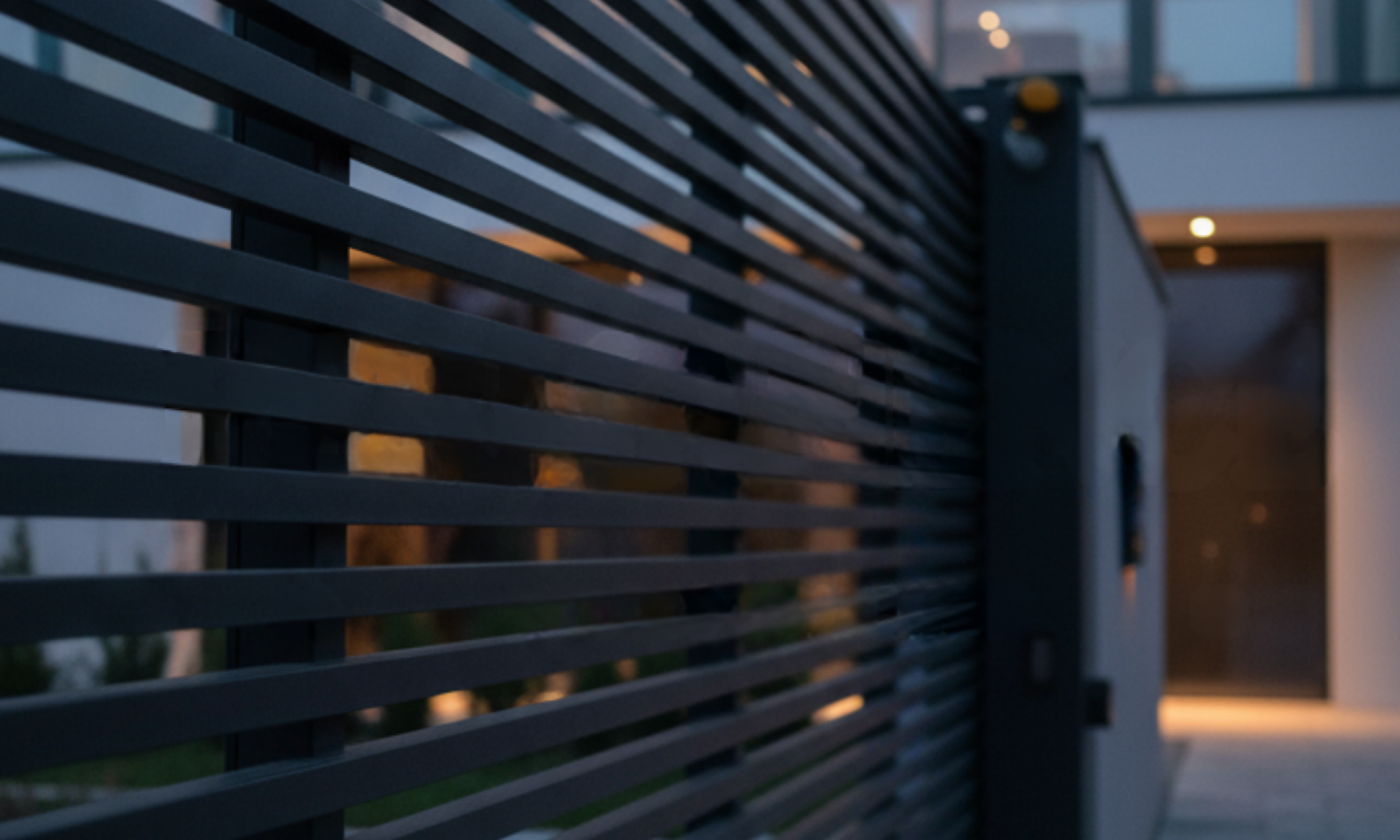

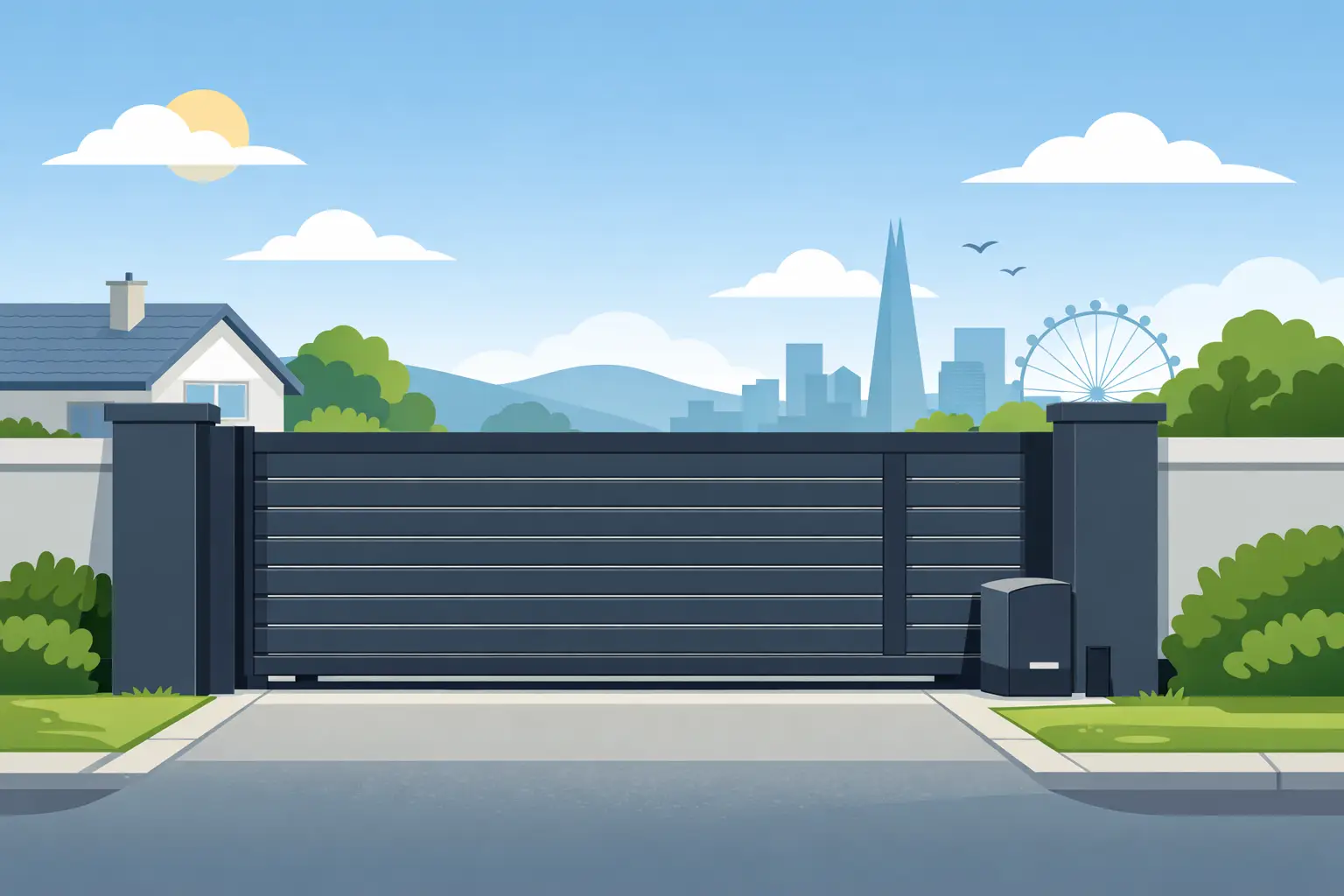
A narrow or sloping driveway can make a conventional pair of gates impractical before you have even considered appearance or automation. So, what is a sliding gate? It is a gate that opens sideways, travelling parallel to the fence line or boundary rather than swinging into or out of the entrance. For many UK homes, commercial sites and developments, this makes it a secure, space-conscious way to control access.
Sliding gates are available in many styles, from clean, contemporary aluminium designs to made-to-measure gates built around a particular opening, gradient or privacy requirement. The right choice depends on the room available beside the entrance, the ground conditions, the gate width and how you plan to use it day to day.
What is a sliding gate and how does it work?
A sliding gate is a single gate leaf that moves horizontally to open. When closed, it spans the driveway or access point. When opened, it parks to one side, running alongside the boundary rather than occupying space within the driveway.
The gate can be operated manually, although automated sliding gates are particularly common for driveways, flat entrances, industrial yards and commercial premises. An electric motor drives the gate along its opening route, usually controlled by a remote fob, keypad, intercom, access control system or smartphone-compatible equipment.
Because the gate moves sideways, it does not need the clear arc required by swing gates. This is its most useful advantage. A vehicle can wait close to the entrance while the gate opens, provided there is safe space to do so away from the public highway.
The two main types of sliding gate
Most sliding gate projects use either a tracked system or a cantilever system. Both can provide dependable access control, but they suit different sites.
Tracked sliding gates
A tracked gate runs on wheels along a rail fixed across the driveway. Guide rollers at the side of the opening keep the gate upright and aligned as it moves. This is a familiar and cost-effective arrangement for many domestic and commercial entrances.
The track needs to be kept reasonably clear. Leaves, gravel, mud and ice can affect travel if they build up in the rail, so a tracked system is best where the driveway surface is level, properly prepared and easy to maintain. Good drainage also matters, particularly on exposed sites where water may collect across the entrance.
Cantilever sliding gates
A cantilever gate is supported from one side and travels above the driveway surface, with no track running across the opening. It includes a longer counterbalance section behind the gate, which means it needs more room along the fence line than the visible opening width alone.
This arrangement is often chosen for uneven ground, high-traffic entrances or locations where debris and standing water would make a ground track inconvenient. Cantilever gates can also be well suited to commercial sites, although the supporting foundations and hardware need careful specification due to the weight and forces involved.
Why choose a sliding driveway gate?
The strongest reason to choose a sliding gate is usually space. A swing gate needs room inside the property to open safely, and outward-opening gates should not obstruct a pavement or road. Sliding gates avoid this issue by travelling along the boundary.
They can also suit wide entrances. A single sliding leaf can span a broad opening without requiring two large leaves to meet in the middle. For driveways with a rising gradient immediately behind the entrance, a sliding design can be more practical too, as a swing gate may otherwise catch the ground during operation.
Security is another consideration. A correctly specified sliding gate can create a controlled boundary for a private home, development or business premises. When paired with suitable automation, safety equipment and an intercom system, it enables visitors to be checked before access is granted.
Aluminium is a particularly sensible material for sliding gates. It is lightweight compared with steel, which can reduce the load placed on the mechanism and supporting structure. It is also resistant to corrosion and does not require the frequent painting, staining or treatment associated with timber. That does not mean no care is needed, but it does mean less routine upkeep for busy property owners.
Where a sliding gate may not be the best fit
A sliding gate needs a clear run-back area. In simple terms, there must be enough unobstructed space beside the opening for the gate to park when open. A 4-metre opening generally requires at least 4 metres of side room for a tracked gate, while a cantilever arrangement needs additional length for its counterbalance section.
This can be the deciding factor on compact plots. A swing gate may be more suitable where there is generous depth inside the driveway but limited boundary length at either side. Likewise, if a pedestrian entrance is used frequently, a separate pedestrian gate is often the safer and more convenient solution than opening the vehicle gate for every person arriving on foot.
Cost is also influenced by the groundwork. A sliding gate may require substantial concrete foundations, level track preparation, posts, electrical supply and drainage work. The gate itself is only one part of the project. A site survey helps identify these requirements early, so the design and budget reflect the full installation rather than just the gate panel.
Choosing the right size, style and specification
Start with the clear opening width, not just the apparent gap between existing walls or posts. The finished measurement needs to account for posts, guide equipment, clearances and the position of the motor. If the driveway is shared, used by delivery vehicles or accessed by larger vans, consider the turning space as well as the width of the gateway.
Next, look at privacy and visibility. Solid or closely spaced aluminium infill offers a more private frontage, while horizontal slats, vertical bars and decorative patterns can create a lighter look. For homes, the best design often complements the property’s windows, fencing and front door. For commercial sites, visibility, security and a professional entrance may take priority.
Height should be chosen with planning, security and streetscape in mind. Requirements can vary according to the property, the gate’s position and whether it borders a highway. It is sensible to check the relevant planning guidance before ordering, especially for taller gates, listed buildings, conservation areas or new developments with design conditions.
Bespoke manufacture is valuable where the entrance is unusually wide, sloped, stepped or designed around existing masonry. Readymade options can work well for standard openings and faster projects, but a made-to-measure gate provides more flexibility over dimensions, colour, infill and matching side panels.
Automation and safety are part of the gate system
An automated sliding gate should never be treated as simply a manual gate with a motor added later. The motor, rack, safety devices, controls, foundations and gate weight all need to work together.
Common safety measures include photocells that detect people, vehicles or objects in the gate’s path, pressure-sensitive safety edges and manual release facilities for use during a power cut. The precise equipment required depends on the installation and risk assessment, but safe operation should be built into the specification from the outset.
For daily convenience, homeowners may prefer remote controls combined with an audio or video intercom. Commercial sites may need keypad entry, timed access, fob systems or integration with a wider access control arrangement. Akuvox intercom systems can provide an effective option where video calling and controlled visitor access are required.
Professional installation is particularly worthwhile for automated gates. It helps ensure the gate is aligned correctly, the electrical work is suitable, safety devices are positioned properly and the finished system is commissioned for reliable use.
Looking after an aluminium sliding gate
Aluminium gates are low maintenance, not maintenance-free in the literal sense. Washing the gate occasionally with warm water and a mild detergent will remove traffic film, salt and surface dirt, helping the finish stay looking its best. Avoid abrasive pads and harsh chemical cleaners that may damage coated surfaces.
The moving parts need attention too. Keep the track clear on a tracked gate, check that guide rollers remain free from obvious damage and arrange servicing for automated equipment in line with the manufacturer’s recommendations. If the gate starts moving unevenly, making unfamiliar noises or failing to close consistently, stop using it and have the issue assessed before it develops into a larger repair.
A well-planned sliding gate should feel straightforward to use, not like another property problem to manage. Aluminium Gates Direct can help you weigh up the available side room, gate style, automation and installation requirements, so the final solution suits your entrance, budget and everyday routine.