
A gate that looks right but stops short of opening reliably is an expensive frustration. The right automation should suit the gate’s weight, movement, daily use and access requirements, while meeting essential safety expectations. This gate automation buyer guide explains the practical decisions that shape a dependable electric gate system for homes, developments and commercial sites.
Start with how the gate will move
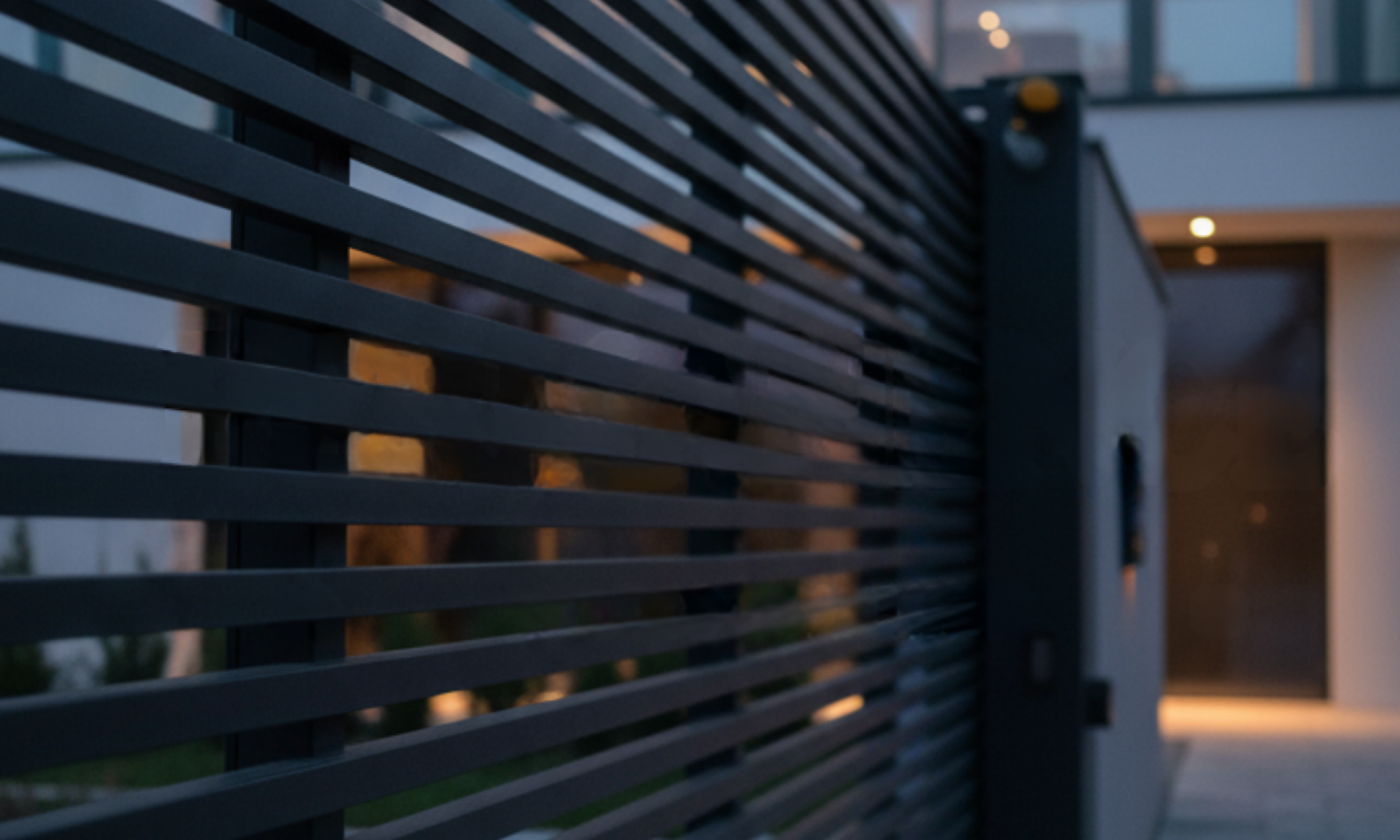
Automation is not a separate add-on to choose at the end of a project. The gate design and the operating system need to work together from the outset. A lightweight aluminium gate is well suited to automation because it places less strain on motors, hinges and supporting posts than many heavier alternatives. That can support smoother operation and help reduce wear over time, but the gate still needs the correct motor specification.
Swing gates and sliding gates require different types of automation. A swing gate opens on hinges, either as a single leaf or a pair of leaves meeting in the middle. It is often a natural choice for residential driveways with sufficient clear space behind the gates. A sliding gate travels sideways along the boundary, making it useful where a driveway slopes upwards, space behind the entrance is limited, or a wider opening is required.
The best option depends on the site. A sliding gate needs enough clear run-back space beside the entrance and a suitable track or cantilever arrangement. Swing gates need a clear opening arc and must not move out across a public pavement or road. Before selecting a system, consider the entrance width, driveway gradient, ground levels and the space available when the gate is fully open.
Gate automation buyer guide: match the motor to the gate
Motors are chosen around far more than gate width. The gate’s weight, leaf length, construction, wind exposure and expected number of operating cycles all affect the right specification. A long, solid gate in an exposed location can create considerable wind loading, even if the gate itself is aluminium. In these circumstances, the motor, posts and foundations need careful consideration.
For a typical domestic swing gate, underground motors, articulated arm motors and linear ram motors may all be appropriate. Underground systems keep the mechanism out of sight and can preserve a clean, premium appearance, although they require more excavation and drainage planning. Above-ground arm or ram systems are easier to access for servicing and may be more economical, depending on the gate and installation layout.
Sliding gates generally use a ground-mounted motor and rack system, or a cantilever arrangement for sites where a ground track is unsuitable. Commercial entrances, flat developments and busy shared driveways may need a higher-duty motor designed for frequent use. Choosing a domestic motor for a heavily used entrance can lead to unreliable operation and unnecessary replacement costs.
Do not assume a larger motor is automatically better. The aim is to select a system correctly rated for the gate and its use, installed with the safety equipment it requires. A good supplier or experienced installer will ask about the gate dimensions, infill style, number of users and site conditions before recommending equipment.
Safety is part of the specification
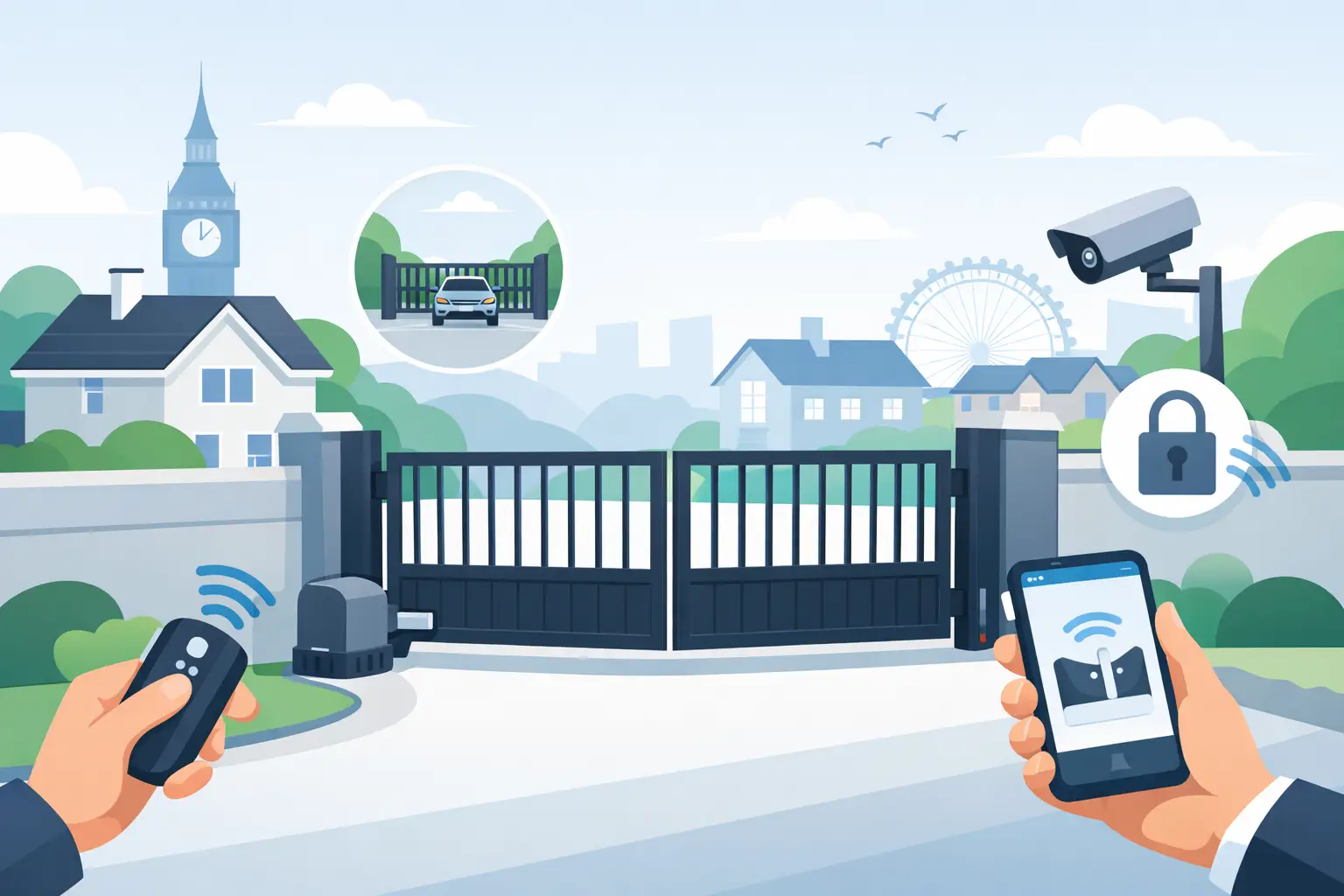
An automated gate is a moving machine, not simply a remote-controlled entrance. Safety should be addressed during planning, not treated as a final extra. The exact measures required depend on the gate type, layout and risk assessment, but safeguards may include photocells, safety edges, obstacle detection, warning signs and appropriate control positioning.
Photocells create an invisible beam across an opening. If a vehicle, person or object interrupts the beam, the system should prevent the gate from closing or stop and reverse it as designed. Safety edges are pressure-sensitive strips fitted to potential trapping or crushing points. They can be particularly relevant on sliding gates, tight approaches and installations with limited visibility.
The entrance should also be assessed for pinch points around hinges, posts, walls and gate leaves. Children, pedestrians and visitors must be considered, not only the regular driver who understands how the system operates. For commercial premises, the risk assessment may need to account for deliveries, staff on foot and larger vehicles entering at different times.
Professional installation and commissioning are central to safe operation. Ask who will set up the system, test its protective devices and explain how to use the manual release in a power cut. Retain the handover information and arrange periodic checks, especially at busy entrances.
Decide how people will gain access
Remote controls remain a convenient choice for households, but they are only one part of a well-planned access system. The right control method should reflect who uses the gate, how often they arrive, and whether visitors need access when nobody is at home.
Keypads work well where family members, tradespeople or tenants need a code rather than a fob. They are useful, but codes should be changed when circumstances change. Key fobs offer straightforward access for regular users, while vehicle detection loops or hands-free systems can provide convenient entry and exit for cars.
Video intercoms add another level of control. An Akuvox intercom system, for example, can allow occupants to see and speak to a visitor before releasing the gate. This can be especially valuable for properties set back from the road, multi-occupancy developments and commercial sites receiving regular deliveries. Consider where the call will be answered – at an internal monitor, a mobile device, a reception point or more than one location.
A separate pedestrian gate is often worth including. It gives visitors, delivery drivers and family members a clear walking route without opening the main driveway gate unnecessarily. It can also reduce wear on the vehicle gate and make access safer where people arrive on foot.
Plan power, drainage and site preparation early
Electric gate projects are often delayed because the groundwork has been underestimated. The automation may require a safe electrical supply, cables between equipment, ducts for future upgrades and foundations capable of supporting the gates and posts. Where cables cross a driveway, they should be planned before surfacing is completed rather than added as an afterthought.
Drainage deserves particular attention with underground automation and any area prone to standing water. Poor drainage can affect access to components and create avoidable maintenance issues. For sliding gates, the track area must remain stable, level and clear of debris. A well-prepared site helps the gate operate consistently through wet weather and winter conditions.
Solar-powered automation can be an option in suitable locations, particularly where bringing mains power to the entrance would be disruptive or costly. However, it depends on the available light, gate usage and system design. It should be assessed properly rather than selected simply to avoid cabling.
Set a realistic budget for the complete project
The price of automation is not just the motor kit. A clear quotation should separate the cost of the gate, posts, automation equipment, safety devices, intercom or access controls, electrical work, groundwork and installation. This makes it easier to compare proposals on a like-for-like basis.
Bespoke gates may cost more than readymade options, but they can solve awkward entrance widths, match existing fencing or railings, and achieve the preferred style and colour. For a straightforward opening with standard dimensions, a readymade aluminium gate may offer a quicker and more economical route. The right choice depends on how much flexibility the project needs.
It is also sensible to account for future use. A property owner planning a new intercom, extra fobs or a pedestrian access point may save disruption by allowing for ducts and cable routes at the start. For commercial buyers, access control needs may change as staff numbers, tenants or delivery arrangements evolve.
Choose support as carefully as the equipment
Gate automation relies on correct specification, installation and aftercare. Look for clear advice about what the system includes, which safety measures are proposed and what preparation is needed before fitting. If an installation partner is involved, establish who is responsible for surveys, groundwork, electrical work, commissioning and any future service support.
Aluminium Gates Direct can help customers select aluminium gates, automation and access solutions that suit the entrance, budget and level of use, with nationwide installation support available through trusted partners. Whether the requirement is a private driveway gate or a controlled commercial entrance, the strongest result comes from treating the gate, automation and access control as one complete system.
A well-chosen automated gate should feel simple to use every day. Give the project enough planning time, ask direct questions about safety and servicing, and choose equipment that fits the site rather than forcing the site to fit the equipment.