
A gate can look exactly right on paper, then become awkward to live with once automation is added. The motor is too small, the opening speed feels sluggish, the access control is overcomplicated, or the setup does not suit the way vehicles actually move in and out. That is why an automatic gate opener selection guide matters – not as a technical extra, but as a practical way to make sure the whole entrance works properly from day one.
For homeowners, that usually means balancing convenience, appearance and budget. For developers, builders and commercial buyers, it often means getting reliability, compliance and traffic flow right without creating avoidable maintenance issues later. In both cases, choosing the correct opener starts with the gate itself, not the motor catalogue.
What this automatic gate opener selection guide should help you decide
The right opener depends on five things working together: gate type, gate size and weight, frequency of use, site conditions and the access control you want to pair with it. If one of those is overlooked, the automation can feel like a compromise rather than an upgrade.
A lightweight aluminium gate often gives you more flexibility than heavier alternatives because the operator does not need to work as hard to deliver smooth, dependable movement. That can affect not only the motor choice, but also long-term wear, power consumption and how quietly the system runs. Even so, lightweight does not mean every opener will suit every gate. A wide double swing driveway gate has different demands from a compact pedestrian gate or a commercial sliding entrance.
Start with the gate format
Swing gate openers
Swing gates remain a popular choice for domestic driveways and many private developments. They suit properties where there is enough space behind the gate for the leaves to open inward, and they can offer a traditional, balanced look.
When selecting automation for a swing gate, the hinge geometry matters as much as the leaf size. The distance between the hinge point and the rear face of the post affects whether you need an articulated arm motor or a ram type operator. Deep brick piers, wide posts or awkward hinge positions can limit your options. This is one of the most common areas where buyers benefit from specialist advice, because a motor that looks suitable by headline specification may not fit the physical layout properly.
Swing automation also needs careful thought where the driveway rises sharply. If the gates open inward and the ground slopes up, standard movement can be restricted. In those cases, a sliding gate or a different hinge and automation arrangement may be more practical.
Sliding gate openers
Sliding gates are often the better answer when space is tight, the driveway is sloped, or security and controlled access are higher priorities. They are widely used on commercial sites, flat developments and modern private driveways where a clean, efficient opening action is preferred.
A sliding operator must be matched to the gate weight, the length of travel and expected duty cycle. It also relies heavily on the quality of the track, guide system and installation accuracy. If the gate does not roll freely, even a powerful motor will be under strain. For high-traffic sites, that can shorten service life and create unnecessary callouts.
Match the motor to real use, not ideal conditions
One of the easiest mistakes is choosing an opener purely by maximum gate weight. That figure is useful, but it is only part of the picture. Manufacturers rate automation systems differently, and the stated capacity may assume favourable conditions.
In practice, you should think about how often the gate will open each day, whether it will operate in exposed weather, and whether the entrance will be used by one household, several properties or regular delivery traffic. A domestic gate opening six times a day needs a different level of performance from a gate serving a shared courtyard or a commercial yard with repeated vehicle movements.
Duty cycle is especially important. Some operators are designed for light residential use, while others are built for intensive operation. Over-specifying can increase cost unnecessarily, but under-specifying usually costs more in the long run through wear, downtime and frustration.
Consider the site conditions before you choose
The entrance itself often decides more than the brochure does. Wind exposure, ground levels, available run-back space, post sizes and power supply all influence which system will work best.
A solid infill gate in a windy location places greater load on a swing operator than an open design would. A long driveway may give you flexibility with underground cabling and control positions, while a compact frontage may require a simpler and more contained layout. On rural properties, you may need to think about power availability and whether accessories such as GSM access or battery backup would make day-to-day use easier.
Commercial sites bring extra considerations. HGV access, repeated opening cycles, wider clear openings and integration with safety devices all need to be planned from the start. It is not only about opening the gate – it is about controlling movement safely and predictably across the whole site entrance.
Safety is not an optional extra
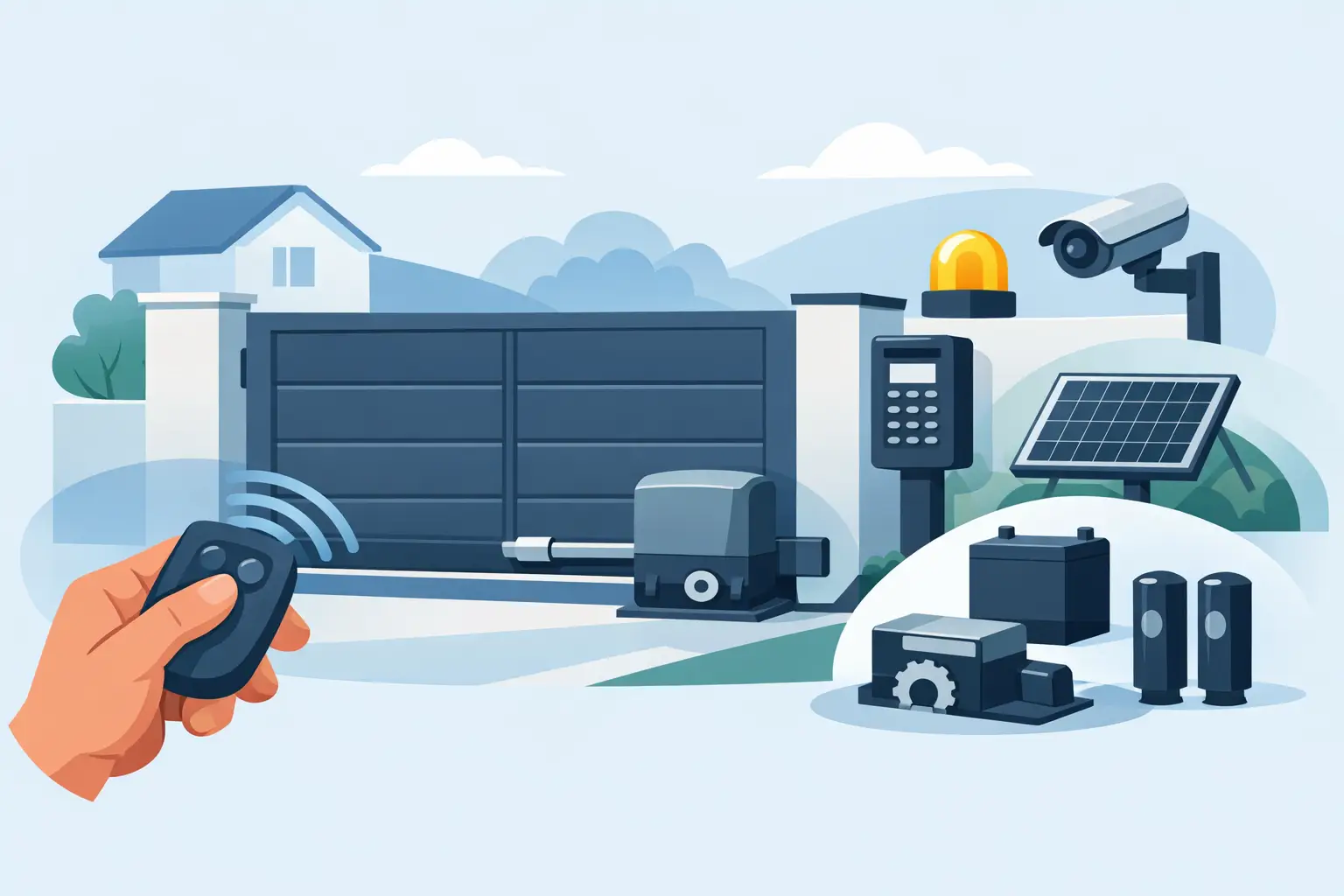
Any automatic gate system must be designed with safety in mind. That includes the right control logic, obstacle detection, safety edges, photocells and force settings, depending on the gate type and operating environment.
For domestic buyers, safety can feel secondary to convenience until they start thinking about children, pets and visitors. For commercial and multi-user settings, there is even less room for error. A good specification considers who will use the gate, who may be near it, and how the system behaves if something interrupts its travel.
This is another reason why the opener should never be chosen in isolation. The motor, controls and safety devices are part of one system, and they need to be compatible with both the gate design and the site layout.
Access control should suit how you actually use the entrance
The opener gets the gate moving, but the access control decides how convenient the entrance feels every day. That might be as simple as remote fobs for a private driveway, or it could involve keypads, video intercoms, GSM calling, timed access or integration with wider site security.
The right answer depends on the user profile. A family home may need straightforward operation for multiple drivers and occasional visitors. A block development may need managed access for residents and delivery drivers. A commercial site may require staff entry, audit trails and separate control for pedestrian and vehicle access.
There is no point fitting advanced automation if the access method is frustrating. It is usually better to choose a system that is easy to manage and reliable in everyday use than one packed with features that rarely get used.
Budgeting properly means looking beyond the motor
When buyers compare prices, they often focus first on the opener kit. In reality, the total cost depends on more than the motor itself. Control boards, safety devices, access equipment, cabling, groundwork, posts, installation time and commissioning all affect the final figure.
That is why transparent pricing matters. A cheaper opener does not always mean a better-value system if it needs more adjustment, offers lower duty performance or is not well suited to the gate. Equally, the most expensive setup is not automatically the right one for a modest domestic entrance.
A sensible budget should reflect the full system and the expected level of use. For many buyers, aluminium gates help here because the lower weight can support efficient automation without sacrificing strength, durability or appearance.
Bespoke or readymade – does it change the opener choice?
Sometimes it does. A readymade gate can be a practical route when the opening is straightforward and the priority is a faster, cost-conscious solution. A bespoke gate becomes more valuable when the opening is unusual, the design needs to match an existing boundary, or the automation requirements are more complex.
Custom sizing and fabrication can make automation more effective because the gate can be designed with the operator, hinge positions, locking and cable routes in mind from the outset. That joined-up approach often avoids compromises later.
For customers who want both supply and installation support, working with a specialist such as Aluminium Gates Direct can make the process more manageable. It helps ensure the gate, automation and access control are considered together rather than as separate purchases.
The best opener is the one that suits the whole entrance
A good automatic gate system should feel uncomplicated once it is in use. It should open smoothly, close safely, respond reliably and fit the character of the property or site without constant adjustment. That result usually comes from asking the right questions early, not from choosing the strongest motor or the cheapest kit.
If you are weighing up swing versus sliding, domestic versus intensive use, or readymade versus bespoke, the most useful next step is often to look at the gate opening, traffic pattern and control requirements together. Get that part right, and the opener becomes much easier to choose – and much easier to live with.