A sliding gate that has to be opened by hand quickly becomes a nuisance in bad weather, late at night or on a busy commercial site. If you are researching how to automate sliding gates, the real question is not just which motor to buy. It is how to choose a system that suits the gate’s size, weight, usage and level of security, while staying reliable over the long term.
For some properties, automation is a straightforward upgrade. For others, especially wider driveways, sloping approaches or high-traffic entrances, the details matter much more. The right setup should feel simple to use day to day, but there is a fair amount to get right behind the scenes.
How to automate sliding gates: start with the gate itself
Before looking at motors, intercoms or control options, check whether the gate is suitable for automation in the first place. The gate needs to run smoothly and consistently on its track or cantilever system. If it drags, catches or sits out of alignment, fitting an operator will not solve the underlying problem. In many cases, it will make it more obvious.
Gate weight is one of the first things to confirm. Automation kits are rated for specific weight ranges and duty cycles, so a lightweight residential aluminium gate needs a different operator from a heavy commercial sliding gate used all day. Length matters too, because a long gate creates different forces to a shorter one, even if the material itself is relatively light.
This is one of the reasons aluminium works well for automation. It offers the strength needed for secure perimeter access while remaining lighter than many traditional alternatives. That lower weight can reduce strain on motors and support smoother operation over time, provided the gate is well made and correctly installed.
Choosing the right motor and operator
When planning how to automate sliding gates, the motor should be matched to the actual gate and the way the entrance is used. A domestic driveway gate opened a handful of times a day does not need the same specification as a shared access road, warehouse entrance or flat development.
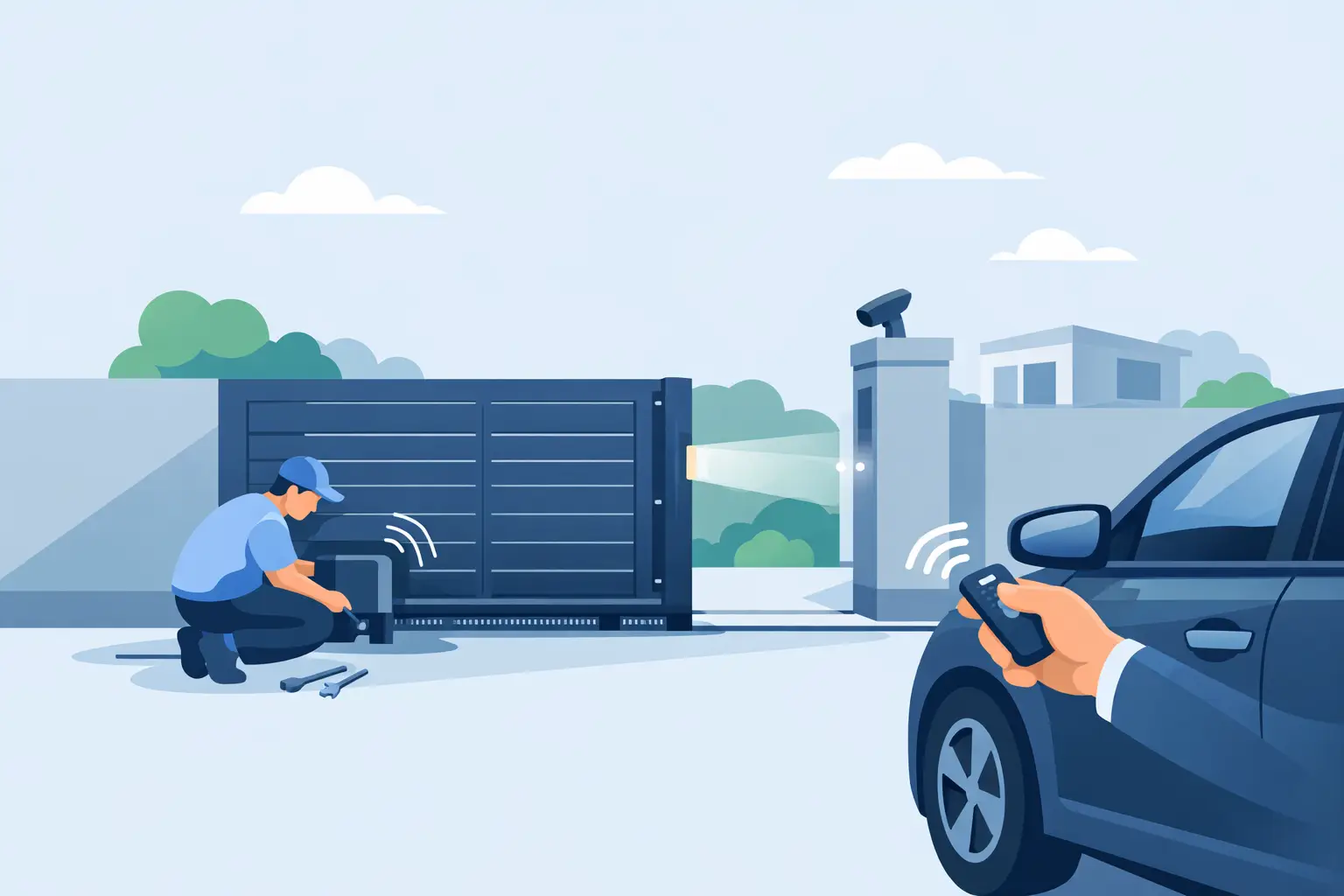
Most sliding gates are automated using a rack and pinion system. A toothed rack is fixed along the gate, and the motor drives the gate open and closed via a gear. It is a proven approach, but the quality of the components and installation makes a significant difference to noise levels, speed and reliability.
It is tempting to choose a motor purely on headline capacity, but overspecifying is not always sensible. A very powerful operator on a lightly used residential gate may cost more than necessary and offer little practical benefit. On the other hand, underspecifying usually leads to poor performance and premature wear. The right choice sits in the middle – enough capacity for the gate, plus some margin for wind load, regular use and general wear over time.
Power supply is another factor. Some systems run on standard mains power, while others may include battery backup. For sites where access cannot be interrupted during a power cut, backup is worth discussing early. Commercial sites, in particular, often need clearer planning around emergency access and continuity.
Safety is not optional
Any discussion about how to automate sliding gates should include safety from the start, not as an add-on. An automated gate is a moving piece of machinery, and it must be designed to detect obstruction and reduce risk to people, vehicles and property.
Safety devices often include photocells, pressure edges and obstacle detection built into the operator. Which combination is needed depends on the gate layout, operating forces and the surrounding environment. A family home with good visibility has different risk points from a commercial entrance used by delivery vehicles and pedestrians throughout the day.
There are also legal and compliance considerations in the UK. Automated gates should be installed and assessed correctly to meet current safety expectations. That is one reason professional specification and installation matter. A gate can look fine from the outside and still be unsafe if the force settings, safety edges or detection zones are wrong.
Access control: decide how the gate will be used
Once the gate and motor are properly specified, the next question is how users will open it. This part is often underestimated, but it shapes how convenient the system feels every day.
For a private driveway, remote controls may be enough. Some homeowners also prefer keypad entry, GSM control or intercom integration so visitors can request access without leaving a vehicle or walking to the gate. On larger homes and multi-user properties, combining methods usually makes sense.
Commercial sites often need a more structured setup. That might include fobs, keypads, time-controlled access, intercoms or integration with broader access control systems. Delivery patterns, staff access and vehicle flow all need to be considered. The best option is not always the most complex one. It is the one that fits the site’s actual usage without creating delays or confusion.
This is where a system such as an intercom can add real value. It improves control and convenience, particularly where visitor access needs to be managed remotely. The key is to think about daily use, not just the initial installation.
Groundworks and installation details matter more than many expect
A good operator fitted to poor ground preparation will not perform as it should. The motor base, track alignment, drainage and cable routes all play a part in long-term reliability.
With tracked sliding gates, the running surface must stay clear and stable. If water sits around the track, debris builds up, or the base shifts over time, operation can suffer. Cantilever systems avoid a ground track across the opening, which can be useful on uneven surfaces or where dirt and debris are likely, but they have their own structural requirements and need the right support design.
Cable planning is another area that is easier to get right at the start than to revisit later. Power, safety devices, intercoms and control points all need to be considered before installation begins. On new build and renovation projects, early coordination can save time and cost.
Can you automate an existing sliding gate?
Sometimes yes, but it depends on the condition and specification of the gate already in place. If the gate is structurally sound, runs smoothly and has suitable support and clearance, retrofitting automation can work well. If it is worn, poorly aligned or simply not designed with automation in mind, the better route may be to replace or upgrade the gate at the same time.
This is often where buyers benefit from straightforward advice rather than a one-size-fits-all answer. Retrofitting can appear cheaper at first, but if it leads to ongoing problems, the saving disappears quickly. A new aluminium sliding gate designed for automation may offer better value over the long term through lower maintenance, improved reliability and a cleaner overall finish.
Maintenance after automation
One of the main reasons people choose aluminium gates is the lower upkeep compared with timber or untreated steel. That benefit still matters once automation is added, but no automated system is entirely maintenance-free.
The gate should be kept clean and free from unnecessary debris, especially around tracks and moving parts. Motors, racks, rollers and safety devices should be checked at sensible intervals. Frequency depends on use. A private driveway may need occasional servicing, while a busy commercial entrance will usually need more regular attention.
It is also worth acting quickly if the gate starts sounding different, moving unevenly or responding inconsistently. Small issues are usually cheaper to correct than faults left to develop.
The value of proper specification
If there is one common mistake when deciding how to automate sliding gates, it is treating automation as a bolt-on accessory rather than part of the whole entrance system. In reality, the gate design, support structure, operator, safety equipment and access control all need to work together.
That is why specification matters so much. A well-planned system should suit the property, the users and the budget without overcomplicating things. For some customers, that means a simple and dependable residential setup. For others, it means a bespoke sliding gate with integrated automation and intercom control for a larger development or commercial site.
At Aluminium Gates Direct, this is exactly where practical guidance helps. Matching the gate, automation and access method properly at the outset usually leads to a smoother installation and fewer compromises later.
If you are weighing up options, start with the gate’s size, usage and layout rather than with a motor catalogue. The best automated sliding gate is the one that feels effortless to use because the hard decisions were made properly at the beginning.