A gate can look the part in daylight and still be a nuisance in the rain if the automation is wrong. That is why choosing the best gate automation systems is not really about picking the most expensive motor or the brand with the biggest brochure. It is about matching the system to the gate, the site, the level of use and the kind of access control you actually need.
For some properties, a straightforward residential setup with remote fobs is enough. For others, especially shared entrances, commercial yards or busy driveways, the right answer includes safety devices, intercoms, access logs and hardware designed for frequent daily cycles. The detail matters because a well-chosen automation system should feel reliable, safe and easy to live with for years.
What makes the best gate automation systems?
The best systems tend to have four things in common. They are suited to the gate type, sized correctly for the weight and dimensions of the gate, supported by dependable safety features and built with components that can be serviced and adjusted over time.
That sounds simple, but this is where many buying decisions go wrong. A lightweight aluminium gate does not place the same demand on automation as a heavy steel gate, and a level driveway does not behave like a sloping entrance exposed to wind. Two properties can look similar on paper and still need very different motor arrangements.
A good automation package should also fit the way the entrance is used. A family home may prioritise quiet operation and convenient entry from the car. A development or commercial site may care more about duty cycle, controlled access and integration with intercom systems. Neither is better in absolute terms. The better choice is the one that suits the real job.
Swing and sliding gates need different automation
If you are comparing the best gate automation systems, the first distinction is whether the gate swings or slides. That choice shapes the entire setup.
Swing gate automation
Swing gates are common on residential driveways and can work extremely well with above-ground or underground motors. Above-ground automation is often more practical and cost-effective. It is easier to access for servicing and usually the simpler option when budgets matter.
Underground motors are chosen more for appearance. They keep the mechanism out of sight and preserve clean gate lines, which appeals to homeowners investing in a premium entrance. The trade-off is that installation can be more involved, and future maintenance access needs to be planned properly from the outset.
Swing gate automation also needs careful attention to hinge geometry, opening angles and any rise in the drive. A gate that opens perfectly by hand can still need a more specific motor arrangement once automation is added.
Sliding gate automation
Sliding gates are often the stronger option where space behind the gate is limited or where security is a priority. Because the gate moves laterally, they avoid the swing arc that can be awkward on shorter drives or tighter commercial entrances.
Their automation generally centres around a track or cantilever system and a sliding motor matched to the gate weight and frequency of use. For high-traffic sites, sliding gates can offer very controlled operation, but they also depend on good groundwork and precise installation. Debris, drainage and track condition all matter more here than many buyers expect.
Motor type is only part of the decision
It is easy to focus on motors because they are the headline item, but the wider system is what determines how well the gate performs day to day. Control boards, photocells, safety edges, flashing lights, release mechanisms and access devices all contribute to reliability and safety.
A cheaper package can look appealing until you compare what is included. Some systems are priced around the motor alone, while others are specified as a complete working solution. That difference matters when you want realistic costs rather than a low starting figure followed by add-ons.
For most buyers, a sensible approach is to ask not just what powers the gate, but how the whole system handles safety, entry, power cuts and regular use.
Safety should never be treated as an extra
Any discussion about the best gate automation systems should include safety from the start, not as an optional upgrade. Automated gates are moving machines. They must be designed, installed and set up to reduce risk to people, vehicles and property.
Photocells are a common part of this, helping detect obstructions in the gate path. Safety edges can add another layer of protection by responding to contact. Force settings, stopping distances and obstacle detection also need proper calibration.
This matters on every gate, but especially where children, shared access or public-facing entrances are involved. Residential customers often think in terms of convenience first, while commercial buyers may focus on security. In practice, both need the same disciplined approach to safe automation.
Access control can change the value of the system
The gate motor opens and closes the entrance, but access control determines how useful the system is. A remote-only setup may be perfectly suitable for a private home with a single household. Once deliveries, tradespeople, visitors or multiple users are involved, the picture changes.
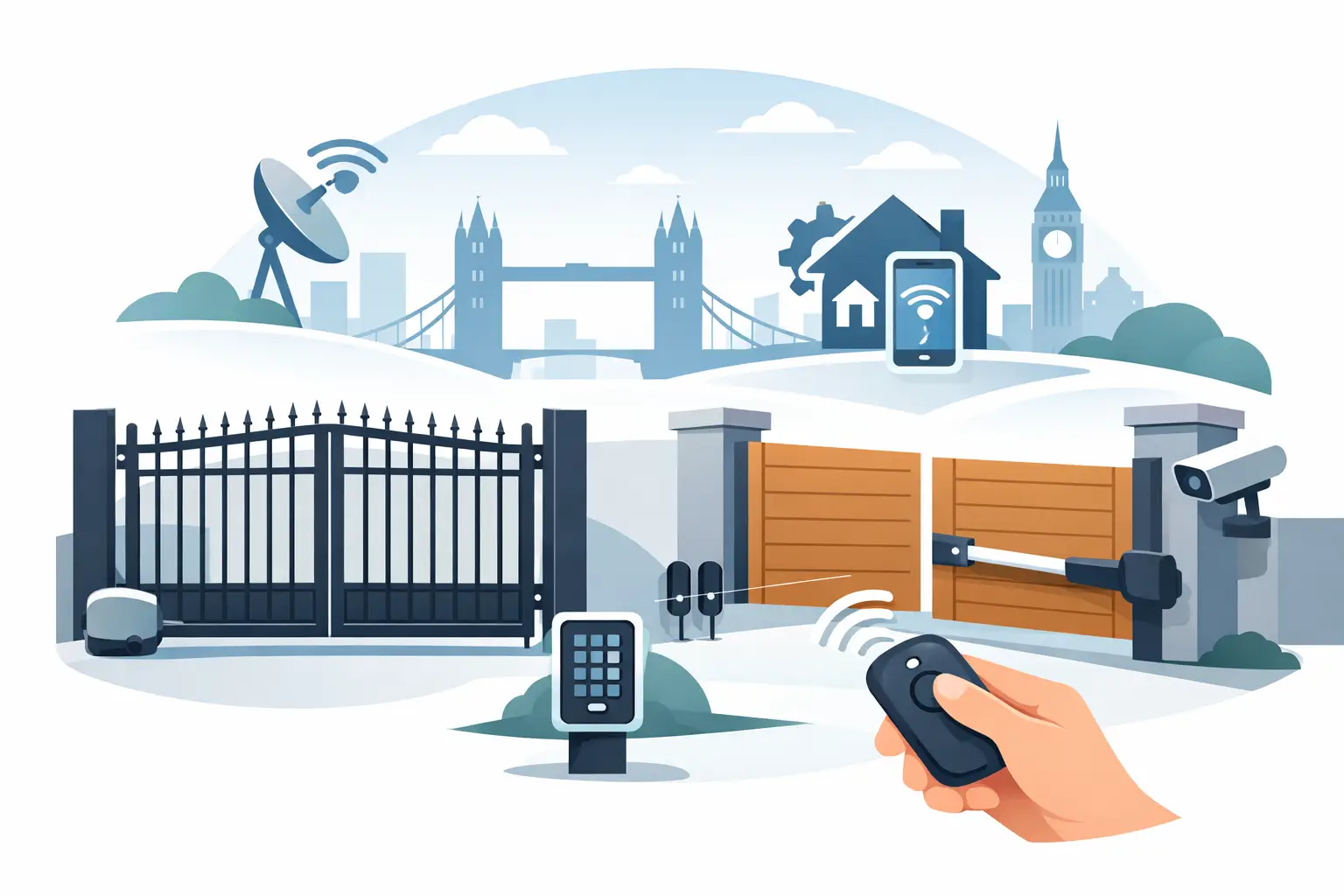
Intercoms, keypads, GSM entry and app-based controls can all improve day-to-day use. Video intercom systems are especially useful where you want to see who is at the entrance before granting access. For larger homes, flat-style developments or commercial premises, this can make the whole setup far more practical.
There is also a budget question here. Spending more on access control can sometimes deliver more real benefit than upgrading to a less visible motor option. It depends on how the gate is used, but convenience is often driven by the controls rather than the mechanics.
Best gate automation systems for homes
For most UK homeowners, the best system is one that combines dependable operation, straightforward controls and sensible long-term maintenance. Aluminium gates are especially well suited to automation because they are lightweight, strong and resistant to rust. That lower weight can reduce strain on components compared with heavier alternatives, while still providing a smart and secure entrance.
A typical residential setup might include above-ground motors for a pair of swing gates, photocells, manual release, remotes and a video intercom. That covers what many households need without overcomplicating the system.
If appearance is the main priority, underground operators may be worth considering. If value and ease of servicing matter more, above-ground automation is often the stronger choice. Neither answer is universal. It depends on the gate design, the driveway layout and how much importance you place on visible hardware.
Best gate automation systems for commercial sites
Commercial and multi-user sites usually need more from automation. A motor that works well on a private driveway may not be suitable for repeated daily cycles at a depot, office entrance or managed development.
Here, duty cycle, speed, integration and durability become more important. Sliding gates are often preferred for security and control, though swing gates still suit many layouts. Access control may need to include intercoms, keypads, timed opening, vehicle access management or multiple user permissions.
The best setup is usually one that balances traffic demands with predictable maintenance. Over-specifying can waste budget, but under-specifying leads to downtime, wear and frustration. For commercial buyers, dependable performance is often the real saving.
Installation quality matters as much as product quality
Even the best gate automation systems can disappoint if the installation is poor. Motor alignment, gate geometry, stops, cabling, drainage, foundations and safety setup all affect how the gate performs.
This is one reason why early specification is useful. If the gate, posts, automation and access control are considered together, fewer compromises are needed later. Retrofitting automation can work very well, but it sometimes reveals site constraints that would have been easier to handle at the design stage.
That joined-up approach is where specialist support adds real value. Aluminium Gates Direct helps customers align gate choice, automation and access control so the finished system works as a complete entrance solution rather than a collection of separate parts.
How to choose with confidence
If you are weighing up the best gate automation systems, start with the facts of the site. Gate type, width, weight, usage levels, power supply, driveway gradient and preferred access method should all be clear before products are compared.
After that, think in terms of ownership rather than just purchase price. The right system should be reliable, serviceable and suited to the way you will use it in winter, at night, in poor weather and over repeated daily operation. A lower upfront cost is not always better value if it brings more maintenance or less convenient access.
The most successful projects usually come from a straightforward brief and honest advice. When the gate, automation and intercom are chosen to work together, the result is simpler, safer and better suited to the property. That is what turns an automated gate from a nice feature into something you genuinely rely on every day.