

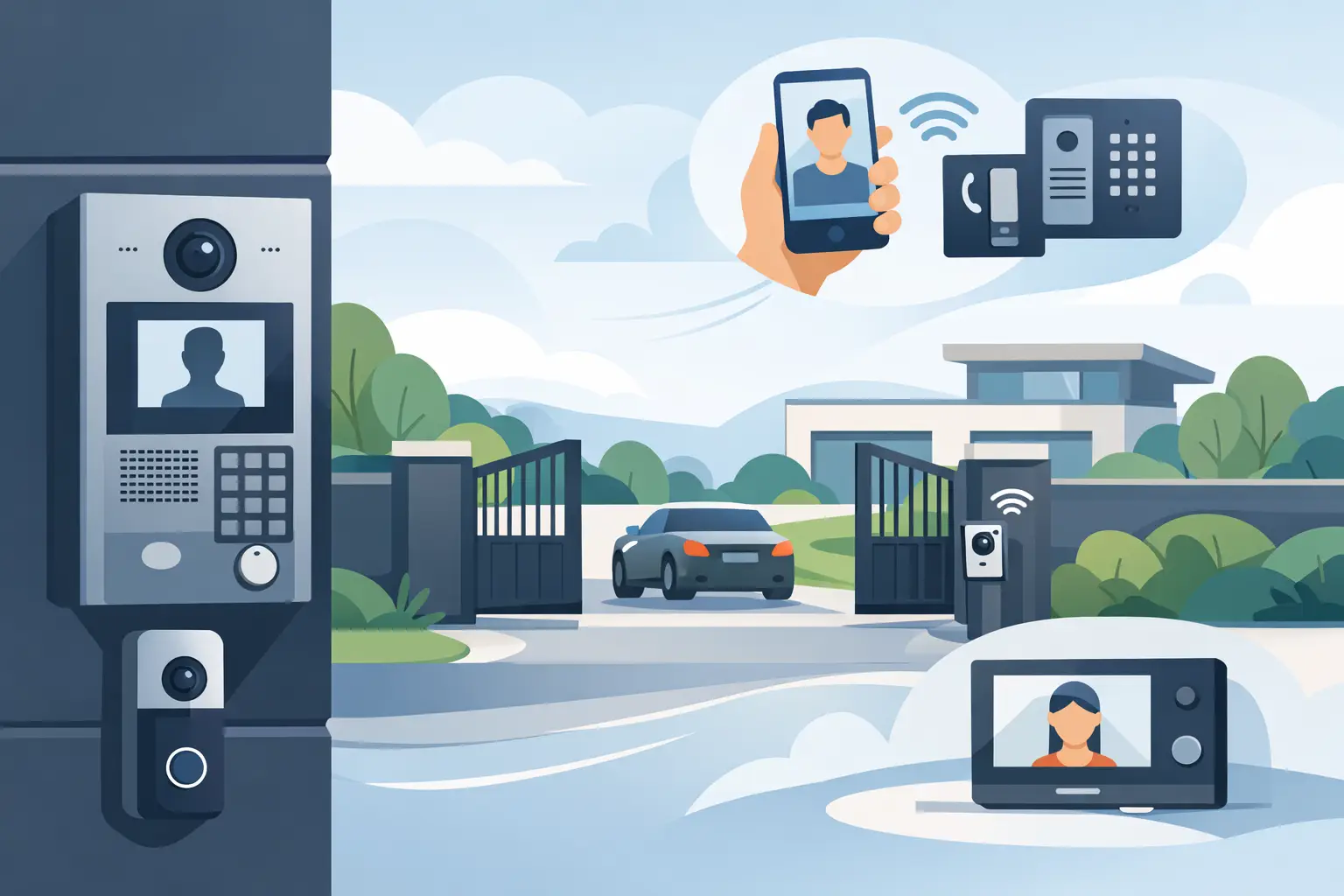
A gate can look the part and still fall short if access is awkward. That usually becomes obvious on wet evenings, busy school runs or at commercial sites where deliveries come and go all day. Intercom systems for gates solve that practical problem by letting you see, speak to and grant access without leaving the house, office or gatehouse.
For some buyers, the priority is simple convenience. For others, it is tighter control over who enters the property and when. In many cases, it is both. The right intercom should fit the gate type, the property layout and the way the site is used day to day, rather than adding features that sound impressive but are rarely needed.
Why intercom systems for gates matter
A gate is often the first line of access control, but on its own it does not tell you who is outside. An intercom adds that missing layer. At a residential property, that could mean checking whether it is a courier, a guest or an unexpected caller before opening the gate. At a commercial site, it can help staff manage visitor access without slowing down operations.
This matters even more where gates are automated. Once a gate can be opened remotely, the method of authorisation becomes central to security. A good intercom system helps make sure the gate opens for the right people, at the right time, with as little friction as possible.
There is also a practical benefit that is easy to overlook. A well-chosen system reduces unnecessary movement and interruption. Homeowners do not need to walk to the entrance whenever someone arrives. Site managers do not have to rely on ad hoc phone calls or manual checks. Over time, that convenience becomes part of the value.
What to consider before you choose
The first question is not which handset, monitor or app looks best. It is how the entrance actually works. A single pedestrian gate at the side of a property needs something different from a pair of automated driveway gates, and both differ again from a sliding gate on a commercial entrance.
Distance matters. If the gate is a long way from the house or control point, signal reliability and cabling requirements become more important. Some properties suit a hard-wired system because it offers stable performance over time. Others benefit from wireless or network-based options where cabling is difficult or costly. Neither is automatically better in every setting.
You also need to think about who will use the system. A private home may only need straightforward audio and video access from one or two internal devices. A block, office or business premises may need multiple users, app access, call routing and better audit control. When more than one person needs to answer the gate, the specification usually becomes more involved.
Audio only or video intercom
An audio-only system can still be a sensible option, especially where budget is tight or the use case is simple. If you recognise most callers by voice and the entrance is in a controlled setting, audio may be enough. It can also be easier for some users who prefer a basic, uncomplicated setup.
That said, video has become the preferred choice for many residential and commercial buyers because it gives you more certainty. Being able to see who is at the gate helps with deliveries, unknown callers and occasions when speech is unclear because of weather, traffic or background noise. It is not just about security in the strict sense. It is about making a better decision before granting access.
If you are choosing between the two, it is worth thinking about how often the caller will be someone you do not know. The more frequent those interactions are, the more useful video tends to become.
Wired, wireless and app-based options
A wired intercom system is often the most stable long-term solution, particularly on new projects or where groundwork is already planned. It tends to suit permanent installations where reliability is the main priority. For larger homes, blocks of flats and commercial premises, that consistency can be a real advantage.
Wireless systems can be useful where running cable would be disruptive or expensive. They can work well, but performance depends on the site conditions. Thick walls, gate pillars, long distances and interference can all affect reliability. That does not rule wireless out, but it does mean the site needs proper assessment rather than assumptions.
App-based intercoms are increasingly popular because they let you answer the gate from your mobile phone, whether you are indoors, elsewhere on the property or away from site. For many customers, that flexibility is the main selling point. Still, app control should not be treated as a substitute for a well-designed system. It depends on internet reliability, device permissions and the way users manage notifications. If instant response is critical, a dedicated monitor or internal station may still be the better primary control point.
Matching the intercom to the gate system
Not every intercom suits every gate automation setup. If the gate is already automated, the intercom needs to work properly with the existing motor and access controls. If you are specifying a complete new entrance, it makes more sense to treat the gate, automation and intercom as one joined-up system from the start.
This is where many problems can be avoided. A gate may be physically suited to the property, but if the access equipment has been pieced together without proper compatibility checks, the user experience can be poor. Delays, inconsistent release functions and awkward programming tend to show up later.
Swing and sliding gates each bring their own considerations. A sliding gate on a busy entrance may need faster, more controlled access logic. A pair of swing gates at a private driveway may place more emphasis on visitor communication and ease of use. The intercom should support how the gate performs in practice, not simply connect to it at the most basic level.
Residential and commercial needs are different
For homeowners, ease of use is usually high on the list. The system should be simple enough for everyday use by the whole household, including family members who may not want to rely on an app for everything. Clear audio, dependable video and uncomplicated access are often more valuable than a long feature list.
For developers and architects, appearance and integration matter as well. The entrance should feel considered, with intercom hardware that complements the gate design rather than looking like an afterthought. This is especially relevant on higher-spec homes and developments where presentation is part of the overall brief.
Commercial sites usually need a different balance. Security, durability and user management become more important, especially where there are regular visitors, staff, contractors or timed deliveries. In those cases, the best system is often the one that gives controlled flexibility. It should allow access when needed, but still maintain a clear and reliable process.
Installation, maintenance and long-term value
An intercom should not be judged only on purchase price. Installation complexity, compatibility and future support all affect the real cost. A cheaper unit that is difficult to integrate or unreliable in poor weather can end up costing more in disruption and remedial work.
Outdoor equipment needs to stand up to British conditions. Rain, cold, dirt and day-to-day use all place demands on gate entry hardware. That is why build quality matters. So does placement. Even a good unit can underperform if it is fitted too low, too exposed or in a position that makes camera use awkward.
Maintenance requirements are usually modest with a good system, but no access control equipment is entirely fit-and-forget. Firmware updates, connection checks and occasional servicing may be needed depending on the setup. The key is to choose a system that is dependable and supported, rather than one that becomes difficult to maintain after installation.
Getting the specification right
The best starting point is to be clear about what the system needs to do every day. Do you need to control one gate or several? Do you want audio only, or is video worth the extra investment? Should access be granted from an internal screen, a mobile phone or both? Will the system be used mainly by a household, a small office or a busy commercial team?
Once those points are clear, the choice becomes much easier. You can focus on suitability rather than marketing claims. For customers buying a new aluminium gate with automation, it often makes sense to discuss the intercom at the same time so everything is planned as one solution. That tends to give better results and fewer compromises later.
At Aluminium Gates Direct, that practical approach is central to helping customers choose with confidence. A gate entrance should look right, work properly and remain easy to live with over the long term. The right intercom system supports all three.
If you are weighing up options, it helps to think less about features on a brochure and more about the moments when the gate is actually used. That is usually where the right decision becomes clear.