
A gate now does more than mark the edge of a property. For many homeowners and site managers, it has become part of the overall design brief – shaping first impressions, improving security and reducing ongoing maintenance at the same time. That is why aluminium gate design trends are moving towards solutions that balance appearance, practicality and long-term value rather than focusing on style alone.
What is shaping aluminium gate design trends?
The strongest trend is not one single look. It is the shift towards gates that work harder for the property as a whole. Buyers want clean design, reliable performance and a finish that still looks smart years down the line. Aluminium suits that change well because it is lightweight, strong and far less demanding to maintain than timber or traditional steel.
Across residential and commercial projects, there is also more attention on how a gate fits with fencing, railings, access control and the building itself. A gate is rarely chosen in isolation now. Developers may want a coordinated perimeter solution. Homeowners often want the gate to match windows, front doors or external cladding. This has pushed design choices towards more tailored, better integrated options.
Clean lines remain the dominant look
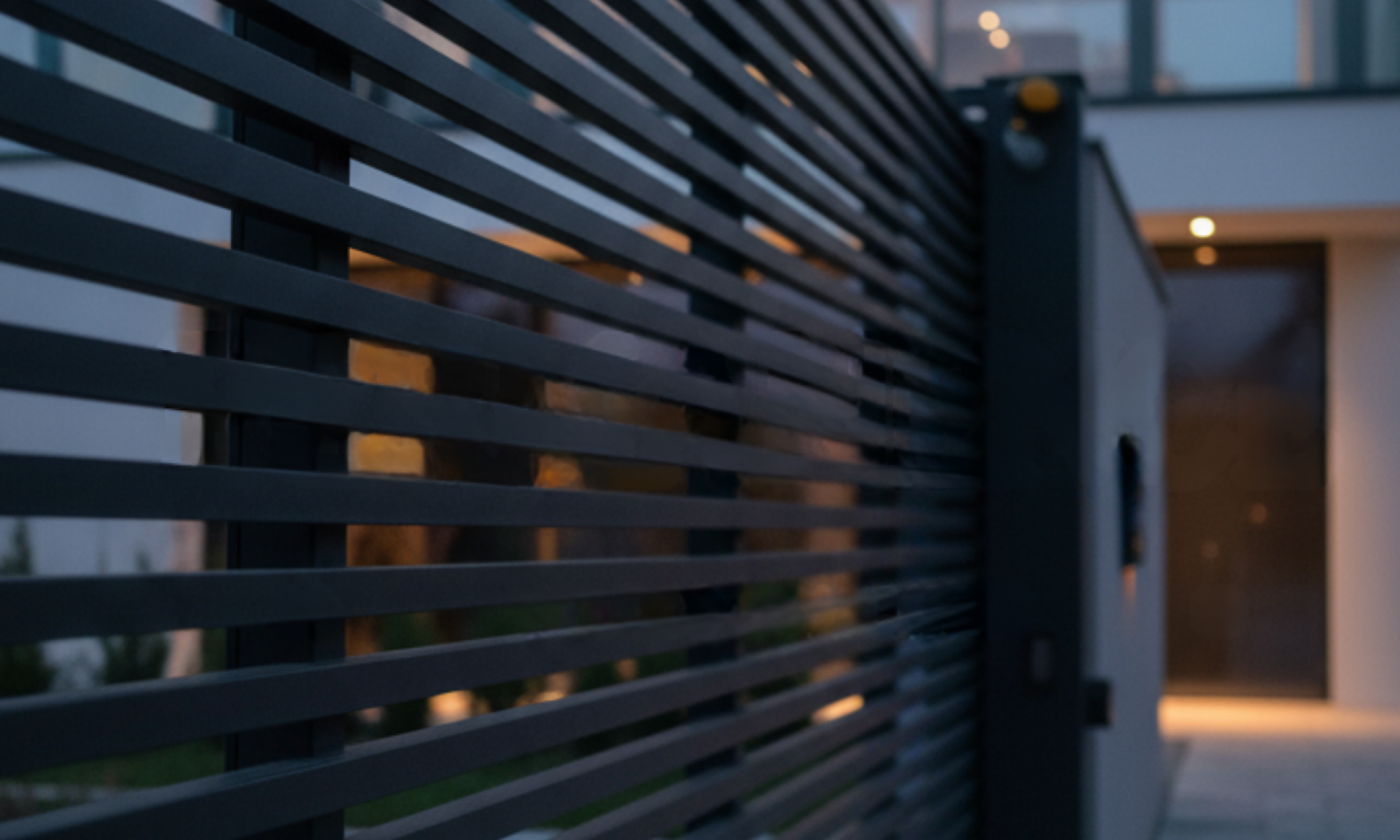
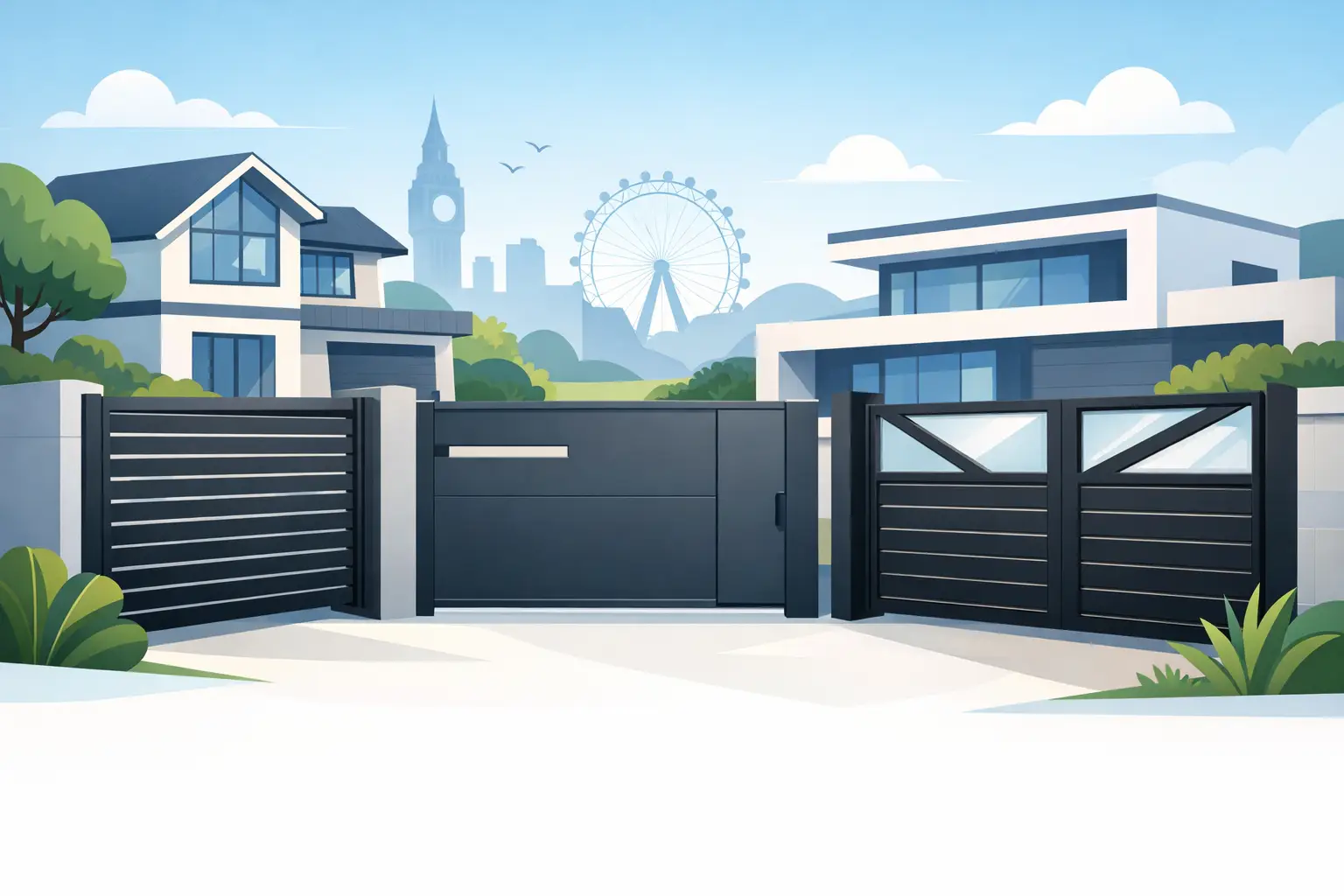
Minimalist styling continues to lead the market, particularly for modern homes, renovated driveways and new-build developments. Horizontal slat gates are especially popular because they create a crisp, contemporary appearance without feeling too stark. Depending on the spacing, they can be adjusted to give a more open frontage or greater privacy.
Vertical line designs are also gaining attention, especially where clients want a modern look that feels slightly softer or more architectural. Vertical patterns can make an entrance feel taller and more formal, which suits town properties, commercial premises and homes with strong symmetrical façades.
That said, minimal does not always mean plain. Subtle detailing in the frame, infill width or top profile can make a big difference. The most successful designs are usually the ones that keep the overall form simple but get the proportions right.
Privacy is becoming a bigger priority
One of the clearest aluminium gate design trends is the move towards more private frontage designs. This is particularly true for driveway gates on busy roads, corner plots and overlooked entrances. Close-boarded aluminium styles, solid infill sections and reduced gap spacing all answer a practical concern while still keeping the gate visually sharp.
Privacy, however, is not always the right answer in full. Some properties benefit from partial visibility, especially where a solid gate might feel too imposing or block natural light at the entrance. In those cases, semi-private slatted designs often strike a better balance between screening and openness.
Heritage styling is being updated, not replaced
While modern styles are strong, period-inspired and ornate gates still have a clear place in the market. The difference is that buyers increasingly want traditional character with the benefits of modern materials. Aluminium allows that combination well, giving the appearance of classic metalwork without the same maintenance burden associated with rust treatment and repainting.
For period homes, rural properties and more formal entrances, decorative tops, finials and shaped frames are still in demand. The trend is towards cleaner heritage styling rather than excessive ornament. Many customers want something elegant and in keeping with the property, but not overly busy.
This is where bespoke design matters. A standard off-the-shelf pattern may work for some openings, but listed-style homes, converted properties and architect-led projects often need a more considered approach to proportions, detailing and finish.
Colour choices are broadening beyond standard black
Black remains a dependable choice, particularly for railings, pedestrian gates and homes where a classic contrast is wanted. Anthracite grey, though, has become one of the most requested finishes for contemporary aluminium gates. It pairs well with modern brickwork, render, aluminium windows and composite doors, and it offers a sharp look without the visual weight of black.
There is also growing interest in softer greys, muted greens and heritage shades for rural and character properties. Wood-effect finishes are another notable trend, especially for customers who like the warmth of timber but want to avoid the upkeep. Done well, these finishes can soften the look of metal and help a gate sit more naturally within garden surroundings.
The right colour depends on context. A bold dark finish can make a modern statement, but on a smaller frontage it may feel heavier than expected. Lighter or textured finishes can be more forgiving, particularly where the gate is part of a wider scheme with fencing and boundary elements.
Matching gate style to gate type matters more than ever
Design trends are not only about appearance. They are also shaped by the mechanics of how a gate opens and how it will be used every day. Swing gates remain a popular option for many homes, but they need suitable clearance and levels. Sliding gates suit sites where space is tighter or where a more controlled entrance is needed, particularly on commercial premises or larger driveways.
That practical side influences design decisions. Some infill patterns look better on wider sliding gates, while certain ornate or heavily framed styles may suit swing gates more naturally. For pedestrian gates, buyers often want a coordinated look with the main entrance gate, but the scale and function need to be considered separately.
A trend that continues to grow is treating the full entrance as one system rather than a single product. That means thinking about the main gate, pedestrian access, fencing, automation and intercom together from the outset.
Smart access is now part of the design conversation
Automation used to be seen as an upgrade added at the end of the process. Now it is often considered much earlier, and that is influencing design choices. Clients increasingly want electric gates, integrated safety features and intercom systems built into the plan rather than retrofitted later.
For residential customers, convenience is a major driver. For commercial buyers, controlled access, reliability and site management are usually the bigger concern. In both cases, the gate design needs to work with motors, access controls and usage levels.
This does not mean every gate needs full automation. Manual gates can still be the right choice for smaller openings, lower traffic use or tighter budgets. But if automation may be added later, it makes sense to allow for that possibility in the initial specification.
Bespoke sizing and made-to-order design are increasingly expected
Another of the most important aluminium gate design trends is the move away from one-size-fits-all thinking. Many customers begin with a visual idea, but the final specification depends on opening width, ground levels, privacy needs, planning considerations and how the gate will actually be used.
This is especially relevant in the UK, where properties vary so much. A suburban driveway, a country home entrance and a commercial service yard all place different demands on the gate. Readymade options are valuable where speed and budget are priorities, but bespoke gates are often the better route when fit, appearance and site conditions need more careful attention.
A bespoke approach also helps when matching existing railings, boundary lines or architectural details. The result is usually more coherent and often better value over time because the gate is designed around the site rather than forced into it.
Durability is no longer just a technical selling point
Low maintenance has become part of design appeal, not separate from it. Buyers increasingly understand that a gate should continue to look good without constant sanding, staining or repainting. Aluminium answers that expectation well, which is one reason it continues to gain ground against timber and heavier steel alternatives.
For busy homeowners, that means less routine upkeep. For developers and commercial buyers, it means a product that supports lifecycle value and site presentation with less ongoing attention. Design trends are therefore favouring finishes and construction choices that stand up well in daily use, especially in exposed coastal or urban environments where wear can show quickly.
Choosing a trend that will still work in ten years
Following current taste is sensible up to a point, but the best gate choices are not based on fashion alone. A very minimal gate may suit a contemporary home perfectly and still look right years later. On a more traditional property, the same design could feel out of place from day one.
The most successful projects usually start with the property, the setting and the practical brief. Do you need privacy or visibility? Is automation part of the plan? Will the gate be used several times a day? Does it need to coordinate with fencing, railings or access control? Once those questions are clear, the right design direction becomes much easier to define.
At Aluminium Gates Direct, that is often where the best results come from – not simply choosing what is popular, but matching the design to the property, the budget and the way the entrance needs to perform. Trends can point you in the right direction, but a well-chosen gate should still feel right long after the current look has moved on.