A gate often looks like a simple purchase until you start comparing sizes, styles, access requirements and budgets. That is usually the point where the real question appears – should you choose bespoke or readymade gates? The right answer depends less on what looks best in a brochure and more on how your entrance needs to work day after day, for years to come.
For some properties, a readymade gate is the most sensible route. It can offer a faster, more cost-effective solution with a clean, professional finish. For others, bespoke is the better investment because the opening is unusual, the design needs to match existing features, or automation and access control need to be planned in from the start.
Bespoke or readymade gates: what is the difference?
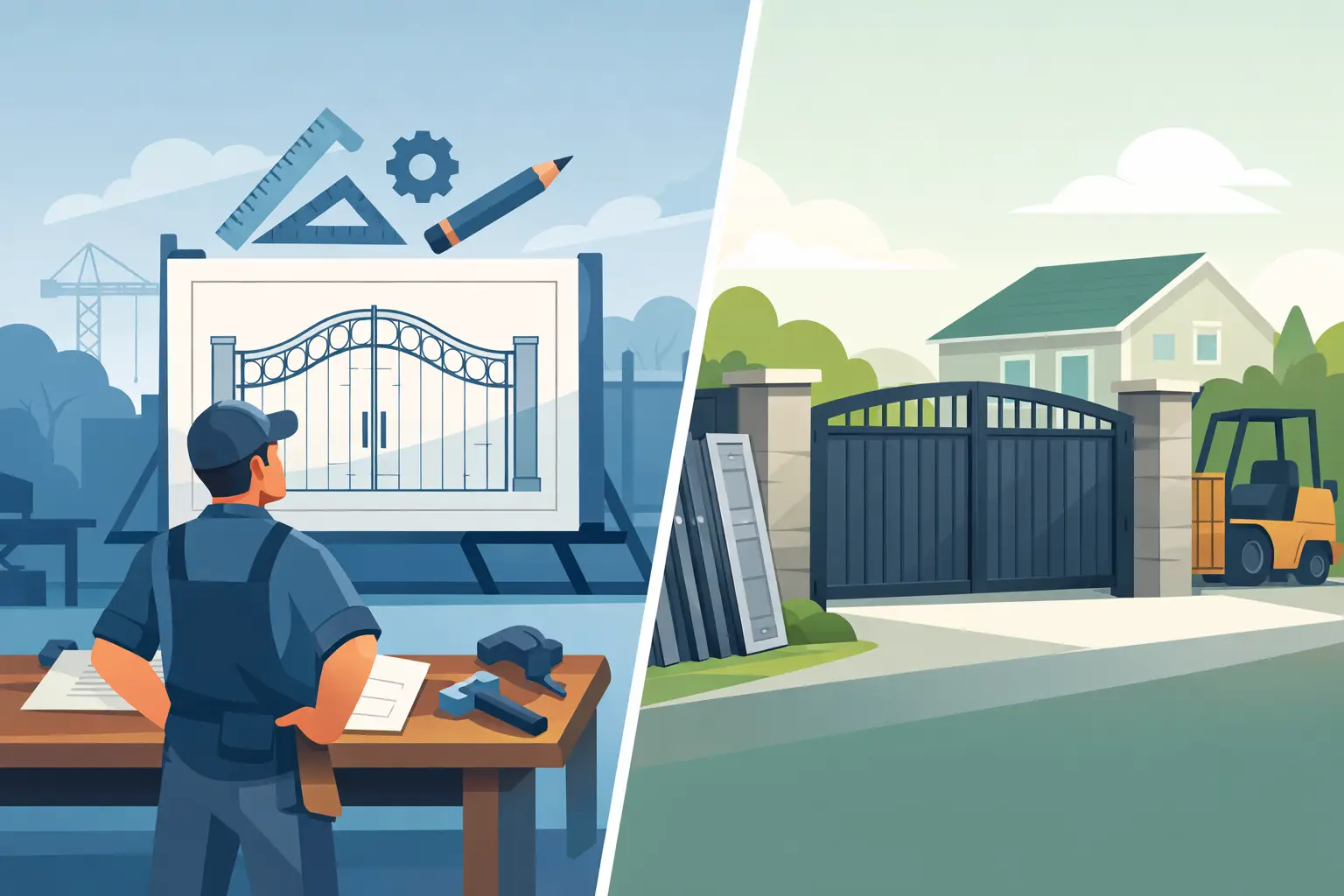
Readymade gates are manufactured in standard sizes and fixed designs. They are ideal where the opening is straightforward and the chosen style works without alteration. In practical terms, they simplify the buying process because dimensions, lead times and costs are usually more predictable.
Bespoke gates are made to order. That means the gate is produced to suit your specific width, height, layout and design preferences. Bespoke options are often chosen for sloped driveways, non-standard entrances, period properties, larger commercial openings or projects where appearance and specification matter just as much as function.
Neither option is automatically better. The best choice comes from matching the gate to the site, the usage and the level of customisation required.
When readymade gates make the most sense
If your opening suits a standard size and you want a straightforward solution, readymade gates can be excellent value. Many homeowners are surprised by how good a well-made standard gate can look, particularly in aluminium. You still get a smart, durable entrance without paying for custom manufacturing where it is not needed.
Readymade gates are often a strong fit for side access, pedestrian entrances, gardens and standard driveways. They can also suit developers and trade buyers working across multiple plots where consistency, speed and budget control are priorities.
The main advantage is efficiency. With fewer design variables, the process tends to move more quickly from selection to delivery and installation. Pricing is also easier to understand upfront, which helps customers compare options without feeling that every decision creates a new cost.
That said, standard sizes can only work where the site allows it. If the opening is awkward, if levels are uneven, or if you are trying to achieve a particular architectural finish, compromises can start to show. A gate that is almost right is not always right enough.
When bespoke gates are worth it
Bespoke gates come into their own when the project has specific demands. A wider driveway, an unusual entrance layout, walls or piers that are already fixed, or a requirement to match railings and fencing can all point towards a made-to-order solution.
There is also the design aspect. For many homeowners, the front entrance is one of the first things people notice. For developers and architects, it forms part of the overall visual language of the scheme. A bespoke gate gives you more control over proportions, infill styles, privacy levels, decorative detail and finish.
This matters because gates are not only about security. They affect kerb appeal, site presentation and how a property feels on arrival. A bespoke design can make the entrance look intentional rather than adapted.
From a practical point of view, bespoke can also be the better technical choice. If automation is planned, if the gate weight and swing need careful calculation, or if intercom and access systems are part of the project, custom design allows those elements to be considered early rather than added as an afterthought.
Budget matters, but so does value
Cost is often the first filter when comparing bespoke or readymade gates, and understandably so. Readymade options usually come with a lower initial outlay because the design and manufacturing process is standardised. For many projects, that makes them the obvious choice.
But price alone does not tell the full story. A cheaper gate that needs compromise on fit, appearance or installation can become less cost-effective over time. If the opening needs adjustment, if extra fabrication is required on site, or if the result never quite looks right, the saving may not feel like a saving for long.
Bespoke gates usually cost more because they involve custom manufacturing and a more tailored specification. Yet that additional spend can deliver better long-term value where exact sizing, integrated automation or a stronger visual match is needed. In other words, the best-value gate is not always the cheapest one – it is the one that solves the right problem first time.
Why material choice changes the equation
Whether you choose bespoke or readymade, material makes a major difference to ownership costs and day-to-day satisfaction. Aluminium remains a strong option for both formats because it offers durability without the ongoing maintenance associated with timber or the weight and corrosion risks often linked with steel.
For homeowners, that means no regular sanding, staining or repainting just to keep the gate looking presentable. For commercial sites, it means a smart perimeter solution that can cope with regular use while reducing upkeep demands.
The lightweight strength of aluminium also supports smoother operation, which is especially useful for automated systems. A gate that performs reliably over time is not just about convenience. It also affects wear on motors, hinges and fixings.
Bespoke or readymade gates for automation
Automation is one area where the choice deserves careful thought. A readymade gate can still work very well with automation if the size, weight and site conditions are suitable. For straightforward residential driveways, this can be an efficient way to achieve secure and convenient access.
However, bespoke gates often give more flexibility for automated setups. You can account for ground conditions, hinge positions, opening angles, safety requirements and the placement of intercoms or access control from the start. That can be especially useful for wider entrances, sloping approaches and commercial premises where traffic flow and security procedures are more demanding.
If automation is part of the plan, it is worth looking at the whole system rather than treating the gate as a separate purchase. The gate, posts, motors, control equipment and access devices all need to work together properly.
Design, privacy and property style
A gate should suit the building behind it. That sounds obvious, but it is one of the most common reasons customers move from readymade to bespoke. Standard designs often cover popular tastes well, but they may not fully complement a period property, a modern self-build or a high-spec commercial frontage.
Privacy is another factor. Some customers want an open, ornamental look that frames the property. Others want solid infill or reduced visibility from the road. Bespoke manufacturing gives you more control over that balance, while readymade ranges can be ideal if one of the available styles already achieves what you need.
There is no rule saying bespoke is always more attractive. A well-chosen readymade aluminium gate can look excellent. The key is whether the design feels properly matched to the site rather than simply available.
How to decide with confidence
The easiest way to choose is to start with the site, not the catalogue. Measure the opening accurately, consider how the gate will be used, think about privacy and security, and decide whether automation is likely now or later. From there, it becomes much clearer whether a standard solution will do the job or whether bespoke is the better route.
It also helps to be honest about priorities. If speed, simplicity and cost control matter most, readymade may be exactly right. If the entrance is a focal point, the dimensions are unusual, or the project needs a more tailored finish, bespoke is often the smarter decision.
At Aluminium Gates Direct, this is usually where expert guidance matters most. Customers do not always need the most customised option. They need the option that suits their property, budget and long-term plans without unnecessary complication.
A gate is something you will see and use every day, so it is worth choosing the version that fits properly, works reliably and still looks right years from now.