
A driveway gate should feel solid when it closes, not become a constant source of maintenance, alignment issues or repainting. That is why many UK property owners are now looking closely at lightweight gates for driveways, especially where ease of use, long-term durability and automation matter just as much as appearance.
The term lightweight can be misleading. In practice, it does not mean flimsy or less secure. It means a gate that places less strain on posts, hinges, motors and daily operation while still delivering the strength and presence you expect at the front of a property. For homeowners, developers and commercial buyers alike, that balance can make a real difference over time.
Why lightweight gates for driveways are in demand
Traditional driveway gates in timber or steel can look impressive at first, but their weight brings practical challenges. Heavy gates put more pressure on hinges and support posts, which can lead to sagging, difficult movement and increased wear on automation systems. If the gate is used several times a day, those issues tend to show up sooner.
Lightweight gates for driveways reduce that load. They are generally easier to open and close, more suitable for automation, and less likely to create avoidable stress on the overall gate system. That matters on a busy family driveway, a multi-plot development or a commercial entrance where reliability is essential.
There is also the maintenance question. Buyers often start by thinking about style, then quickly realise that upkeep matters just as much. If a gate looks good on installation day but needs frequent treatment, rust repair or repainting, the long-term cost changes the picture.
Material choice matters more than the word lightweight
When people ask for a lightweight gate, they are usually asking for a gate that is easier to live with. The material is what determines whether that goal is realistic.
Aluminium is the obvious fit
Aluminium offers a useful combination that is difficult for other materials to match. It is significantly lighter than steel, it does not rust, and it is strong enough for both residential and many commercial applications. That makes it particularly well suited to driveway gates where durability and low maintenance are high priorities.
A well-made aluminium gate can provide the clean lines of a modern entrance, the detail of a more traditional design, or a fully bespoke solution shaped around the property. It also works well with powder-coated finishes, giving buyers a wide choice of colours without the maintenance burden associated with painted timber or untreated metal.
For many customers, the biggest advantage is not just the lower weight on paper. It is the fact that aluminium gates are easier to specify for regular use and automation without compromising on appearance.
Timber and steel still have a place
That said, the right choice does depend on the project. Timber remains popular where a natural look is the priority, especially on rural or period properties. Steel can suit projects that call for a more traditional wrought-iron appearance or higher impact resistance.
The trade-off is that both usually demand more attention over time. Timber needs ongoing care to protect it from moisture and movement. Steel is strong, but heavier and more prone to corrosion if not properly protected and maintained. If low upkeep and day-to-day practicality are central to the brief, aluminium often becomes the more sensible option.
What to look for in lightweight driveway gates
Not all gates described as lightweight perform in the same way. Good specification matters.
Strength in the frame and build quality
A lightweight gate still needs structural integrity. The quality of the frame, joints, fixings and finish will have more impact on performance than marketing language. A poorly made gate can cause problems regardless of material, while a well-engineered aluminium gate can feel secure, stable and substantial.
This is particularly important for wider driveway openings. As the span increases, design and fabrication become even more important. A specialist supplier should be able to advise whether a swing gate or sliding gate is the better fit, and whether a standard or bespoke design is more appropriate.
The right opening style
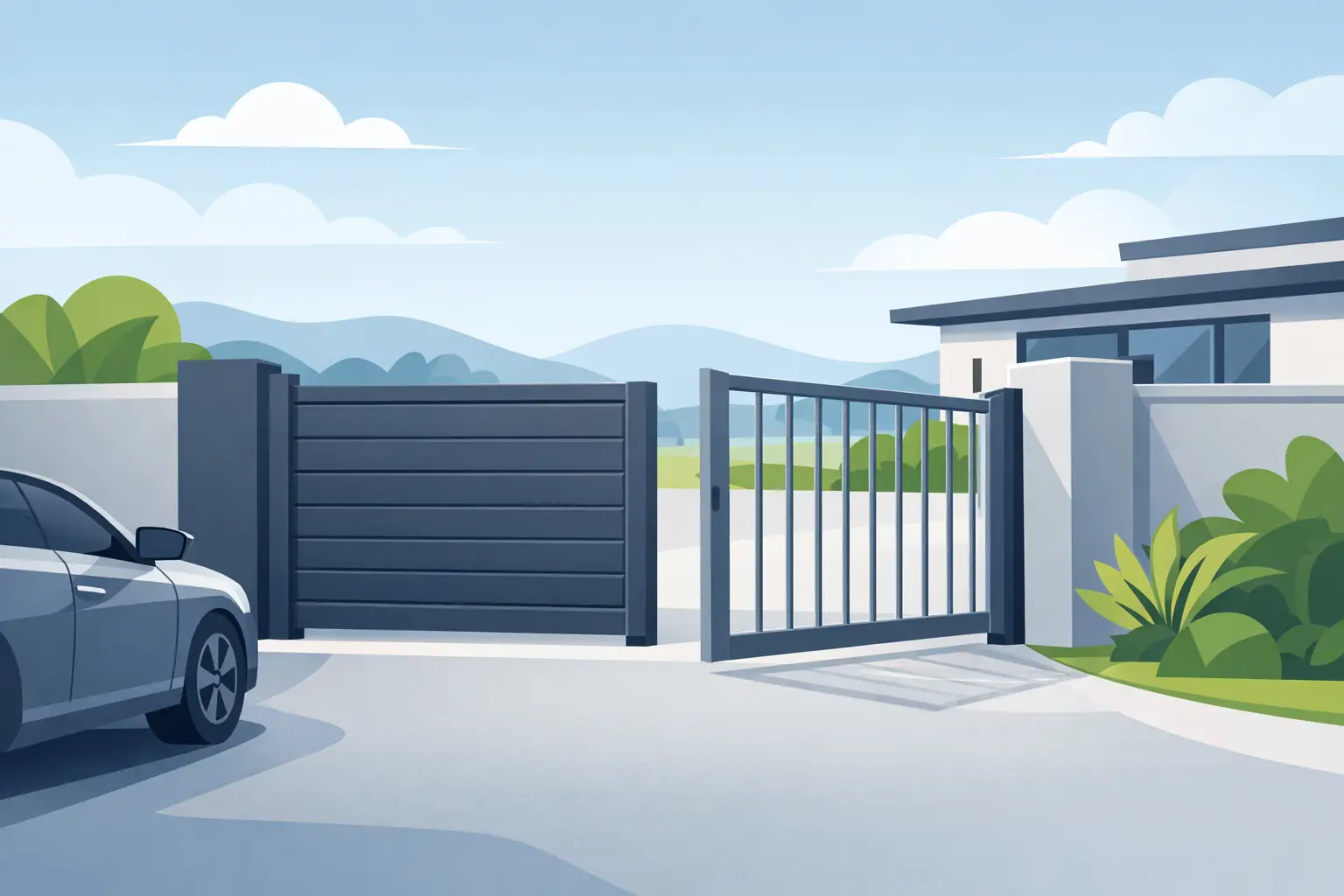
Swing gates remain a popular choice for domestic driveways and suit many properties well. They can be elegant, practical and straightforward to automate when space allows. Sliding gates are often the better answer where the driveway slopes upward, space is tighter, or the gate needs to work efficiently across a wider opening.
Weight plays into this decision. A lighter gate leaf can improve ease of movement in both formats, but the site layout should always come first. A lightweight gate is only a good solution if it also works with the property’s access and clearance requirements.
Privacy, appearance and airflow
Some customers want a fully boarded look for privacy. Others prefer open railings or decorative infills to maintain visibility and a lighter visual effect. There is no single right answer here. A solid driveway gate can create stronger screening and a more private frontage, while a more open design may suit exposed locations better by allowing wind to pass through.
This is where bespoke design can be valuable. The best result is usually the one that matches the building style, the practical demands of the entrance and the customer’s budget, rather than forcing a standard design onto every property.
Lightweight gates and automation
Automation is one of the strongest reasons buyers consider lighter driveway gates in the first place. Gate motors work more efficiently when they are not having to move unnecessary weight day after day. That can help with smoother operation, reduce strain on components and support better long-term performance.
For domestic buyers, this often comes down to convenience. Opening the gate from the car, controlling access remotely and integrating intercom systems can make everyday use much easier. For commercial sites or larger residential developments, automation becomes even more important because reliability, traffic flow and managed access are all part of the specification.
A lighter gate does not remove the need for correct installation and proper motor selection. Wind exposure, opening frequency, gate width and usage patterns still matter. But where two gates offer similar performance, the one carrying less weight is often the better partner for automation.
Design flexibility without the upkeep
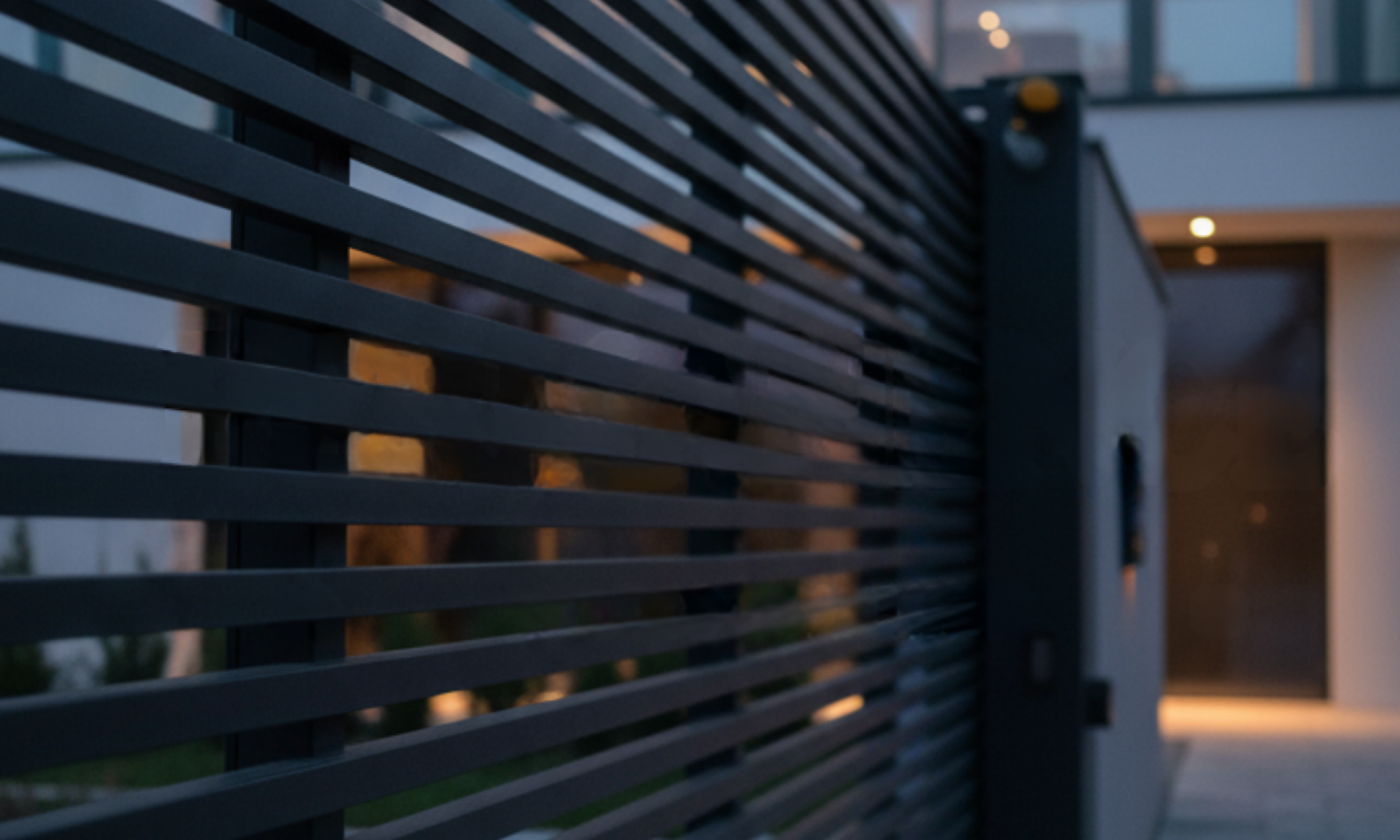
One reason aluminium has grown so quickly in the UK gate market is that buyers no longer have to choose between practical and attractive. Lightweight driveway gates are available in contemporary horizontal slat designs, classic vertical formats, ornate styles and made-to-measure layouts that suit everything from new-build homes to more traditional properties.
For developers and trade buyers, this flexibility is useful because it allows the gate design to align with wider fencing, railings and perimeter treatments. For homeowners, it means the gate can improve kerb appeal without creating another maintenance job.
That low-maintenance point is worth being clear about. Maintenance-free does not mean you never clean the gate or inspect moving parts. It means the material itself is not demanding regular sanding, staining or rust treatment to stay presentable. For most buyers, that is the kind of saving that matters.
When lightweight gates are the wrong choice
There are cases where the lightest possible option is not the best one. High-risk commercial sites may need a more security-led specification. Exposed coastal or high-wind locations might call for specific design adjustments. Some listed or heritage properties may also need a material or style that aligns with planning expectations.
This is why good advice matters. The right gate is not simply the lightest model available. It is the one that fits the opening, the level of use, the desired appearance and the access requirements of the site. In many cases, that still points to aluminium, but the final specification should be based on the project rather than a single feature.
Buying with confidence
If you are comparing lightweight gates for driveways, it helps to think beyond the gate leaf itself. Ask how the gate will be used, whether automation is planned now or later, what level of privacy is needed and how much maintenance you realistically want to take on. Also consider whether a readymade gate will suit the opening or whether a bespoke option will avoid compromise.
This is where working with a specialist supplier can save time and cost. Clear advice on gate type, sizing, design, finish and installation support usually leads to a better result than choosing on appearance alone. Aluminium Gates Direct, for example, supports customers across the UK with readymade and bespoke options, helping match each project to the right balance of style, durability and budget.
A driveway gate is not something most people want to replace in a few years. If you choose well, it should look right, operate reliably and ask very little of you once it is in place. Lightweight gates make a lot of sense when they are properly designed, correctly specified and built from a material that can handle British conditions without becoming a burden. If you start with that standard, the rest of the decision becomes much clearer.