A gate can look right on day one and still be the wrong choice five winters later. That is usually where the real question starts. When people ask what is the best gate material, they are rarely asking about appearance alone. They want to know what will last, what will need the least upkeep, what suits automation, and what represents good value over time.
The honest answer is that the best material depends on where the gate is going, how often it will be used, and how much maintenance you are prepared to take on. For most residential and commercial buyers in the UK, aluminium is now the strongest all-round option. It offers a rare combination of durability, low weight, corrosion resistance and low maintenance that traditional materials often struggle to match.
What is the best gate material for most properties?
If you are comparing the main gate materials on a practical basis rather than tradition, aluminium comes out ahead in most cases. That is especially true for driveway gates, side gates, garden gates and automated entrance gates where long-term performance matters as much as first impressions.
The reason is fairly simple. A gate lives outside all year. It deals with rain, frost, changing temperatures, dirt, daily use and, in many cases, automation. A material that is strong but too heavy can put strain on hinges, posts and motors. A material that looks attractive but needs regular treatment can become expensive and time-consuming to own. A material that corrodes or warps will eventually affect both appearance and function.
Aluminium avoids many of those common problems. It is lightweight compared with steel, it does not rust like ferrous metals, and it does not absorb moisture like timber. With the right finish, it keeps its appearance well and requires very little routine maintenance beyond occasional cleaning.
That does not mean every other material is a poor choice. It means aluminium tends to give the most balanced answer when customers want strength, appearance, reliability and lower ownership costs in one package.
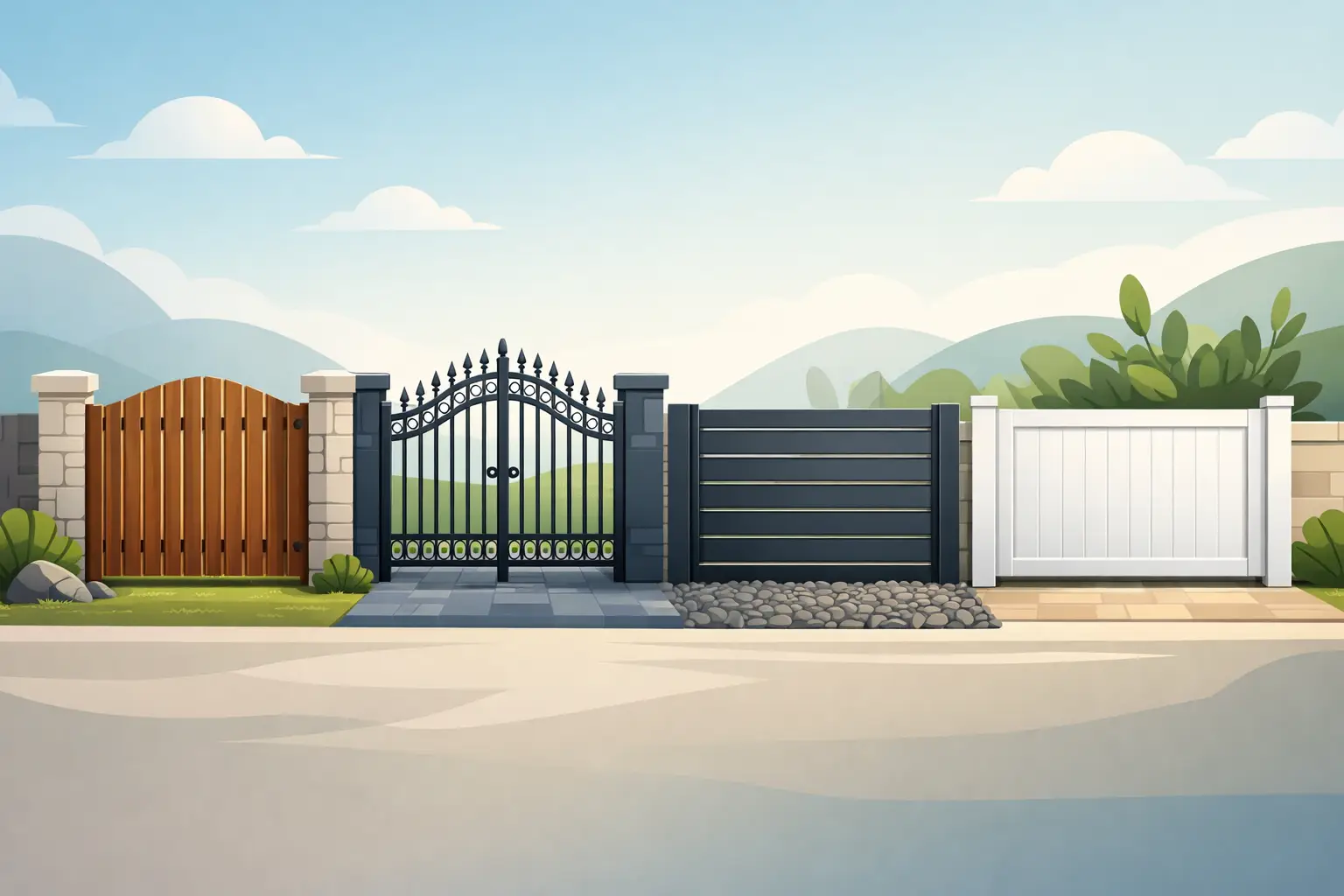
Comparing the main gate materials
Aluminium
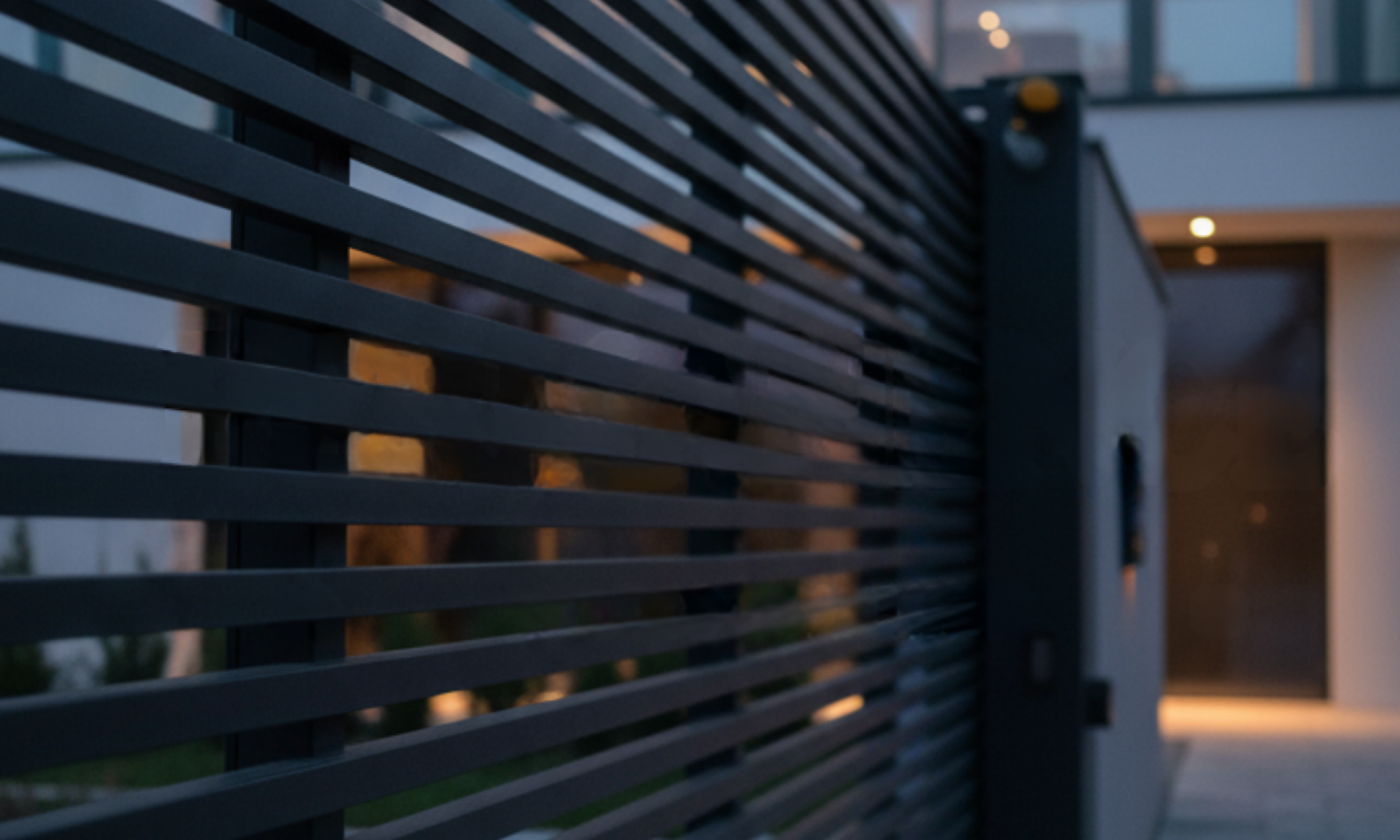
Aluminium is increasingly the preferred choice for modern gate systems because it performs well across the board. It is strong enough for residential and commercial use, yet light enough to reduce stress on hardware and automation. That lower weight matters more than many buyers expect. It can improve ease of operation, support smoother automated movement and reduce wear over time.
It is also a sensible material for the UK climate. Unlike steel, aluminium will not rust. Unlike timber, it will not rot, swell or twist due to moisture. For customers who want a gate that keeps its shape and finish with minimal upkeep, that makes a real difference.
From a design point of view, aluminium is versatile. It suits contemporary styles, traditional layouts and bespoke designs, and it is available in a wide range of colours and finishes. That makes it easier to match the gate to the property rather than compromise on appearance for the sake of practicality.
The main trade-off is usually upfront cost. A quality aluminium gate can cost more initially than a basic timber option. However, when you factor in reduced maintenance, long-term durability and better compatibility with automation, the value picture often changes in aluminium’s favour.
Steel
Steel is often chosen for its strength and security credentials. It has a solid, substantial feel and can work well for certain commercial or high-security applications. In ornate designs, it can also create a classic look that suits period properties.
The issue with steel is that strength comes with weight. Heavier gates may require more substantial support structures, stronger hardware and careful planning if they are to be automated. Weight also affects handling, installation and ongoing wear.
The other key consideration is corrosion. Steel can be protected with galvanising and powder coating, but if that protective finish is damaged and not maintained properly, rust can become a problem. In exposed locations, coastal areas or high-traffic sites, that maintenance burden can increase.
Steel still has a place, particularly where maximum impact resistance is a priority, but for many buyers it introduces more upkeep and more structural demand than aluminium.
Timber
Timber remains popular because of its natural appearance. For cottages, rural settings and traditional garden boundaries, wood can feel warm and familiar in a way metal sometimes does not. It can also be customised and painted or stained to suit the property.
That said, timber is the material most likely to demand ongoing attention. In the British climate, wooden gates are exposed to damp, UV, frost and temperature changes. Over time, timber can swell, shrink, warp, crack or rot if not properly treated and maintained.
Even a well-made timber gate usually needs periodic sanding, staining, painting or sealing to stay in good condition. For some homeowners, that upkeep is part of the appeal. For others, it becomes a recurring cost and inconvenience.
Timber can still be the right choice where natural character matters most, but it is rarely the best option for buyers who want a long-lasting, low-maintenance solution.
Composite
Composite gates are sometimes considered as a middle ground between timber appearance and lower maintenance. Depending on the product, they can offer a wood-effect finish with better resistance to weathering than natural timber.
However, not all composite systems are equal, and the long-term performance can depend heavily on the quality of the construction and frame. In many cases, the structural support still relies on metal elements, and lower-grade products may not deliver the durability buyers expect.
Composite can suit certain projects, but it is often a more niche option compared with aluminium, steel or timber. Buyers should look closely at the core construction, surface finish and expected lifespan rather than assume all composite gates behave the same way.
What matters most when choosing the best gate material?
The right material depends on the demands of the site as much as the appearance of the gate.
If low maintenance is your priority, aluminium is difficult to beat. It does not need the regular treatment associated with timber and avoids the corrosion concerns that can come with steel. For homeowners who want kerb appeal without a long maintenance list, that matters.
If the gate will be automated, weight becomes especially important. Lighter gates are generally easier on motors, hinges and posts. That makes aluminium a practical choice for both swing and sliding gates, particularly on busy driveways or commercial access points where reliability matters.
If security is the main concern, material is only one part of the picture. Gate design, frame construction, locking, access control and installation quality all matter. A well-designed aluminium gate can provide excellent security while still being easier to operate and maintain than a heavier steel alternative.
Budget should be looked at over the full life of the gate, not simply at purchase price. A cheaper timber gate may cost less at the start, but regular maintenance and earlier replacement can make it more expensive over time. A higher-quality aluminium gate often gives better long-term value because it keeps performing without constant attention.
What is the best gate material for driveways, gardens and commercial sites?
For driveway gates, aluminium is usually the strongest all-round choice. It offers the right balance of visual appeal, structural performance and suitability for automation. This is particularly relevant for wider openings where excessive weight can create avoidable strain.
For garden and side gates, aluminium again makes a strong case because it combines smart appearance with very little upkeep. Timber may still appeal where a softer, more traditional finish is important, but it comes with more maintenance.
For commercial sites, the answer depends on use and specification. Aluminium is often ideal for controlled access points, offices, flat developments, schools and business premises where appearance, durability and automation are key. Steel may still be selected for certain high-security or industrial environments, but the added weight and maintenance should be part of the decision.
Why aluminium stands out as the long-term option
The best gate material is the one that suits the property, the level of use and the expectations you have for upkeep. For many UK buyers, that points clearly towards aluminium because it solves several common problems at once.
It is durable without being overly heavy. It is attractive without demanding constant maintenance. It works well for bespoke and readymade designs, and it is well suited to modern automation and access systems. For residential customers, that means less hassle and better long-term appearance. For trade and commercial buyers, it means a reliable, specification-friendly solution that supports performance and presentation.
At Aluminium Gates Direct, we see this decision every day across projects of different sizes, styles and budgets. The right gate should not leave you balancing looks against practicality if you can have both.
If you are weighing up materials, the best place to start is not with a trend or a guess. It is with the conditions on site, the level of maintenance you want to avoid, and how you expect the gate to perform years from now.