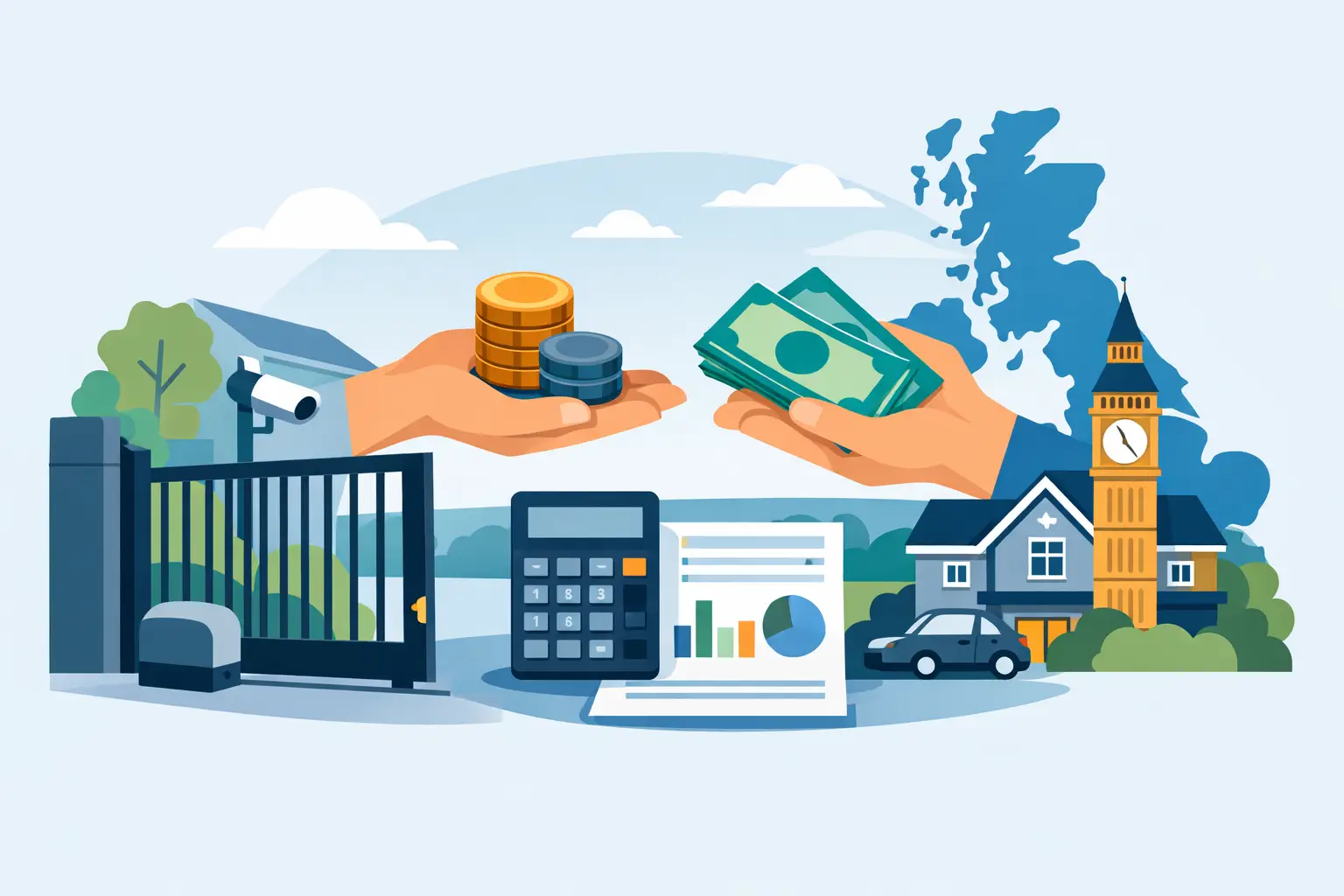
A driveway gate that opens at the touch of a remote, keypad or phone can make arriving home feel simpler and make access control far more practical. But gate automation costs are not just the price of a motor. The gate type, site conditions, power supply, safety equipment and access controls all affect the final budget.
For a reliable system, it pays to look at the whole project rather than choosing automation as an afterthought. A correctly specified operator should suit the gate’s weight, width, usage level and opening style, while the installation must account for safety, foundations and everyday use.
What do gate automation costs include?
A typical automated gate project has several connected elements: the gates themselves, automation equipment, installation, electrical work and access control. Some properties need only a straightforward pair of swing gates with remote controls. Others require a sliding gate, intercom system, vehicle detection and significant groundwork.
As a broad guide, automation equipment alone may start from around £700 to £1,500 for a quality domestic setup, depending on the gate configuration and controls selected. A fully installed automation package can often fall between £2,000 and £5,000 or more. This is separate from the cost of the gates, posts, brickwork or any substantial landscaping and groundwork.
These ranges are useful for early budgeting, not a substitute for a site-specific quotation. A lightweight aluminium driveway gate has very different requirements from a long, solid gate at the entrance to a busy commercial premises.
The biggest factors affecting the price
Swing or sliding gate automation
Swing gates are a popular option for residential driveways. They normally use one motor per leaf, with either underground operators or above-ground articulated or ram-style units. Above-ground systems are generally more accessible for servicing and can be a practical, cost-conscious choice. Underground motors provide a cleaner appearance but usually cost more because of excavation, drainage and installation complexity.
Sliding gates need a track and rollers, or a cantilever arrangement where the gate travels without a ground track across the opening. They use a single motor but require room for the gate to slide back fully when open. Although sliding automation can be an excellent choice for sloping driveways or wide entrances, the supporting groundworks and track requirements can increase the overall cost.
The right choice depends on the available space, driveway gradient, gate design and how vehicles approach the entrance. It is not always sensible to choose the cheapest automation type if it does not work well with the site.
Gate size, weight and construction
Automation should be selected for the actual gate, rather than a generic opening width. Wide gates, tall privacy panels and locations exposed to strong winds place greater demands on motors, hinges and supporting posts. A motor may move a gate comfortably in calm conditions but struggle if the gate has a large solid surface and is exposed to wind.
This is one reason aluminium is a strong option for automated gates. It combines strength with a lower weight than many traditional materials, reducing the load placed on automation components. Aluminium also will not rust and does not need regular painting or staining, which helps keep the gate looking smart without creating extra maintenance around the automation system.
Bespoke gates may involve a higher initial outlay than standard sizes, but they can make automation easier to specify correctly. A gate designed around the opening, posts and intended operating method avoids compromises later in the project.
Groundworks, posts and power supply
Site preparation is often the area that catches buyers by surprise. Automation needs secure, accurately positioned posts or pillars, stable foundations, suitable hinge alignment and a safe route for cables. Existing posts may be suitable, but they need checking before any motor is ordered.
A mains electrical supply is usually the preferred option for dependable daily operation. The distance from the house or consumer unit to the gate can affect labour and materials, especially where cables must pass under driveways, paths or landscaped areas. Your installer may also need to allow for isolators, protective devices and any electrical certification required for the work.
Solar-powered automation can be useful where bringing mains power to the gate would be disruptive or expensive. However, it is not a universal answer. Panel position, shade from trees or buildings, local weather, gate usage and battery capacity all need consideration. For a frequently used entrance or a shaded site, mains power may be the more dependable long-term choice.
Safety equipment and compliant installation
An automatic gate is a moving machine, not simply a manual gate with a remote control added. It must be installed and configured with the right safety measures for the site and its users.
Photocells are commonly used to detect an obstruction in the gate opening. Depending on the design and risk assessment, additional measures can include safety edges, warning lights, force limitation and emergency release arrangements. A qualified installer will assess pinch points, crushing zones, pedestrian access and the possibility of children or visitors entering the gate’s operating area.
Trying to reduce gate automation costs by omitting safety equipment is a false economy. The correct protection helps prevent injury, reduces the chance of damage to vehicles or gates and supports a system that can be used confidently every day.
Access controls: from remotes to video entry
Remote fobs are normally the most basic access method and are often included in an automation package. A keypad is useful for family members, trusted visitors or tradespeople, while a vehicle loop can trigger the gate for cars exiting the property without requiring a remote.
Intercoms add another layer of convenience and security. Audio systems allow visitors to call from the entrance, while video intercoms let occupants see who is there before granting access. App-connected systems can be particularly useful for deliveries, properties with multiple residents or sites managed remotely.
The cost depends on the number of call points, internal monitors, wiring requirements and whether the system needs to connect to an existing network. For a home, a simple keypad and remotes may be all that is needed. For a flat development, office, school or commercial yard, a more advanced intercom and controlled-access setup may be justified.
Budgeting for a new gate and automation together
When planning a project, separate the budget into clear parts: gate supply, automation equipment, installation, electrical work, groundwork and access controls. This makes it easier to compare quotations fairly and see what is included.
A low initial figure may not include cabling, safety devices, post work, commissioning or removal of an old gate. Equally, a higher quotation may include a more suitable motor, better safety provision and all the preparation needed for a dependable installation. Ask whether the price covers programming, handover and instructions for using the manual release in a power cut.
For homeowners, it is also worth considering the cost over the life of the gate. A well-made aluminium gate avoids the repeated repainting, rust treatment and timber repairs associated with some alternatives. Combined with correctly matched automation, that can make the overall investment more predictable.
When is a higher-spec system worth it?
Not every driveway requires premium access control, but some situations benefit from spending more at the start. A long or heavily used driveway, a shared entrance, a property left empty regularly or a commercial site with frequent vehicle movements may need stronger equipment and more advanced controls.
Higher-cycle motors are designed for more frequent opening and closing. They can be a sensible investment where multiple households, staff or deliveries use the entrance throughout the day. Likewise, a video intercom may offer better value than repeated trips to the gate or reliance on temporary access arrangements.
For a straightforward domestic entrance used a few times daily, a carefully specified standard system may be entirely appropriate. The key is matching the equipment to real use, not paying for features that will never be needed.
Questions to ask before accepting a quotation
Before committing, ask what motor type is proposed and why it suits your gate. Confirm whether the quotation includes photocells, safety edges where required, remotes, control boards, cabling, electrical connection and commissioning. It is also sensible to ask how the gate will be released manually during a power failure and what ongoing servicing is recommended.
If the gates have not yet been selected, discuss automation at the same time as the gate design. Aluminium Gates Direct can help customers consider gate style, size, access requirements and installation support together, so the finished entrance is practical as well as attractive.
The best automated gate is rarely the one with the lowest headline price. It is the one designed around your entrance, installed with proper safety measures and simple enough to work reliably every time you come home.