
Privacy aluminium garden screens can turn an overlooked patio, side return or seating area into a space that feels properly your own. Unlike a dense hedge that needs regular cutting or timber panels that may warp and fade, aluminium screening gives you a clean architectural finish with very little ongoing upkeep. The best result is not simply the tallest screen available. It is a design that blocks the right sightlines, suits the property and stands up to British weather.
For homeowners, developers and landscape professionals, the appeal is straightforward: aluminium offers strength without excessive weight, a long-lasting powder-coated finish and a choice of contemporary designs. Used well, screens can create privacy without making a garden feel boxed in.
Start with the view you need to block
Privacy is rarely a problem across an entire boundary. More often, it is a neighbour’s upstairs window overlooking a dining area, a gate opening onto a busy pavement, or a narrow gap between two properties. Before choosing a panel style or height, stand where you expect to sit and look outwards. Then check the same view from the adjoining property if practical.
This helps you specify screening where it will make a difference, rather than enclosing every edge of the garden. A carefully placed panel beside a pergola, at the end of a patio or along one side of a hot tub area can provide more useful privacy than a full run of solid fencing.
Height matters, but so does elevation. A low screen can be effective when the garden is on a raised deck, while a taller panel may still fail to solve overlooking from a first-floor window. For complex sites, especially sloping gardens or new-build developments, it is worth discussing the layout with an experienced supplier before ordering.
Choosing privacy aluminium garden screens by design
The right design depends on whether you want complete concealment, filtered light or a decorative feature. Solid aluminium panels are the most direct option where privacy is the priority. They suit side boundaries, bin storage areas and terraces close to neighbouring properties, although a large uninterrupted solid surface can feel imposing in a compact garden.
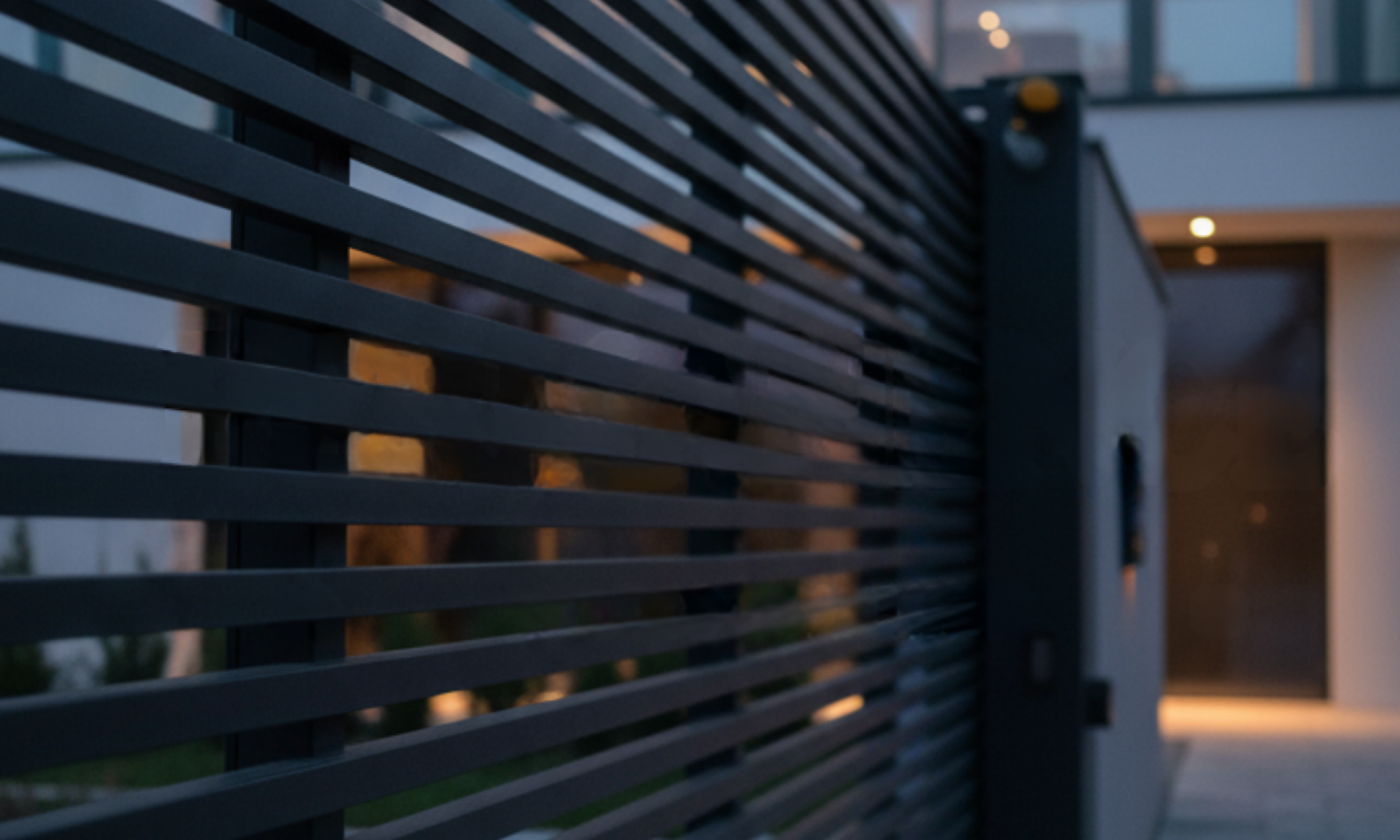
Slatted screens provide a more open appearance. Horizontal slats can make a narrow garden seem wider, while vertical slats can add height and structure. The gap between slats is crucial. Wider spacing allows more daylight and airflow but reduces privacy, particularly when viewed at an angle. Closer spacing gives greater cover and a more enclosed feel.
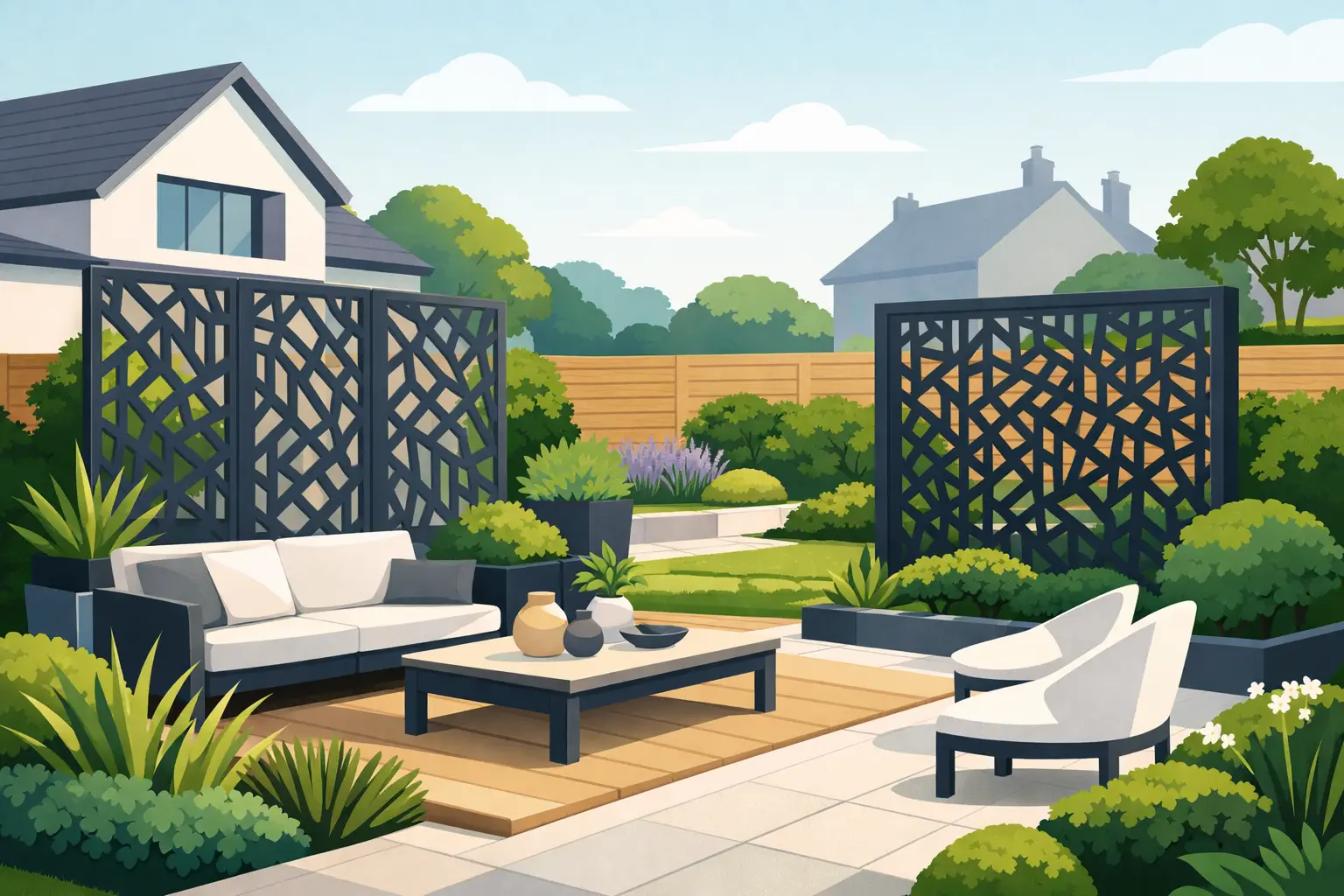
Decorative laser-cut styles are often chosen as a focal point rather than a complete boundary solution. Their patterns cast attractive shadows and can break up a long fence line, but they are not usually suitable where full privacy is needed. They work particularly well in front of planting, where greenery softens the metalwork and the screen creates a layered backdrop.
For many gardens, combining styles is the strongest approach. A solid or closely slatted panel can shield the most exposed area, with more open sections used elsewhere to retain light and visual interest.
Consider colour and finish early
Anthracite grey, black and dark bronze remain popular choices because they complement contemporary doors, window frames and aluminium gates. Lighter shades can feel less dominant in smaller spaces, while a wood-effect finish may suit a garden that has timber decking or natural planting schemes.
Powder coating is not simply a colour decision. A quality coated finish protects the aluminium from corrosion and means there is no routine painting, staining or treating to plan for. In most cases, occasional washing with mild soapy water is enough to remove dirt, pollen and traffic film. Avoid abrasive cleaners, which can dull the surface.
Get the proportions right for the garden
A screen that looks elegant on a wide showroom display can appear heavy in a small courtyard. Panel width, post size and the amount of open space around the screen all affect the finished look. Rather than treating every panel as a fence replacement, think of each one as part of the garden design.
A series of narrower panels can create rhythm along a boundary and make it easier to step around changes in level. Wider panels provide a cleaner, more minimal appearance but need suitable support and accurate installation. If the ground falls away, panels may be stepped or raked depending on the system and the desired finish.
Planting should also be part of the plan. Ornamental grasses, climbers and raised beds can soften a contemporary aluminium screen without hiding its design. Allow enough space for roots, drainage and future growth. Climbing plants can look excellent against a screen, but avoid allowing dense growth to trap debris and moisture in inaccessible areas.
Fixing options affect both appearance and performance
Most garden screens are fixed between posts, although they may also be attached to an existing wall, masonry pier or purpose-built frame. The correct method depends on the screen dimensions, the exposure of the site and the condition of the supporting structure.
Post-mounted systems are often the most flexible choice. Posts can be set into concrete footings or mounted to a suitably strong base, subject to the product specification. They create a consistent run and can accommodate gates or return sections where required. Wall-mounted screens can be an effective option for patios and courtyards, but the wall must be sound enough to take the load and fixings.
Wind is a practical consideration that should not be overlooked. A solid privacy panel catches more wind than an open slatted design, especially in exposed gardens, coastal locations and elevated sites. This does not rule out solid panels, but it may influence panel width, post depth, fixing method and the need for professional installation.
Measurements should be taken at more than one point. Garden walls and old boundaries are rarely perfectly straight, level or square. Accurate site dimensions reduce the risk of awkward gaps, uneven alignment and costly alterations once the screens arrive.
Check boundaries and local requirements
Before installation, confirm exactly where the legal boundary sits. Replacing an existing fence does not always mean the new screen can be positioned in precisely the same place, particularly where posts and concrete footings extend beyond the previous line.
Planning rules can vary according to the property, location and proposed height. There can be additional restrictions for listed buildings, conservation areas and properties next to highways. Screens used close to a front boundary may need particular care. If there is any uncertainty, check the relevant requirements before committing to a design.
It is also sensible to speak with neighbours where the work affects a shared edge. A clear conversation about height, colour and installation access can prevent unnecessary disagreement later.
When bespoke screening is worth considering
Readymade panels are a practical and cost-effective route for straightforward spaces with standard dimensions. They are ideal when the design is simple, the ground is level and a quick, tidy upgrade is the goal.
Bespoke aluminium screens are worth considering when a project has unusual widths, a stepped boundary, a matching gate or a specific architectural style. They can be made to work around planters, retaining walls and changes in level, while keeping the spacing and proportions consistent. This is especially valuable where screens will sit alongside aluminium gates, fencing or railings and need to look like one considered perimeter solution rather than separate additions.
Aluminium Gates Direct can help customers assess whether a ready-made or made-to-order solution is the better fit, including advice on compatible posts, finishes and installation support through trusted partners nationwide.
Plan for privacy without losing the garden
The most successful screen installations leave room for light, planting and movement. If every boundary is made solid and high, a garden can become shaded and restrictive. In contrast, a screen positioned only where overlooking occurs can make the seating area feel private while preserving open views towards the rest of the space.
Choose the design around how you actually use the garden. A family dining area may benefit from close slats that reduce overlooking but still admit air. A quiet reading corner may suit a decorative panel with planting behind it. A side passage might need a solid, easy-clean screen that also conceals bins and stored equipment.
A few accurate measurements, an honest assessment of the view and the right fixing specification will take you much further than choosing on appearance alone. When you are ready, seek advice on a screen layout that gives you privacy where it counts while keeping the garden light, welcoming and built to last.