
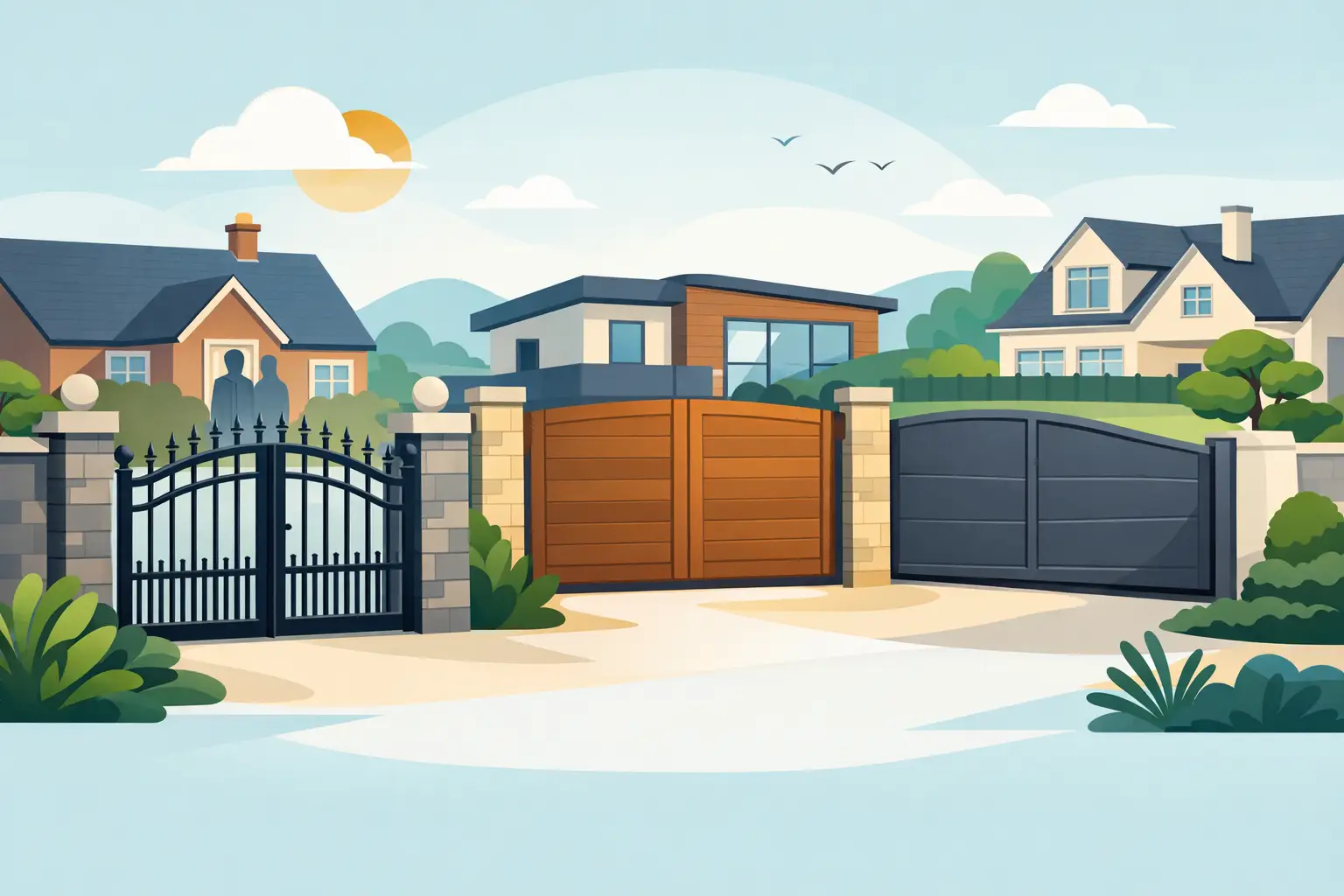
A 3.6-metre driveway with sloping ground, an existing stone wall and limited room for opening leaves is not a job for an off-the-shelf gate. This is where bespoke gate design examples become genuinely useful: they show how dimensions, privacy, access and property style can work together rather than compete.
A made-to-measure aluminium gate gives you far more choice than simply selecting a colour and width. You can adjust the rail layout, infill style, gate height, opening arrangement, hardware and access-control specification to suit the site. The right answer depends on how the gate will be used every day, not just how it looks from the road.
Bespoke gate design examples that solve real briefs
Contemporary horizontal slatted driveway gates
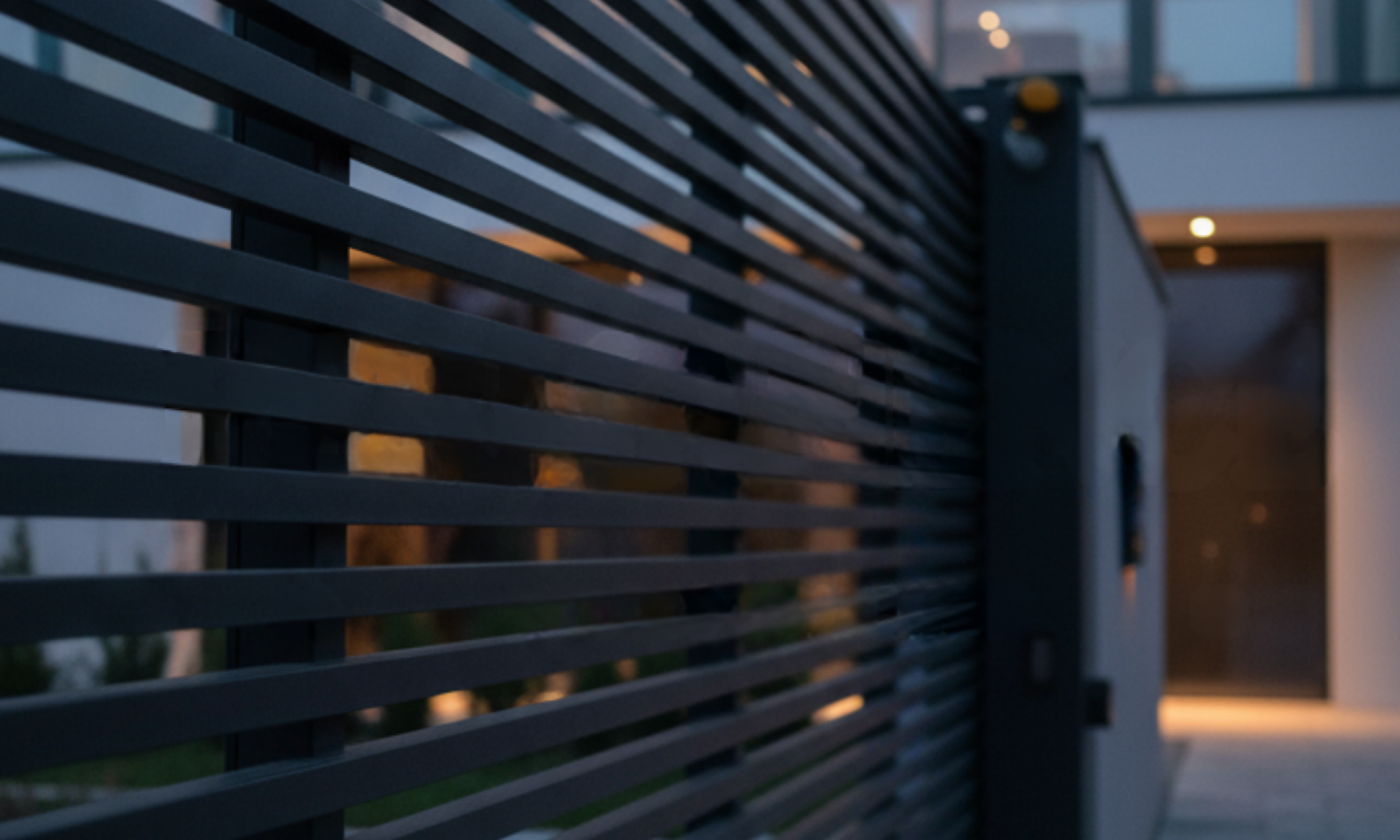
Horizontal slatted gates are a popular choice for newer homes, renovated properties and clean-lined extensions. Their simple geometry suits aluminium particularly well, producing a neat, consistent finish without the warping, splitting or regular repainting associated with timber.
For a customer who wants privacy without making the frontage feel closed in, wider gaps between slats can soften the appearance and allow light through. Closer-spaced slats, or a solid infill arrangement, create greater screening for a drive overlooked by neighbours or passing traffic. A darker powder-coated finish, such as anthracite grey or black, often works well with modern windows, doors and roof details.
On a wide entrance, the same design can be made as a pair of swing gates or a single sliding gate. Swing gates can give a traditional arrival feel, but they need clear space behind the entrance to open safely. A sliding gate is often the better option where the drive rises towards the house, a vehicle needs to park close to the entrance, or the opening is particularly wide.
Aluminium gates framed around traditional brick or stone
Bespoke does not have to mean ultra-modern. A property with reclaimed brick, natural stone piers or a period-style frontage may benefit from a gate that has a more traditional profile while retaining the practical advantages of aluminium.
For example, an arched-top driveway gate with vertical infill and decorative detailing can echo classic wrought-iron proportions. The design can be made to follow an existing wall line or sit comfortably between taller stone piers. A matching pedestrian gate can carry the same top rail and infill pattern, creating a considered entrance rather than two unrelated access points.
There is a balance to strike here. Highly ornate details can look excellent on the right property, but may feel out of place against a modest bungalow or a contemporary brick elevation. Photos of the house, walling, driveway and neighbouring features help establish whether the gate should be a focal point or a quieter part of the overall frontage.
Privacy gates for overlooked gardens and side entrances
A bespoke garden or side gate is often specified for a very practical reason: stopping people looking directly into a patio, bin store, utility area or side passage. A full-height aluminium gate with solid or close-boarded-style infill can offer a much more secure and private boundary than a standard timber panel.
The detail that matters most is not always visible from the front. A narrow side return may require a gate that opens outwards rather than inwards, or one that clears a downpipe, raised step or uneven paving. The latch position, hinge side and clearance beneath the gate all need to suit the actual route used by residents, deliveries and garden equipment.
Powder-coated aluminium is particularly suited to these hard-working locations. It does not need yearly staining or painting, and it stands up well to wet British weather. Occasional cleaning with mild soapy water is normally enough to keep the finish looking smart.
Statement entrance gates with integrated access control
For larger homes, private developments and commercial premises, the gate can become part of a wider access system. A bespoke sliding or swing gate may be paired with automation, safety devices and an intercom so that visitors can be screened before entry is granted.
An Akuvox intercom system can be positioned on a matching pedestal or incorporated alongside the gate within a purpose-built entrance panel. This can create a tidy result, particularly where there is no suitable existing pier. It also avoids adding an afterthought control box to a carefully designed gate.
The gate design should allow for the practical parts of automation from the outset. That includes the weight and construction of the leaves, cable routes, power supply, safety photocells, manual release access and the position of stops or track systems. Retrofitting automation can be possible, but planning it early usually gives a cleaner installation and clearer budget.
Commercial gates built around security and daily traffic
Commercial sites need a different conversation. A warehouse yard, flat development, school service entrance or office car park may require controlled access, a wider opening and a gate that can handle regular vehicle movements. The visual finish still matters, but reliability and safe operation take priority.
A cantilever sliding gate can suit a busy entrance where a ground track would be inconvenient or likely to collect debris. For a smaller staff car park, automated swing gates may provide an effective solution where the internal approach is level and there is adequate opening space. Pedestrian access should normally be considered separately, so people are not encouraged to pass through a vehicle gate.
Commercial bespoke designs can also coordinate with aluminium fencing, railings and access-control points. Matching the infill pattern and powder-coated colour across the perimeter gives a professional appearance while keeping the site boundary consistent.
Choosing the right layout before choosing the style
The most successful gate designs start with the site. Before settling on slats, panels or decorative features, establish the clear opening width, available depth, ground level and the direction vehicles approach from. A gate must have sufficient clearance to operate without catching on a slope, kerb or loose gravel.
For swing gates, consider where a car will wait while the gates open. Gates that open towards a public pavement can create obvious safety and compliance concerns, so inward opening is generally preferred where possible. On a steep or short driveway, sliding operation may remove the problem altogether.
Height is another decision with both visual and practical consequences. A taller gate improves privacy and can add a stronger sense of security, but it may reduce visibility when pulling out onto a road. It can also alter the character of the frontage. Where planning restrictions, conservation-area requirements or title covenants may apply, check these before finalising the specification.
Details that make a bespoke gate look properly finished
A bespoke aluminium gate should look intentional from every angle. Matching posts, hinges, handles, locks and infill alignment all make a difference. If the property has an existing wall, it is worth checking whether the structure is suitable for gate loading or whether dedicated posts will provide a safer, more reliable fixing point.
Colour choice deserves the same attention as the gate pattern. Black can give a crisp contrast against pale render, while anthracite grey sits naturally beside many contemporary frames and roof finishes. A bespoke powder-coated colour may be worthwhile where the gate needs to match a front door, cladding or architectural metalwork. The trade-off is usually a longer lead time than a standard colour.
Consider sightlines too. A fully solid driveway gate offers privacy, but it may conceal vehicles, children or pedestrians on the other side. Designs with controlled gaps, side vision panels or suitable set-back from the highway can help retain a safer view without compromising the overall look.
When readymade may be the better choice
Not every project needs a fully bespoke solution. If your opening is a standard size, the layout is straightforward and you need a gate quickly, a readymade aluminium gate can offer excellent value and a shorter route to installation. It can still provide the low-maintenance finish and durable construction many homeowners want.
Bespoke is most valuable when standard sizes would leave awkward gaps, when the ground or walling presents a challenge, or when you want the gate to coordinate with an existing fence, railing or access system. It is also the sensible choice for unusual opening widths, matching pedestrian gates and designs that need to meet a clear architectural brief.
At Aluminium Gates Direct, the starting point is a clear picture of your entrance, measurements and priorities. Share photographs, approximate dimensions and details of how the gate will be used, and it becomes much easier to recommend a design that is attractive, practical and priced for the project. A well-specified bespoke gate should make arriving home, securing the property and maintaining the entrance feel simpler for years to come.