
A boundary should do more than mark where your property ends. It needs to suit the character of the building, offer the right level of privacy or security, and continue looking smart through wet winters and busy family life. This aluminium railings and fencing guide explains the practical choices behind a successful installation, whether you are improving a front garden, enclosing a rear boundary or specifying a commercial perimeter.
Start with what the boundary needs to do
Aluminium railings and aluminium fencing can look similar at first glance, but they solve different problems. Railings are usually open in design, making them a strong choice where visibility, kerb appeal and a defined boundary matter. They suit front gardens, driveways, communal areas and commercial entrances particularly well.
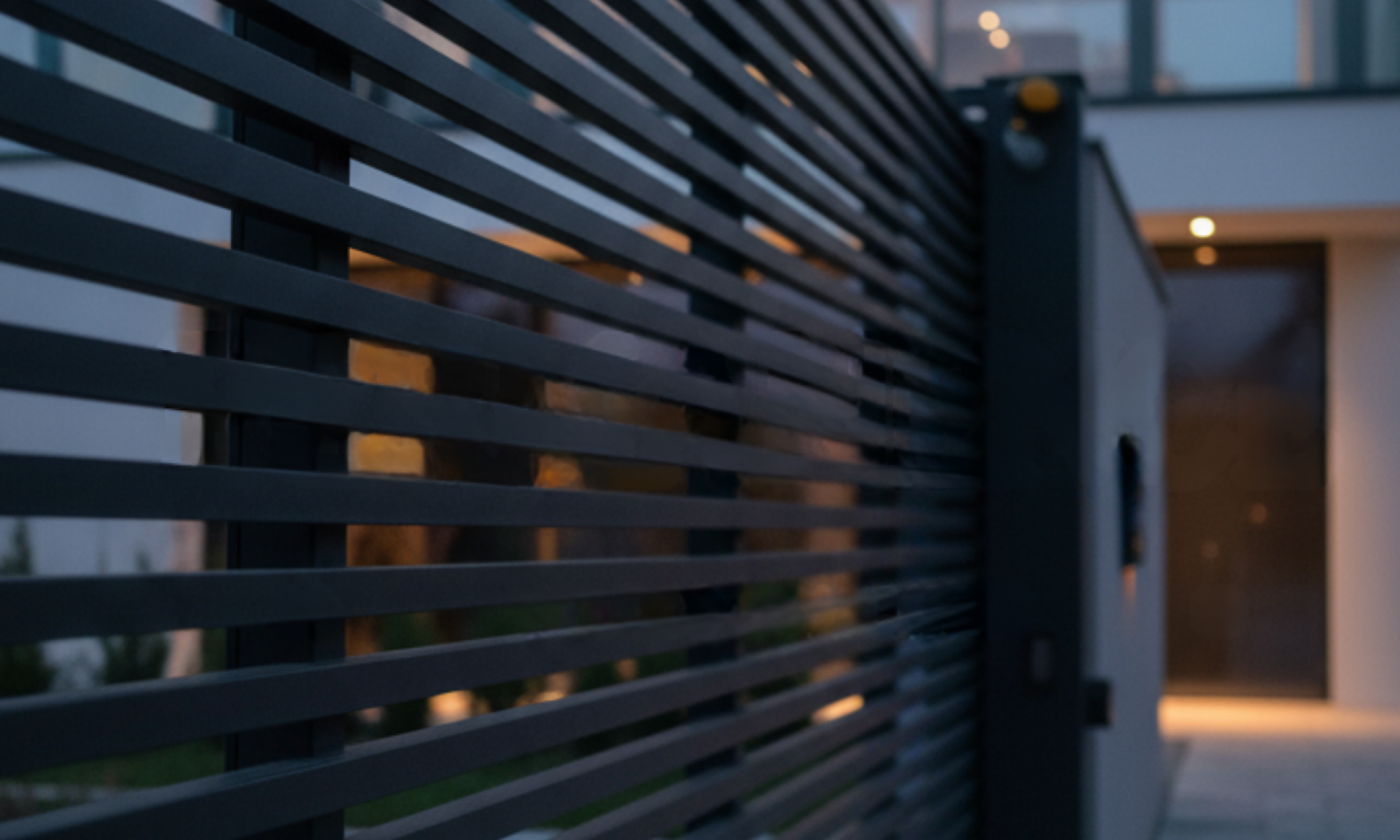
Fencing is more likely to provide screening, wind protection and privacy. Horizontal slatted panels are popular for contemporary gardens because they create a clean, architectural finish while allowing you to choose how open or enclosed the boundary feels. Closer slat spacing gives greater privacy, while wider gaps retain light and a sense of openness.
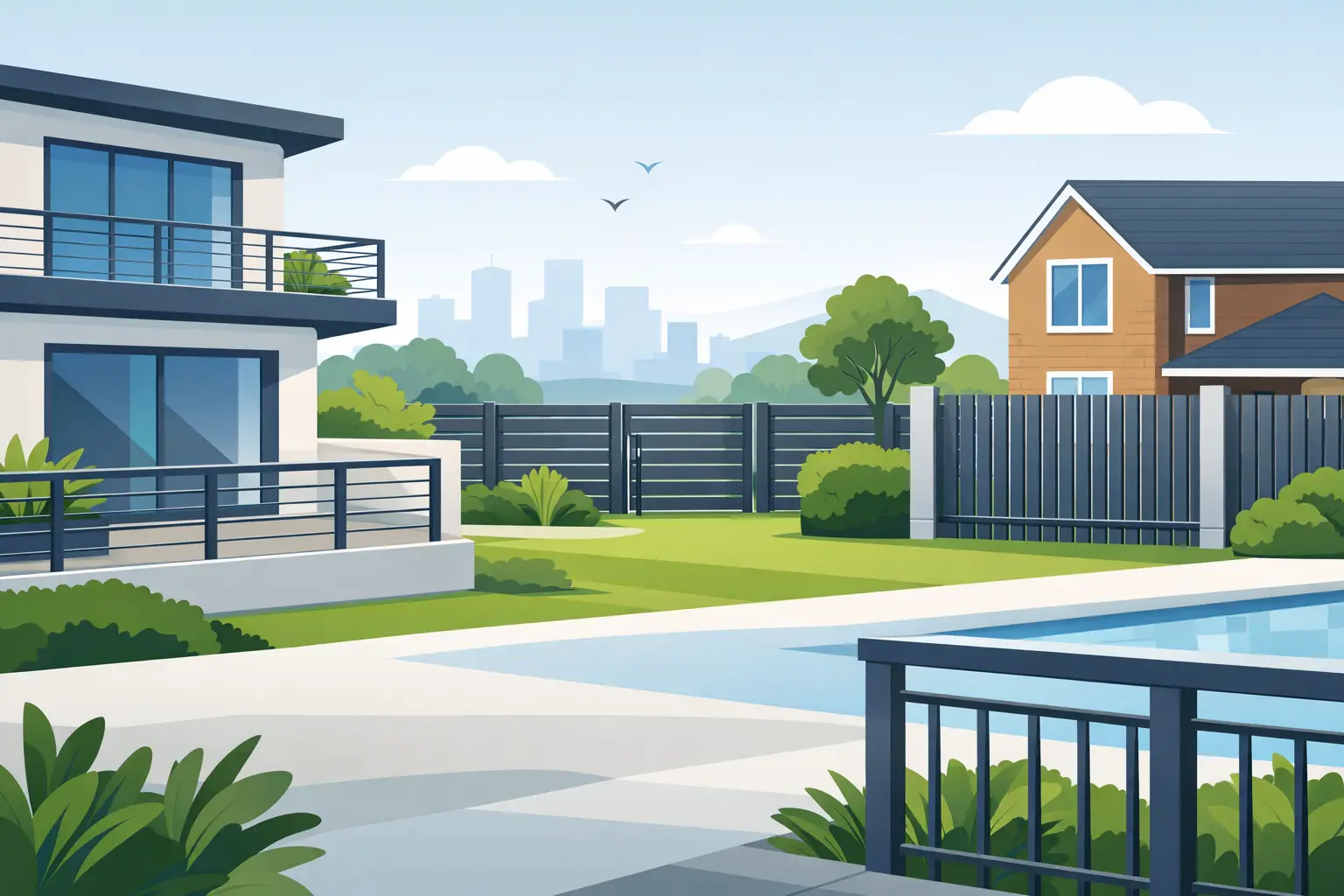
Before selecting a style, decide what matters most at each section of the perimeter. A front boundary may benefit from open railings that complement a driveway gate, while a rear garden may call for a more private aluminium fence. On larger plots, combining both can create a more considered result than using one product everywhere.
Why choose aluminium over timber or steel?
The main advantage of aluminium is the balance of strength, low weight and low maintenance. Unlike timber, it will not rot, swell, splinter or require regular staining. Unlike untreated steel, it does not rust in the same way, which makes it particularly appealing for exposed properties and customers who do not want an ongoing repainting programme.
Quality aluminium railings and fencing are normally powder coated. This baked-on finish provides a consistent colour and an extra layer of protection against weathering. Anthracite grey, black and white remain popular choices, but a wider range of colours can help the boundary work with window frames, brickwork, gates or a property’s existing metalwork.
There are trade-offs. Aluminium can cost more initially than basic timber panels, especially where bespoke sizes, taller sections or complex ground conditions are involved. However, the reduced maintenance requirement and longer service life can make it a better-value decision over time. It is also lightweight compared with steel, which can make handling and installation more straightforward, although the posts and foundations still need to be properly specified.
Choosing between railings, slats and solid-style panels
The right design depends on sightlines, security requirements and the overall appearance you want to achieve.
Open aluminium railings
Vertical railings give a traditional, tidy boundary without closing off the view of the property. They work well alongside pedestrian gates and driveway gates, particularly where you want visitors, deliveries or vehicles to remain visible from the house. Spear-top styles can add a more formal or security-focused appearance, while flat-top railings offer a cleaner, more contemporary look.
Open railings are rarely the best answer where complete privacy is the priority. They define the boundary rather than conceal it. For many front gardens, that is exactly the point: an open frontage can make a smaller space feel less enclosed while still making access clear.
Horizontal slatted fencing
Slatted aluminium fencing suits modern homes, garden renovations and developments that need a coordinated finish across multiple plots. It can be installed horizontally or vertically depending on the system and desired look. Horizontal lines often make a narrow garden appear wider, while vertical layouts can add visual height.
Consider the gap between slats carefully. A small gap can soften the effect of a solid wall while limiting direct views into the garden. Larger gaps provide a lighter appearance but may be unsuitable beside seating areas, hot tubs or neighbouring windows. If the fence will face prevailing winds, discuss the design with your supplier, as a more open layout can reduce wind loading.
Privacy and decorative panels
Some projects call for a more distinctive solution, such as laser-cut decorative screens or more enclosed aluminium panels. These can create privacy around patios, bin stores and side passages without relying on a plain timber fence. Decorative detailing should be chosen with care: a feature panel can lift a garden scheme, but a heavily patterned perimeter may not suit every property or planning context.
Get the height, layout and regulations right
Height affects privacy, security and compliance, so it should be agreed before ordering. In many UK locations, a boundary next to a highway is commonly limited to around one metre without planning permission, while rear and side boundaries are often permitted up to around two metres. These are general rules rather than a substitute for checking your local authority’s requirements.
Planning restrictions can differ for listed buildings, conservation areas, new-build estates and properties affected by specific planning conditions. A higher fence may also cause disputes if it blocks light or materially changes a neighbour’s outlook. It is sensible to check the boundary line, speak to neighbours where appropriate and confirm whether existing covenants or estate rules apply.
Where railings act as guarding around raised decks, retaining walls, steps or balconies, safety requirements become more critical. The required height, spacing and load performance may need to meet relevant Building Regulations and project-specific standards. Do not assume a standard garden railing is suitable for a fall-protection application. Builders, architects and commercial buyers should confirm the correct specification before manufacture.
Match the posts and fixings to the site
Even the best-looking panel will disappoint if the installation is poorly planned. Aluminium systems can be fixed using in-ground posts set in concrete, surface-mounted posts bolted to suitable foundations, or wall-mounted arrangements where the structure is sound and the design allows it.
In-ground posts are often preferred for garden boundaries because they provide a neat, stable finish. Surface mounting can be useful on existing concrete, patios or low walls, but the base must be substantial enough to resist movement. Fixing a tall privacy fence to a weak wall or shallow paving slab is not a reliable solution.
Ground levels deserve close attention. A gradual slope can often be followed by stepping panels down in sections, or by using a raked system where available. Stepped panels give a crisp, level appearance, but may leave small gaps beneath the fence on sloping ground. Raked panels follow the slope more closely, though they may not suit every design. Measure changes in level early rather than trying to solve them on installation day.
Consider security without making the property feel hostile
For homes, security is often about discouraging casual access and controlling entry points rather than creating an imposing barrier. Railings with secure gates, lockable access and well-positioned lighting can be more effective than a very high fence alone. Keep shrubs and planting maintained so they do not create hiding places or obstruct views of entrances.
Commercial sites may need a more formal perimeter strategy. This can include taller railings, anti-climb design features, controlled pedestrian access, automated gates and intercom systems. The best approach depends on the site’s risk profile, public access needs and operational hours. Security should support day-to-day use, not make deliveries, visitors or staff access unnecessarily difficult.
Where a new fence meets a driveway entrance, coordinate the design with the gate from the outset. Matching colours, slat profiles and post sizes produces a far more cohesive result. It also helps ensure there is sufficient room for gate hinges, sliding-gate track arrangements, automation equipment and safe opening clearances.
Colour, finish and long-term maintenance
A powder-coated finish makes aluminium easy to live with, but maintenance-free does not mean never cleaned. Rain will remove some surface dirt, yet road grime, salt, algae and pollution can build up, especially around coastal locations or busy roads. A periodic wash with warm water, mild detergent and a soft cloth is normally enough to keep railings and fencing looking their best.
Avoid abrasive pads, harsh solvents and aggressive pressure washing at close range, as these can damage the coating. If the finish is scratched during building work or landscaping, deal with it promptly using the appropriate repair advice rather than leaving exposed damage unattended.
Dark colours offer a sharp, modern contrast against pale render and natural stone, although they can show dust and water marks more readily than lighter finishes. Lighter shades can make a compact garden feel brighter, while a bespoke colour may be worthwhile when coordinating a gate, front door and architectural details. The best choice is usually the one that suits the property for years, not simply the current trend.
Make ordering and installation straightforward
Accurate measurements are essential, but width and height alone are not enough. A supplier or installer will also need to understand post positions, finished ground levels, wall returns, corners, access restrictions and whether the fence connects to gates or existing structures. Photographs and a simple sketch can prevent costly misunderstandings.
For a bespoke project, allow time for design confirmation and manufacture. Readymade options can suit straightforward openings and customers working to a shorter programme, but custom-made railings and fencing offer greater flexibility where boundaries are uneven or a matching gate is required. Aluminium Gates Direct can help customers compare these options and arrange installation support through its nationwide partner network.
A well-planned aluminium boundary should feel like part of the property rather than an afterthought. Choose the level of privacy and security you genuinely need, specify the system for the site conditions, and invest in proper installation. The result is a clean, durable perimeter that continues to earn its place long after the landscaping is finished.