
A gate intercom is often the point where security, convenience and first impressions meet. The best gate intercom features are not necessarily the longest specification list. They are the functions that suit the gate, the property layout and the people using it every day – whether that means answering a delivery driver from the kitchen, managing visitors to a shared development or controlling access to a commercial site.
For a new aluminium gate installation, it pays to decide on the intercom early. Cable routes, gate posts, automation controls and power supplies can then be planned properly, rather than added as an afterthought. The result is a cleaner installation and a system that is easier to use and maintain.
Best Gate Intercom Features Worth Prioritising
Clear audio and dependable two-way communication
Every intercom should make conversation straightforward. This sounds obvious, but outdoor equipment has to cope with wind, rain, road noise and visitors standing at different distances from the panel. Look for a system with clear two-way audio, a well-positioned microphone and speaker, and volume that can be adjusted where needed.
For a busy roadside driveway or commercial entrance, audio quality deserves particular attention. A video image can show who is there, but a clear conversation helps you confirm why they have called and give instructions without opening the gate. It is also worth considering the indoor handset or screen location. A system is only useful if it can be heard and answered conveniently.
Video calling and a useful camera view
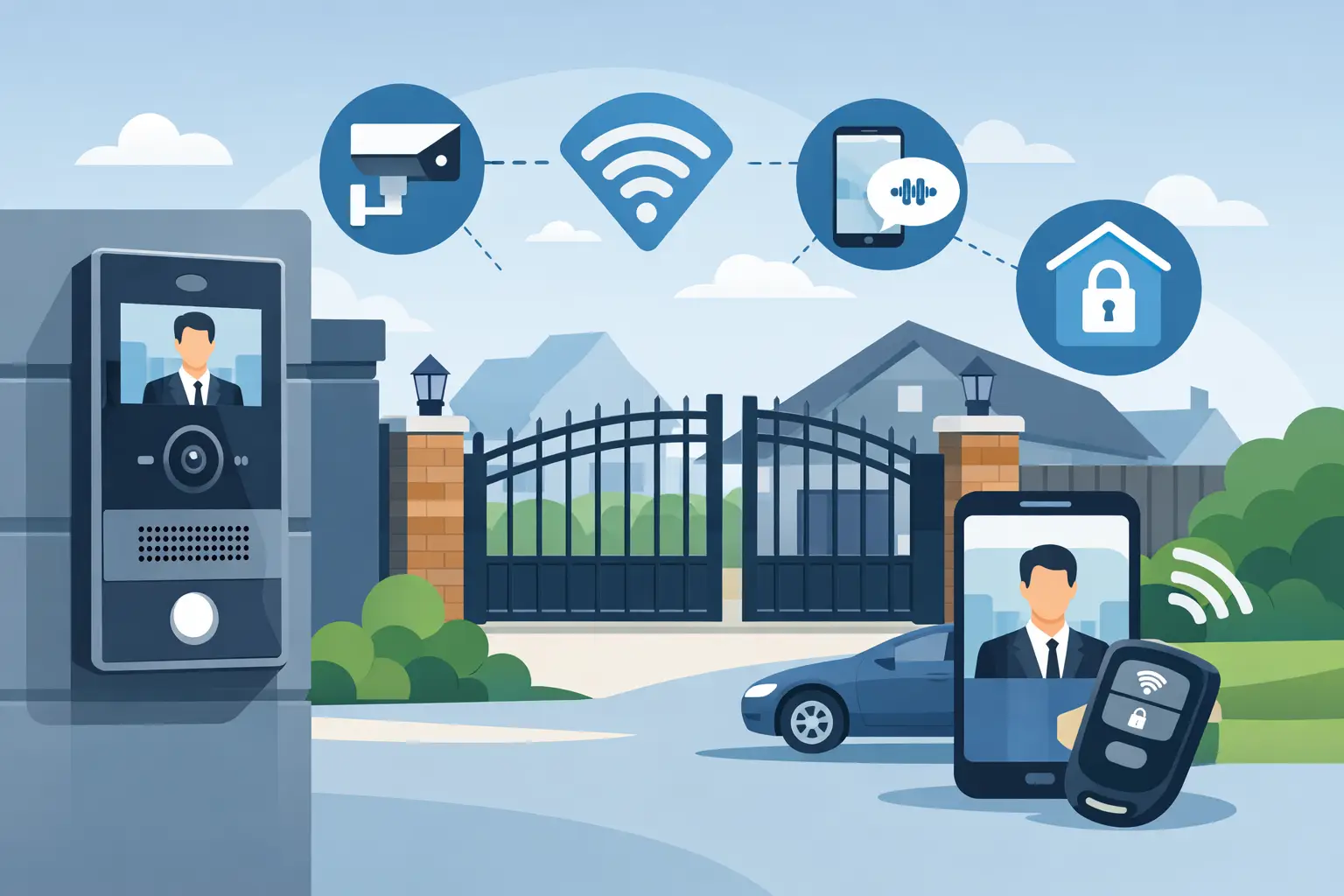
Video is one of the most valuable features for driveway and pedestrian gate access. It allows you to see the visitor before releasing the gate, adding reassurance for homes and practical oversight for managed premises.
Camera quality matters, but the view matters just as much. A wide-angle lens can help capture visitors standing close to the panel, while good low-light performance supports use during darker mornings and evenings. Consider what sits behind the caller too. If the gate entrance faces strong sunlight at certain times of day, choose equipment designed to maintain a clear image in changing light.
Video does not need to be excessive to be effective. For many homes, a reliable view of the visitor and the immediate entrance area is more useful than a complicated camera arrangement that no one checks. Larger sites may benefit from separate CCTV coverage, with the intercom focused on calling and access control.
Mobile app access when it suits the property
An app-connected intercom lets authorised users receive calls and release the gate through a smartphone or tablet. This is particularly helpful when nobody is near an internal monitor, when a homeowner is away from the property, or when a business needs a nominated person to manage arrivals.
Remote access should be selected with care. It depends on stable internet coverage at the property and a sensible approach to user permissions. For example, a homeowner may want calls sent to two family members, while a site manager may need to add or remove access for staff without handing out physical remotes.
The convenience is significant, but an app should complement rather than replace practical on-site controls. A wired indoor monitor, keypad or fob system can provide useful back-up when a phone battery is flat, a signal is poor or a visitor needs access during a temporary internet outage.
Secure gate release and automation compatibility
An intercom must work properly with the gate automation system. At the press of a button, it should send the correct command to release a pedestrian gate, open swing gates or operate a sliding gate. The equipment needs to be specified around the gate type, operator and safety arrangement rather than treated as a separate purchase.
A well-planned system can also support more than one access method. Residents or staff may use remote controls, key fobs, PIN codes, cards or a mobile app, while visitors call through the intercom. This avoids the frustration of relying on a single method for everyone.
Safety remains essential. Automated gates should have correctly installed safety devices, including suitable detection and control equipment, so that the gate operates safely around people, vehicles and obstructions. The intercom release function is part of this wider system, not a substitute for safe automation design.
Choosing Features for Residential Gates
For most homeowners, the priority is a simple, reliable experience. A video intercom with clear audio, an internal screen or handset, and the option to answer via a mobile app will cover many requirements. Add a keypad or fob access method if household members regularly come and go without needing to call through.
The position of the intercom panel can make a considerable difference. It should be easy for a visitor to find and reach from a vehicle or on foot, while remaining protected from unnecessary knocks and weather exposure. At a driveway entrance, consider the height for drivers and whether pedestrians need a separate call point or access route.
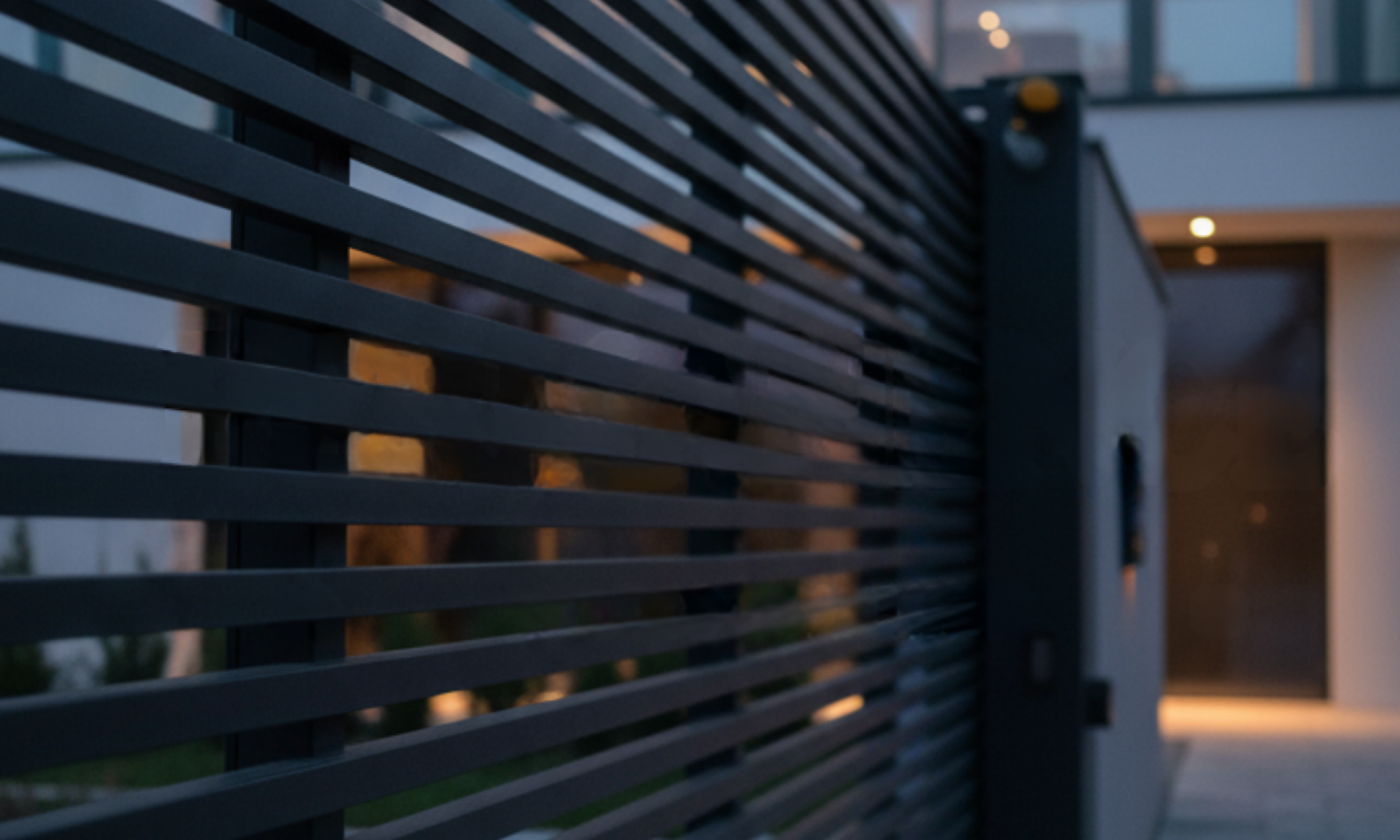
An aluminium gate works particularly well with a neatly integrated intercom solution. Cable management and panel placement can be considered alongside the gate design, helping preserve the clean, low-maintenance appearance that many homeowners choose aluminium for. Bespoke gates also allow more flexibility where a standard post-mounted panel would not suit the design.
Features That Matter More on Commercial Sites
Commercial and multi-occupancy properties often need a broader access strategy. A single call button may be enough for a small yard, but offices, developments and managed sites may require multiple residents, departments or named contacts. Directory calling, multiple call destinations and controlled user administration become more relevant in these settings.
Durability should also be assessed honestly. An entrance that receives frequent deliveries, contractor visits and staff traffic needs equipment built for regular use, not a domestic system stretched beyond its intended role. Weather resistance, vandal-resistant construction and straightforward replacement options are sensible considerations.
Audit capability can be useful where access needs to be managed more closely. Depending on the system, administrators may be able to control authorised users, issue temporary access credentials or review relevant call and entry activity. The right level depends on the site. A small business may only need reliable video calling and staff fobs, whereas a larger development may need a more structured access arrangement.
Keypad, fob and card access
These features are especially useful when people need to enter without contacting someone inside. Keypads suit households, tradespeople and smaller teams, provided codes are changed when they are no longer needed. Fobs and cards can be easier to manage on a commercial site because individual credentials can be removed if lost or when a staff member leaves.
Avoid sharing one permanent code too widely. It may feel convenient, but it becomes difficult to control once it has been passed between contractors, former tenants or visitors. A system that supports separate user access is usually the more secure long-term choice.
Wired or Wireless: The Installation Decision
Wired intercoms are often the preferred choice for new gates and major refurbishments. They can offer a dependable connection and avoid reliance on wireless range across a long driveway. If trenching, gate posts and automation are already being planned, installing the correct cabling at the same time is normally the most sensible approach.
Wireless equipment can be useful where running cable would be disruptive or disproportionately costly. However, range is affected by distance, walls, metalwork and the local environment. A large rural driveway, for example, may need a site-specific assessment before wireless equipment is selected.
Power also needs consideration. Gate automation, intercom panels, internal monitors and network equipment all need an appropriate supply. Solar-powered gate systems can be effective in the right conditions, but the energy demand of connected access control should be assessed carefully. A feature-rich video system may need more dependable power than a basic audio call point.
Choosing an Intercom System You Will Still Value in Five Years
It is tempting to buy only for the immediate requirement, particularly when replacing an old gate or adding automation to an existing entrance. Yet access needs often change. Families grow, working patterns alter, rental properties gain new occupants and businesses add staff or delivery procedures.
Choose a system that can accommodate sensible future changes without making the installation unnecessarily complex now. This may mean allowing for an additional monitor, selecting an intercom that supports more users, or putting suitable cable routes in place while groundwork is open. Akuvox intercom systems, for example, offer options that can be matched to straightforward residential use as well as more advanced access requirements.
The best choice is not always the most expensive model. It is the one with the right combination of communication, visibility, access control and installation quality for the property. Before ordering, consider who will use the gate, how often visitors arrive, whether mobile access is genuinely useful and how the system will integrate with the gate operator.
A well-specified intercom makes an automated entrance easier to live with from day one. For guidance on matching an intercom, automation and aluminium gate design to your property, speak to Aluminium Gates Direct before installation plans are finalised.