
A gate that is even slightly wrong for its opening can create problems every day. It may catch on a slope, leave an awkward gap beside a post, restrict vehicle access or make automation unnecessarily expensive. Made to order gates are designed around the realities of your property, rather than asking your property to fit a standard product.
For a driveway, garden entrance or commercial perimeter, this flexibility can make the difference between a gate that simply closes and one that looks right, operates reliably and adds lasting value. The key is knowing which decisions need to be made before manufacturing begins.
Why Choose Made to Order Gates?
A made-to-order gate is manufactured to your required dimensions and specification. That does not only mean choosing the width and height. It also allows you to consider the opening configuration, infill design, colour, frame arrangement, posts, access control and whether the gate will be automated now or later.
This is particularly useful for UK properties, where entrances are rarely perfectly standard. Older homes may have uneven brickwork or existing pillars that cannot be moved. New-build developments may require a gate design that complements fencing, railings and the wider architectural scheme. Commercial sites often need controlled vehicle access without compromising the clearance needed for deliveries or emergency vehicles.
Readymade gates remain a sensible option where the opening is standard, timing is tight and the chosen design suits the site. They can offer excellent value and quicker availability. However, if your opening has unusual measurements, the ground slopes, or you have a clear vision for the finished appearance, a bespoke route is often the more practical long-term choice.
Measure the full opening, not just the gap
The clear distance between two pillars is only one measurement. A proper gate specification should account for hinges, latches, posts, ground clearance and any adjustment required during installation. For double gates, the meeting point in the centre and the position of the drop bolts also need to be considered.
Height matters just as much. A low garden gate may need to align with existing fencing, while a driveway gate may need to offer greater privacy or deter unauthorised access. It is also worth checking whether the gate will open over gravel, block paving, a rising driveway or a public footpath. These details influence the design from the outset.
Where there is uncertainty, a site survey is the safest starting point. Accurate measurements reduce delays, avoid costly alterations and help ensure the finished gate sits squarely within its surroundings.
Plan the Gate Around Everyday Access
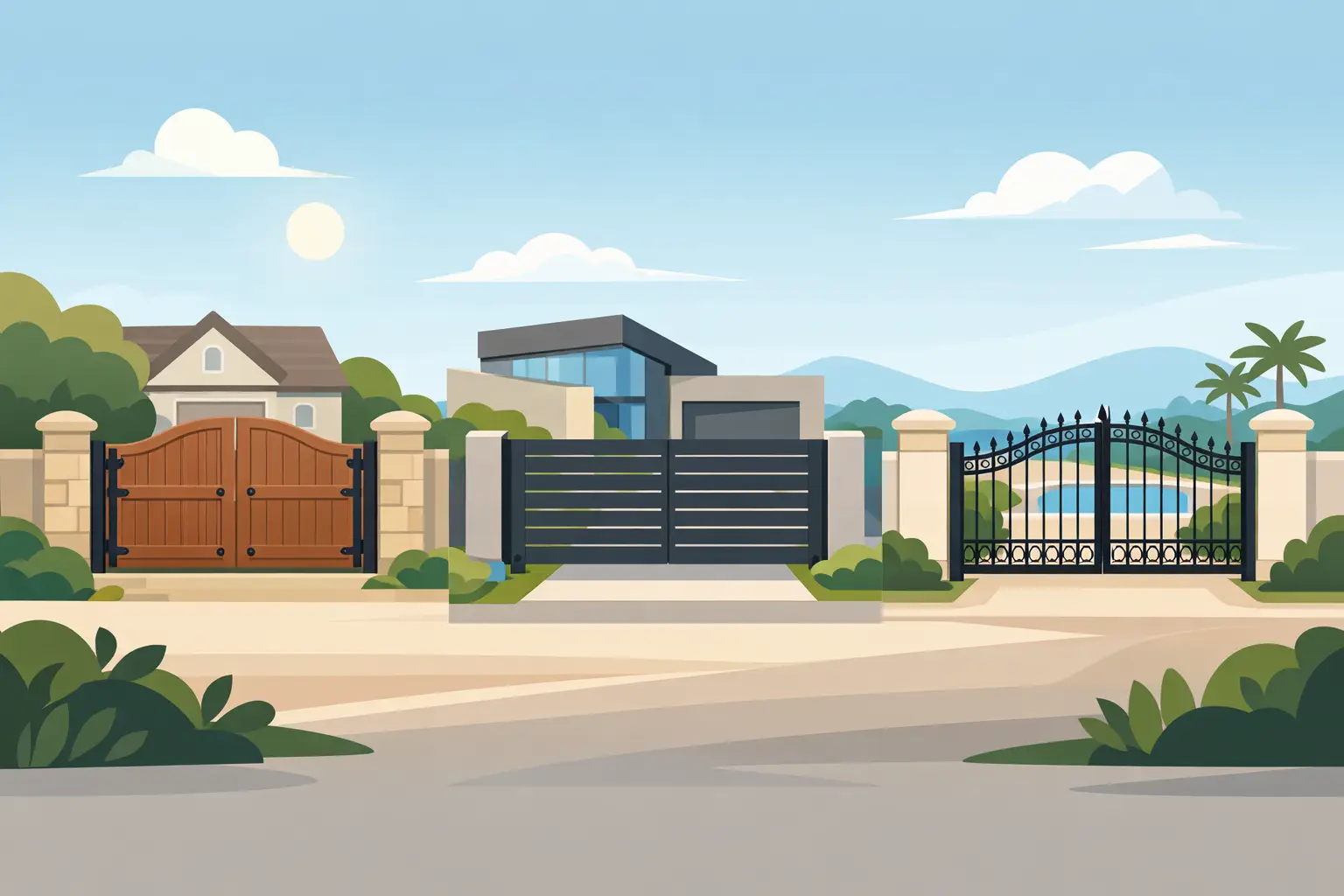
The right operating style depends on how the entrance is used, not only how it looks. Swing gates are a popular choice for domestic driveways and can create a traditional, balanced appearance. They require clear space behind the gates to open, so they are less suitable where a drive rises sharply or a vehicle needs to park close to the entrance.
Sliding gates are often a better answer for restricted or sloping driveways. Instead of swinging into the property, the gate travels sideways along the boundary. This can provide a clean, contemporary solution, but it needs sufficient run-back space and a suitable track or cantilever arrangement.
A separate pedestrian gate is worth considering where people regularly enter on foot. It prevents the main driveway gate from being opened unnecessarily and can make daily access easier for families, visitors, staff and delivery drivers. For larger properties or commercial premises, separating pedestrian and vehicle access can also improve control over who enters the site.
Think about the widest vehicle likely to use the entrance, rather than only the family car. A van, removal lorry, tradesperson or mobility vehicle may need more clearance than expected. It is much easier to allow for this at the design stage than after installation.
Aluminium Gives You Design Freedom Without Heavy Upkeep
Aluminium is a strong fit for made-to-order gate projects because it is lightweight, durable and naturally resistant to corrosion. Unlike timber, it does not require regular staining or painting. Unlike untreated steel, it will not rust. For busy homeowners and site managers, that reduced maintenance requirement is one of its most practical benefits.
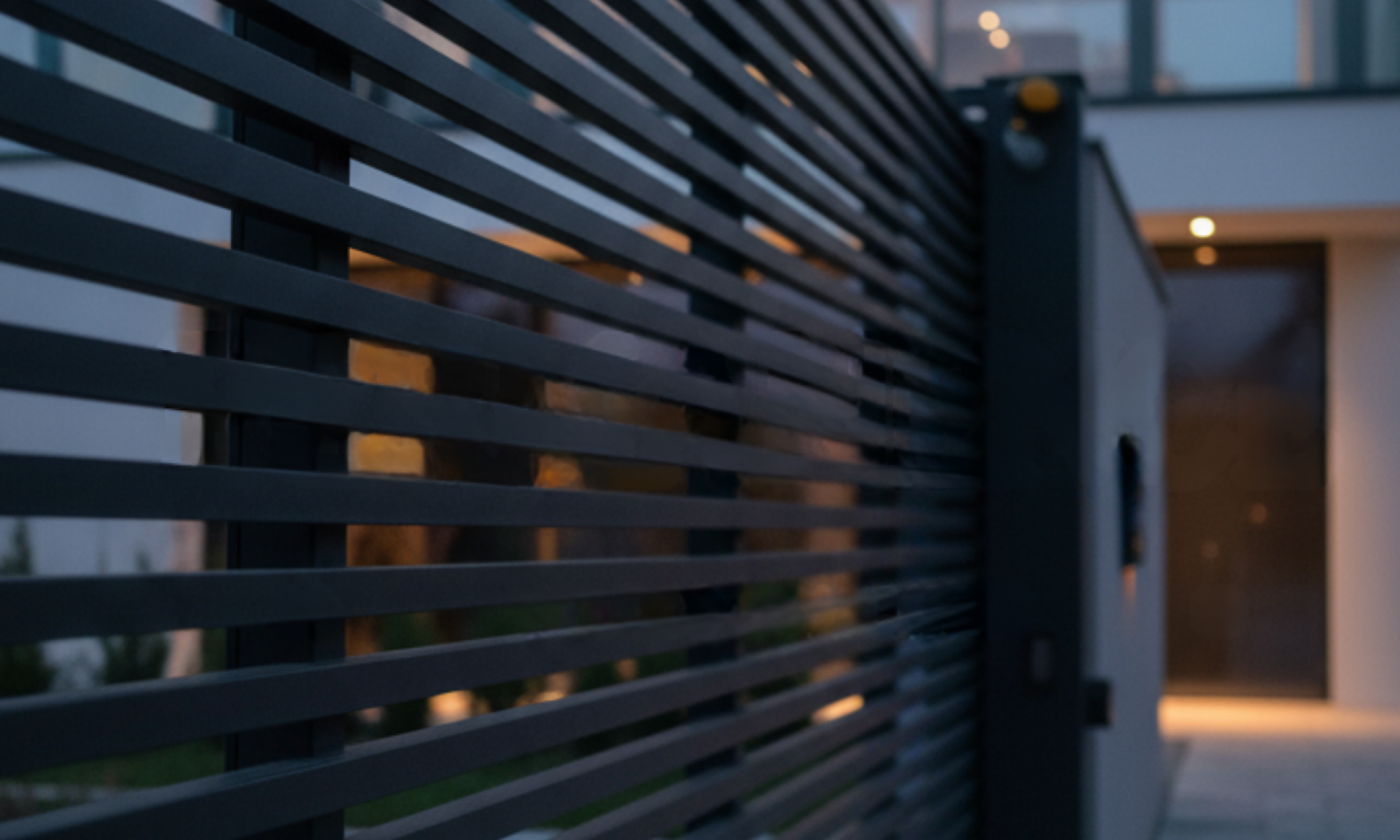
The material also supports a wide choice of appearances. Horizontal slats can give a clean modern finish, while vertical bars, solid panels and decorative features can suit more traditional properties. Privacy levels can be adjusted through the spacing and style of the infill, allowing you to balance security, airflow and visibility.
Powder-coated aluminium gates are available in a broad range of colours, including popular neutral shades that work well with brick, render, stone and contemporary cladding. Matching the gate to aluminium fencing, railings or a pedestrian entrance creates a more considered boundary line than mixing unrelated finishes.
Low maintenance does not mean no care at all. Periodic cleaning with warm water and a mild detergent helps remove road grime, salt and organic build-up, especially on properties near the coast or busy roads. Hinges, locks and automation components should also be checked as part of routine care. These small checks help maintain the gate’s appearance and smooth operation over time.
Automation Should Be Decided Early
A gate can be automated after installation in some cases, but planning for automation from the beginning is usually simpler and more cost-effective. The gate design, hinge type, ground conditions, power supply and safety equipment all need to work together.
For swing gates, the available space behind the leaves and the gate weight will affect the type of operator required. Sliding gates need a level, stable route and appropriate support for the moving gate. Both arrangements need safety features that detect obstructions and prevent the gate closing onto a vehicle or person.
Access control is another early decision. A keypad may be enough for a straightforward domestic entrance, while an intercom with video calling can offer greater reassurance where visitors, deliveries or multiple users are involved. Akuvox intercom systems can be incorporated into a wider access solution, giving occupants the ability to manage entry without walking to the gate.
Power is often the detail most easily overlooked. Running cables after landscaping, paving or drive surfacing is complete can be disruptive. Allowing for ducting and electrical supply during the initial project makes for a neater installation and leaves more options open.
Specify the Details Before Manufacturing Starts
A clear specification helps a supplier quote accurately and ensures every party understands what is being produced. Before confirming made to order gates, establish the following:
- the finished opening size, ground levels and whether posts or pillars are already in place;
- the preferred gate type, including single, double or sliding operation;
- the required style, colour, privacy level and matching fencing or railings;
- whether manual operation, automation, intercoms and access control are needed;
- who will install the gate and whether the groundwork, electrics and cabling are ready.
It is sensible to discuss the budget openly at this point. Bespoke manufacturing gives more choice, but some options add cost: taller gates use more material, intricate decorative work takes more production time, and automation requires equipment, electrical preparation and installation expertise. A good specification focuses spend on the features that matter most for the site.
Get Support From Product Selection to Installation
The strongest gate projects are planned as a whole. The product, installation method, posts, automation and access control should be considered together, rather than bought as separate afterthoughts. This helps prevent common issues such as a gate that is too heavy for its chosen operator or posts that are not designed to carry the load.
Aluminium Gates Direct supports customers nationwide with made-to-order and readymade options, alongside access to trusted installation partners. Whether you are replacing a worn timber gate, specifying a boundary for a development or improving security at a commercial site, specialist advice can turn a complicated purchase into a clear set of decisions.
A well-designed gate should feel uncomplicated once it is in use. Taking time to measure carefully, plan access and choose the right specification means your entrance can serve the property properly for years to come.