
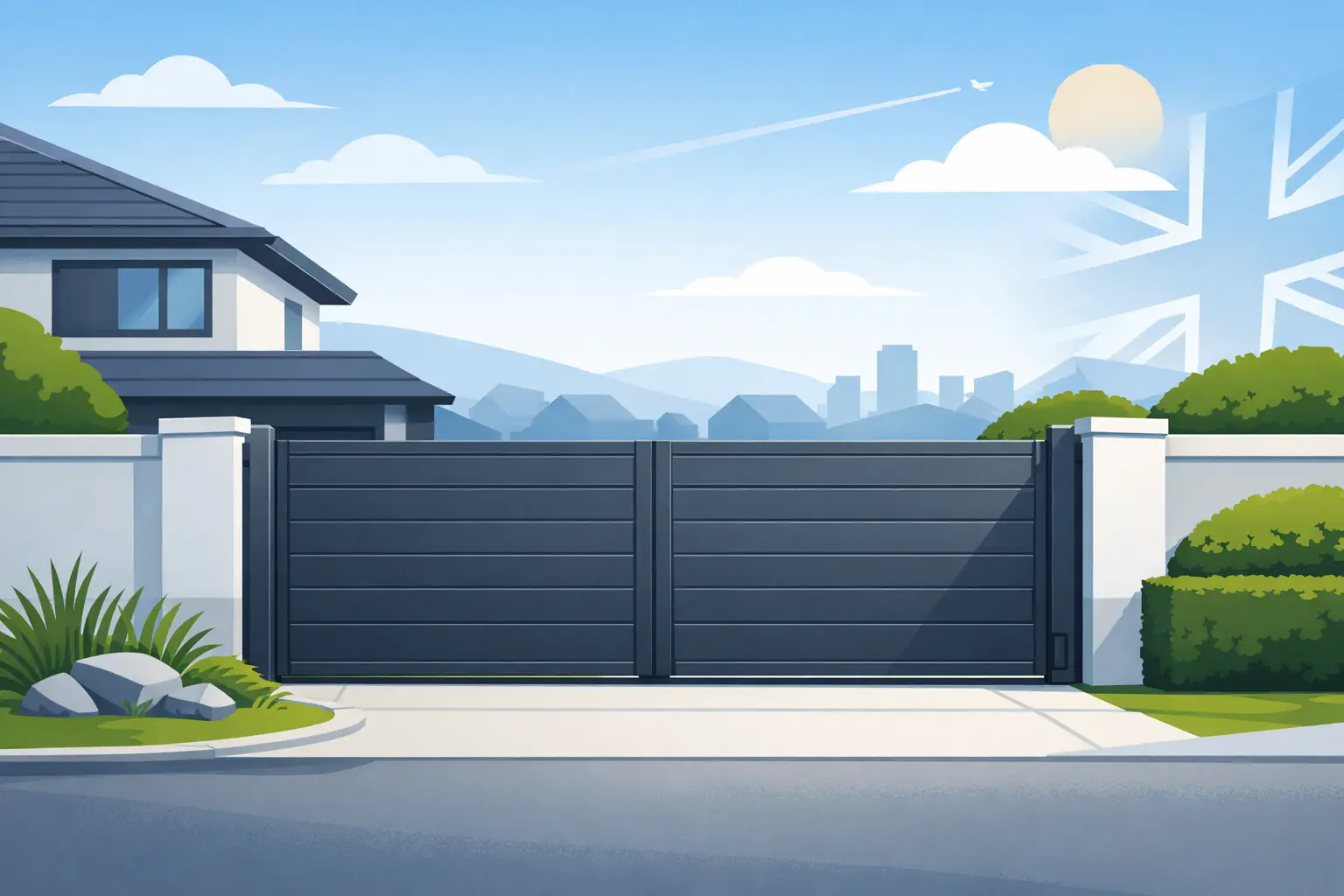
A driveway gate is often the first feature visitors notice, but it also has a practical job to do every day. The right choice should improve privacy, manage access and suit the way vehicles enter and leave your property. This aluminium driveway gate guide explains the decisions that make the greatest difference before you order.
Aluminium is a particularly strong option for UK homes because it gives the appearance and presence of a substantial gate without the weight, regular treatment or corrosion concerns associated with many timber and steel alternatives. It is available in modern, traditional and fully bespoke designs, making it suitable for anything from a compact suburban driveway to a wide entrance at a rural property.
Start with how your driveway needs to work
The best gate is not always the largest or most decorative option. Begin by looking at the entrance itself: its clear width, slope, available run-back space and how vehicles approach it. Think about everyday use too. A gate that looks ideal on a plan may be awkward if a car has to stop on a busy road while it opens.
Measure the opening between the points where the gates or posts will sit, rather than estimating from the existing boundary. Also check the level across the entrance and whether the driveway rises immediately behind it. These details affect hinge positions, ground clearance and the type of operation that is practical.
For a driveway used by several vehicles, delivery drivers or visitors, automation can make a noticeable difference. For a secondary entrance that is only used occasionally, a manual gate may be the more sensible and cost-effective choice. The specification should follow the property’s use, not simply the appearance you want to achieve.
Swing or sliding aluminium driveway gates?
Swing gates remain a popular choice for residential properties. They create a classic entrance, work well with many styles of home and can be supplied as a pair of equal leaves or in an unequal split. Outward-opening gates are generally unsuitable where they would move across a public pavement or highway, so most domestic swing gates open into the property.
They need sufficient clear space inside the driveway for the leaves to travel. On a sloping site, this needs particular attention. A rising driveway may require altered ground clearance, a different hinge arrangement or another gate type altogether.
Sliding gates are often the better answer where there is limited room behind the entrance, a steep incline, or a need to secure a wider opening. They move sideways along the boundary rather than into the driveway. However, they require adequate space to one side for the gate to park when open. A sliding system also needs suitable foundations and careful planning for its track or cantilever arrangement.
Neither option is automatically better. A site survey or detailed discussion with a gate specialist can prevent a costly mismatch between the design and the driveway.
Choosing a style that suits the property
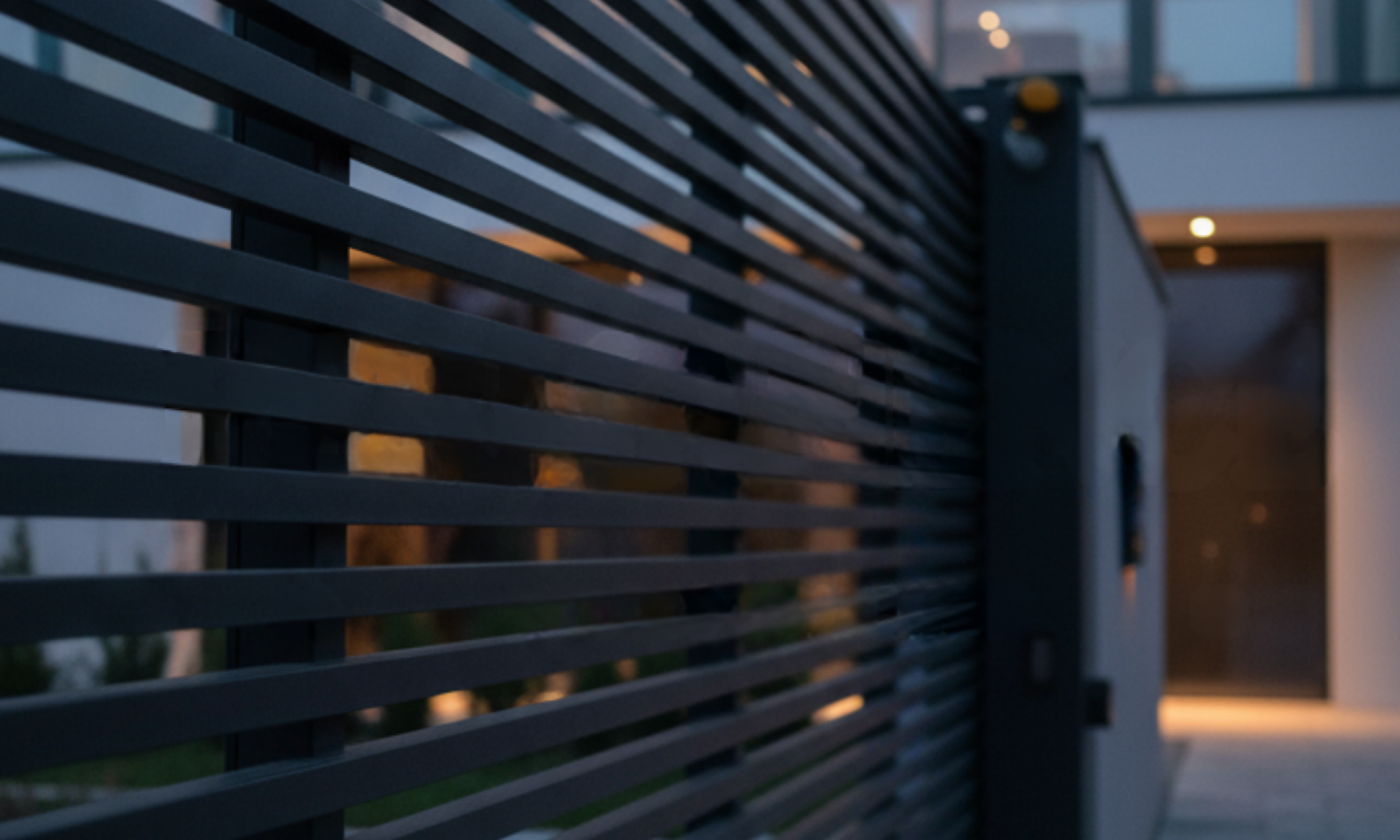
Aluminium gives you plenty of freedom over the final look. Horizontal slats and clean-lined panels are well suited to contemporary homes, particularly when matched with aluminium fencing, railings or a pedestrian gate. Vertical bars, decorative infill and more ornate detailing can sit comfortably alongside period homes and established brick or stone boundaries.
Privacy is another key consideration. Solid or closely spaced slatted designs reduce views into the driveway and garden, while open-bar designs offer a lighter appearance and allow visibility through the entrance. For some properties, a semi-private design gives the right balance: it improves security and kerb appeal without making the frontage feel closed off.
Colour should be considered alongside the home’s windows, doors, roofline and boundary materials. Anthracite grey, black and white remain popular choices, but a bespoke finish can help the gate look designed for the property rather than added as an afterthought. Check samples in natural light where possible, as finishes can appear different against brickwork and landscaping.
Why aluminium is a practical long-term material
A driveway gate has to handle rain, frost, wind and regular use. Aluminium does not rust in the same way as untreated steel, and quality powder-coated finishes are designed to provide lasting colour and protection. This makes aluminium well suited to exposed UK locations, including coastal areas, although the right maintenance routine still matters.
It is also lightweight relative to its strength. That can make daily manual operation easier and reduce the load placed on hinges, posts and automation equipment. Lighter gates are especially useful on wider openings, where a heavy material can place greater demands on the supporting structure.
Low maintenance does not mean no maintenance. Wash the gate periodically with warm water and a mild detergent to remove road dirt, salt and deposits. Avoid abrasive cleaners, and inspect hinges, fixings, safety devices and drainage around the entrance. Automated gates should be serviced in line with the manufacturer’s recommendations to keep them safe and reliable.
Automation, access control and safety
Automation turns a driveway gate into an access-control system rather than simply a boundary feature. You may choose remote controls for straightforward use, keypad entry for family and regular visitors, or an intercom system that lets you speak to callers before granting access. Video intercoms can be particularly useful where the entrance is some distance from the house.
The gate design, weight, opening method and frequency of use all influence the automation equipment required. It is worth specifying this from the start. Retrofitting automation can be possible, but planning power supplies, cable routes and access controls during the project is usually cleaner and more economical.
Safety must be part of the specification, not an add-on. Automated gates need suitable safety features, including controls that detect obstructions and prevent trapping risks. The installation should be assessed for pinch points, gaps around hinges and posts, and the way pedestrians may approach the gate. Professional installation and commissioning are particularly valuable here, as they ensure the system is set up for the actual site conditions.
Posts, foundations and the details people miss
A well-made gate can only perform as well as the structure holding it. Existing brick piers may be suitable, but they must be sound, correctly sized and able to withstand the movement and load of the chosen gate. In some cases, purpose-made aluminium or steel-reinforced posts provide a more dependable solution.
Foundations are equally important. Posts need to be set at the right depth and alignment, while sliding gates require a level, stable base for their operating system. Allow for drainage too. Standing water, loose gravel and uneven surfaces can affect operation and make maintenance more difficult.
Do not overlook practical items such as a pedestrian access route, letterbox position, refuse collection and emergency entry. If the driveway gate will be closed overnight, consider how tradespeople, guests and delivery drivers will contact you. These small decisions shape whether the entrance feels convenient after the first few weeks of ownership.
Planning permission and responsible specification
Planning requirements depend on the property and the gate’s location. Gates next to a highway generally have tighter height restrictions than those set back from the road, and listed buildings, conservation areas and new developments may have further controls. It is sensible to check with your local planning authority before placing an order, especially if you are replacing an existing boundary treatment with a taller or more solid design.
For developers and commercial sites, the brief may also include vehicle flow, controlled access, fire procedures and a consistent perimeter design. A driveway gate should then be considered alongside fencing, railings, pedestrian gates and access technology rather than as a standalone purchase.
Getting the right specification and price
When comparing quotations, look beyond the headline price. Confirm the gate dimensions, frame and infill design, finish, posts, hinges, locks, automation, access control, delivery and installation scope. A clear quotation makes it easier to compare like for like and avoids assumptions about what is included.
Readymade aluminium gates can be an efficient choice for standard-sized openings and quicker projects. Bespoke aluminium gates offer greater freedom where dimensions, slope, privacy needs or architectural details are specific to the property. Aluminium Gates Direct can help customers weigh up both routes, with nationwide supply and access to installation support where required.
A well-specified aluminium driveway gate should feel effortless to use, look right from the street and continue doing its job through changing weather and daily wear. Taking the time to assess the entrance before choosing the design gives you a result that adds value to the property rather than another item on the maintenance list.