
A gate can look secure yet still leave a site exposed if access is managed with a shared remote control, an outdated keypad code or a reception team trying to verify every visitor manually. The most useful commercial access control trends are therefore not just about new technology. They are about giving site managers clearer control over who enters, when they enter and what happens when access needs to change.
For warehouses, offices, flat developments, schools, compounds and trade premises, the right system needs to work reliably in poor weather, suit the daily traffic on site and remain manageable long after installation. Below are the developments shaping commercial gate and access decisions across the UK, along with the practical questions worth asking before specifying a system.
Commercial access control trends changing site security
Mobile credentials are reducing reliance on keys and fobs
Physical keys are difficult to control once they have been copied or passed between staff. Fobs are easier to manage, but they can still be lost, retained by former employees or used without a clear record of who has them.
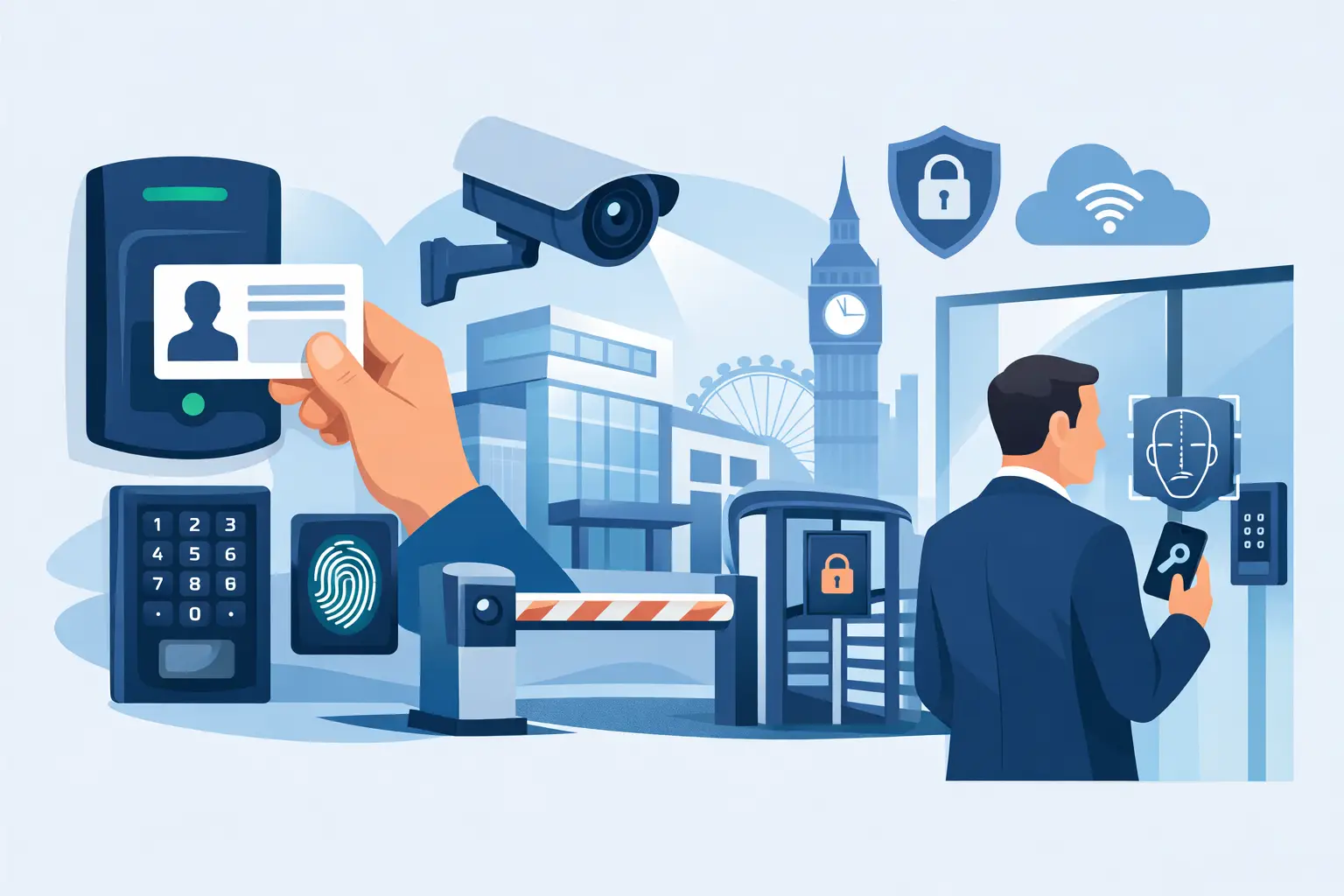
Mobile credentials allow authorised users to open a gate or door using a smartphone, commonly through Bluetooth, an app or a digital pass. Access can be issued, amended or withdrawn without collecting a key or arranging a new fob. This is particularly helpful for multi-site businesses, managed developments and contractors who only need access for a defined period.
Mobile access is not automatically the right answer for every location. Some teams prefer fobs for shared vehicles, workers without company smartphones or sites where phone use is restricted. A sensible specification can support more than one credential type, so permanent staff, visitors and contractors are not forced into the same method.
Video intercoms are becoming a central entry point
Commercial sites increasingly want more than an audio call button at the gate. Video intercom systems let staff see and speak to visitors before releasing access, whether they are at reception, in an office or, with the appropriate set-up, away from the property.
This can make a meaningful difference where deliveries are frequent or a reception desk is not staffed throughout the day. A driver can be checked before a sliding or swing gate is opened, while the call record gives managers greater visibility of visitor activity.
Intercom choice should reflect the environment. A small office may only need a simple internal monitor, whereas a gated development or busy commercial yard may benefit from multiple call points, app-based answering and clear camera coverage at vehicle height. Akuvox intercom systems are one option for projects that need this level of connected control, but the gate position, network connection and user requirements must be considered together rather than treated as separate purchases.
Access systems are being connected to gates, barriers and doors
A standalone automated gate is useful, but it delivers more control when it forms part of a joined-up access plan. The same authorised credential can be used to enter a vehicle gate, open a pedestrian gate and access a building or secure area. Managers can then apply different permissions to different people instead of relying on one universal code.
This approach is especially relevant on sites with separate staff parking, delivery yards, bin stores, plant areas or tenant entrances. It can also help control out-of-hours access, allowing a contractor through a pedestrian entrance without giving unrestricted vehicle access to the whole site.
The physical perimeter still matters. An access control panel cannot compensate for an undersized gate, weak fencing or a layout that lets people bypass the intended entrance. Aluminium gates and matching perimeter solutions can provide a strong, low-maintenance boundary while accommodating automation, safety devices and access equipment from the outset.
Cloud management is improving day-to-day administration
Cloud-managed access control allows authorised administrators to manage users, permissions and activity records through a secure online platform rather than only from a panel on site. For property managers and organisations with several locations, this can reduce unnecessary visits and speed up routine changes.
The advantage is control, not complexity. A manager should be able to add a new employee, remove a leaver and set time-based access without needing specialist knowledge for every adjustment. Audit trails can also help investigate a reported incident or confirm when a contractor arrived.
However, cloud access depends on suitable connectivity and sensible account management. Ask who owns the administrator account, who will retain access if a managing agent changes and how permissions are protected. Strong passwords, multi-factor authentication and regular software updates are basic requirements, not optional extras.
Visitor access is becoming more planned and less improvised
A growing number of sites are moving away from the familiar routine of leaving a gate open for deliveries or giving out a code that is never changed. Temporary passes, scheduled access windows and video verification offer a more controlled alternative.
This is valuable for builders’ merchants, storage yards, office parks and developments where several contractors may attend in one week. A visitor can receive access only for the agreed date and time, while a delivery driver can use an intercom to request entry when they arrive. The precise method depends on the site, but the aim is consistent: make legitimate access easy without turning the perimeter into an open invitation.
Cyber security now belongs in the specification
As gate automation, intercoms and access systems become connected, cyber security has become a practical purchasing issue. An internet-connected device should not be installed with its default password left in place or treated as fit-and-forget equipment.
Choose equipment from established manufacturers with a clear update process, use unique credentials and restrict administrator access to the people who genuinely need it. If cameras or access logs identify individuals, data handling must also be considered. UK GDPR responsibilities may apply, particularly around the purpose of monitoring, retention periods and who can view recorded information.
This need not make a project difficult. It simply means involving the person responsible for IT or data protection early, rather than after cables have been run and equipment has been commissioned.
Why physical gate design still sets the standard
Technology receives most of the attention, but commercial access control is only as dependable as the entrance it is fitted to. A gate must be correctly sized for vehicle movements, adequately supported and designed for the duty cycle expected. A busy site with regular lorry deliveries places very different demands on automation than a small private car park.
Sliding gates are often a good choice where space behind the entrance is limited or where vehicle movements are frequent. Swing gates can suit sites with sufficient clear space and may offer a particular architectural look. Pedestrian gates should be planned alongside vehicle access, not added as an afterthought, so staff and visitors have a safe, controlled route on foot.
Aluminium is well suited to many commercial settings because it is lightweight, strong and does not require the ongoing painting and corrosion treatment associated with some traditional materials. The reduced maintenance burden is useful for property managers responsible for keeping entrances presentable as well as secure. Bespoke sizing, infill styles and colours also make it easier to match the gate to fencing, railings and the wider development.
Specifying the right system for your site
Start with how the entrance is actually used. Consider the number of daily users, peak arrival times, vehicle types, delivery arrangements, visitor volume and whether access is needed outside normal working hours. A system that works perfectly for ten staff may cause delays for a site with shift changes and constant deliveries.
Next, decide what level of control is genuinely needed. A keypad may be appropriate for a low-risk, small team, provided codes are changed regularly. A video intercom may be more useful where visitors arrive unpredictably. Mobile credentials or managed fobs are often stronger choices when permissions change frequently. The best answer is usually proportionate to the risk, not simply the most feature-rich option.
Safety should be included from the first discussion. Automated gates require suitable safety measures, clear operating areas and professional installation. Consider emergency release arrangements, obstacle detection, visibility at the entrance and how pedestrians are kept separate from moving vehicles. Ongoing inspection and maintenance are equally important, particularly where gates operate many times each day.
Finally, appoint suppliers and installers who can support the whole project. Aluminium Gates Direct can help commercial buyers select gates, fencing, automation and intercom options that fit the site, budget and intended use, with nationwide installation support available through trusted partners. Clear drawings, cable requirements and access equipment choices before installation help prevent costly changes later.
A well-planned entrance should feel straightforward for authorised people and difficult to exploit for everyone else. Start with the traffic, risks and daily routines on your site, then build the gate, automation and access controls around them. That is how an investment in perimeter security continues to work long after the first opening cycle.