
A driveway gate now does far more than mark the edge of a property. It shapes the first view from the road, affects day-to-day access and can add meaningful privacy and security. The strongest modern gate design trends reflect that wider role: clean architectural lines, practical materials, controlled access and designs tailored to the property rather than chosen from a one-size-fits-all range.
For homeowners, developers and commercial buyers, aluminium is central to this shift. It offers the appearance of a premium made-to-measure entrance without the ongoing painting, staining or corrosion concerns commonly associated with timber and steel. The right design still depends on the setting, available space, level of privacy required and whether automation is part of the plan.
Modern gate design trends: cleaner lines, better function
Contemporary gate design is moving away from overly decorative detailing on many new-build and renovated properties. Simple forms tend to complement modern brickwork, render, stone, composite cladding and aluminium windows more naturally. That does not mean every gate needs to be plain. It means the detail is more considered.
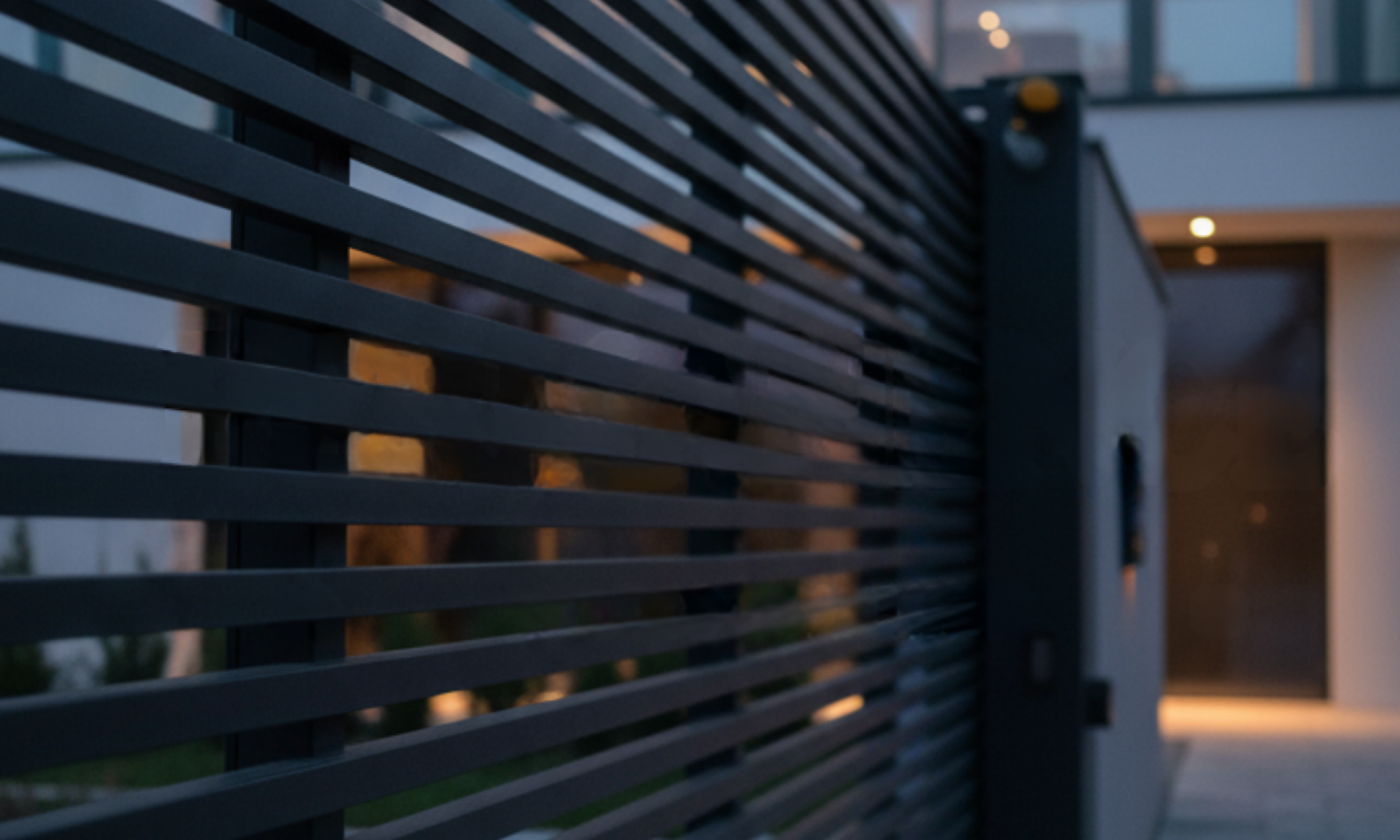
Horizontal slatted gates remain a popular choice, particularly for driveway entrances where customers want privacy without creating a heavy, enclosed frontage. The spacing between slats can be adjusted to suit the view from the property and the level of screening needed from the street. Tighter spacing offers greater privacy, while wider gaps allow more light and visibility through the gate.
Vertical infill designs are also becoming more common, especially where a taller, more formal appearance suits the architecture. They can make a narrow entrance appear higher and work well alongside matching aluminium fencing and pedestrian gates. For properties with a traditional character, an ornate or framed aluminium design can provide a more classic look while still benefiting from a low-maintenance material.
The key is proportion. A gate that is too solid can overwhelm a modest frontage, while an open design may not provide enough privacy on a busy road. Looking at the gate, boundary fencing, pillars and driveway as one scheme usually produces a more balanced result.
Aluminium finishes that work with the property
Anthracite grey remains a leading colour choice for modern gates, largely because it sits comfortably alongside contemporary windows, doors and roof finishes. Black is another strong option, creating a sharper contrast against pale render, stone and lighter brickwork. Both finishes are versatile, but neither is the only answer.
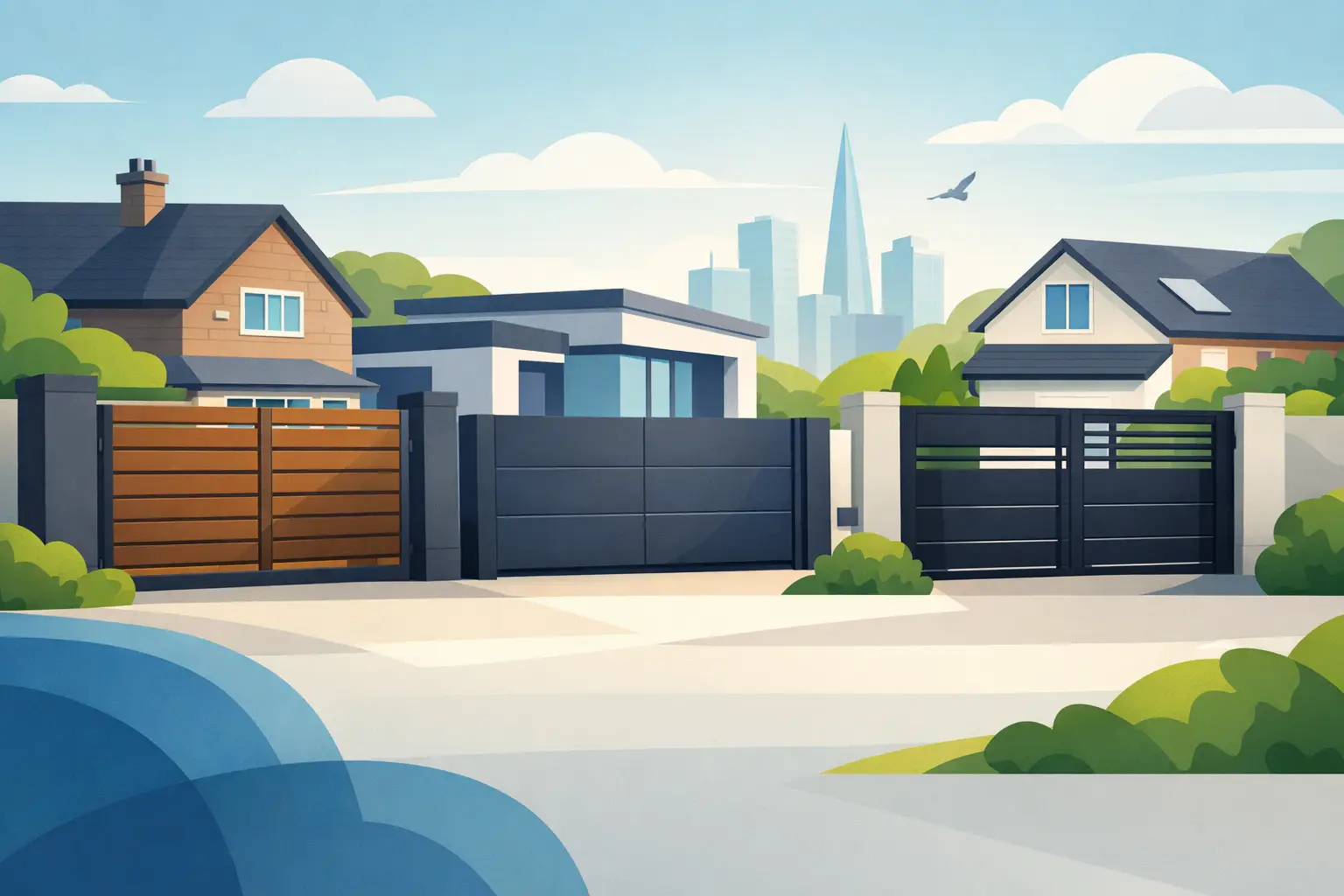
Warmer shades, including brown, bronze and wood-effect finishes, are gaining interest from customers who want a softer alternative to grey. A wood-effect aluminium gate can be particularly effective where a timber appearance is preferred but regular treatment and the risk of warping are not. On period homes and rural properties, this can bridge the gap between traditional character and modern performance.
Matching the gate to every feature is not always necessary. A gate can complement window frames or railings without being identical. What matters is that the chosen colour works with the dominant tones of the building and its boundary. Samples and visual references are useful here, as colours can look noticeably different in direct sunlight, shade and against existing masonry.
Privacy without losing kerb appeal
Privacy is a major reason customers replace open metal gates or ageing timber panels. Modern designs increasingly use solid lower sections combined with slatted or decorative upper sections. This helps reduce views into the driveway while avoiding the appearance of a completely blank barrier.
For garden side entrances and pedestrian gates, full privacy panels are often the most practical option. They can hide bins, storage areas and side access while creating a neat continuation of the wider fencing line. On a driveway, however, a fully solid gate may be best reserved for properties where privacy is the clear priority.
This is also where bespoke manufacture makes a difference. Standard sizes can work well for straightforward openings, but made-to-measure gates allow the rail layout, infill style, height and width to be properly matched to the site. Uneven ground, non-standard pillars and sloping driveways are all common reasons to consider a tailored solution rather than forcing a standard product to fit.
Sliding and swing gates chosen around the driveway
The gate’s opening method has become part of modern design, not simply an installation detail. Sliding gates are increasingly specified for shorter driveways, commercial entrances and locations where gates must not swing into a public highway. They create a clean, controlled entrance and can be an efficient use of space when there is sufficient run-back room along the boundary.
Swing gates remain an excellent choice for many residential driveways. They suit traditional and contemporary properties alike, can create an impressive central entrance and do not require the side clearance needed for a sliding system. Bi-parting gates are often preferred for wider openings, while a single-leaf gate may be appropriate for a smaller access point.
The practical checks should come before selecting a style. Consider driveway depth, ground levels, drainage, pillar condition, parking arrangements and where the gate will sit when open. Gates should not open outwards across a pavement or road. An experienced installer can assess these details early and help prevent expensive changes later in the project.
Automation is now expected, not exceptional
Automated gates are no longer limited to high-end developments. More homeowners are choosing automation for convenience, while commercial sites value controlled access and the ability to manage vehicle movement more effectively. The most successful installations consider automation from the outset, rather than treating it as an add-on after the gate has been selected.
A lightweight aluminium gate is well suited to automation because it places less strain on the operating equipment than a heavier alternative. The system still needs to be correctly specified for the gate size, usage level and opening style. A domestic driveway used a few times a day has different requirements from a shared development or commercial site with frequent access.
Video intercoms and keypad entry systems are another clear trend. Akuvox intercom systems, for example, can help property owners see and speak to visitors before granting access. For deliveries, family access, contractors and business visitors, this provides practical control without having to leave the building.
Safety must remain part of the specification. Automated gates need appropriate safety devices, careful positioning and professional commissioning. A well-designed system should be convenient, but it must also be safe for residents, visitors, pedestrians and vehicles.
Coordinated boundaries create a more complete finish
A gate can look disconnected if the surrounding boundary is tired, mismatched or poorly proportioned. More projects now combine driveway gates with matching aluminium fencing, railings and pedestrian access gates. This creates a consistent finish and avoids the common compromise of fitting a premium entrance next to old timber panels or unrelated steelwork.
For developers and commercial buyers, coordinated perimeter solutions also make specification easier. Using compatible materials and finishes across gates, fencing and access points can simplify ordering and give a site a more professional appearance. It is particularly useful where multiple plots, communal entrances or separate vehicle and pedestrian routes need a consistent identity.
Readymade or bespoke: choose based on the project
Readymade aluminium gates can be a sensible option for standard openings, straightforward replacements and customers working to a defined budget. They can offer a quicker route to a quality entrance when the size and style are suitable.
Bespoke gates are more appropriate when the opening is unusual, the design needs to match existing architectural features, or automation and access control require a more considered layout. They also provide greater freedom over colour, slat direction, privacy levels and decorative details.
Neither route is automatically better. The best choice is the one that suits the site, the desired finish and the long-term use of the gate. Aluminium Gates Direct can help customers weigh up these options, from initial product selection through to installation support and automation planning.
A well-chosen gate should still look right after years of use, not just on installation day. Start with how the entrance needs to work, then choose the design, finish and access system that make that daily use easier. That approach usually leads to a gate that improves both the appearance and practicality of the property.