

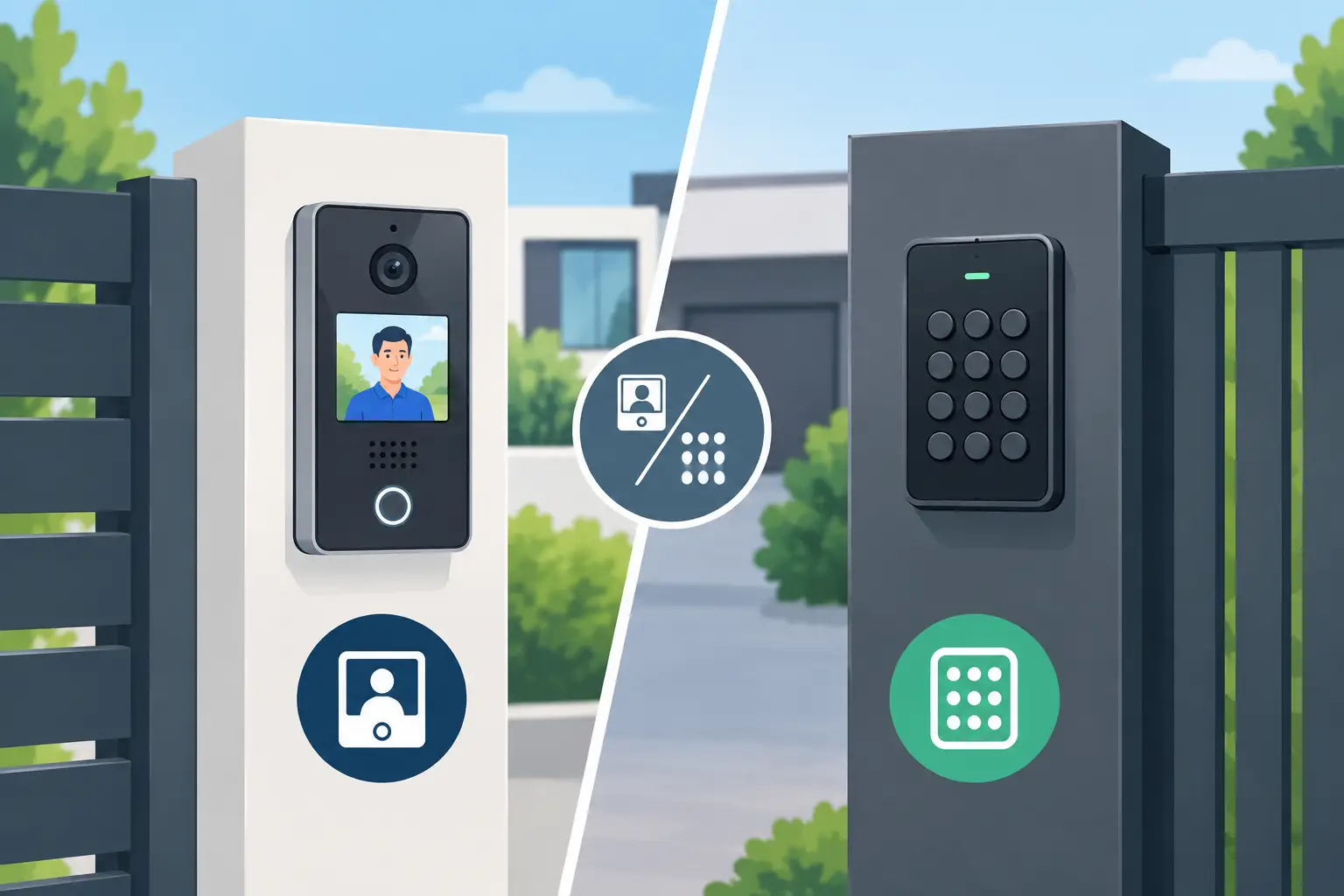
A driveway gate can look exactly right and still cause frustration if access is awkward. The decision between intercom vs keypad entry affects how your household, visitors, deliveries and tradespeople use the gate every day. The best option is not always the most feature-rich one. It is the system that suits the property, the people using it and the level of control required.
For many homes, a keypad is a straightforward, dependable answer. For properties where visitors need to be checked before entry, an intercom adds a valuable layer of control. Commercial sites may benefit from using both.
Intercom vs keypad entry: the key difference
A keypad opens an automated gate when the user enters the correct PIN code. It is designed primarily for authorised people who already have permission to enter, such as residents, staff, regular contractors or family members.
An intercom allows a visitor to call someone inside the property before the gate is opened. Depending on the system selected, this may be an audio call, a video call or a call diverted to a mobile phone. The person receiving the call can identify the visitor and release the gate remotely.
Put simply, a keypad provides access through a code, while an intercom provides a way to screen visitors. Both can be fitted to swing and sliding gate systems, and both work particularly well when planned alongside gate automation rather than treated as an afterthought.
When keypad entry is the practical choice
Keypad entry is often the right fit where convenience is the main priority. A homeowner can give a code to close family, a gardener or a cleaner without handing out additional remote controls. On a shared private drive, codes can be issued to regular users and changed when access needs to be removed.
A keypad also keeps the gate operation simple. There is no need for someone to answer a call, and visitors who have permission can let themselves in even if the property is empty. This can be useful for homes with frequent service visits, holiday lets, yards and smaller commercial premises.
The main consideration is code management. A PIN can be passed on, written down or forgotten, particularly if one code is shared by too many people. Changing the code periodically is sensible, and systems with separate user codes make it easier to remove access for an individual without disrupting everyone else.
For a keypad to remain effective, it should be installed at a comfortable height and position for drivers and pedestrians. On a driveway, think about the distance from the road and the space a vehicle needs to pull clear while the gate opens. A poorly placed keypad can lead to users stretching from the car window or stopping where they obstruct the pavement or road.
Keypad entry suits properties with regular authorised users
A keypad is generally a strong choice when most users are known and visit regularly. It is affordable, unobtrusive and easy to understand. It can be an especially sensible starting point for a readymade or bespoke aluminium gate where the customer wants controlled access without adding more technology than they need.
When an intercom is worth the extra investment
An intercom is better suited to properties where visitors need to request access. This may include family homes set back from the road, larger driveways, blocks of flats, offices, schools, depots and gated commercial sites.
With an audio intercom, the occupier can speak to a caller before releasing the gate. A video intercom adds visual confirmation, helping the user check who is at the entrance. This is useful when a delivery driver, unfamiliar contractor or unexpected visitor arrives, particularly where the front door is some distance from the gate.
Modern systems can offer mobile app calling, which means calls can be answered when the occupier is elsewhere on the property or away from it. This can be helpful, but it should not be the only factor in the decision. App-based functions rely on suitable network coverage, a reliable internet connection and confident day-to-day use of a smartphone.
For households wanting a clearer view of who is calling, or businesses with a reception team that needs to approve arrivals, a quality video intercom such as an Akuvox system can provide a more controlled approach to entry. The right specification depends on whether calls need to reach one handset, several users or a managed access point.
Intercoms offer better visitor control, not automatic security
An intercom allows you to make a decision before opening the gate, but the result still depends on how it is used. If anyone can press the release button without checking the caller, the extra control is lost. Video helps with identification, but it should be installed with a clear sightline, suitable lighting and a camera angle that captures the person at the entrance.
It is also worth considering how visitors use the system. A clear call button, readable name plate and straightforward instructions make a noticeable difference. Access equipment should make a property feel welcoming while still protecting it.
Using an intercom and keypad together
For many installations, the most useful answer is not intercom or keypad entry, but both. The intercom manages unknown visitors while the keypad gives trusted users a quick way in. Residents may use remote controls or a keypad code, while deliveries and new visitors call through the intercom.
This combination works well at busy family homes and commercial sites. It avoids the need to share a visitor access code widely, while ensuring regular users are not dependent on someone being available to answer an intercom call.
There are other access methods to consider too. Key fobs, vehicle-mounted remote controls, proximity readers and exit buttons can all be incorporated into an automated gate design. For commercial premises, the access strategy may need to account for staff turnover, delivery schedules, pedestrian access and emergency procedures.
Installation considerations before choosing
The access system should be selected as part of the wider gate project. Cable routes, power supplies, gate automation, pedestrian entry points and the position of the control panel all need to be considered early. Retrofitting is possible in many cases, but planning it from the start usually produces a cleaner installation and can reduce unnecessary disruption later.
Wireless options can help where running cables is difficult, although wired equipment is often preferred for permanent installations because it avoids battery changes and potential signal issues. The most suitable approach depends on the distance between the gate and property, ground conditions and whether excavation is practical.
The gate itself matters too. Aluminium gates are lightweight yet strong, which makes them well suited to automated operation. Their low-maintenance finish means the access equipment can be paired with a gate solution that does not demand regular painting or treatment. Whether you choose a sliding gate for limited driveway depth or a swing gate for a more traditional entrance, the access control should be designed around safe operation and convenient use.
Safety should always be part of the specification. Automated gates require suitable safety devices, including photocells and force controls, to reduce the risk of trapping or impact. A professional installer can assess the layout, opening direction, public-facing risks and manual release arrangements before recommending the appropriate equipment.
Cost, maintenance and long-term use
A basic keypad is usually the lower-cost option because it has fewer components and a simpler function. An intercom, particularly video or mobile-connected equipment, involves a greater initial outlay and may require more careful setup. That does not make it unnecessary. If screening callers is a priority, it can be money well spent.
Neither system should be selected on purchase price alone. Think about who will use it in three or five years, whether the property may be rented or sold, and how easy it will be to update access. For example, a business with changing staff may place greater value on individual user codes, while a homeowner may prioritise a video call to a phone.
Keep keypads clean and check that buttons remain responsive. Review codes after a contractor finishes work or a tenant changes. For intercoms, periodically test audio, video, gate release and any app notifications. A simple check can identify an issue before a visitor is left outside or access is needed urgently.
The right access control should make your gate easier to live with, not more complicated. If you are weighing up keypad convenience against intercom screening, Aluminium Gates Direct can help you match the equipment, gate design and automation arrangement to your property and budget before installation begins.