
A gate can improve the look of a property or undermine it completely. The difference usually comes down to proportion, detail and whether the design suits the building behind it. That is why bespoke aluminium gate design appeals to so many homeowners, developers and commercial buyers – it gives you control over appearance, function and long-term performance instead of forcing a compromise.
For some projects, a standard gate is perfectly suitable. For others, it is too wide, too narrow, too plain or simply wrong for the setting. A made-to-measure solution allows you to match the opening, the architecture and the way the gate will be used every day. Done well, it adds security and kerb appeal without creating extra maintenance.
Why bespoke aluminium gate design suits modern properties
Aluminium has become a practical choice for perimeter products because it solves several common problems at once. It is lightweight compared with steel, it will not rot like timber, and it offers excellent strength for residential and commercial use when properly manufactured. For buyers who want a gate that looks smart year after year, that matters.
The bespoke element matters just as much as the material. A gate is rarely an isolated feature. It needs to sit comfortably with the driveway, walls, railings, fencing, entrance posts and the style of the property itself. A rural home, a contemporary new-build and a commercial site entrance all call for very different design choices. Bespoke sizing and detailing make it possible to achieve the right balance rather than settling for a near match.
There is also the practical side. You may need to account for a sloping drive, unusual pillar spacing, privacy requirements, vehicle clearance or automation equipment. These are not minor details added at the end. They should shape the design from the start.
What good bespoke aluminium gate design looks like
The best designs are not always the most elaborate. In many cases, the strongest result is the one that feels proportionate to the property and straightforward to live with.
Proportion comes first
Width, height and panel layout all affect how a gate looks from the road. A gate that is too heavy visually can dominate the frontage. One that is too slight can look insubstantial, even if the build quality is excellent. This is especially important on wider driveways where double gates need enough structure to look intentional rather than stretched.
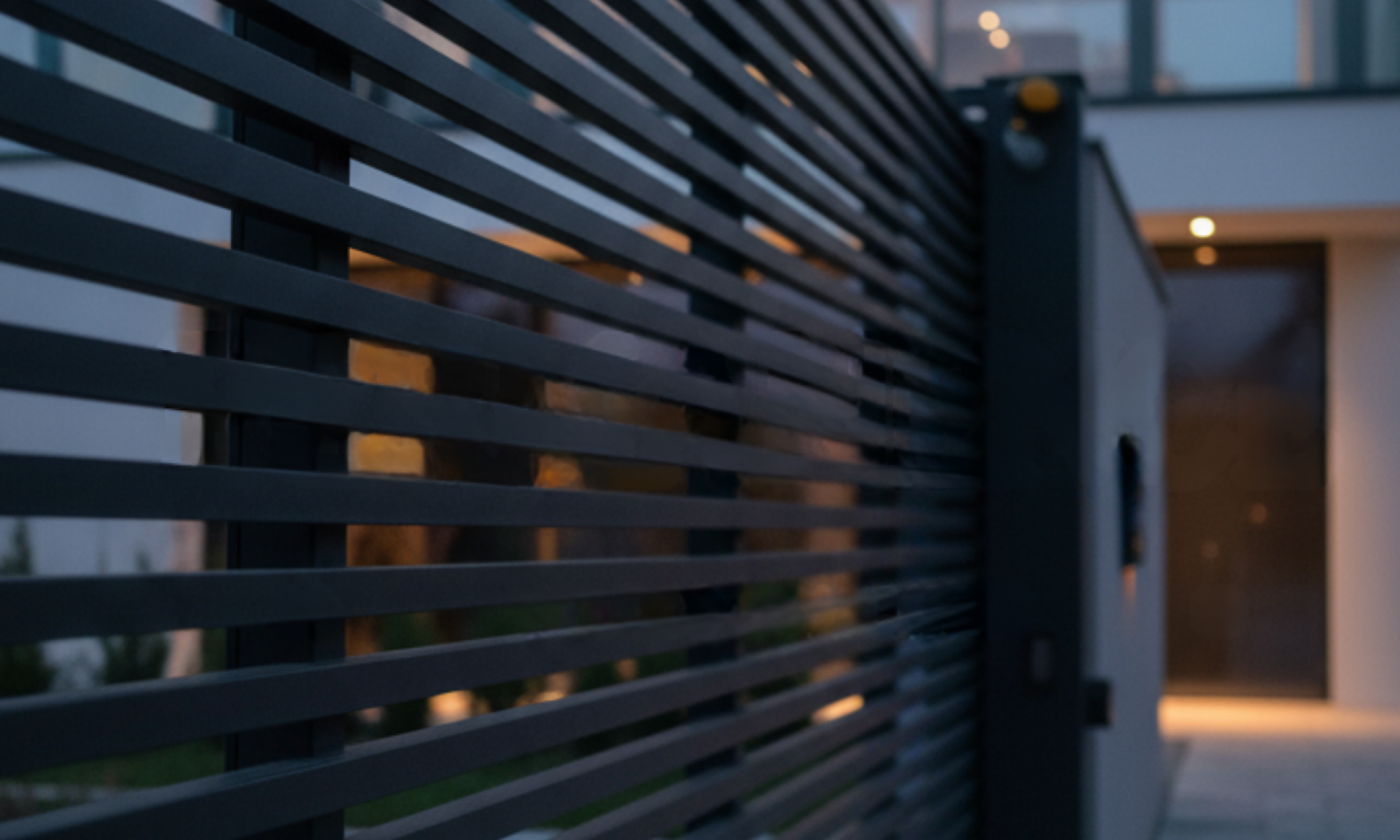
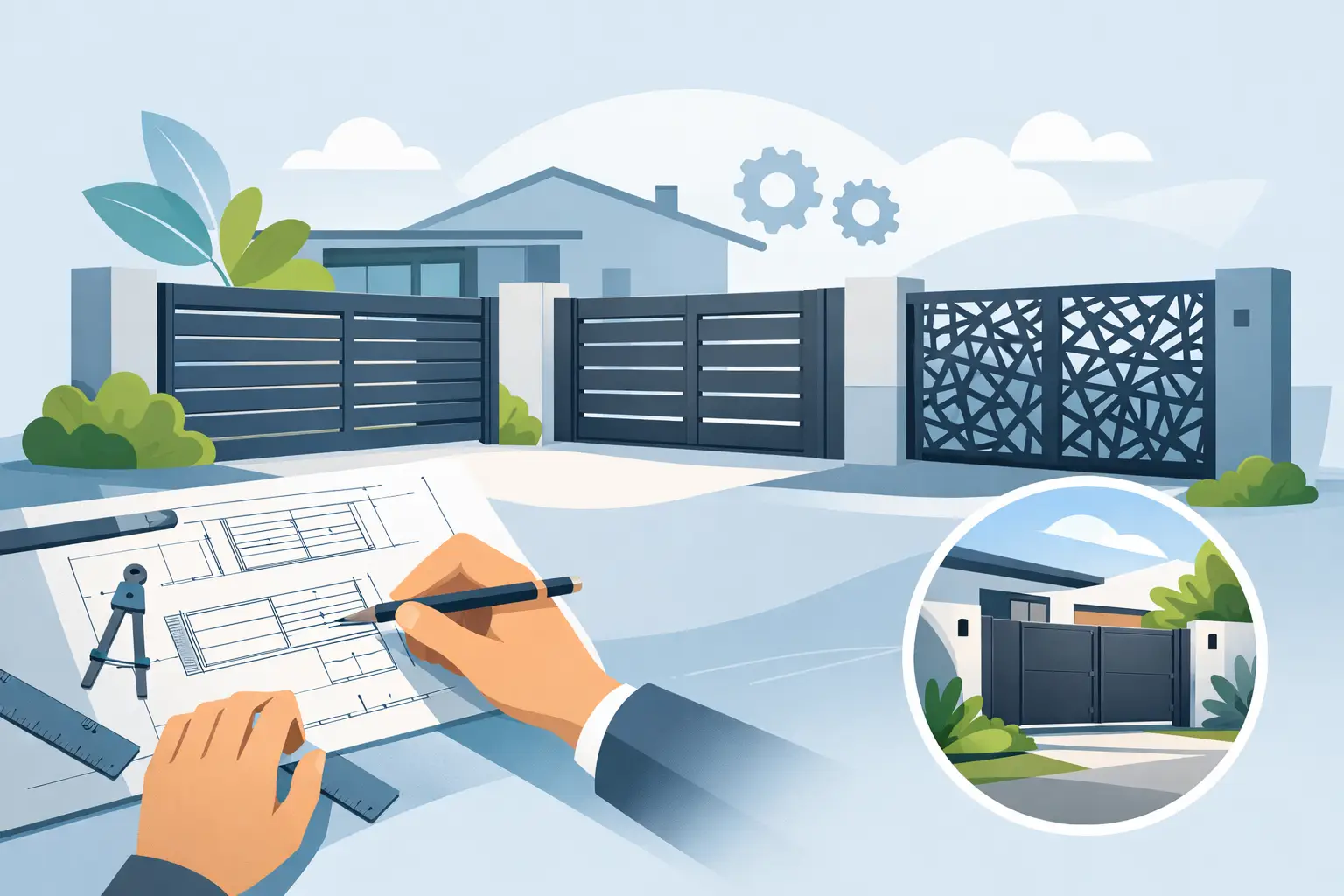
Spacing within the design also changes the feel of the entrance. Horizontal slats often suit modern homes and can provide a clean, architectural finish. Vertical designs can feel more traditional and may work better with period properties or homes with railings and brick piers. Solid or near-solid infills increase privacy, while more open styles keep the frontage lighter and more welcoming.
Privacy and visibility need balancing
Privacy is often one of the first reasons buyers consider a bespoke gate, but full screening is not always the right answer. A completely solid gate can create a bold, secure appearance, yet it may not suit every setting. On exposed sites, it can also place greater demands on hinges, posts and automation due to wind load.
A partially open design can be a better fit where appearance and airflow matter. It depends on the location, the surrounding architecture and how much screening you genuinely need. For front garden pedestrian gates, a lighter design may be ideal. For a main driveway gate or commercial entrance, stronger privacy and access control may take priority.
Details make the gate feel finished
Frame thickness, top profiles, decorative features and colour choice all influence the final result. Some customers want a simple flat-top design with a contemporary powder-coated finish. Others prefer a more ornate style that echoes traditional metalwork without the upkeep associated with older materials.
Colour should be considered alongside the property’s windows, doors, fencing and brickwork. Dark grey, black and anthracite remain popular because they work across a wide range of property styles, but bespoke design is about fit, not fashion. A gate should complement the rest of the exterior rather than chase a trend that may date quickly.
Choosing between swing and sliding gates
The choice of opening style affects the design as much as the mechanics. Swing gates are often the first option considered for domestic driveways because they are familiar, practical and available in a wide range of styles. They can work very well where there is enough clearance and a reasonably level approach.
Sliding gates are often better suited to wider openings, tighter spaces or commercial sites where controlled access is a priority. They can also be useful on sloping driveways where swing operation becomes difficult. That said, sliding systems require the right run-back space and suitable ground conditions, so they are not automatically the better option.
This is where bespoke planning helps. The gate should not just fit the opening on paper. It should operate reliably in the real conditions of the site.
Design choices for homes, developments and commercial sites
Residential buyers often focus on kerb appeal, privacy and ease of upkeep. In that setting, bespoke aluminium gates offer the freedom to create a stronger frontage without committing to regular sanding, painting or repairs. For driveway entrances, the right design can tie together the house, boundary treatments and landscaping in a way off-the-shelf products rarely manage.
Developers and architects tend to look at consistency across multiple plots, planning requirements and cost control. A bespoke approach can still be the right one here, especially where standardisation is needed across a site but openings vary slightly. It allows a coherent visual scheme without ignoring practical differences between plots.
Commercial buyers usually have a more complex brief. Security, traffic flow, automation, access control and presentation all need to work together. A commercial gate should still look professional, but durability and daily performance carry more weight than decorative detail. Aluminium is especially useful where a lighter gate leaf can reduce strain on automated systems while still delivering a strong perimeter solution.
Automation should be planned early
One of the most common mistakes in gate projects is treating automation as an add-on. If you already know the gate will be powered, the design should accommodate that from the start. Weight, infill style, opening method, use frequency and access equipment all influence what will work best.
Intercoms, keypads, safety devices and remote access systems should also be considered alongside the gate design rather than after manufacturing. A well-designed automated gate feels straightforward to use. A poorly planned one can become an expensive frustration.
For many customers, support with specification is just as valuable as the gate itself. Aluminium Gates Direct works with customers nationwide and through installation partners, which helps bridge the gap between choosing a product and making sure it works properly on site.
What affects price in bespoke aluminium gate design?
There is no single price for bespoke work because specification drives cost. Size is a factor, but so are style, complexity, automation requirements, hardware, finishes and installation conditions. A simple made-to-measure pedestrian gate will sit in a very different price bracket from a large automated driveway or commercial sliding gate.
That does not mean bespoke automatically means overpriced. In many cases, it is better value than repeatedly adapting a standard product that was never quite right. Transparent pricing matters here. Buyers should understand what they are paying for and where design choices influence cost.
It is also worth thinking beyond the purchase price. Aluminium’s low-maintenance finish and resistance to rust and rot can reduce ongoing upkeep significantly compared with timber or untreated steel alternatives. Over time, that changes the value equation.
Getting the brief right from the outset
A successful gate project usually starts with a clear brief rather than a catalogue image. Think about the opening size, the level of privacy you want, whether automation is required, how often the gate will be used and what style genuinely suits the property.
Photos of the entrance, rough dimensions and a sense of preferred design direction can help narrow the options quickly. If the property has unusual access needs, restricted space or site-specific constraints, raising those early saves time and avoids unsuitable recommendations.
Good advice should leave you with a gate that looks right, functions properly and fits your budget without surprises. That is the real value of bespoke aluminium gate design. It is not about adding complexity for the sake of it. It is about getting a result that feels considered, practical and built for the way the property is actually used.
If you are choosing a new gate, aim for a design that will still feel right in five or ten years, not just on installation day.