
A driveway gate has to do more than fill an entrance. It needs to suit the width and gradient of the drive, complement the property, provide the level of privacy required and remain reliable through British weather. The best readymade driveway gates make that decision simpler, offering a faster route to a smart, durable entrance without the lead time of a fully bespoke design.
For many homeowners, a readymade aluminium gate is the right balance of value, appearance and convenience. The key is choosing a standard-size option that genuinely fits the site, rather than trying to make the opening fit the gate after delivery.
What makes the best readymade driveway gates?
The best option is not automatically the heaviest gate or the one with the most decorative detail. It is the gate that works properly with your entrance, posts, access needs and budget. A well-specified readymade gate should offer strong construction, a practical opening arrangement and a finish that will still look good after years outside.
Aluminium is particularly well suited to driveways. It is lightweight compared with steel, so manual operation is easier and automated systems do not have to work as hard. It will not rot like timber or develop the rust associated with untreated steel. Quality powder-coated aluminium also offers a consistent, attractive finish in popular colours such as anthracite grey, black and white.
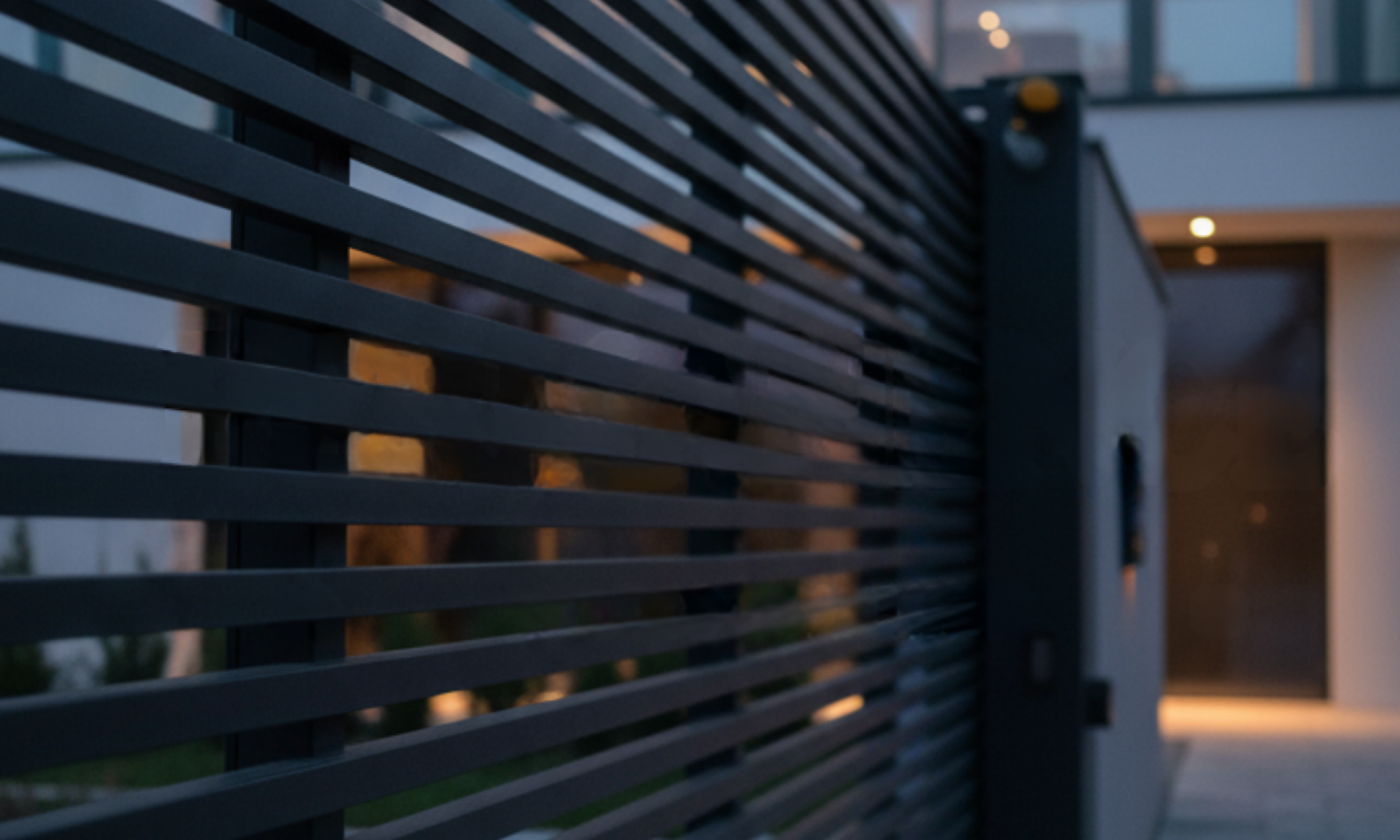
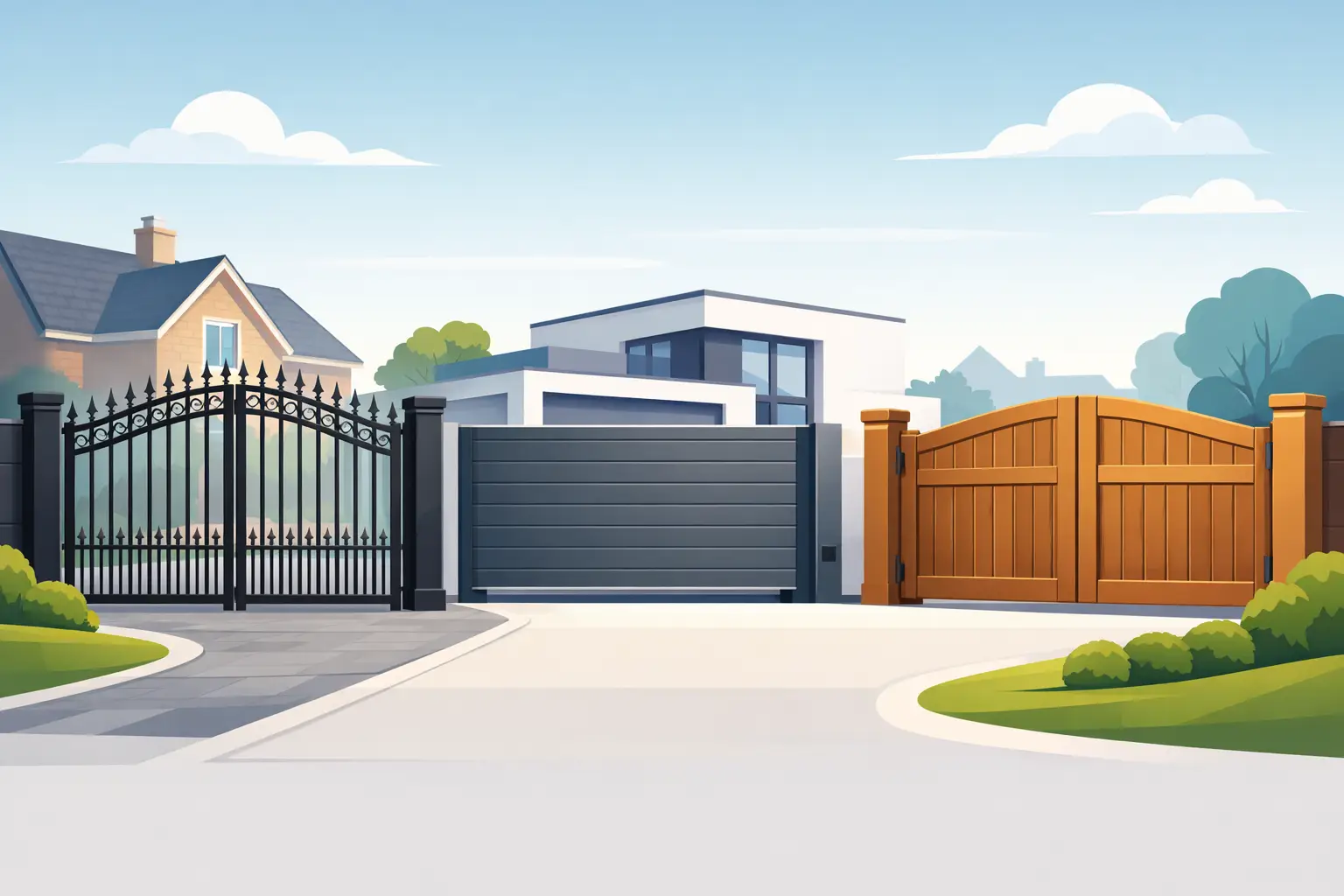
This does not mean every property needs the same gate. A modern home may suit a horizontal slatted design, while a period property can benefit from an aluminium gate with more traditional lines or ornate detailing. The right style should look intentional from the road and work with existing fencing, railings, brickwork and landscaping.
Start with accurate driveway measurements
Most problems with ready-to-delivery gates come down to measurement. Before selecting a size, establish the clear opening between the finished gate posts, walls or pillars. Measure at ground level and again higher up, especially where old brickwork is not perfectly square.
It is also essential to check whether the stated gate size refers to the gate leaf itself or the total opening it is intended to fill. Hinges, latch gaps and clearances all require space. If you are replacing existing gates, do not assume the old leaves were correctly sized for the opening.
For a double swing gate, consider the width of each leaf and the space available for it to open. A narrow driveway that meets a busy road may not have room for gates to swing outwards, and outward-opening gates can create safety and legal concerns where they cross a public pavement. In most domestic settings, gates should open into the property.
Driveway slope matters too. A rising drive can prevent a conventional swing gate from opening fully unless there is adequate ground clearance or the gate arrangement is designed around the gradient. A sliding gate may be a more suitable solution where space and levels make swing gates impractical, though it needs sufficient room along one side of the entrance for the gate to travel.
Allow for posts, hardware and ground clearance
Readymade gates are supplied in standard sizes, but a complete installation includes more than the gate panels. You may need aluminium, steel or masonry-mounted posts, plus hinges, a latch, drop bolts and suitable fixings. If the gate will be automated, the choice of hinges and mounting positions needs to be agreed before installation.
Leave sensible clearance beneath the gate for uneven ground, surface water, leaves and small stones. Too little clearance can lead to scraping and difficult operation. Too much can reduce security and spoil the finished appearance. An experienced installer can assess this before posts are set in place.
Choose the right balance of privacy and kerb appeal
Solid or closely slatted aluminium driveway gates provide greater privacy and can help screen parked vehicles from view. They are a popular choice for homes on through roads or properties with a close view of neighbouring houses. However, solid panels catch more wind than open designs, which can affect the specification of posts, hinges and automation.
Open-bar, spaced slat or rail-style gates allow light and visibility through the entrance. They can make a smaller frontage feel less enclosed and often suit properties that already have railings. Their more open construction can also be helpful in exposed locations, where reducing wind load is a sensible consideration.
Think about the view in both directions. From outside, the gate should enhance the front of the property. From inside, it should not make the drive feel dark or overly enclosed. Matching the gate colour and design to adjacent pedestrian gates, fencing or railings creates a more considered perimeter than selecting each element separately.
Manual or automated operation?
A manual gate is a sensible, cost-effective choice for a short drive or a home where the entrance is used occasionally. Aluminium’s lower weight makes it comfortable to operate, provided hinges are correctly installed and the ground is level. A good latch and drop bolts are still important for security and stability.
Automation adds convenience, particularly when arriving home in rain or using the driveway several times a day. It can also make a large double gate easier to manage. Yet an automated gate must be planned as a system, not treated as an accessory added at the last minute.
The gate weight, length, wind exposure, frequency of use and available power supply all influence the appropriate motor. Safety features such as photocells, force limitation and a manual release mechanism should be included in the design. An intercom or keypad can provide controlled access for visitors, deliveries and tradespeople, while vehicle exit loops and remote controls can make daily use more straightforward.
If automation is likely in the future, tell your supplier at the point of purchase. Choosing a gate and post arrangement that is automation-ready can avoid unnecessary changes later.
Readymade versus bespoke driveway gates
Readymade gates are ideal when your opening aligns with a standard width and height, you prefer an established design and delivery time is a priority. They can offer excellent value because the design and manufacturing process is already defined. For straightforward domestic entrances, this is often all that is required.
Bespoke gates become more worthwhile when the opening is unusual, the driveway is sloped, pillars are irregular, or you want a specific pattern, height, colour or infill. They are also worth considering where a gate needs to match existing perimeter products precisely. Bespoke does not simply mean decorative – it can solve practical site constraints that a standard size cannot.
There is a trade-off. A readymade option can be quicker and more economical, but flexibility is limited. A bespoke gate takes longer to manufacture and may cost more, yet it gives greater control over fit and appearance. The most suitable choice depends on how standard the entrance really is.
Do not overlook installation and aftercare
Even a high-quality aluminium gate will only perform as well as its installation. Posts must be securely founded, aligned and capable of carrying the gate’s load. Hinges need correct adjustment, latches must meet cleanly and automated equipment must be installed and commissioned by a competent professional.
Aluminium requires very little upkeep, which is one of its main advantages. Periodically wash the gate with mild soapy water and a soft cloth to remove road film, salt and general dirt, particularly in coastal areas or beside heavily used roads. Avoid abrasive pads and harsh chemicals that could damage the powder-coated surface. Check moving parts occasionally and keep the ground track or opening area clear.
For nationwide projects, installation support can be as valuable as the gate itself. Aluminium Gates Direct can help customers select a suitable aluminium solution and connect them with installation partners, including projects that require automation or access control.
A practical buying checklist
Before ordering, confirm the clear opening, intended gate height, direction of travel and whether the driveway is level. Decide how much privacy you want, whether the gate will be manually operated or automated, and whether posts, fittings and access controls are included in the specification.
Also consider how the entrance will be used in real life. Will a family car, van, refuse lorry or delivery vehicle need to pass through comfortably? Is there enough room for visitors to stop safely while the gate opens? Will a pedestrian gate make everyday access easier without operating the driveway gate? These details often determine whether a gate feels convenient or becomes a frustration.
A well-chosen readymade aluminium gate should make the entrance feel secure, finished and easy to live with. Take the time to measure properly and discuss the site conditions before ordering, and you can choose a gate that looks right on day one and continues to perform for years to come.