The right gate changes how a property feels before anyone reaches the door. It shapes first impressions, frames the entrance and adds a sense of security that needs to work every day, not just look good on a brochure. That is why ornate aluminium gates appeal to so many homeowners, developers and commercial buyers – they offer decorative detail without the upkeep that often comes with more traditional materials.
For some buyers, the priority is appearance. They want scrollwork, finials or a more classic design to suit a period-style home, a smart driveway or a formal entrance. For others, the attraction is more practical. They want a gate that looks substantial, resists weathering and does not demand regular sanding, repainting or rust treatment. Aluminium makes that balance much easier to achieve.
Why ornate aluminium gates make sense
A decorative gate should do more than look attractive. It needs to stand up to daily use, changing weather and the general wear that comes with being the most used part of a boundary line. Aluminium is well suited to this because it is lightweight, strong and naturally resistant to corrosion.
That matters in the UK, where gates face rain, frost, wind and long periods of damp conditions. A traditional wrought iron style can be visually impressive, but it often brings more maintenance than many buyers expect. Timber can also look excellent, but it needs ongoing care to keep it in good condition. Ornate aluminium gates give you the decorative look many people want, while reducing the long-term work needed to keep the entrance looking smart.
Weight is another practical advantage. A lighter gate places less strain on posts, hinges and automation equipment. That can be useful for wider driveway gates, frequent-use entrances and projects where reliability matters just as much as appearance. Lightweight does not mean flimsy – good aluminium gates are designed to provide strength and stability while remaining easier to handle than many steel alternatives.
The difference between ornate and overdesigned
Decorative gates work best when the detailing suits the property. A common mistake is choosing a style that is too busy for the setting. An ornate design should add character, not dominate the frontage.
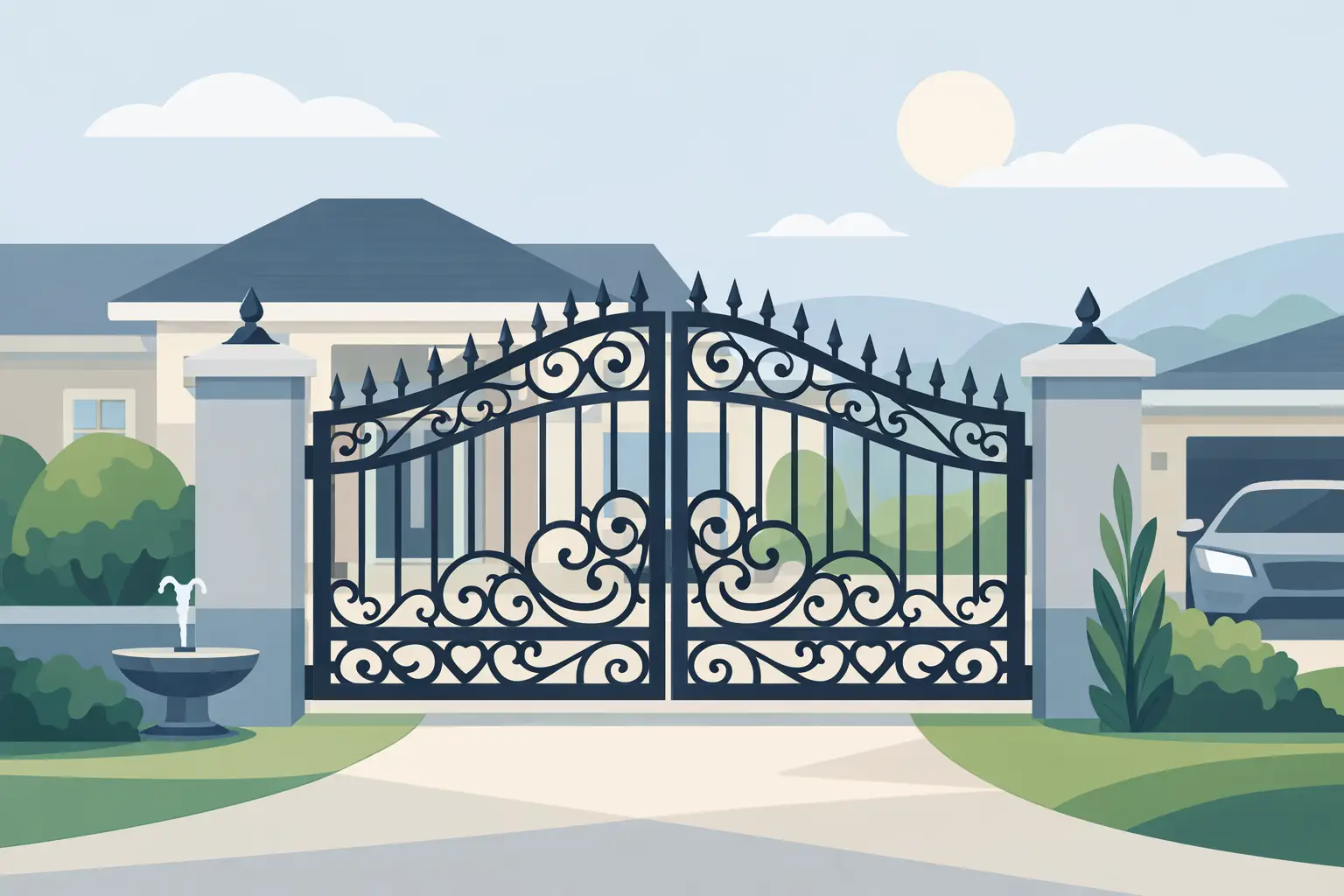
On a traditional property, more elaborate scrolls, cast details and shaped tops can sit naturally with brick pillars and established landscaping. On a newer home, a cleaner decorative pattern may be the better choice. You still get the visual lift of an ornate gate, but with lines that feel more in keeping with modern architecture.
This is where bespoke design can make a real difference. Standard options suit many openings, but not every entrance has the same proportions, surroundings or planning considerations. A made-to-order gate allows you to tailor the level of detail, the height, the width and the finish so the end result feels considered rather than forced.
Ornate aluminium gates for driveways and entrances
Driveway gates are often where ornate styles have the biggest impact. They are prominent, they add kerb appeal and they can lift the overall presentation of a property very quickly. If the entrance is wide and open, an ornate design can help create a stronger sense of structure and presence.
That said, style should always be matched to function. A pair of swing gates may suit a level driveway with enough clearance, while a sliding gate may be more practical where space is tighter or where the entrance opens onto a busy road. The decorative element can be worked into both formats, but the design needs to account for how the gate will move and how often it will be used.
Height also matters. A lower gate may be ideal if the focus is appearance and marking the boundary. A taller gate can provide more privacy and a stronger security presence. There is no single right answer – it depends on whether the property needs openness, screening or a balance of both.
Finish, colour and detail
The finish of an ornate gate can change the whole look. Black remains a popular choice because it gives a classic appearance and suits both traditional and modern settings. Grey tones, including anthracite, can feel more contemporary while still working well with decorative features.
The texture and sheen of the finish are worth thinking about too. A matte or satin finish often gives a more refined result than a high gloss surface, especially on detailed designs. Decorative features such as spear tops, rings, scrollwork and shaped rails should complement the gate rather than compete with one another.
If the gate is part of a wider boundary project, it is sensible to think about railings, fencing and pedestrian access at the same time. Matching or coordinating these elements usually gives a more professional result. It can also make installation and automation planning more straightforward.
Security and automation without losing style
A decorative gate still needs to perform as a security product. That means considering locking, access control and how the gate integrates with the rest of the perimeter. For residential buyers, this may involve keypad entry, remote opening or an intercom. For commercial and multi-occupancy sites, the requirement may be more focused on traffic management, controlled access and reliability under heavier use.
The good news is that ornate designs do not rule out automation. In fact, aluminium is often a very practical choice for automated gates because the lower weight can support smoother operation and reduce wear on motors and hardware. The gate still needs to be properly specified for automation, of course, particularly in terms of size, hinge geometry and usage levels.
A good supplier will help you look at the full picture rather than treating automation as an afterthought. That includes the gate design, the opening type, the control method and any safety requirements. When these decisions are made early, you are less likely to face compromises later.
What to check before you buy ornate aluminium gates
Measurements are the obvious starting point, but there is more to a successful purchase than width and height. Ground levels, pillar condition, hinge positions and available run-back space all influence what will work best. If the site is uneven or restricted, that can affect whether swing or sliding gates are the better option.
It is also worth being clear on whether you need a fully bespoke solution or whether a readymade gate can do the job. Bespoke is often the right route for unusual openings, specific architectural styles or buyers who want full control over decorative details. Readymade options can be an excellent fit where timescales are tight and the opening is straightforward.
Budget should be looked at in terms of total value, not simply purchase price. A cheaper gate that requires more maintenance or early replacement may not save money over time. Aluminium tends to compare well when you factor in reduced upkeep, long service life and the benefit of a finish designed to last.
Ornate aluminium gates for residential and commercial projects
Although ornate designs are often associated with private homes, they can also work well in commercial settings. Residential developments, flat buildings, schools, hospitality venues and premium business premises may all benefit from a more decorative entrance if presentation matters alongside access control.
The level of ornamentation usually shifts depending on the site. A domestic driveway may suit more visible detailing and a softer aesthetic. A commercial entrance often calls for a cleaner design with selective decorative features rather than a highly traditional look. The principle is the same in both cases – the gate should support the character of the property while meeting practical access and security needs.
For trade buyers, developers and architects, supplier support is especially important. Product choice, manufacturing lead times, installation coordination and automation planning all need to align with the wider programme. Working with a specialist such as Aluminium Gates Direct can make that process easier, particularly when a project needs a mix of bespoke design, dependable supply and access to nationwide installation support.
Getting the balance right
The best ornate gate is not always the one with the most detail. It is the one that suits the property, performs reliably and still looks right years after installation. That may mean a grand entrance with decorative flourishes, or it may mean a simpler design with just enough ornamentation to lift the frontage.
If you are comparing options, take time to think about how the gate will be used every day, what level of maintenance you are comfortable with and how the design fits the building around it. A well-chosen gate should feel like part of the property rather than an add-on. When style, durability and practical design come together, ornate aluminium gates can offer exactly that.