

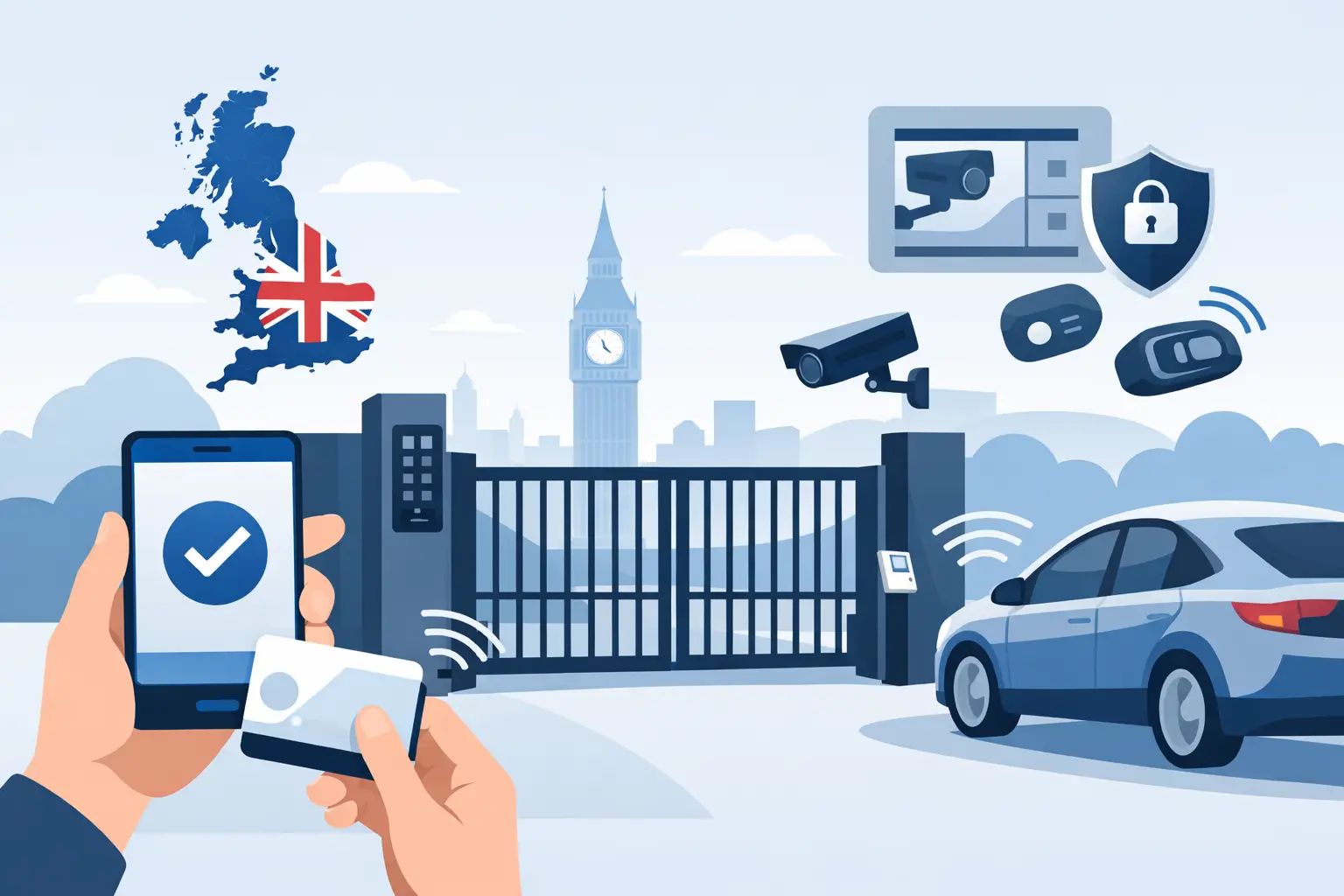
When a gate looks right but the access control is wrong, problems show up quickly. Deliveries get missed, residents get frustrated, staff find workarounds, and a smart entrance starts to feel awkward to use. That is why a proper gate access control review matters before you commit to an intercom, keypad, fob system or app-based entry.
For homeowners, the priority is usually convenience, privacy and kerb appeal. For commercial sites, it is more often control, auditability and reliable day-to-day operation. In both cases, the best system is rarely the one with the longest feature list. It is the one that suits the gate type, the people using it and the level of security the site actually needs.
What a gate access control review should cover
A useful gate access control review is not just a look at hardware. It should assess how the entire entrance works in practice. That includes the gate itself, the automation, the entry method, the power supply, visitor communication and the safety measures around the opening and closing cycle.
On a residential driveway, that might mean checking whether a video intercom is more practical than a simple audio unit, or whether a keypad will become inconvenient for family members coming and going at different times. On a commercial entrance, it might mean deciding if token access is enough or whether you need time-based permissions, event logs and the ability to manage multiple users remotely.
The other point often missed is compatibility. Not every access control option works equally well with every gate configuration. Swing and sliding gates have different operating characteristics, and the access equipment needs to be matched to the automation and site layout rather than added as an afterthought.
Gate access control review: the main system types
Most buyers are choosing between a small number of access methods, sometimes as a single solution and sometimes in combination.
Intercom systems
Intercoms remain one of the most practical choices for both domestic and commercial properties because they deal with the basic question every gate has to answer – who is outside, and should they be allowed in?
Audio intercoms are straightforward and cost-effective, but video has clear advantages. Being able to see the caller gives extra reassurance, particularly at larger homes, shared entrances and business premises where multiple visitors arrive throughout the day. Modern systems can also route calls to an indoor monitor, a mobile app or both, which adds flexibility if the property is occupied irregularly.
The trade-off is that more capable systems usually mean more setup considerations. Signal quality, monitor location, internet dependency and app configuration all need to be considered properly. A better specification is not automatically a better result if the system becomes harder for the end user to manage.
Keypads
Keypads are popular because they are simple to understand and relatively affordable. They work well where several regular users need access without carrying extra devices, and they can be especially useful on side gates, smaller developments and staff entrances.
Their weakness is predictable. Codes get shared. Codes get forgotten. Codes often stay in use longer than they should. For low to moderate security needs, that may be acceptable. For higher-risk sites or places with staff turnover, it can become a weak point unless codes are updated regularly and supported by another entry method.
Fobs, cards and readers
Fob and card systems give tighter user control than a standard keypad. Access can be added or removed for individual users, which is useful for blocks of flats, offices, schools and managed commercial spaces. If someone loses a fob, that credential can usually be deactivated without changing the whole system.
This approach works well where management needs a cleaner structure, but it does depend on users carrying the right device. Lost fobs, replacement costs and admin time are part of the equation. For some residential buyers, that feels unnecessary. For commercial operators, it is often worth it.
App and GSM entry systems
Mobile-based access control has become more attractive because it offers remote management and fewer physical credentials to issue. GSM and app-enabled systems can let you open a gate from your mobile phone, grant access remotely and in some cases review usage.
This can be very useful for busy households, holiday lets, managed sites and businesses that do not always have someone sitting near the entrance. The main consideration is reliability. Mobile signal, internet availability and user confidence with the technology all matter. A system that looks convenient on paper can become irritating if it depends on poor coverage or if different users struggle with the app.
Matching access control to the gate and property
The best access setup depends on the physical gate as much as the electronics. A heavy steel gate, for example, behaves differently from a lightweight aluminium gate. Aluminium offers a real advantage here because it is strong yet lighter than many alternatives, which can reduce strain on automation components and support smoother operation over time.
That does not mean every aluminium gate needs the same access system. A sliding gate on a commercial site may call for a different access strategy from a pair of swing gates on a private driveway. Visitor flow, available space, cabling routes and the distance between the gate and the building all shape what makes sense.
For a long driveway, a video intercom with remote answering can be far more practical than a basic keypad. For a shared access point, controlled user permissions may matter more than appearance. For a garden or side entrance, a simpler and more durable solution may be entirely appropriate.
Security, safety and ease of use
Good access control is about more than keeping the wrong people out. It also needs to work safely and without causing hassle for authorised users.
Safety is especially important on automated gates. Photocells, obstacle detection and correctly configured opening and closing forces are not optional extras. They are part of making the entrance suitable for regular use. If the gate automation and access control have not been considered together, you can end up with a system that is technically secure but awkward or unsafe in practice.
Ease of use matters just as much. A gate that takes too long to answer, needs multiple steps to open or confuses occasional visitors will frustrate people quickly. That is often where professional advice proves its worth. On paper, many systems look similar. In real use, small differences in layout, call handling and control options make a noticeable difference.
Cost versus value in a gate access control review
Price always matters, but lowest upfront cost is not the same as best value. A cheaper access method may be perfectly suitable for a straightforward domestic installation. Equally, it may become expensive if it needs replacing early, lacks the right functions or creates avoidable callouts.
When reviewing costs, it helps to separate hardware price from total project cost. Installation complexity, groundwork, power supply, integration with automation and future maintenance all affect the final figure. So does the consequence of getting it wrong. Replacing a poor-fitting access system after installation is usually far more expensive than choosing properly in the first place.
This is where a tailored approach makes sense. Some buyers need a bespoke solution with integrated intercom and automation. Others are better served by a ready-to-deliver gate paired with a straightforward control method. The right answer depends on site conditions, budget and how the gate will actually be used.
Common mistakes buyers make
One common mistake is choosing access control purely on features. Remote opening, video feeds and app control sound attractive, but they are only worthwhile if they improve daily use. Another is underestimating the importance of installation quality. Even good equipment can perform poorly if cabling, positioning or setup have been handled badly.
Buyers also sometimes focus on the gate style first and leave access decisions until late in the process. In reality, the best results come when gate design, automation and entry system are planned together. That is especially true on bespoke projects, where you have the opportunity to get the details right from the outset.
A final mistake is not thinking far enough ahead. A family home may later need parcel access, trades access or better control for older relatives. A business may grow and need more user credentials or better visitor handling. Choosing a system with sensible room to adapt can save time and money later.
How to choose the right setup
Start with the people who will use the gate every day. Think about residents, staff, visitors, deliveries and contractors. Then consider the site itself – gate type, distance to the building, available services, expected traffic and security level.
From there, narrow the options to the systems that suit both the property and the users. A domestic driveway may benefit most from a reliable video intercom with simple remote access. A commercial entrance may need structured credentials and stronger management control. Neither is universally better. It depends on the job the system needs to do.
At Aluminium Gates Direct, that is usually where practical guidance makes the difference. When the gate, automation and access control are treated as one joined-up package, buyers are more likely to end up with a system that looks right, performs properly and stays easy to live with.
The best gate access control review is the one that leads to fewer compromises after installation. If you choose with real use in mind, the entrance will feel less like a piece of technology and more like part of the property working exactly as it should.