
A driveway gate that drops, drags or refuses to line up usually goes wrong long before the first hinge is fixed. If you are researching how to install aluminium driveway gates, the key is not brute force or guesswork. It is accurate measuring, sound post foundations and making sure the gate style suits the opening, ground levels and intended use from the start.
Aluminium gates have clear advantages here. They are lighter than many steel or hardwood alternatives, which makes them easier to handle on site and places less strain on hinges, posts and automation over time. They are also strong, weather-resistant and low maintenance, but none of that removes the need for a careful installation. A well-made gate still depends on correct setting out.
Before you install aluminium driveway gates
The first decision is whether the gate should be a pair of swing gates or a sliding gate. For most domestic driveways, swing gates are the straightforward option, but they need enough space to open safely without fouling the drive surface, parked cars or rising ground. Sliding gates suit tighter sites and commercial entrances, though they bring added groundwork, tracking or cantilever considerations and generally require a more specialist installation.
You also need to decide whether the gate will be manual or automated. Manual gates are simpler to fit, but if automation is likely later, it is worth planning for that at the beginning. Cable routes, hinge positions, stop points and safety requirements can all affect the install. Retrofitting is possible, but it is not always the neatest or most cost-effective route.
Check the opening width in several places, not just once. Measure between finished pillars or proposed post positions at the top, middle and bottom. If the drive is out of square, and many are, that will affect your clearances. Ground levels matter just as much. A gate can look perfectly sized on paper and still catch on a sloping drive if the opening arc has not been considered properly.
Tools, posts and preparation
Most aluminium gate installations rely on the same principles whether the design is contemporary, ornate or fully bespoke. The posts or pillars must be stable, plumb and correctly spaced. The hinges must be fixed to a solid structure. The leaves must be lifted and aligned with equal gaps, and the closing point must be supported with the right stop arrangement.
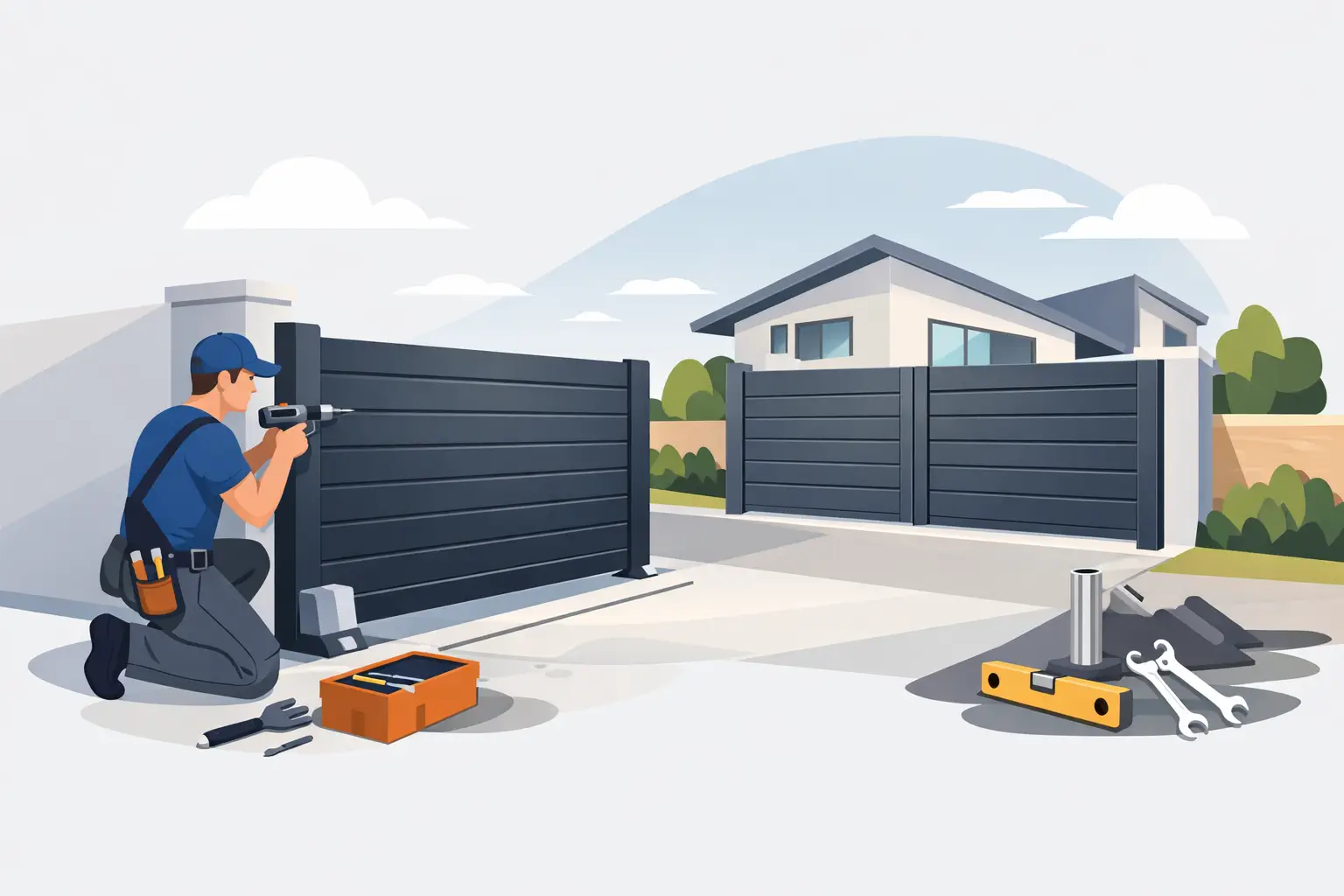
For a typical hinged driveway gate installation, you will usually need a tape measure, spirit level, string line, post hole tools, suitable fixings, packers, spanners and lifting support. If you are fitting automation, you may also need conduit planning, power access and coordination with an electrician and gate automation specialist.
Post choice is important. Aluminium gates can be fixed to steel posts, substantial aluminium posts or existing brick pillars, provided those pillars are structurally sound. That last part matters. Old masonry can look solid but still be unsuitable if movement, cracking or poor foundations are present. Because aluminium is lightweight, some buyers assume the support structure is less critical. In practice, the accuracy of the support structure is what gives the gate a clean swing and reliable closure.
When setting new posts, dig to a depth appropriate for the gate size, wind exposure and ground conditions. There is no single dimension that fits every project. A wide pair of driveway gates in an exposed rural location needs more thought than a smaller entrance in a sheltered suburban setting. If in doubt, work from the gate manufacturer’s guidance and the site conditions rather than relying on rules of thumb.
How to install aluminium driveway gates step by step
Start by marking out the exact gate opening and confirming the hinge side for each leaf. Allow for the manufacturer’s recommended gaps at the hinge side, meeting stile and bottom clearance. Those tolerances are there for a reason. Too tight, and the gate may bind as temperatures change or the ground moves slightly. Too loose, and the finished result can look poor and feel less secure.
If you are installing posts, set them first and let the concrete cure fully before hanging the gates. Trying to speed this stage often causes alignment issues later. Use a level on more than one face of each post and check the spacing again before the concrete sets. Even a small error can become obvious when both gate leaves are hung.
Once the posts or pillars are ready, fix the hinge hardware in line with the gate specification. Some systems use adjustable hinges, which are especially useful because they allow fine tuning once the gate leaf is in position. Offer up the first leaf carefully, using support blocks or a lifting aid to achieve the correct height off the ground. Aluminium is lighter than many gate materials, but driveway gates are still awkward items to manoeuvre safely.
Tighten the hinges enough to hold the leaf while leaving room for adjustment. Then check the swing. The leaf should move freely without twisting, scraping or dropping at the closing edge. Repeat the process for the second leaf, paying close attention to the centre gap. A neat, even meeting line is one of the clearest signs of a good installation.
At this stage, fit the drop bolt, centre stop or latch arrangement as required. For manual gates, the closing hardware needs to feel positive without forcing the leaves out of alignment. For automated gates, the stop positions must match the motor setup and safety system. It is worth taking your time here, because poor stop placement can affect both appearance and long-term performance.
Common installation mistakes to avoid
The biggest mistake is assuming the opening is straight and level when it is not. Drives often fall away, pillars can lean slightly and finished surfaces are not always as accurate as expected. Measure repeatedly and dry-check positions before anything is fixed permanently.
Another common issue is underestimating the effect of gate width. A wide aluminium gate is still lighter than many alternatives, but width creates leverage. That places force on hinges and posts, especially in windy conditions. Correct hinge specification and solid support are essential.
Clearance errors are also common. If the bottom gap is too small, the gate may catch on gravel, block paving or debris. If the gate opens onto a slope, the opening arc must be calculated properly. Sometimes a sliding gate or a change in hinge arrangement is the better answer than trying to force a swing gate into an unsuitable entrance.
Automation creates its own complications. Motors, control boards, safety edges, photocells and intercom access all need coordinated planning. A gate that is easy to hang manually is not automatically ready for powered operation. If the end goal is an automated entrance, it is usually best to treat the gate, access control and installation as one joined-up project.
DIY or professional installation?
That depends on the gate type, your practical experience and the site itself. A straightforward pair of manual aluminium driveway gates on correctly installed posts may be within reach for a competent installer or experienced trade customer. If the site is uneven, the gates are large, pillars need structural assessment or automation is involved, professional installation is the safer route.
For many homeowners, the real value in professional fitting is not just labour. It is having someone identify issues before they become expensive. Incorrect post spacing, poor drainage around foundations, awkward access for motors or unsuitable existing pillars can all delay a job or compromise the result. Getting those points right early usually saves time and money.
This is where product choice also matters. A made-to-measure gate designed around the opening, usage and fixing method is easier to install well than a gate that is only approximately right. Suppliers such as Aluminium Gates Direct support customers with specification advice, gate style options and access to installation partners, which helps remove guesswork from the process.
Final checks after installation
Once the gates are hung and hardware is fixed, test the full range of movement several times. Open and close each leaf fully, checking for smooth travel, consistent gaps and secure closure. Recheck all fixings after the first period of use, especially if adjustable hinges have been fine-tuned on site.
With aluminium, ongoing maintenance is refreshingly simple. You will not be dealing with rust in the same way as untreated steel or regular repainting associated with timber. Even so, hinges, latches and automation components should still be inspected periodically, and the gate should be kept clear of built-up dirt, leaves and grit around moving parts.
A good installation should look effortless once it is finished. That is usually the result of careful preparation, accurate measuring and knowing when a site needs a bespoke answer rather than a standard one. If you are planning a new gate, the best starting point is not the hinge. It is choosing a gate system that genuinely suits the entrance, the property and the way the gate will be used every day.