
A narrow driveway can make a standard gate layout impractical very quickly. If you are asking which gate suits narrow driveways, the answer is usually not simply the narrowest gate. You need a design that preserves as much usable entrance width as possible, has somewhere safe to move when open and works with the slope, parking arrangement and access needs of your property.
For many UK homes, a sliding or bi-fold gate is the most effective answer. However, an inward-opening swing gate can still be an excellent choice where there is enough clear space inside the boundary. The right option depends on the full site, not just the gap between your gate posts.
Which gate suits narrow driveways best?
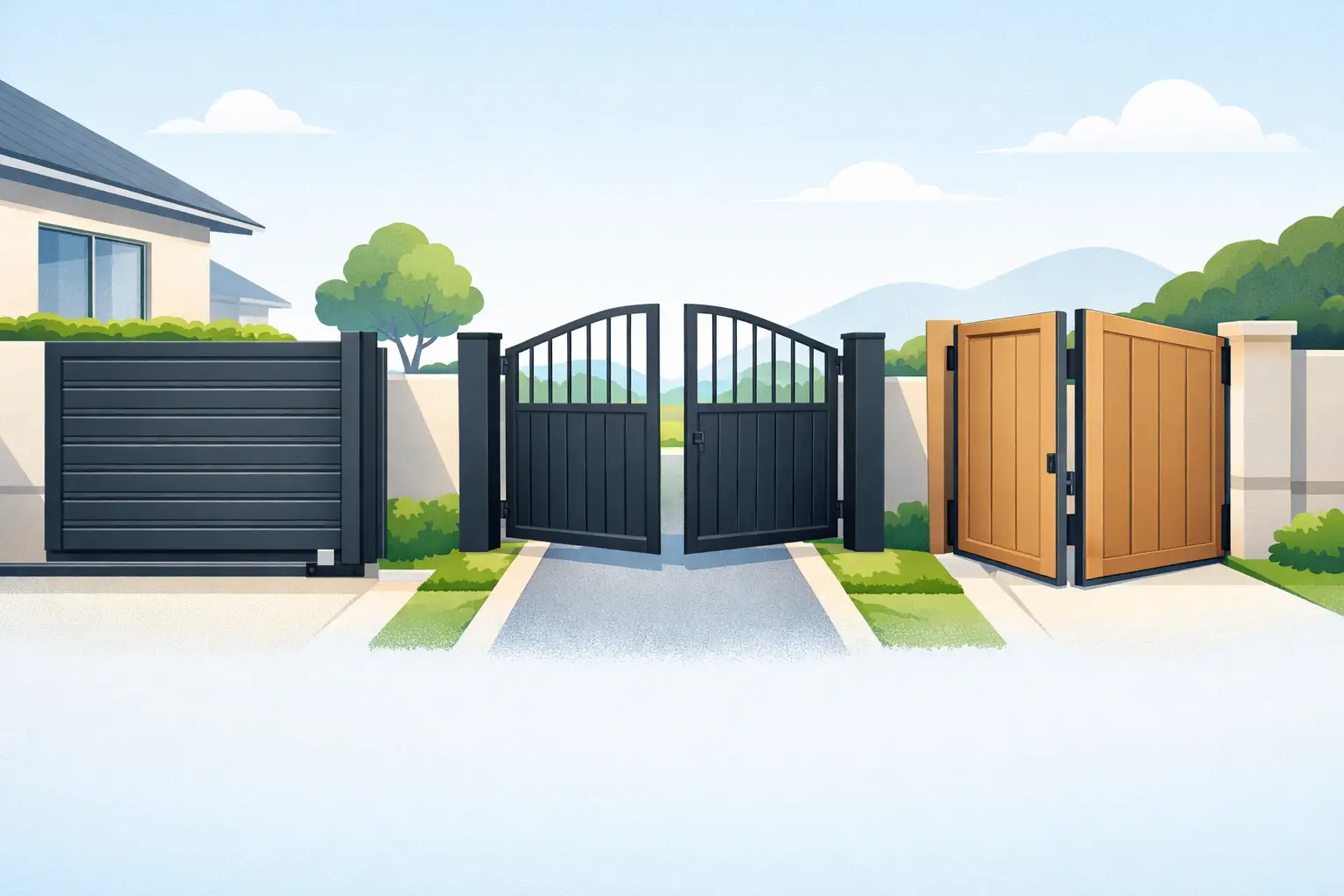
A sliding gate is often the first option to consider when driveway width is limited but there is enough room along the fence or wall line for the gate to travel. Rather than swinging into the driveway, it moves sideways, leaving the entrance clear once open. This makes it especially useful where a vehicle needs to turn directly after entering or where the driveway is short.
Bi-fold gates are another strong option for tight sites. Their leaves fold back as they open, so they need far less swing depth than a conventional pair of gates. They are well suited to driveways where there is little room inside the boundary but no practical side run for a sliding gate.
Traditional swing gates remain a sensible, attractive and often cost-effective choice where the driveway has sufficient depth. They can work particularly well on properties with a wider internal parking or turning area. The key is ensuring that the leaves can open fully without reducing access, striking a parked vehicle or obstructing a pedestrian route.
Start with the usable opening, not the overall frontage
A common mistake is to measure the full width between two boundary walls and assume that this is the available driveway opening. Posts, hinges, gate frames and clearance requirements all take up space. On a narrow entrance, even a small loss of width can make the difference between comfortable daily use and having to fold mirrors every time you come home.
Measure the clear distance between the proposed gate posts, then consider the width and turning circle of the largest vehicle likely to use the drive. This may be a family SUV, a delivery van, a work vehicle or a mobility vehicle rather than the car currently parked outside.
Also consider the approach. A straight entrance can work with a tighter clear opening than a driveway reached from an angle or a narrow road. If drivers need to turn sharply through the gateway, extra width becomes far more valuable.
Allow space for posts, automation and safety clearances
Gate posts must be sized to suit the gate weight, height and type of operation. Aluminium is lighter than steel or solid timber, which can make handling and automation requirements more manageable, but posts and foundations still need proper specification.
Automated gates also require room for motors, hinges, guide rollers, tracks or cantilever hardware, depending on the system. Safety devices such as photocells and safety edges should be included in the plan from the outset rather than added as an afterthought. A gate that fits on paper may not be the best working solution once these details are allowed for.
Sliding gates: maximum driveway space, with one major condition
Sliding gates are popular on restricted driveways because they do not consume space behind the entrance. A tracked sliding gate runs on a ground track, while a cantilever sliding gate is supported above the ground and travels past the opening without a track across it.
The major condition is side room. A sliding gate needs a clear run-back area beside the entrance. In many cases, this needs to be at least the width of the opening, plus additional space for the frame, posts and operating equipment. If your boundary has a wall, planting, a garage or a change in level immediately beside the entrance, a sliding gate may not be viable without redesigning the layout.
Cantilever systems can be particularly useful where leaves, gravel, uneven ground or drainage make a ground track less desirable. They generally require more run-back space and a stronger supporting structure, so they are best assessed as part of the complete installation.
For a narrow driveway with a long, unobstructed fence line, a made-to-measure aluminium sliding gate is often the cleanest solution. It can be designed to complement fencing, railings and the property frontage while keeping the entrance as open as possible.
Bi-fold gates: a practical answer where side room is limited
A bi-fold gate has hinged sections that fold together as the gate opens. This reduces the depth needed inside the driveway and offers quicker opening than a long single swing leaf. It is a useful compromise for properties that cannot accommodate a sliding gate but do not have enough depth for conventional swing gates.
Bi-fold gates can be supplied as a single folding leaf or a pair of folding leaves, depending on the opening and the desired appearance. A pair opening from the centre can suit a symmetrical entrance, while a single leaf may work where the available space is uneven.
There are trade-offs. Bi-fold designs have more moving components than standard swing gates, and the structure must be well specified to ensure smooth, reliable operation. They can also have a more contemporary appearance than a traditional pair of driveway gates. For many homes, this is a benefit, especially when matching modern aluminium fencing or a clean-lined façade. For a period property, a bespoke design can soften the look with more traditional detailing.
When swing gates are still the right choice
A narrow entrance does not automatically rule out swing gates. If the driveway opens into a generous parking area, inward-opening aluminium swing gates can offer an elegant and dependable solution. Their simple layout is familiar, versatile and well suited to both manual and automated operation.
The direction of opening matters. Gates should not open outwards across a public pavement or highway. In most residential settings, this means the leaves need to open inwards. Before choosing them, check that there is enough unobstructed depth for the leaves to swing through their full arc.
Sloping ground is another important consideration. A driveway rising immediately behind the gates can prevent standard inward-opening leaves from operating correctly. Depending on the site, rising hinges, a change to the driveway level, a sliding arrangement or a bi-fold system may be more appropriate.
For a very short drive, do not overlook the waiting position outside the gate. Drivers need somewhere safe to stop while the gate opens, without blocking the road, a junction or a neighbouring entrance. Automation and an intercom can make access more convenient, but they do not solve a poor approach layout.
Design choices that help a tight entrance feel less restricted
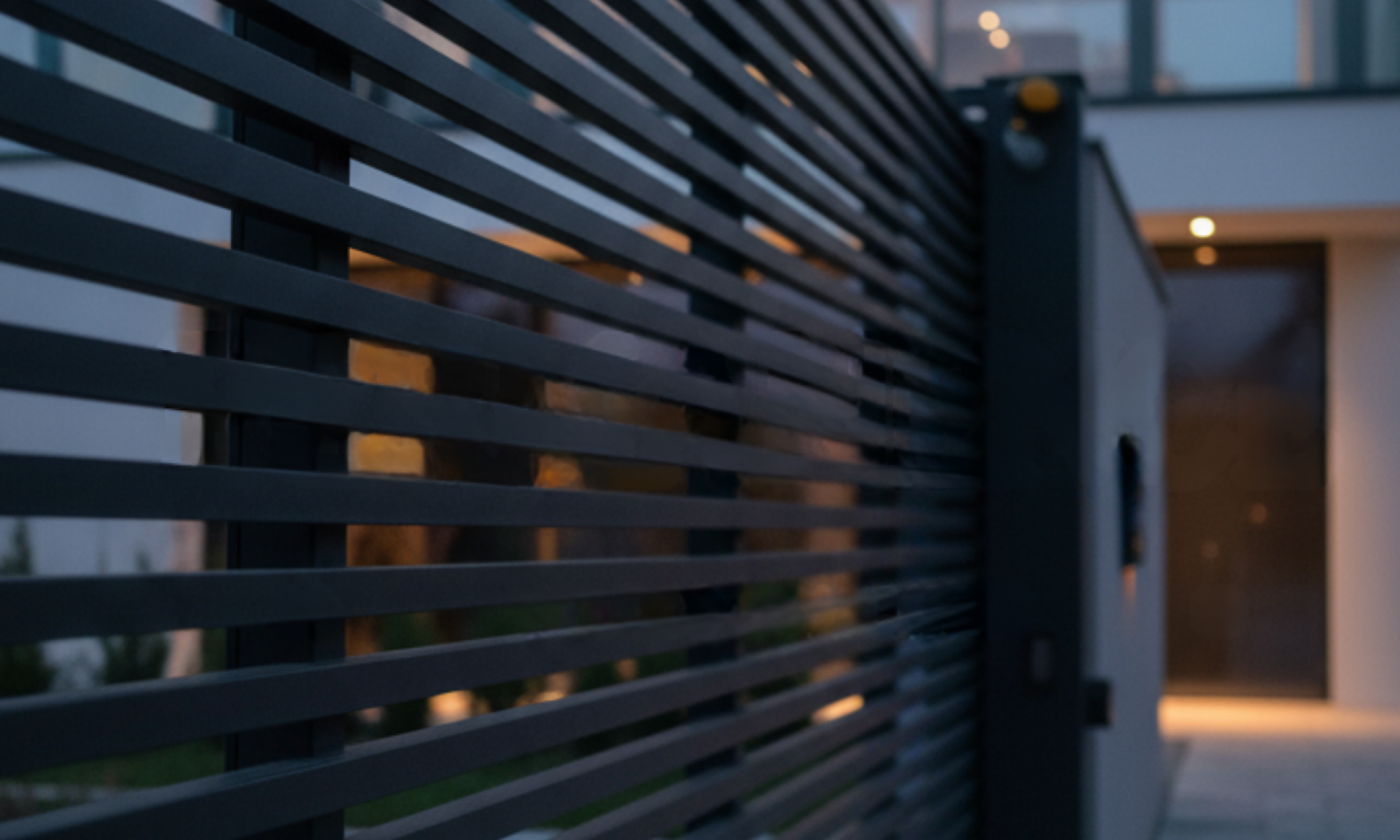
The gate style can affect how a narrow driveway feels. Open slatted or rail-style aluminium gates maintain sightlines and can make an entrance appear wider, while solid privacy panels create a more enclosed, private boundary. Neither is universally better. Consider visibility for drivers leaving the property, the level of privacy required and the character of the house.
A pedestrian gate can also reduce unnecessary use of the main driveway gate. This is useful for households receiving regular visitors, for bins and deliveries, or where residents walk in and out frequently. It avoids repeatedly operating the vehicle gate for simple access and can be matched to the driveway gate for a coordinated finish.
Colour and finish deserve thought too. Aluminium gates are available in a broad range of powder-coated colours and can be made to suit traditional or contemporary properties. Dark tones can give a crisp, architectural look, while lighter or wood-effect finishes may sit more naturally alongside brick, render or timber features.
Do not choose automation last
On a narrow driveway, automation should be part of the first design discussion. The choice of gate type affects where motors, control equipment and safety devices can be positioned. It also affects how a driver enters, exits and communicates with visitors.
A keypad, remote controls or an Akuvox intercom system can be selected around the way the property is used. For example, a home with a gated entrance close to the road may benefit from video calling and remote release, while a commercial site may need controlled access for staff, visitors and deliveries.
Any automated gate should be professionally assessed, installed and safety tested. The gate must have appropriate protection against trapping, crushing and impact risks, particularly where children, pedestrians or members of the public may be nearby. A lightweight aluminium gate helps reduce operating loads, but safety depends on the complete system, its installation and ongoing checks.
Get a site-led recommendation before ordering
The most reliable way to decide between sliding, bi-fold and swing gates is to assess the opening, side run, driveway depth, slope and daily vehicle use together. Photographs and accurate measurements are helpful, but an installation survey is often worthwhile for more complex sites, especially where automation, uneven ground or boundary changes are involved.
Aluminium Gates Direct can help customers compare ready-made and bespoke aluminium gate options, with support for nationwide installation through trusted partners. A made-to-measure design may cost more than an off-the-shelf size, but on a narrow driveway it can protect valuable access width and avoid costly alterations later.
Choose the gate that gives you comfortable access every day, not just one that physically fits between two posts. A well-planned gate should make arriving home feel simpler, safer and more secure from the very first use.