
A gate that looks right on paper can feel completely wrong in daily use. That usually becomes obvious on a wet school run, during deliveries, or when a busy commercial entrance starts backing up. When comparing gate automation vs manual, the best choice is rarely about one option being better in every case. It is about how the gate will actually be used, who will use it, and what level of convenience, control and budget makes sense for the property.
For some customers, a well-made manual gate is the straightforward answer. For others, automation quickly proves its value in security, access management and day-to-day practicality. The key is understanding the trade-offs before you commit.
Gate automation vs manual: the real difference
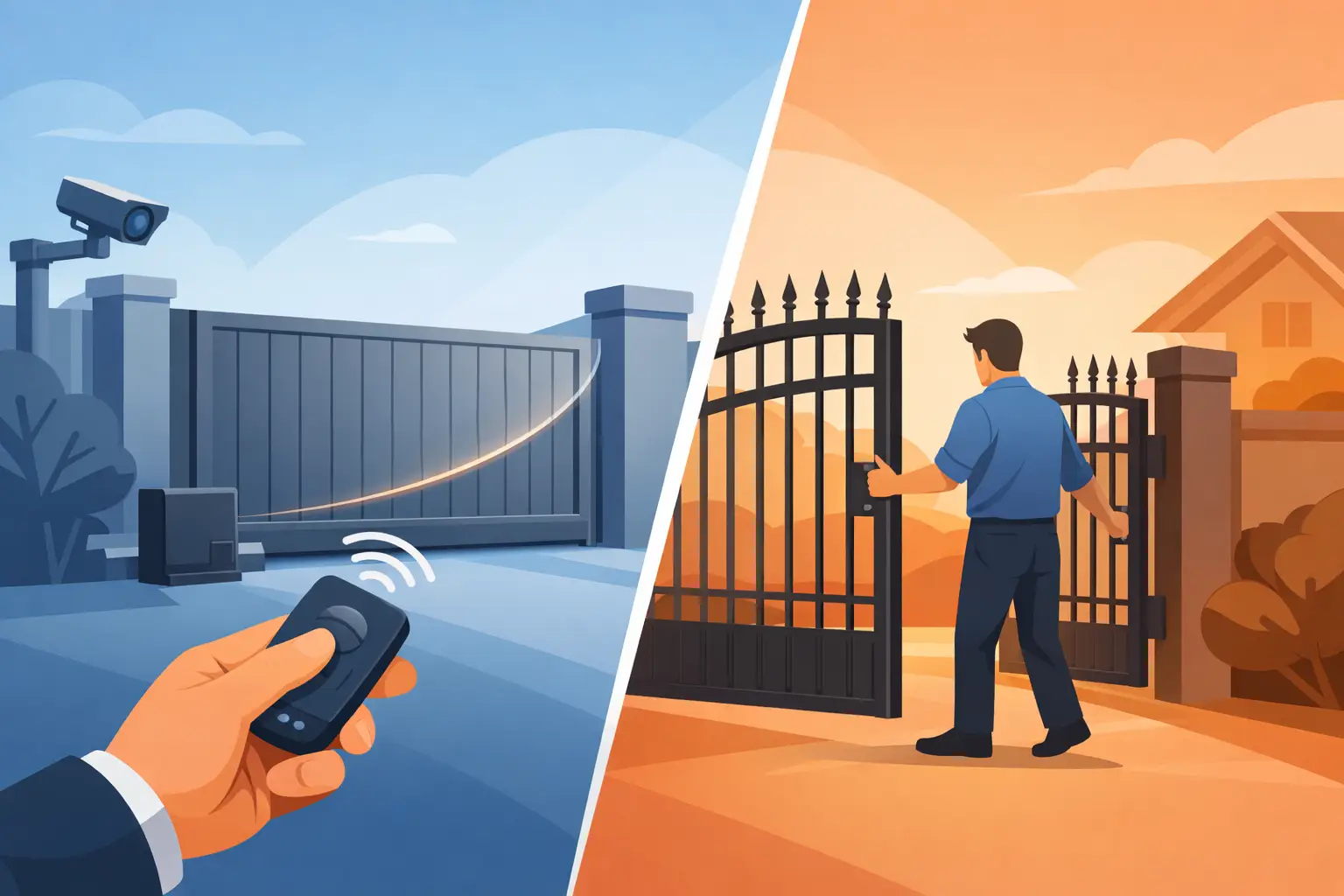
At the simplest level, a manual gate is opened and closed by hand. An automated gate uses motors, controls and safety components to handle movement, often with remote access, keypads, intercoms or app-based control depending on the specification.
That sounds like a basic distinction, but the real difference is how each option affects everyday use. A manual gate relies on someone being physically present to operate it each time. That can be perfectly acceptable for a side entrance, a lightly used garden gate or a driveway where convenience is less of a concern. It also means fewer components and a lower initial outlay.
Automation changes the role of the gate. It becomes part of the access control system rather than just a physical boundary. That matters for properties where vehicle access is frequent, security needs are higher, or multiple users need dependable entry without constant manual handling.
When a manual gate makes sense
Manual gates still have a clear place, and they should not be dismissed as the lesser option. In the right setting, they are practical, cost-effective and entirely fit for purpose.
For many residential properties, a manual pedestrian gate or a low-use driveway gate is all that is needed. If the gate is mainly there for boundary definition, appearance and simple access control, manual operation can keep the project straightforward. There is no need for motors, power supply planning or additional control hardware.
Manual gates can also suit rural or uneven sites where the opening frequency is low and simplicity is valued. Some customers actively prefer fewer moving parts, especially if they are working to a tighter budget or want to phase a project over time.
That said, the benefits of manual operation depend heavily on usage. A gate that feels manageable when opened once or twice a day can become inconvenient very quickly if several vehicles are coming and going, especially in poor weather or on a sloped driveway.
Where automation earns its cost
Automation tends to justify itself when convenience, security and regular use all matter. If you drive in and out daily, receive frequent visitors, or want more controlled access to a private or commercial site, an automated system can make the gate far more effective.
For homeowners, the appeal is obvious. You stay in the car, the gate opens, and the entrance feels easier to use. That is not just a luxury feature. It can be a practical improvement for families, older users and properties on busier roads where stopping to open a gate manually is awkward.
For commercial premises, flat developments and managed sites, automation often becomes the sensible minimum rather than the premium upgrade. It allows controlled access, supports higher traffic levels and can be paired with intercoms and entry systems to improve both security and site management.
This is especially relevant where presentation matters as well. A well-designed aluminium gate with automation gives a site a more professional, complete finish while supporting function, not just appearance.
Cost is not just about the starting price
This is where many buying decisions become oversimplified. Manual gates usually cost less upfront. That part is true. Automation adds motors, control equipment, safety devices, installation requirements and commissioning, so the initial spend is higher.
But the more useful question is whether the cheaper option stays cheaper over time for your particular use.
If a manual driveway gate becomes frustrating to use, gets left open regularly, or creates repeated inconvenience for residents, staff or visitors, the lower purchase price may not feel like good value. On the other hand, if the gate is only opened occasionally, paying for automation may offer limited return.
There is also the question of specification. Not every automated gate setup needs to be complex, and not every manual gate is low-cost. Bespoke sizes, decorative detailing, site-specific engineering and installation factors all affect price. The right comparison is not manual versus automated in the abstract. It is the right gate design and access method for the job.
Security and control
Security is one of the strongest reasons customers choose automation, but it helps to be precise about why. A gate does not become secure simply because it has motors. The real advantage is controlled entry and more consistent use.
A manual gate can provide a physical barrier, but it depends on users closing and securing it properly every time. In real life, that does not always happen. Automated gates are more likely to be used as intended because they remove effort and can be integrated with access controls such as keypads, fobs and intercom systems.
For homes, that can mean greater privacy and more confidence over who enters the property. For commercial sites, it can support a much clearer access strategy, particularly when different users need different permissions or when deliveries and visitor management need oversight.
Of course, automation also needs proper safety design, correct installation and suitable controls. A poorly specified system can create problems rather than solve them. That is why the gate, hardware and automation should be considered together rather than as separate purchases.
Gate automation vs manual for maintenance and reliability
Some buyers assume manual always means low maintenance and automated always means high maintenance. The truth is more balanced.
A quality aluminium gate is already a strong starting point because the material is lightweight, durable and resistant to the issues that can affect timber or untreated steel. That matters in both manual and automated setups. Lower weight puts less strain on hinges, posts and motors, which is one reason aluminium is such a practical choice for modern gate systems.
A manual gate has fewer components, so there is less that can go wrong mechanically. However, it still needs proper alignment, suitable hinges and dependable latching. An oversized or poorly hung manual gate can be frustrating from day one.
An automated gate adds serviceable components and will need routine checks to keep it operating correctly. That does not make it unreliable. It means it should be specified properly and maintained sensibly. In return, you gain easier operation and better access control. For many customers, that is a fair trade.
Think about traffic, not just the gate
One of the most useful ways to choose between manual and automated operation is to focus on traffic patterns. How many openings will there be each day? Will the users be on foot, in vehicles, or both? Is the property private, shared or commercial? Are there deliveries, tradespeople or timed access requirements?
A quiet garden entrance has very different demands from a family driveway. A private driveway has different demands from a school, office yard or residential development. The more frequent and varied the traffic, the stronger the case for automation becomes.
The gate type also matters. Swing gates and sliding gates behave differently on site, and the available space, ground conditions and entrance width all influence what will work best. Automation should support the physical layout rather than fight against it.
The right choice depends on the property
For a modest residential entrance with occasional use, a manual gate may be the most practical route. It keeps the system simple and can still deliver security, style and durability when specified well.
For a main driveway, a higher-value property, a multi-user entrance or a commercial perimeter, automation often provides a better long-term experience. It improves access, helps ensure the gate is actually used properly and supports added control through intercom and entry systems.
Many customers also take a phased approach. They install a gate with future automation in mind, even if they begin with manual operation. That can be a smart option when budgets need to be managed without compromising the long-term plan.
At Aluminium Gates Direct, this is usually where expert guidance matters most. The right answer comes from looking at the entrance as a whole – gate design, usage, access needs, safety requirements and budget – rather than choosing based on price alone.
A good gate should feel right every time you use it, not just when you first buy it. If you are weighing gate automation vs manual, think beyond the gate itself and focus on how the entrance needs to perform for the people using it every day.