
A new gate changes the first impression of a property before anyone reaches the front door. The top gate styles for modern homes combine clean lines with practical requirements such as privacy, security, safe access and low upkeep. For UK homeowners, the right choice is rarely just about appearance. It must also suit the driveway width, boundary layout, level of exposure to the weather and how the gate will be used each day.
Aluminium is particularly well suited to contemporary properties because it provides a crisp, consistent finish without the regular staining, painting or rust treatment associated with many timber and steel gates. It is lightweight but strong, available in a wide choice of colours and can be made to suit standard or bespoke openings. The key is selecting a style that looks at home with the building while working properly for the people using it.
What makes a gate feel modern?
Modern gate design is usually defined by proportion and restraint rather than decorative detail. Straight horizontal lines, simple frames, uncluttered surfaces and carefully chosen colours tend to complement newer homes, renovated properties and extensions alike. That does not mean every gate has to be plain. A practical design can still have character through its spacing, finish or combination of materials.
Before choosing a style, consider what you need the gate to do. A driveway gate may need to secure vehicles and provide controlled access, while a side or garden gate may primarily screen bins, protect children or provide a private route to the rear of the property. The best design balances these requirements instead of treating them as separate decisions.
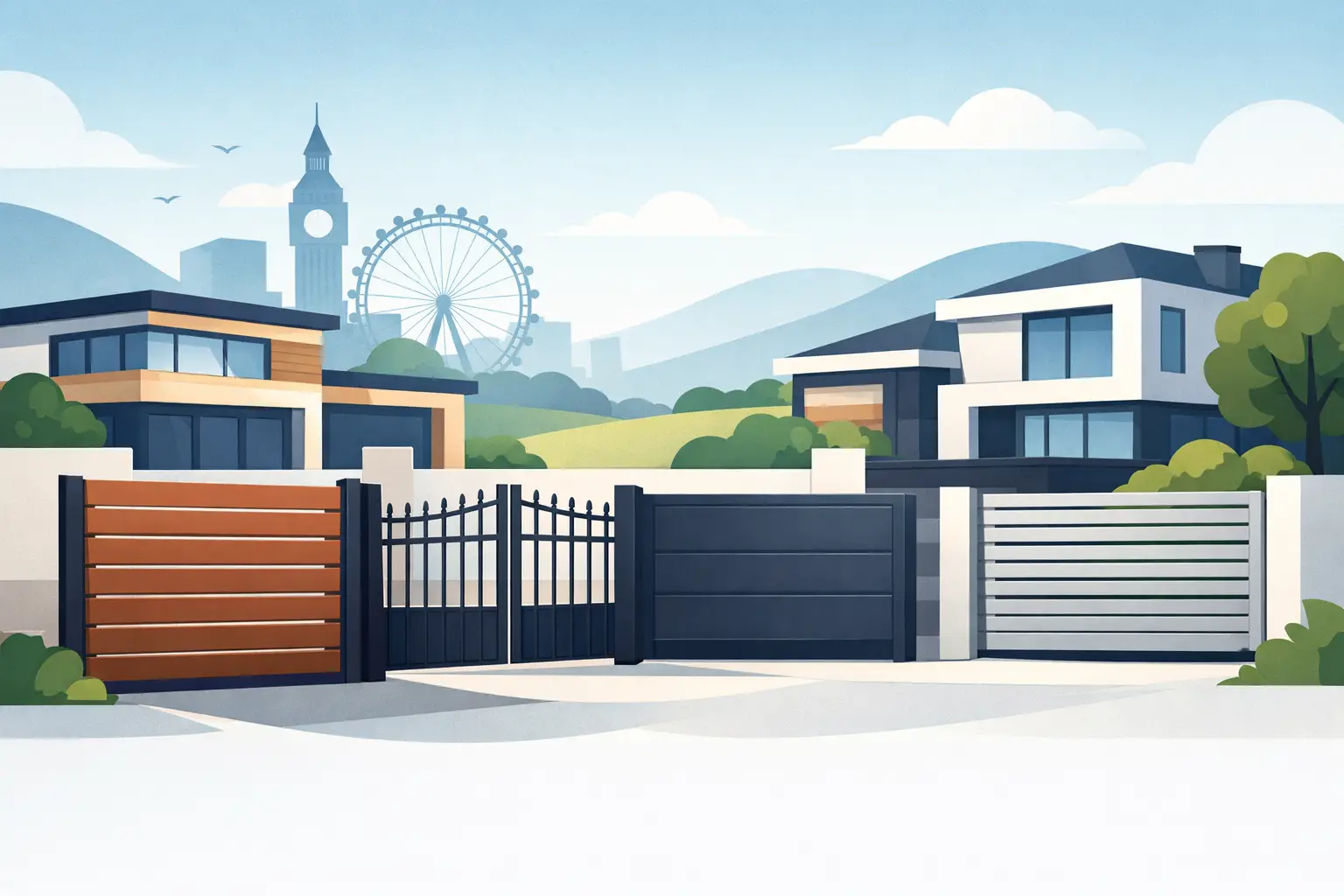
Top gate styles for modern homes
Horizontal slatted gates
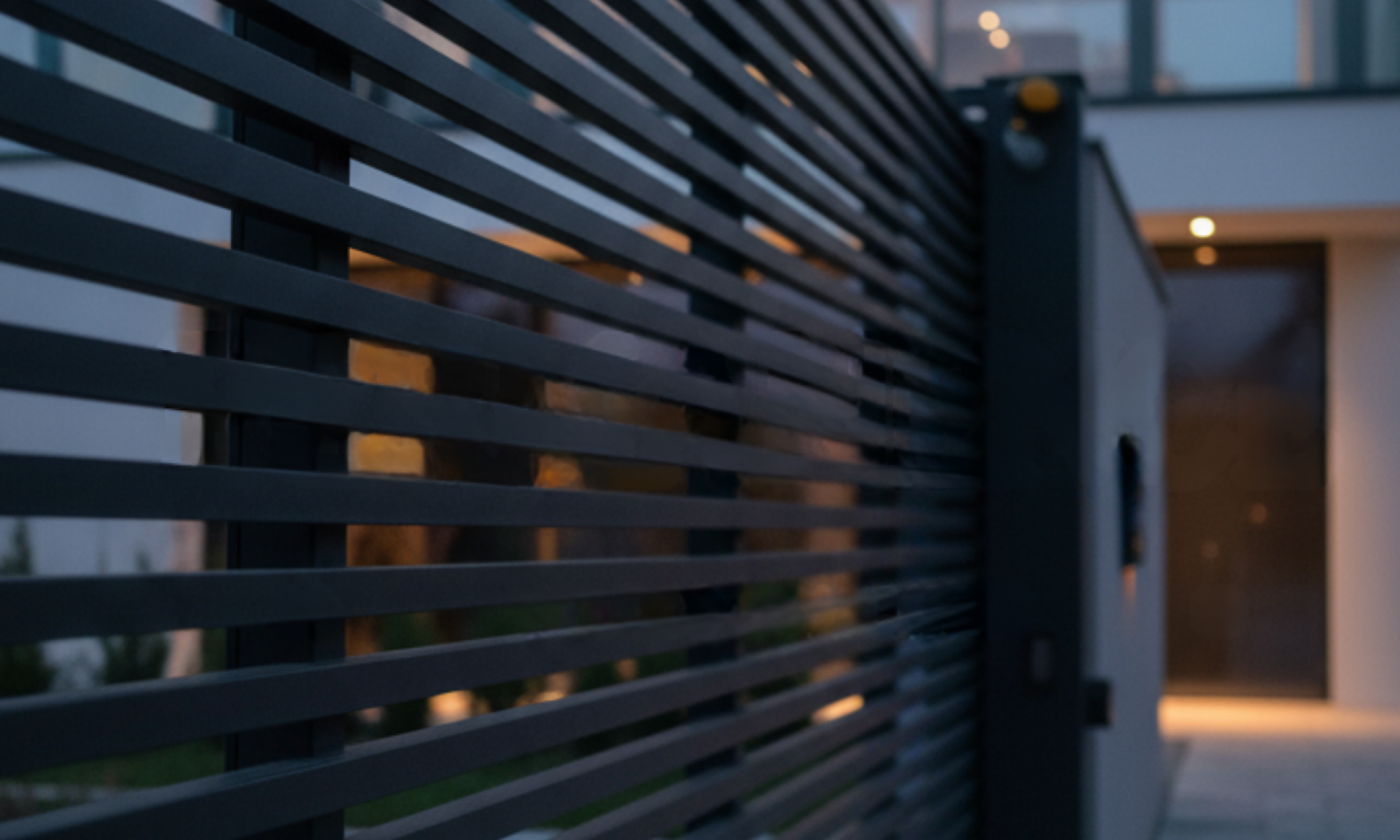
Horizontal slatted gates are one of the most popular choices for contemporary homes. The repeated linear pattern gives a driveway or garden entrance a clean, architectural look, and the gap between slats can be adjusted to suit the required level of visibility and privacy.
Narrow gaps create a more enclosed boundary and help shield a driveway from the road. Wider spacing allows light and air through, which can be useful on a smaller plot or where a solid gate would feel too imposing. It is worth remembering that open slats offer less screening at an angle, so a gate that looks private when viewed head-on may be more transparent from the pavement or neighbouring property.
This style works especially well when paired with aluminium fencing or railings in the same finish, creating a considered perimeter rather than a gate that appears added as an afterthought.
Full privacy gates
A solid-panel aluminium gate offers the greatest visual screening. It suits homes on busier roads, properties with overlooked driveways and gardens where privacy matters as much as access control. With no open gaps, the gate gives the frontage a calm, substantial appearance and can make a compact outside space feel more enclosed.
The trade-off is weight in visual terms rather than physical weight. A tall, fully solid gate can dominate a narrow entrance or reduce natural light to a driveway. Breaking up the design with a horizontal reveal, a contrasting frame or a slightly lower pedestrian section can retain the privacy benefits while keeping the frontage balanced.
Full privacy designs are also a strong option for side gates, where they can conceal storage areas and offer a secure route between the front and rear of the property.
Vertical slatted gates
Vertical slats provide a slightly different look while still feeling current. They can add height to a low, wide frontage and are often a natural match for properties with vertical cladding, tall windows or upright architectural details. The design can be close-boarded for privacy or spaced to create a lighter boundary.
For period homes with modern alterations, vertical slats can be a useful middle ground. They are simpler than ornate designs but may sit more comfortably alongside traditional brickwork than a very wide horizontal profile. As with horizontal styles, spacing and gate height should be decided with the view from both inside and outside the property in mind.
Framed contemporary gates
A framed gate uses a clearly defined outer border around a slatted or solid central panel. This gives the design a sharper, more tailored appearance and can echo window frames, garage doors or aluminium bifold doors. It is an effective choice where the gate needs to make a strong visual statement without adding decorative scrolls or complicated features.
Framed designs are particularly useful for bespoke projects because the proportions can be tailored to the opening. A wide driveway may benefit from a deeper frame to prevent the gate looking too thin, while a narrow side entrance may need a slimmer profile to preserve usable access. This is one area where made-to-measure design can make a noticeable difference.
Mixed-panel and feature gates
For a more individual finish, some homeowners choose a gate that combines solid panels and slatted sections. For example, a lower solid panel can provide privacy around parked vehicles while an upper slatted section keeps the elevation lighter. A contrasting insert or carefully selected colour can also create a focal point.
This approach suits architectural homes and developments where a standard gate would look too generic. However, it needs restraint. Too many panel changes, colours or surface details can date quickly. Usually, one clear feature is enough to make the entrance distinctive.
Choosing between swing and sliding gates
The gate style is only half of the decision. The opening method has a major impact on day-to-day convenience and what will work on site.
Swing gates remain a popular choice for residential driveways. They can be supplied as single or double leaves and offer a traditional opening movement with a modern appearance. They need sufficient clear space inside the property for the leaves to open safely, and the driveway should be reasonably level across the swing path. On a sloping entrance, specialist planning may be needed.
Sliding gates are often the better solution where there is limited internal depth, a steep driveway or a need to avoid gates opening towards a public highway. They travel sideways along the boundary, making them well suited to wider entrances and properties where vehicle space is at a premium. A sliding system does require adequate run-back space and a suitable supporting structure, so it should be considered early in the project.
For pedestrian access, a matching aluminium side gate can provide a consistent finish while allowing everyday entry without operating the main driveway gate. This is particularly useful for deliveries, refuse collection arrangements and family use.
Colour, finish and the wider boundary
Anthracite grey remains a popular colour for modern aluminium gates because it complements white render, brick, stone and contemporary window systems. Black creates a stronger, more defined outline, while lighter greys can soften the look of a pale property. Bespoke colour options are worth considering where the gate needs to match existing doors, cladding or fencing.
A gate should also be considered alongside its posts, walls, fencing and railings. A high-quality gate can lose impact if the surrounding boundary is tired or mismatched. Coordinating aluminium fencing and pedestrian access points creates a more complete result and can simplify specification for new-build and renovation projects.
The finish should suit the setting too. A darker colour may show dust and water marks more readily in exposed locations, while a lighter shade can feel less severe on a small frontage. Aluminium remains a low-maintenance option, but an occasional clean with mild soapy water helps keep the finish looking its best.
Plan automation and access control early
Automation is easiest to integrate when it is included at the design stage. The gate type, weight, hinge or track arrangement, power supply and safety equipment all need to be compatible with the operator. A well-planned automated gate should open reliably, include appropriate safety measures and provide a practical manual release for power outages.
Intercom and access control choices also affect the specification. An Akuvox intercom system, keypad, remote controls or vehicle detection can be selected around how the property is used. For example, a family home may prioritise video calling and convenient pedestrian access, while a commercial site may need controlled entry for staff, visitors and deliveries.
Do not leave cable routes and power requirements until after landscaping or paving has been completed. Early planning avoids unnecessary disruption and helps ensure the finished installation looks as tidy as the gate itself.
Getting the proportions right
A modern gate should fit the opening, not simply fill it. Height, width, ground clearance and the relationship to adjoining walls all influence the finished appearance. Gates that are too low can feel insubstantial, while excessively tall gates may appear heavy and may be subject to planning considerations depending on their position and height.
Accurate site measurements are essential, particularly for sloping ground, irregular masonry or automated systems. For made-to-order work, discussing photos, measurements and intended use with a gate specialist can identify potential issues before manufacturing begins. Readymade options can be excellent value for standard openings, but bespoke aluminium gates offer greater control where the entrance has unusual dimensions or a specific design brief.
Whether you are replacing an ageing timber gate, completing a renovation or specifying a development, Aluminium Gates Direct can help match the style, configuration and access options to the property. Start with the entrance you have, the privacy you need and how the gate will be used every day – the right modern design will follow from those practical details.