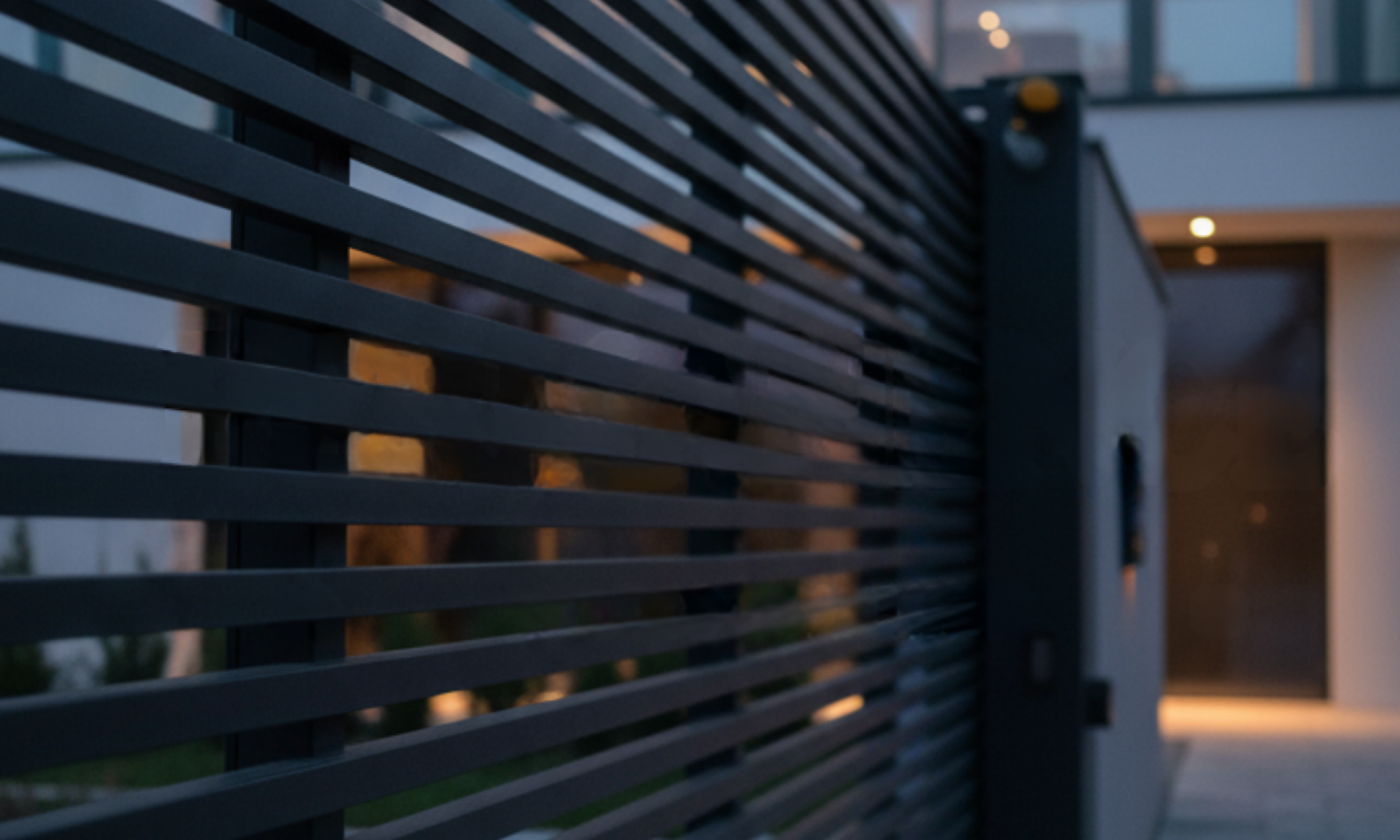

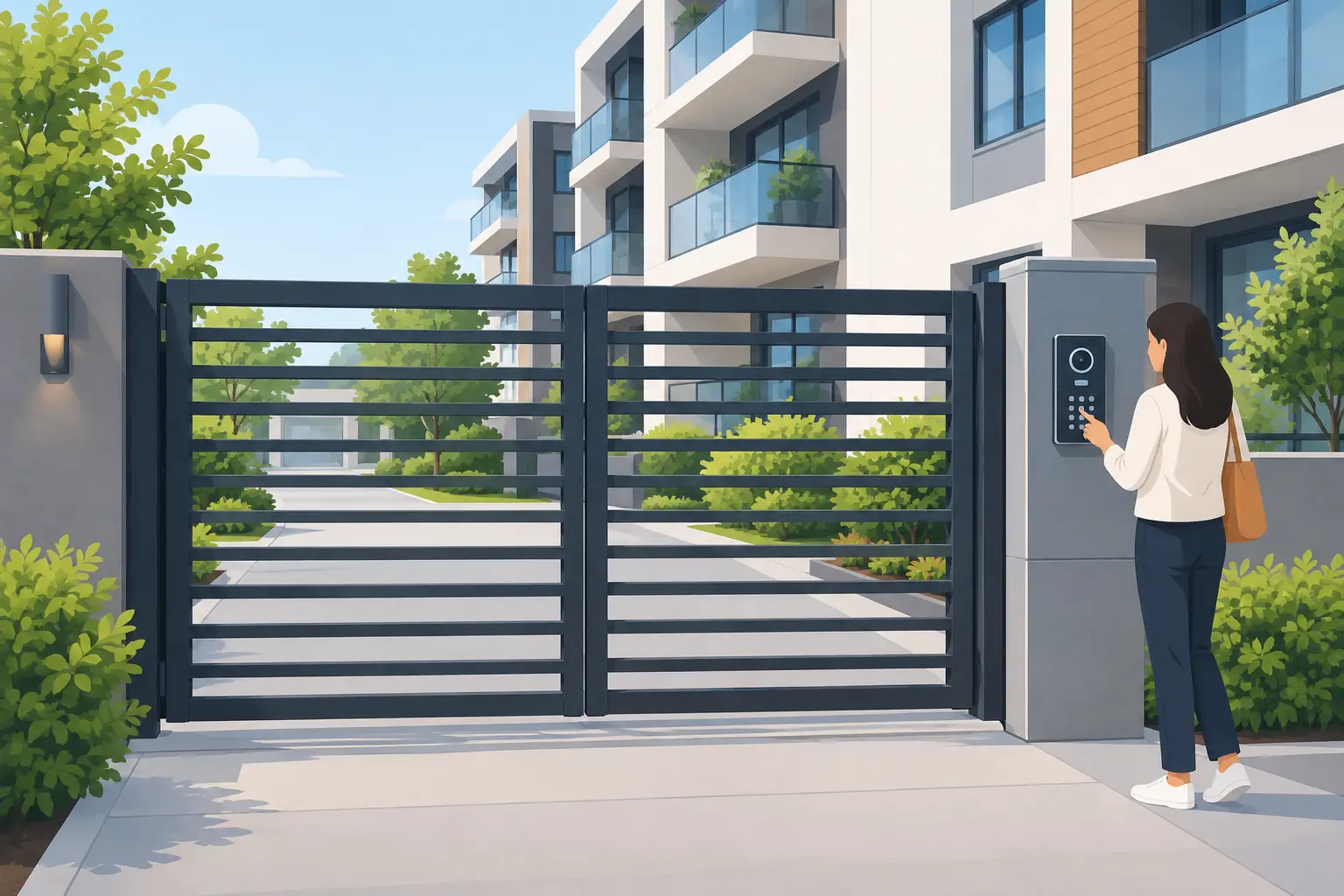
A gate at a flat entrance has to work harder than a typical domestic driveway gate. It may control access for dozens of residents, welcome delivery drivers and visitors, support emergency access, and contribute to the first impression of the whole development. A successful flat gate installation therefore starts with the way people use the site, not simply the style of gate.
For landlords, managing agents, developers and block owners, the right solution balances security, safety, appearance and day-to-day reliability. Aluminium is often a practical choice because it is lightweight, strong, corrosion-resistant and requires very little upkeep compared with timber or untreated steel.
Start flat gate installation with the access plan
Before choosing a sliding or swing gate, establish who needs to enter, how often, and by which route. Vehicle access, pedestrian access and service access should be considered separately. A gate that works well for resident cars may create unnecessary delays or safety issues for pedestrians if there is no clearly planned side entrance.
Consider the peak periods at the property. A small residential block may only need occasional vehicle access, while a larger flat development may have regular arrivals, deliveries, contractors and refuse collections. If vehicles queue on a public road while waiting for the gate to open, the entrance layout and operating speed need particular attention.
Emergency access must also be agreed early. Fire and ambulance services may need a reliable means of entry, while residents need to be able to leave safely if there is a power failure. The required approach depends on the site and local requirements, but it should never be left as an afterthought once gates, posts and cabling have been specified.
Sliding or swing gates?
Sliding gates are often well suited to flat entrances with frequent use. They do not swing into the driveway or pavement, and they can be a sensible answer where space behind the entrance is limited. However, they require enough clear run-back space along the fence line for the gate leaf and any required safety zones.
Swing gates can provide a more traditional appearance and suit entrances with adequate internal space. A pair of automated swing gates may be appropriate for a lower-traffic development, but the opening arc must remain clear of parked cars, slopes, pedestrian routes and landscaping. Gates should not open outwards across a public footpath or highway.
The choice is not only about preference. Ground levels, available space, traffic volume, wind exposure and the width of the entrance all influence the most suitable design. A site survey is the point at which these practical constraints become clear.
Permissions, boundaries and site preparation
Flat buildings can have more complicated ownership arrangements than a single home. Check the title plan, lease conditions and management responsibilities before work begins. The entrance may sit within communal land, be shared with neighbouring properties or be subject to access rights that affect the position and operation of the gate.
Planning permission is not automatically required for every installation, but height, location, conservation areas, listed buildings and proximity to a highway can all change the position. New developments may also have planning conditions that set out expectations for boundary treatments and access. Where there is any uncertainty, obtain advice before ordering a made-to-measure gate.
A durable gate relies on sound groundwork. Posts, tracks, foundations and stop points need to be designed for the gate size, weight and local ground conditions. Drainage matters too. Standing water, loose surfaces and poorly finished levels can affect sliding gate tracks, foundations and the lifespan of automated components.
It is also sensible to plan services at this stage. Automation, lighting, intercoms and access controls require power and suitable cable routes. Installing ducts before surfaces are finished is usually cleaner and more cost-effective than lifting block paving or tarmac later.
Make safety part of the specification
Automated gates are machinery, not just a boundary feature. Their design, installation and ongoing operation must account for pinch points, crushing zones, entrapment risks and the possibility of people moving through the entrance unexpectedly.
This is particularly relevant at flat sites, where children, dog walkers, visitors and delivery drivers may not understand the access system or be familiar with the gate movement. Appropriate safety devices can include photocells, safety edges, warning signage and controlled pedestrian routes. The right combination depends on the gate layout and risk assessment.
A separate pedestrian gate is often the safest and most convenient option. It avoids residents attempting to pass around or through a moving vehicle gate, and can be integrated with the same access credentials where required. For accessible use, consider clear opening widths, thresholds, path surfaces and the height and position of entry controls.
A competent installation partner should assess site-specific risks rather than fitting a standard automation package to every entrance. Ask who will commission the system, provide operating information and explain the planned maintenance requirements. These details matter as much as the gate’s finish.
Choose access control around residents, not assumptions
A keypad may be enough for a small private car park, but it can become frustrating where residents change regularly or codes are frequently shared. Key fobs, proximity tags, telephone entry and video intercom systems each offer different levels of convenience, administration and oversight.
For a managed block, an intercom system can give residents control over visitor entry without leaving their flat. Akuvox intercom options, for example, can be considered where video calling and more flexible access management are needed. The best system is one the building manager can update easily when residents move in or out.
Think beyond the main residents too. Delivery drivers, cleaners, maintenance contractors and refuse teams may require different forms of access. A timed code or managed credential can be preferable to circulating a permanent code. For commercial or mixed-use flat schemes, access records and controlled permissions may be especially valuable.
Reliability should guide the specification. A more advanced system is only worthwhile if the responsible person can manage it confidently and residents understand how to use it. Clear handover information and a named point of contact prevent minor access issues becoming daily inconvenience.
Why aluminium suits flat entrances
A flat entrance is visible every day, so appearance has a practical value as well as an aesthetic one. Aluminium gates are available in contemporary slatted, solid-panel and more decorative designs, allowing the gate to complement railings, fencing, cladding or brickwork.
The material is particularly useful where a wide gate or automated operation is required. Aluminium is lighter than many steel alternatives, which can reduce demand on hinges, motors and supporting structures while still providing a strong, substantial result. Its resistance to rust also makes it well suited to exposed UK conditions.
Low maintenance is another advantage for management companies and owners. Aluminium does not need routine staining, painting or treatment in the way timber often does. Occasional cleaning and inspection are still worthwhile, especially around moving parts, tracks and safety equipment, but ongoing care is generally straightforward.
Bespoke gates allow dimensions, infill style, colour and privacy levels to be matched to the site. Readymade options can be a sensible route where the opening is standard and programme or budget is the priority. The right choice depends on whether speed, exact fit or a distinctive architectural finish carries most weight.
Plan for maintenance from day one
A maintenance-free gate material does not mean a maintenance-free entrance system. Automated gates need periodic checks to confirm that safety devices, controls, hinges, rollers, locks and motors continue to operate correctly. The frequency should reflect the gate type, usage level and manufacturer guidance.
The management team should know how to release the gate manually in an emergency, who can authorise changes to access credentials, and whom to contact if a fault occurs. Keep records of installation details, remote controls, access permissions and service visits in one accessible place.
A gate is most effective when it feels effortless to residents and difficult for unauthorised visitors to bypass. At Aluminium Gates Direct, project support can help property teams match aluminium gates, automation and access control to the layout, budget and practical demands of a flat site. The best time to solve access challenges is before the ground is prepared, when the right design can still be built into the entrance rather than added around it.