
A gate that looks substantial but can be climbed, forced or left open does little for a property’s security. The best gate security features work together: a strong gate structure, controlled entry, reliable automation and a layout that does not create weak points around the perimeter. The right combination will differ between a family driveway, a rural home, a development entrance and a commercial site.
Start with the gate’s strength and design
Security begins with the physical gate, not the keypad or intercom fitted later. A well-made aluminium gate offers a strong, lightweight barrier without the ongoing corrosion concerns associated with untreated steel or the regular painting and repair often needed with timber. Aluminium is particularly well suited to UK conditions because it will not rust, making it a practical long-term choice for exposed driveways and commercial entrances.
The frame, infill panels, hinges and fixings all matter. A gate should be manufactured to suit its opening and usage, rather than simply selected by appearance. Wide driveway gates, for example, need adequate structural support to avoid movement over time. Frequent commercial use may call for a more substantial specification than a domestic garden gate.
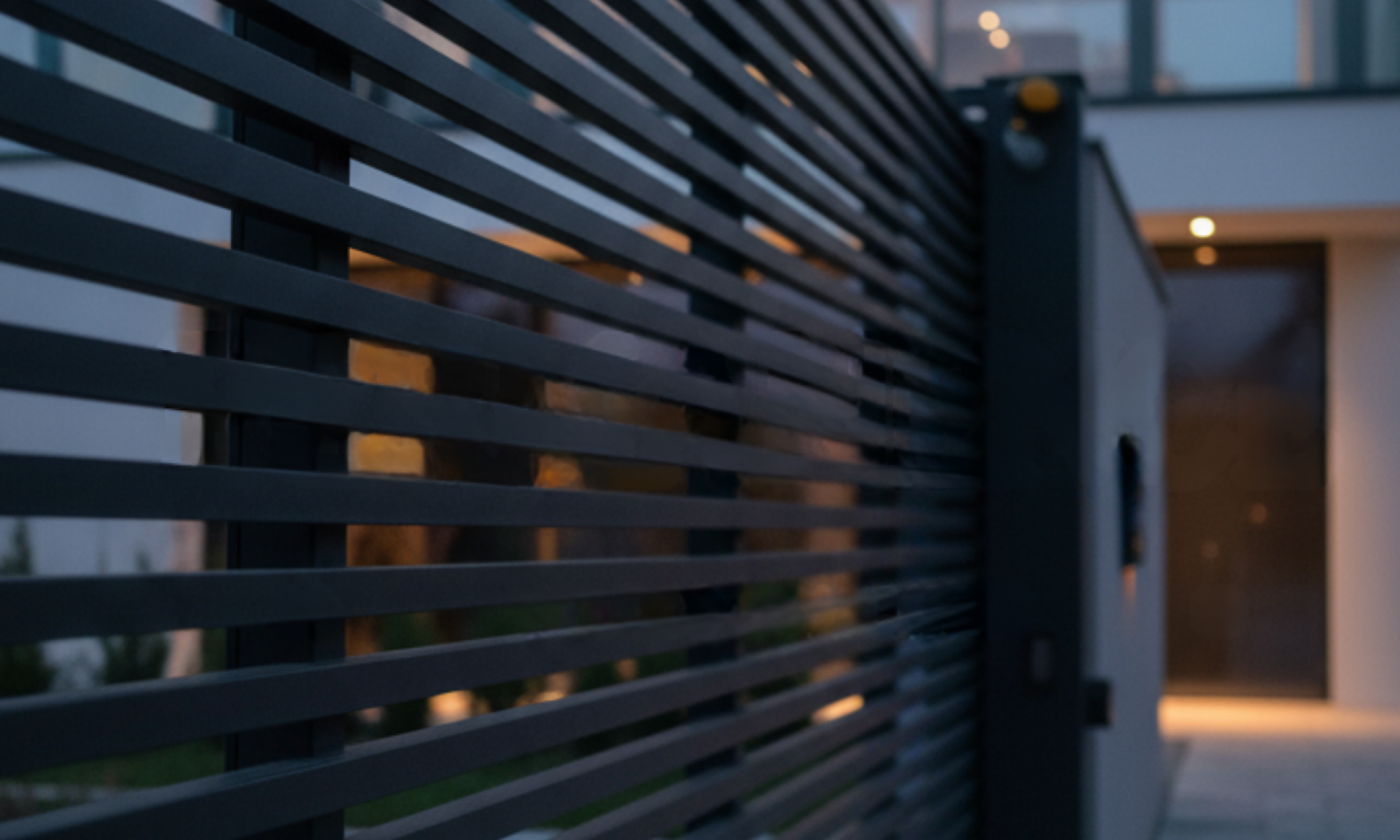
The visual design also affects security. Closely spaced vertical slats, solid panels or privacy-focused infills make climbing more difficult and limit views into the property. Horizontal rails can provide potential footholds, so they need careful consideration where climbing is a concern. Privacy is not always the priority, however. Some homes and sites benefit from a more open design that allows clear sightlines from the house, road or reception area.
Best gate security features for controlled access
A secure perimeter should make entry straightforward for authorised users and inconvenient for everyone else. These are the features most often worth discussing at the specification stage:
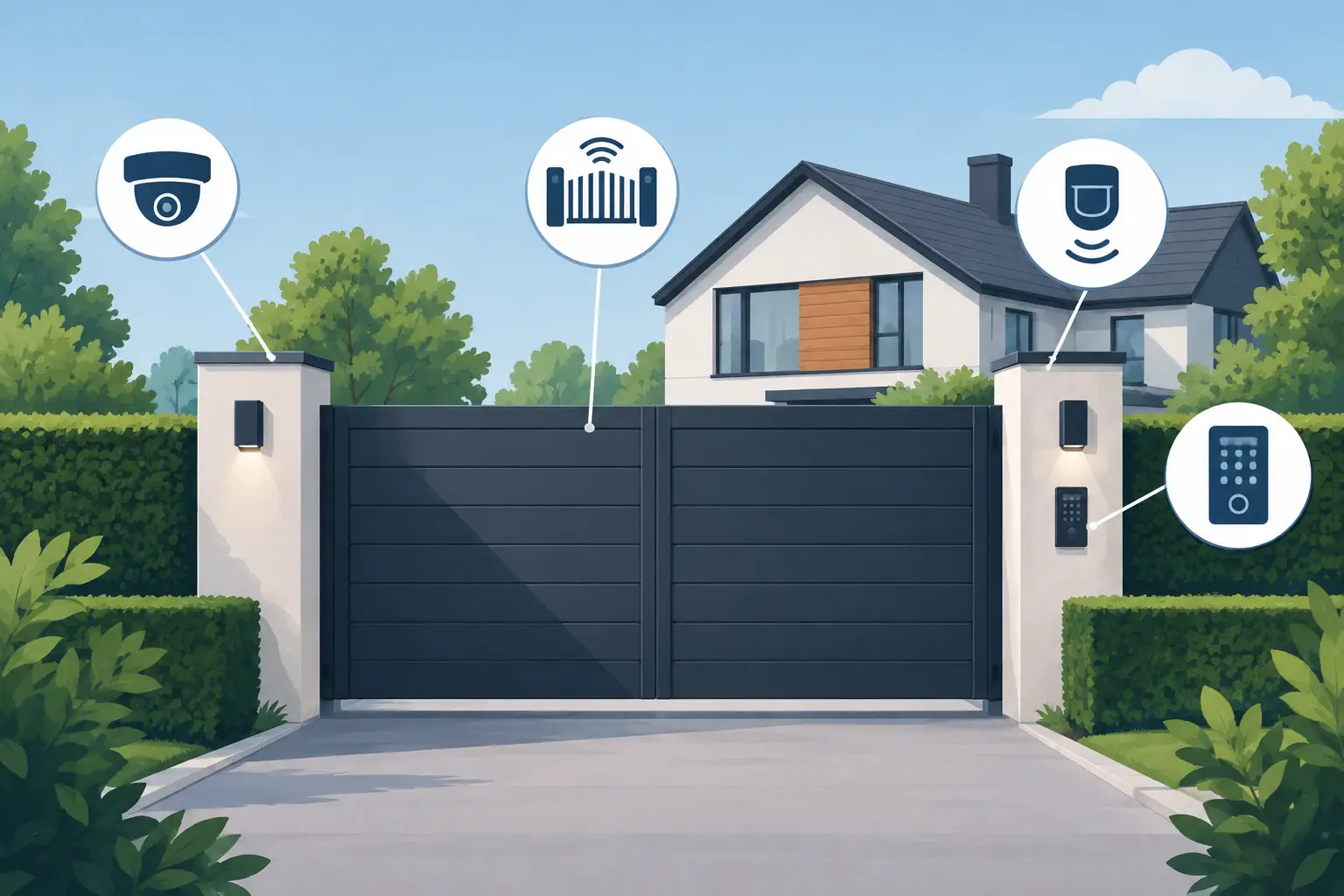
- Automated opening keeps drivers inside their vehicle while entering or leaving, which is particularly useful on busy roads, dark rural approaches and commercial premises.
- A quality locking system provides physical resistance when the gate is closed. Manual gates may use keyed locks, while automated gates should have secure locking arrangements appropriate to the operator and gate type.
- Intercom and video entry systems let occupants verify a visitor before releasing the gate. Video systems can be especially useful where the entrance is some distance from the property.
- Keypads, fobs and access cards provide controlled access without issuing physical keys to every family member, contractor or member of staff.
- Vehicle detection and exit controls allow authorised vehicles to leave safely without leaving gates open for longer than necessary.
No individual feature is a complete answer. A keypad offers convenience, but its code can be shared. A video intercom adds verification, but only if someone is able to respond. For many homes, a combination of automated gates, video entry and remote controls offers a sensible balance between daily convenience and security. Commercial sites may need individual access credentials, timed access permissions and a record of entry activity.
Choose swing or sliding gates around the site
The opening method has a direct effect on security, safety and reliability. Swing gates are a popular choice for residential driveways and can create an impressive entrance. They need sufficient clear space to open inward, and the ground must be suitable for dependable operation. Outward-opening gates can create issues where they move towards a public footway or carriageway, so this should be assessed early.
Sliding gates are often preferred where driveway depth is limited or where a wide opening is required. A sliding design can be highly effective for commercial yards, flat developments and properties on sloping approaches, provided there is enough room along the fence line for the gate to travel. Cantilever sliding gates avoid a track across the driveway, which can be useful where debris, uneven surfaces or frequent vehicle movements would make a ground track less practical.
The best choice is not simply the one that appears most secure. A gate that cannot operate consistently is likely to be left open or bypassed. Site measurements, gradients, drainage, wind exposure and the position of existing walls, fencing and services should all be considered before ordering.
Do not overlook posts, fencing and side access
An automated driveway gate can be the strongest part of a perimeter while a poorly secured side gate provides an easy route around it. Effective security planning looks at the entire boundary: gates, posts, fencing, railings, walls and pedestrian access points.
Posts and foundations must be designed for the gate’s size, weight and operating forces. This is especially relevant for large swing gates and gates installed in exposed locations. Loose posts, undersized foundations or unsuitable hinges can compromise alignment and put strain on automation equipment.
Pedestrian gates deserve the same attention as vehicle entrances. A self-closing pedestrian gate with a secure latch or access-controlled lock can help prevent it being accidentally left open. For shared developments and commercial premises, separating pedestrian and vehicle access may also reduce the need to open the main gate for every visitor.
Where fencing or railings meet the gate, avoid gaps that allow a person to squeeze through or reach the release mechanism. The rear of the gate and automation controls should not be easily accessible from the public side. Good perimeter design is about removing these simple opportunities, not adding unnecessary complexity.
Safety features are part of gate security
Automation must be safe as well as secure. A professionally specified automated gate requires appropriate safety devices to reduce the risk of trapping, crushing or impact. Photocells, safety edges, force limitation and emergency release arrangements may all form part of the system, depending on the gate type and installation.
A gate that reverses when it detects an obstruction helps protect children, pedestrians, pets and vehicles. Safety photocells should be positioned and maintained correctly, rather than treated as an optional extra. The same applies to manual release systems: they need to allow access during a power cut, but should not be easily exploited from outside the property.
Maintenance is also a security issue. Dirt on photocells, damaged hinges, worn rollers or a poorly adjusted operator can cause unreliable operation. When gates become troublesome, people often disable automation, prop them open or rely on temporary fixes. Regular checks help protect the investment and keep the entrance functioning as intended.
Match access control to how the property is used
For a private home, convenience often shapes the final specification. Remote controls, a video intercom and smartphone-compatible entry can make a driveway gate easy to use without reducing control over who enters. Consider how deliveries, tradespeople, relatives and emergency services will be managed. A separate pedestrian gate may be a better solution than repeatedly opening a large vehicle gate.
For managed developments, access needs can change frequently as residents, tenants and contractors come and go. A system that allows credentials to be added or removed easily is more practical than relying on a shared code. Developers should also consider visitor access, refuse collections and long-term management responsibilities before deciding on the equipment.
Commercial sites often need a more structured approach. Opening times, staff access, delivery vehicles and visitor procedures should be mapped out before choosing automation and controls. A gate designed for occasional domestic use may not be suitable for a busy yard with repeated daily movements. The right equipment should match the duty cycle, vehicle type and level of supervision on site.
Get the specification right before installation
The most effective security feature is careful planning. Measure the opening accurately, identify underground services, confirm where power will come from and decide where controls will be placed. Think about what a driver sees when approaching, where vehicles will wait, and whether the gate can open without obstructing the road or pavement.
At Aluminium Gates Direct, customers can discuss gate style, bespoke sizing, automation and access control as one joined-up project, with installation support available through a trusted partner network. This approach helps avoid the common problem of choosing a gate first and discovering later that the layout or automation requirements have been overlooked.
A secure gate should feel uncomplicated to use every day. By choosing durable aluminium construction, appropriate access controls and a design tailored to the site, you can create an entrance that protects the property while still looking right for it. If you are comparing options, speak to a specialist with your measurements, photographs and a clear idea of how the entrance will be used – the best solution is the one that works reliably long after installation day.