A gate that looks right but opens reluctantly, stops short or leaves the driveway inaccessible during a power cut soon becomes a daily frustration. This aluminium gate automation systems review looks at what makes a dependable setup, from the right motor type to safety devices, controls and installation planning. The best system is not necessarily the most powerful or expensive one. It is the one properly matched to the gate, the entrance and how the property is used.
For aluminium gates, automation is particularly attractive. Aluminium is strong but lighter than many steel or timber alternatives, which can reduce the strain placed on motors and supporting hardware. However, lightweight does not remove the need for careful specification. Gate size, wind exposure, opening frequency and ground conditions all affect the result.
What an aluminium gate automation system includes
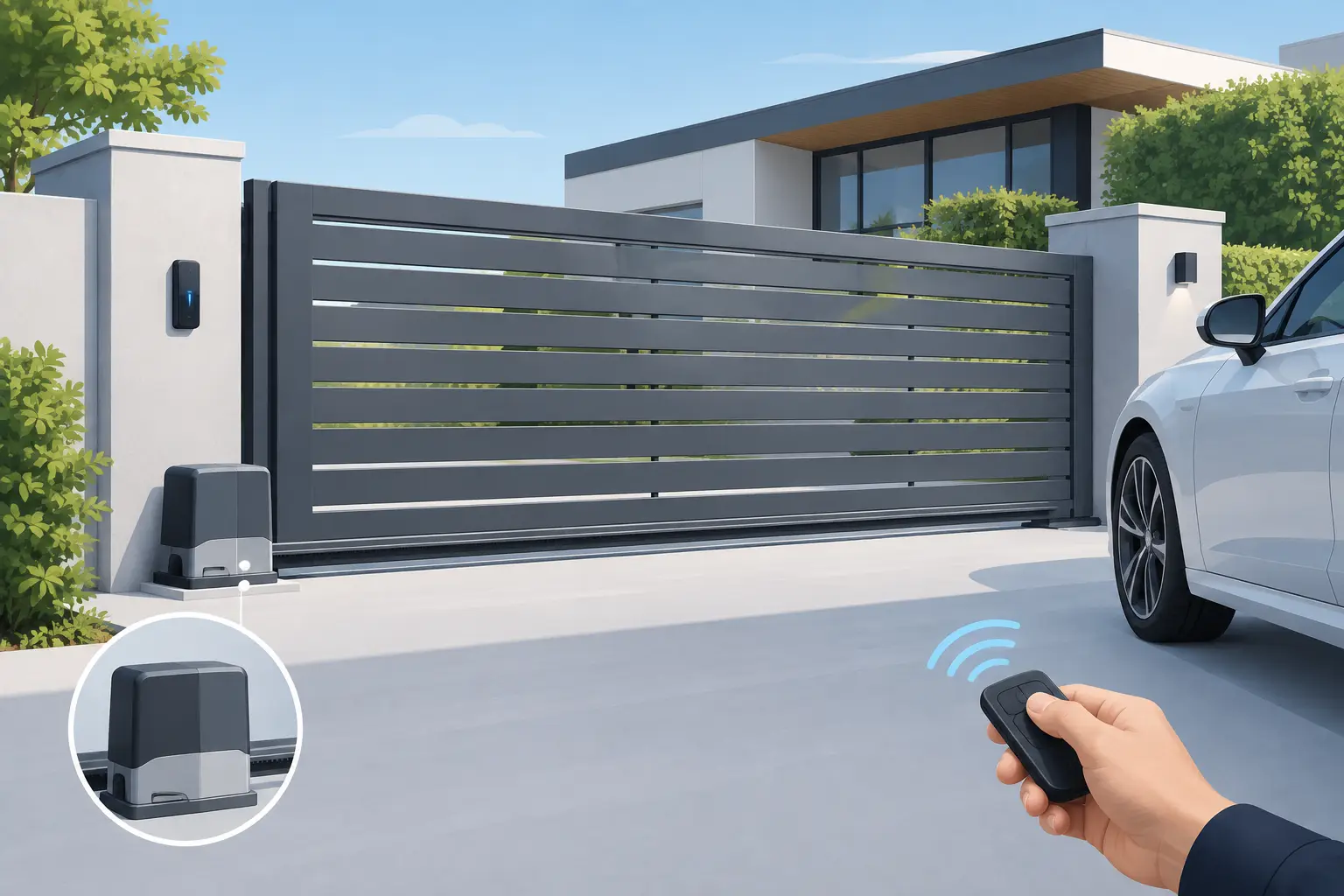
Automation is more than a motor fixed to a gate post. A complete system normally includes the operating motor or motors, a control panel, remote controls, safety photocells and mechanical stops. Depending on the site, it may also include an intercom, keypad, vehicle loop, GSM calling unit, warning light, battery backup or access control linked to a commercial building.
The motor supplies movement, but the controls and safety equipment determine how practical the gate is to live with. A well-planned system should open reliably, stop when an obstruction is detected and allow authorised visitors to gain entry without compromising security.
For residential driveways, a handset and video intercom may be all that is needed. For a development, farm entrance or commercial premises, timed access, multiple users, fobs, keypads and vehicle detection may be more appropriate. Choosing those requirements early prevents an otherwise good installation from feeling limited after a few months.
Swing gate automation systems reviewed
Swing gates remain a popular choice for residential properties because they offer a traditional driveway appearance and work well with many aluminium gate designs. The automation options vary according to post depth, hinge position, gate weight and the available space behind the gates.
Above-ground arm and ram motors
Articulated arm motors use a folding arm to move each leaf. They are often a practical option where gate posts are substantial or hinge geometry does not suit a linear system. Their movement is visible, and the units are generally straightforward for an engineer to inspect and service.
Linear ram motors use a compact extending arm. They create a cleaner appearance and are commonly selected for modern aluminium swing gates. They do, however, need the correct mounting dimensions. If the hinge line, post size or opening angle is wrong, the gate may not travel smoothly or achieve the desired opening width.
Neither option is automatically better. An arm motor can be the sensible answer for awkward existing pillars, while a ram motor may suit a new installation with purpose-built metal posts. The site should decide the equipment, not the other way round.
Underground motors
Underground automation is the discreet choice, with the motor housed below ground near the hinge point. It preserves the uncluttered look of an ornate, bespoke or premium aluminium gate and can be an excellent solution where appearance is the priority.
The trade-off is groundwork. The motor boxes need correct drainage and access for future maintenance. Poor drainage is one of the most avoidable causes of problems with underground systems in the UK. A lower-profile installation is worthwhile when it is designed properly, but it should not be chosen simply because it is less visible.
What swing gates need to operate well
Swing gates need a clear and level arc across their full opening path. Sloping driveways can require specially designed hinges, rising systems or a revised gate arrangement. They also need positive closed stops and, in many cases, centre stops to prevent the leaves from being pushed beyond their intended position.
Wind is another consideration. Solid-panel aluminium gates can catch more wind than open railings or slatted designs. A suitably specified motor, strong posts and secure hinges are essential on exposed sites. This is not a reason to avoid a solid gate, but it is a reason to assess the location honestly.
Sliding gate automation systems reviewed
Sliding gates are often the better answer where there is limited room for a swing gate to open into the drive, or where a longer, wider entrance needs controlled access. They can also be useful on sloping approaches because the gate moves sideways rather than sweeping across the ground.
A tracked sliding gate runs on a ground track, usually with guide rollers and a toothed rack connected to the motor. It is a proven, cost-effective format, but the track must be kept clear of leaves, grit, ice and debris. On busy sites, this simple maintenance task matters.
Cantilever sliding gates run above ground without a track across the driveway. They are particularly useful where debris, uneven surfaces or frequent vehicle movements would make a track impractical. They require more space to one side for the counterbalance section and need a carefully engineered structure, so the initial cost can be higher.
For both designs, the motor must suit the gate’s weight and expected duty cycle. A gate opened a handful of times each day has very different requirements from an entrance used continuously by staff, residents, deliveries and visitors. Specifying a domestic motor for a high-use commercial entrance is a false economy.
Safety should shape the specification
An automated gate is a moving machine, not simply a convenience feature. Safety provision needs to be considered from the first survey, particularly where children, pedestrians, visitors or delivery drivers may use the entrance.
Photocells create an invisible beam across the opening. If the beam is interrupted, the gate should stop or reverse according to its set-up. Additional photocells may be needed where the gate creates more than one risk area, such as the rear travel zone of a sliding gate or the closing path of a pair of swing gates.
Safety edges provide another layer of protection by detecting contact with an obstacle. Force settings, warning signage, manual release arrangements and correctly positioned controls all matter too. A professional installation should include commissioning and testing, rather than treating safety devices as optional extras added at the end.
Controls, intercoms and everyday convenience
Remote handsets remain simple and effective, but they are only one option. Keypads suit households that want to provide a code for family members, tradespeople or short-term visitors. GSM systems allow a gate to be opened by a phone call or app, subject to signal and system choice. Video intercoms offer the reassurance of seeing and speaking to a visitor before granting access.
Akuvox intercom systems can be a strong fit for properties requiring modern video entry, multi-user access or integration with wider access control. For commercial sites and flat-style developments, the ability to manage users and monitor entry points can be as valuable as the gate itself.
It is worth considering how visitors will leave as well as how they enter. Exit loops, push-to-exit buttons, free-exit photocells and timed opening functions all have a place, depending on the site. A driveway should not rely on somebody reversing close to a closed gate and hoping a remote is to hand.
Costs and the factors that change them
There is no useful single price for gate automation because installation requirements vary so widely. The main cost drivers are the gate design and size, motor type, distance to the electrical supply, groundwork, access controls, safety equipment and whether existing posts and foundations are suitable.
Underground swing automation and cantilever sliding systems usually involve more groundwork than above-ground motors or tracked sliding gates. Long cable runs, difficult access and drainage work can also affect the budget. On the other hand, investing in the right foundations, posts and cabling at the outset can avoid expensive alterations later.
When comparing quotations, check that they cover the same scope. One price may include motors only, while another includes installation, safety devices, remotes, intercom equipment, electrical works and commissioning. Clear scope is more valuable than a low headline figure that leaves essential items to be added later.
Choosing the right system for your property
Start with the practical facts: the gate opening width, the available opening space, driveway gradient, surface condition, exposure to wind and likely daily use. Then consider the experience you want. A private home may prioritise quiet operation and a video intercom, while a commercial entrance may need frequent operation, controlled access and an arrangement that continues to work efficiently throughout the day.
Aluminium Gates Direct can help customers assess aluminium gate styles alongside automation requirements, whether the project calls for a readymade driveway gate or a bespoke design. Working with an experienced installation partner is especially valuable where groundwork, electrics and access control need to come together as one project.
Before committing, ask how the gate will be released during a power cut, who will maintain the system, where water will drain and whether the controls can be expanded later. Those answers will do more for long-term satisfaction than choosing a motor by appearance alone.
A well-specified automated aluminium gate should feel quiet, secure and uncomplicated from the first use. Take the time to match the system to the site, and it will support your property’s security and kerb appeal for years rather than becoming another item on the maintenance list.