
A new driveway gate can look impressive on its own, but the surrounding boundary often decides whether the finished scheme feels considered or pieced together. Matching gates and railings give a property a consistent line, colour and level of security from the pavement to the entrance, whether you are improving a family home, specifying a development or securing a commercial site.
The best result is not simply a gate and railing in the same shade. It is a perimeter design that suits the building, works with the ground levels and provides the right balance of privacy, access and visibility. Aluminium makes this easier to achieve because it is lightweight, strong and requires far less ongoing upkeep than many traditional materials.
Why a coordinated boundary makes a difference
Gates and railings sit at the front of a property, so they have a direct effect on kerb appeal. When their profiles, spacing and finish relate to one another, they make an entrance look intentional rather than added in stages. This matters for period homes and contemporary properties alike, although the style that works best will be different.
There is a practical benefit too. A coordinated system allows the height, infill design and access points to be planned together. For example, a driveway gate may need privacy and controlled vehicle access, while a pedestrian gate beside it needs a safe, convenient route for visitors. Railings can continue the same design across lower boundary walls, changes in level or garden edges without creating visual clutter.
For developers and commercial buyers, a consistent perimeter can also support a clearer site identity. It helps create a well-managed appearance while defining where visitors, vehicles and deliveries should enter.
Start with the property, not the product
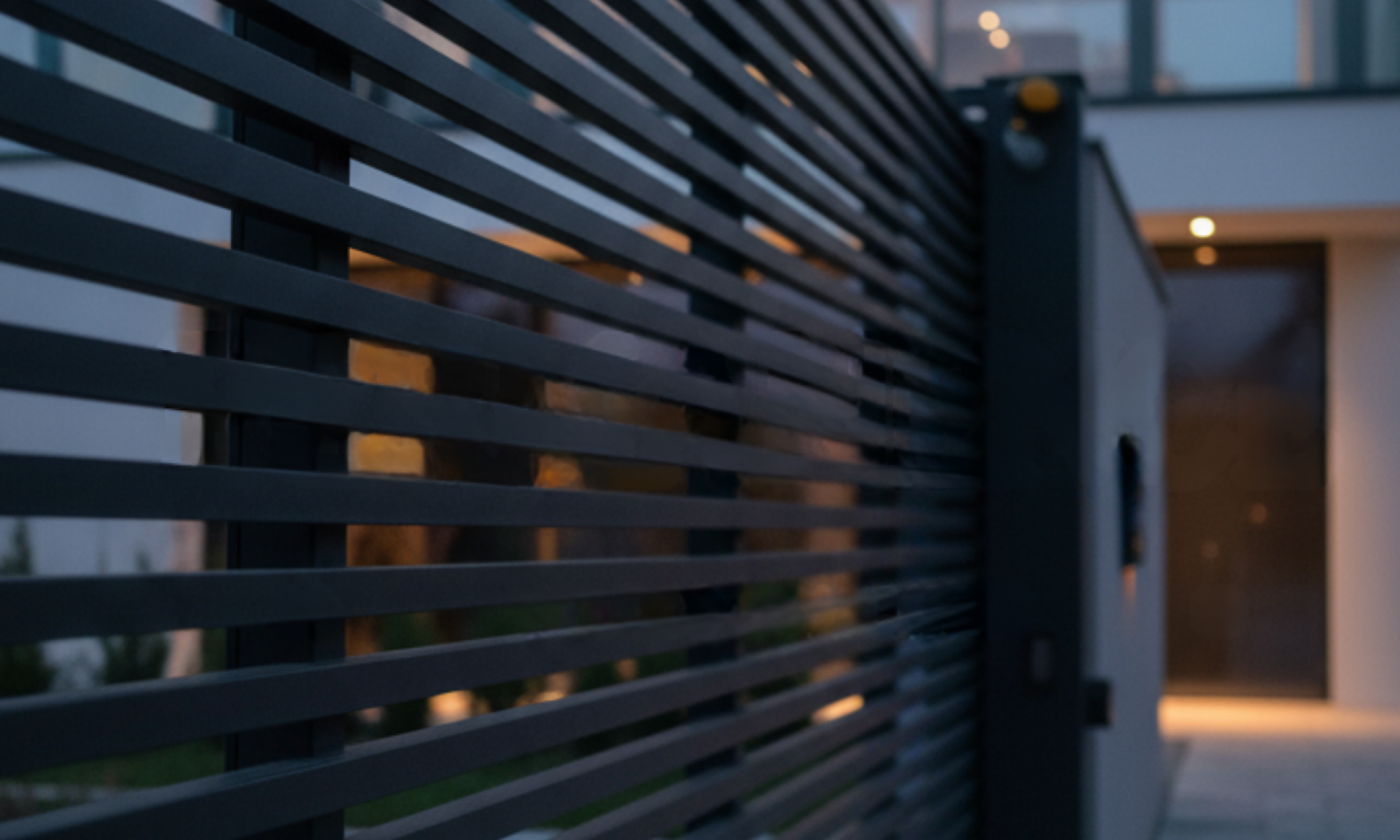
The most successful matching gates and railings take their lead from the setting. A clean, horizontal slatted gate can complement a modern rendered home, especially where privacy is a priority. Vertical bar railings may be more suitable for a traditional frontage, a property with attractive landscaping or a site where clear sightlines are needed.
Look at the building’s existing details before choosing a pattern. Window frames, brick colour, roof lines, boundary walls and exterior lighting can all influence the right choice. Matching every feature exactly is rarely necessary, but the gate and railing design should not compete with them.
Height needs the same level of thought. Higher panels and gates increase privacy, but can make a small frontage feel enclosed. More open railings allow daylight and visibility, which can be useful around driveways, communal areas and commercial entrances. If security is the main concern, the design should deter unwanted access without compromising safe visibility for drivers leaving the site.
Consider how the entrance is used
A gate that looks right but does not suit daily use becomes frustrating quickly. Measure the clear opening needed for vehicles, including wider cars, vans, trailers or delivery access where relevant. Think about the direction of travel, available space for swing gates and whether a sliding gate would be more practical on a short or sloping driveway.
Pedestrian access should be planned at the same time. A separate matching side gate avoids the need to open a large driveway gate for everyday arrivals and offers a natural place for an intercom, letterbox or access control equipment. On commercial sites, it may be sensible to separate staff, visitor and vehicle routes altogether.
Choose one design language across the boundary
A coordinated scheme does not mean every section has to be identical. It means the main visual elements are repeated with purpose. The frame profile, bar or slat arrangement, post style and colour should work as a family.
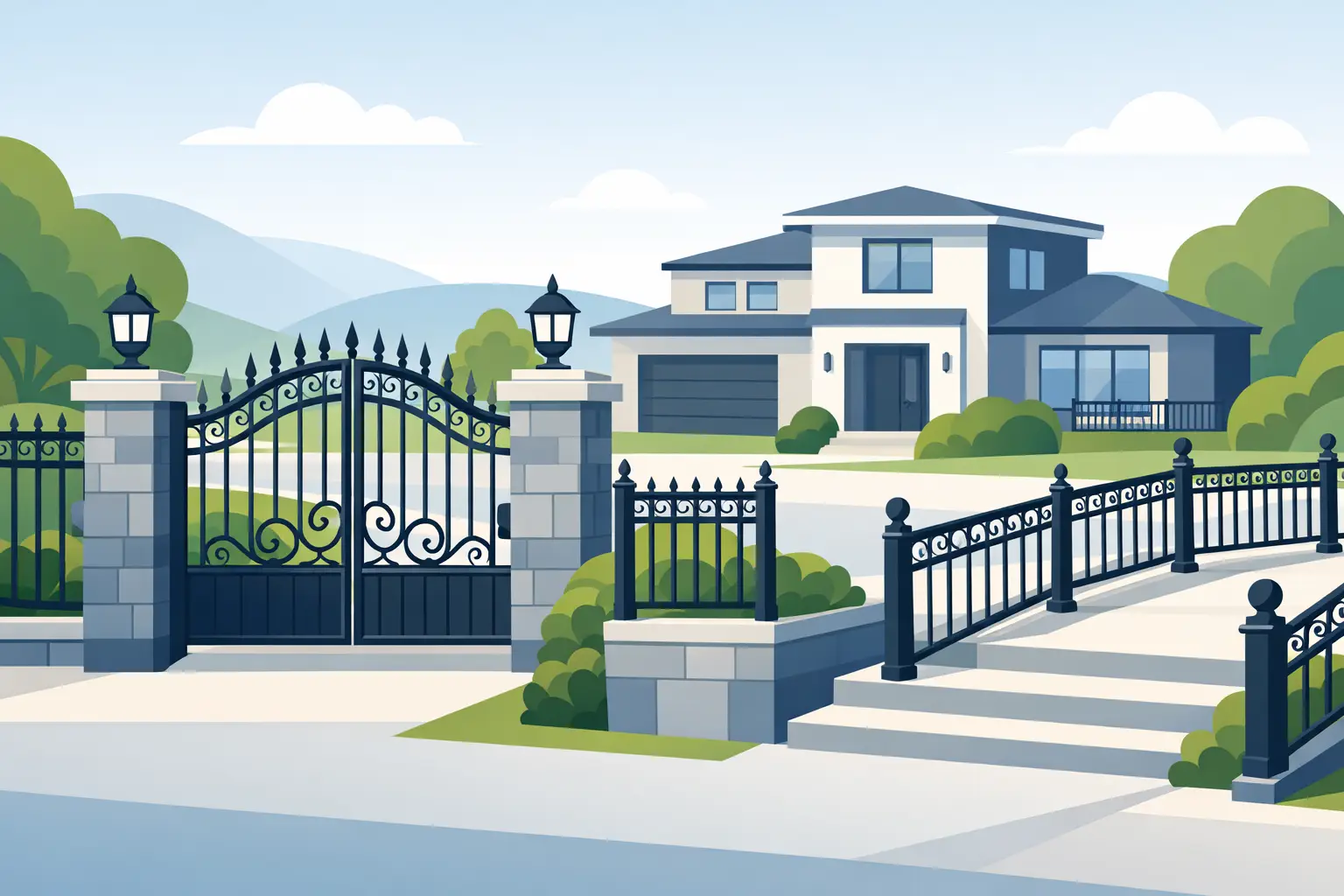
For instance, a solid or semi-solid driveway gate can be paired with more open railings if both use the same horizontal lines and finish. This can give privacy at the entrance while keeping the rest of the frontage lighter. Similarly, ornate aluminium gates can sit well with railings that repeat their decorative details, rather than using a completely unrelated pattern.
Colour is usually the strongest link. Anthracite grey, black and darker bronze tones remain popular because they suit brick, stone and render, while lighter shades can work well with contemporary architecture. A powder-coated aluminium finish provides a consistent appearance across gates, pedestrian gates and railings, and avoids the regular repainting associated with timber or mild steel.
It is worth checking samples in natural light before making a final decision. A colour can appear noticeably different against warm brickwork, pale render or mature planting than it does on a screen or small printed image.
Aluminium offers a practical long-term choice
Boundary products need to cope with rain, frost, sun and everyday knocks. Aluminium is naturally resistant to corrosion, making it particularly well suited to the UK climate and coastal locations where untreated steel can demand more attention. A quality powder-coated finish helps retain colour and keeps routine care straightforward.
For most homes, occasional washing with mild soapy water is enough to remove dirt and keep gates and railings looking presentable. There is no need for annual staining, sanding or painting, which is a significant advantage for busy homeowners, landlords and facilities managers.
Aluminium is also lighter than steel. That helps with handling during installation and can reduce strain on hinges and automation equipment. Lightweight does not mean weak: the right design, posts and fixings are essential, particularly for wide driveway gates, exposed locations and high-security applications.
The trade-off is that not every ready-made size or style will suit every opening. Standard products can be a cost-effective option where dimensions are straightforward, but bespoke manufacture is often the better investment where walls are out of square, levels vary or the gate needs to align precisely with existing railings.
Plan installation details early
The fitting method can change the look and performance of the finished boundary. Railings may be surface-mounted on top of a wall, side-fixed to masonry or installed into the ground using posts. Each option has different structural requirements and affects the final visible height.
Posts deserve particular attention. They need to be strong enough for the gate weight and correctly positioned for hinges, latches, automation arms or sliding gate tracks. If a driveway entrance is being widened, resurfaced or rebuilt, it is usually more efficient to settle the gate and railing specification before groundwork begins.
Sloping ground is another common issue. Railings can often follow the line of the land or step down in sections, depending on the design. Swing gates generally need suitable clearance to open, while sliding gates need room to travel alongside the opening. There is no one answer: an accurate site survey prevents expensive adjustments later.
Add automation and access control as part of the design
Automation is easiest to install when it is considered from the outset. Cable routes, power supply, safety devices and access controls can be planned neatly rather than retrofitted around completed paving and planting.
For residential entrances, remote controls, keypads and video intercoms can make daily access more convenient. Commercial sites may require timed access, multiple user permissions or integration with wider security arrangements. Akuvox intercom systems can provide a smart option where video calling and controlled entry are required.
Automated gates must be specified and installed with safety in mind. Sensors, safety edges, warning devices and correct controls are not optional extras to leave until the end of the project. They are central to safe operation, particularly where children, pedestrians or visitors may be nearby.
Balancing budget, security and appearance
A clear brief helps avoid spending money in the wrong places. If your priority is privacy, invest in the right infill style and gate height. If access control is essential, allow for suitable automation and intercom equipment. If the main aim is to refresh a frontage, a carefully chosen ready-made aluminium gate and matching railing section may offer the right balance of cost and impact.
Do not judge a quote on the gate price alone. Consider posts, fixings, groundwork, delivery, installation, electrical work and automation where required. Transparent pricing makes it easier to compare like with like and identify whether a bespoke solution will save complications on site.
At Aluminium Gates Direct, customers can choose from readymade and made-to-measure aluminium options, with support for product selection, installation and automated access through a nationwide partner network. The right recommendation should reflect the opening, the property style and how the entrance will be used, rather than forcing every project into a standard format.
Before ordering, take clear measurements, photographs of the entrance and notes on ground levels, walls and existing services. A few careful decisions at this stage can turn a simple boundary upgrade into a durable, well-finished entrance that looks right every time you come home or arrive on site.