
A driveway gate is often the first physical decision a visitor, delivery driver or opportunist intruder encounters. Done properly, perimeter security does more than close off a boundary. It makes access clear, controlled and visibly intentional, while still complementing the property behind it.
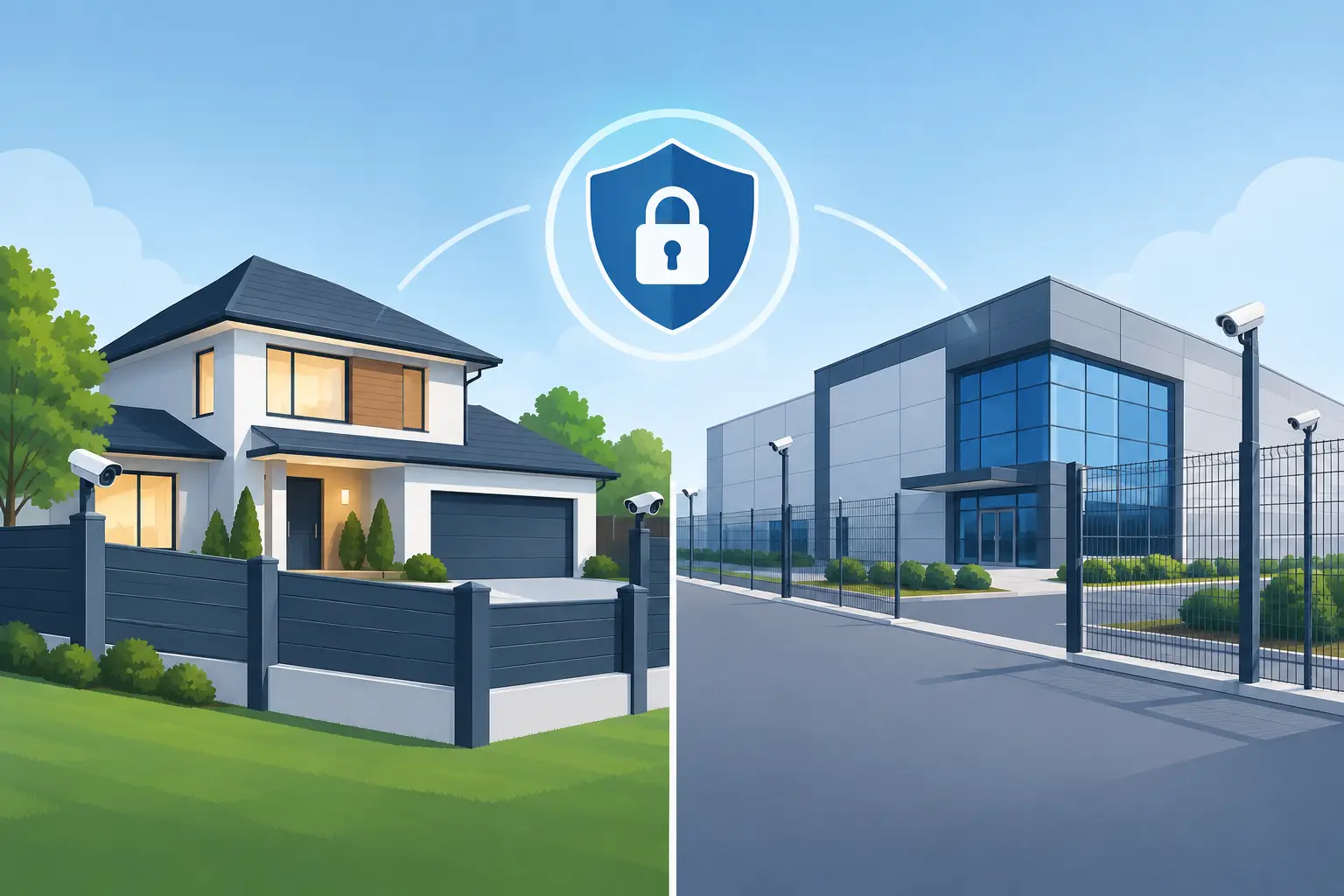
For homeowners, that may mean a smart aluminium driveway gate paired with secure side access. For a commercial premises, it can mean a coordinated system of fencing, sliding gates, access control and intercoms designed around daily vehicle and pedestrian movements. The right approach depends on the site, the level of risk and how people need to use the entrance every day.
What perimeter security should achieve
Effective perimeter protection is not simply about installing the tallest fence or the heaviest gate. A boundary needs to deter unauthorised access, define where visitors should enter and allow legitimate users to move through without unnecessary delays.
A well-planned solution usually combines several elements. Gates control vehicle and pedestrian entry, while fencing and railings close gaps along the boundary. Automation, keypads, fobs or intercom systems manage who can gain access. Lighting and clear sightlines make the area easier to monitor, particularly during darker months.
The aim is proportionate security. A detached home in a quiet residential street has different requirements from a builders’ merchant, flat development or managed industrial site. Over-specifying can make a property feel unwelcoming and add cost without delivering a meaningful benefit. Under-specifying can leave weak points that are easy to exploit.
Start with the boundary, not the gate
It is tempting to focus entirely on the entrance gate, especially where kerb appeal is a priority. However, perimeter security is only as strong as the easiest route around it. Before choosing products, walk the whole boundary and identify how someone could enter without using the main driveway.
Look at side passages, rear garden access, low walls, shared driveways, service entrances and areas hidden from the house or road. Existing fencing may be tired, poorly fixed or easy to climb. A gate may be secure, but a nearby pedestrian opening with a basic latch can undermine the entire arrangement.
For commercial sites, also consider vehicle turning space, delivery patterns, emergency access and the width needed for larger vehicles. A sliding gate can be a practical choice where a swing gate would obstruct a road, pavement or internal yard. On a residential driveway, the available depth, slope and parking layout will help determine whether swing or sliding operation is more suitable.
Choosing gates for security and everyday use
A gate should create a clear physical barrier without becoming frustrating to operate. Aluminium is particularly well suited to this role because it is lightweight, strong and resistant to corrosion. Unlike timber, it will not rot, split or require regular staining. Unlike untreated steel, it will not demand ongoing attention to prevent rust.
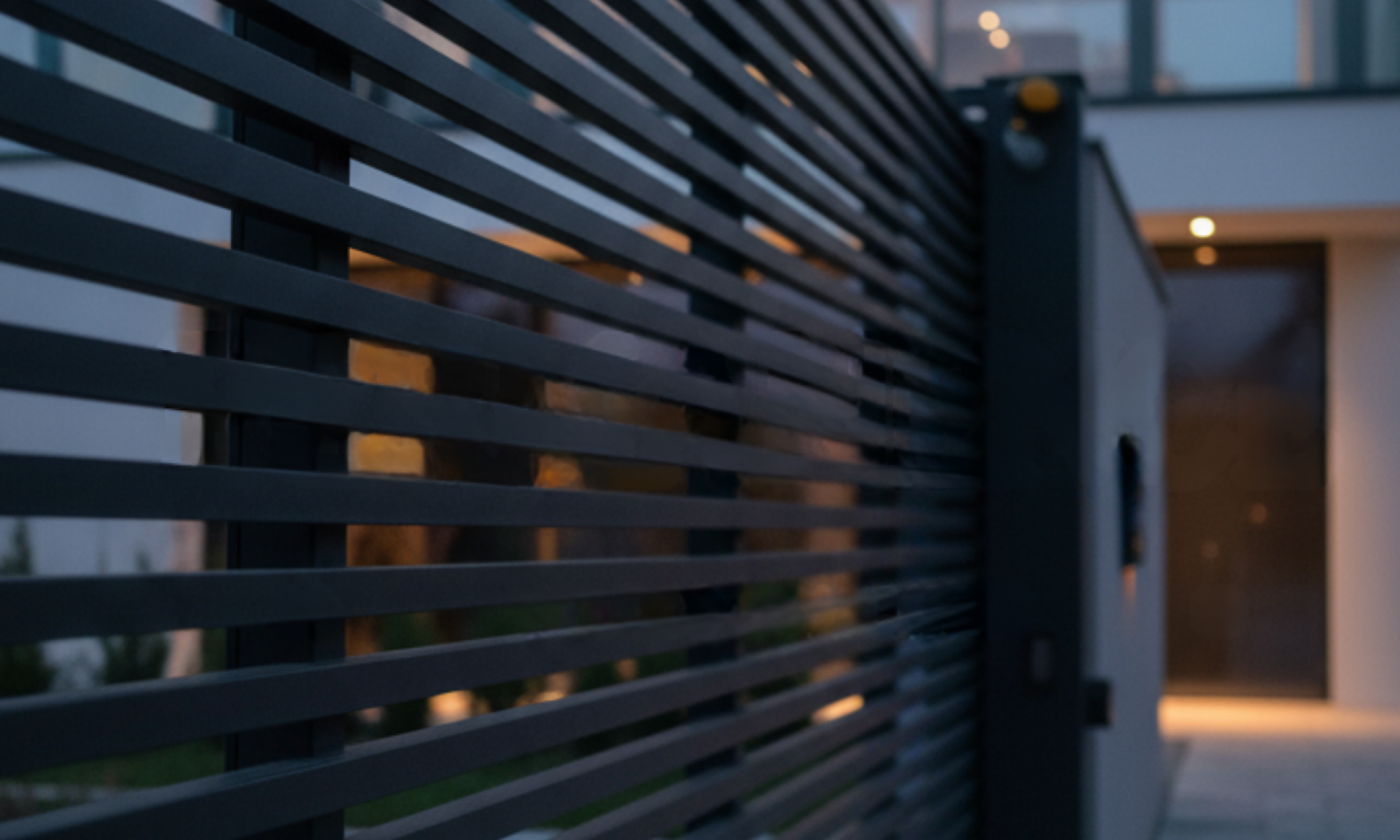
The gate style still matters. Solid or closely spaced infill designs provide more privacy and reduce views into a driveway or garden. Slatted designs can offer a contemporary appearance while allowing some airflow and visibility. Ornate styles may suit period properties, although the spacing between features should be considered if privacy is a priority.
Height and configuration should reflect the property and the local setting. A gate that is too low may offer little deterrent, while an overly imposing design can be out of character with its surroundings. For many homes, a made-to-measure aluminium driveway gate gives the best balance because it can be designed around the opening, levels, posts and preferred finish rather than forcing the site to fit a standard size.
Pedestrian gates deserve the same attention as vehicle gates. A side gate should have a dependable lock, sturdy hinges and a frame that is properly fixed to suitable posts or masonry. If it is used frequently, access control can make it more convenient without leaving keys with multiple users.
Fencing and railings complete the line of defence
Gates work best as part of a continuous boundary. Aluminium fencing and railings can provide a coordinated finish with the same colour and design language as the gate, while offering a long-lasting alternative to timber panels.
Visibility is an important trade-off. Open railings can help owners and staff see activity beyond the boundary, which can be valuable around commercial car parks and front gardens. Solid fencing offers more privacy and can conceal tools, vehicles or outdoor equipment. Neither option is automatically better. The right choice depends on whether overlooking, privacy or deterrence is the main concern.
Pay close attention to fixing and ground conditions. Posts need to be correctly sized and securely installed, particularly for tall gates, long runs of fencing or exposed locations. Poor installation can affect alignment, security and the lifespan of the system. This is one reason many customers choose to use an experienced installation partner rather than treating a gate as a simple fit-and-forget purchase.
Access control turns a boundary into a managed entrance
Mechanical locks remain useful, but access control adds a further layer of control for busy homes and commercial premises. A keypad can suit a small number of regular users. Remote controls offer convenient operation from a vehicle. Fob systems are useful where permissions may need to be issued or withdrawn, such as shared developments or staff entrances.
An intercom is especially valuable when visitors, couriers and contractors need to be verified before access is granted. Video intercom systems, including Akuvox options, allow the property owner or site manager to see and speak with a caller before opening the gate. This avoids the common compromise of leaving a gate open during working hours simply to keep deliveries moving.
Automation must be designed around safe operation. Gates need appropriate safety devices, controls and professional commissioning. A well-selected automated gate should be convenient, but it must also respond safely to people, vehicles and obstructions. Maintenance requirements are generally low with aluminium gates, yet automated components should still be inspected and serviced in line with the equipment manufacturer’s guidance.
Do not overlook lighting, sightlines and routine use
Security lighting is most useful when it supports visibility rather than creating glare or dark shadows. Illuminate key points such as gates, pedestrian entrances, paths and parking areas. Make sure lighting does not shine directly into neighbouring homes or make it harder for cameras and drivers to see clearly.
Landscaping can also affect security. Dense shrubs beside a gate or side passage can provide concealment, while overgrown planting may obstruct lights, intercoms and camera views. Keeping boundary areas tidy makes a property look occupied and allows gates and fencing to be checked easily for damage.
For commercial sites, written procedures are just as valuable as physical products. Staff should know when gates are to remain closed, who can authorise entry and how lost fobs or remote controls are dealt with. A secure gate left open for convenience is no longer performing its intended role.
Planning a proportionate perimeter security solution
Start with the practical questions: what needs protecting, who requires access, when do they need it and where are the weak points? From there, a tailored combination of gates, fencing, railings and access control becomes much easier to specify.
Aluminium Gates Direct can help customers compare readymade and bespoke options, select a suitable operating style and arrange installation support through its nationwide partner network. The most effective boundary is one that feels natural to use every day, looks right for the property and leaves no obvious invitation to enter unchallenged.