
A new fence has to do more than mark a boundary. It may need to improve privacy from a neighbouring garden, secure a driveway, define a commercial site or bring the fencing and gates together as one considered frontage. This aluminium fencing buyer guide sets out the decisions that matter before you order, so the finished result looks right, performs properly and suits your budget.
Aluminium fencing is a strong choice where low maintenance, clean lines and long-term appearance are priorities. Unlike timber, it will not rot, warp or need regular staining. Unlike untreated steel, it does not carry the same risk of corrosion. However, the best specification depends on the site, the level of security required and whether the fencing needs to work alongside pedestrian or driveway gates.
Start with the job your fencing needs to do
The first question is not which style you like most. It is what the fence must achieve. A front boundary may be mainly about kerb appeal and safely defining the edge of a property. A rear garden may call for greater screening, while a commercial perimeter may need clear access points, controlled entry and a more security-led design.
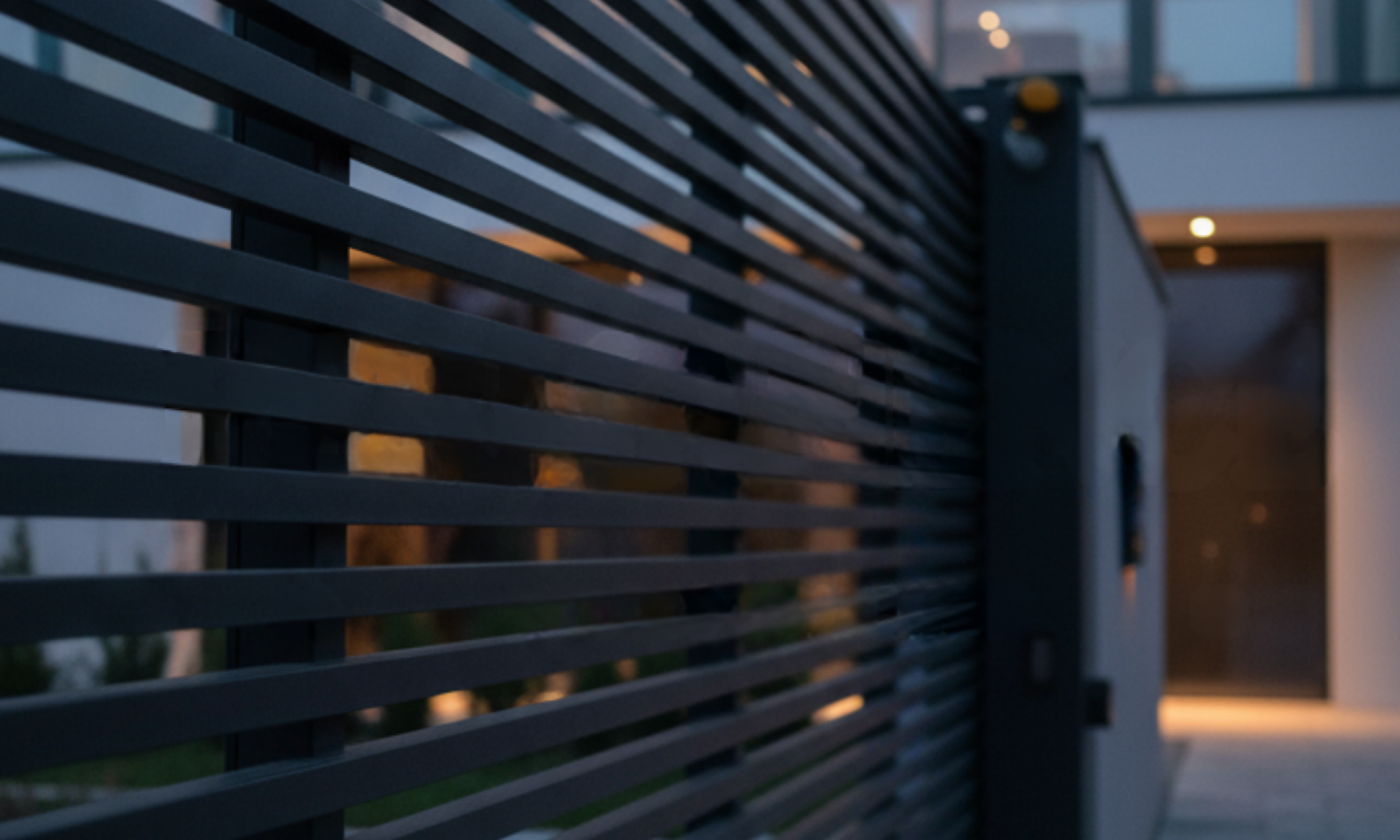
For homes, aluminium slatted fencing is often chosen for its contemporary appearance and flexibility. The spacing between slats can be adjusted to balance privacy, light and airflow. Closely spaced slats create a more enclosed feel, whereas wider gaps maintain visibility and can make a smaller garden feel less boxed in.
For properties with traditional architecture, railings or more decorative aluminium panels can provide a better visual match. They retain the practical benefits of aluminium while avoiding the need to force a distinctly modern design onto an older home. The right answer often comes down to the building, nearby boundaries and the look of any existing gate.
Commercial buyers should consider how the fencing supports the wider site plan. Visibility may be valuable around car parks, entrances and public-facing areas, while service yards and plant areas may need more screening. If vehicle gates, automation or intercom systems are part of the project, it is sensible to plan the fence line, posts and access points together from the outset.
Aluminium fencing buyer guide: choose the right style
Aluminium fencing is available in a broad range of profiles, but most decisions sit within a few practical categories. Horizontal slatted designs create a sleek, architectural finish and are popular for gardens, driveways and contemporary developments. Vertical slats can add height and definition while producing a more traditional rhythm. Solid or near-solid panels are better suited to privacy-sensitive spaces.
Open railings are a good option when sightlines matter. They can define a boundary without blocking a view, making them useful around front gardens, communal areas and commercial premises. Decorative detailing can soften the appearance, but it should be selected carefully. A highly ornate fence can look out of place beside a minimalist aluminium gate, just as a very plain slatted panel may not suit a period property.
Try to view the fencing as part of the whole elevation. Matching the colour, slat orientation and post style to a gate gives a more deliberate result than choosing each element separately. This is particularly worthwhile on driveways, where the gate will naturally become the focal point.
Privacy, airflow and light are a balance
Full privacy is appealing, but it is not always the best choice. Solid fencing can reduce wind flow and create a more enclosed garden, while a slatted design allows light and air to pass through. On an exposed site, the gaps between slats can reduce wind pressure compared with a completely solid run. Conversely, a busy road or overlooked patio may justify a more closed design.
Think about the view from both sides of the boundary. This can help prevent a fence that feels too dominant from the garden or overly imposing from the street. Height, nearby planting and the direction of sunlight all affect the final feel.
Check height, measurements and local restrictions early
Accurate measurements are essential, especially where fencing joins gates, brickwork, walls or changes in ground level. Measure the full run, note the position of corners and record any slopes, steps, drainage covers, trees or service boxes that could affect installation. It is also useful to establish whether posts will be ground-fixed, mounted to a wall or fitted on top of a retaining structure.
Do not assume a boundary is exactly where an old fence stands. Check deeds and discuss the proposed work with neighbours where appropriate. This is particularly important if posts or foundations sit close to the boundary line.
Planning rules can vary. In many cases, garden fencing may not need formal planning permission, but limits can apply, particularly beside a highway, in conservation areas or where permitted development rights have been removed. Listed buildings and commercial projects can bring additional considerations. If there is any uncertainty, confirm the position with the relevant local planning authority before placing an order.
Sloping ground deserves special attention. A fence can follow the gradient, with each panel rising or falling continuously, or be stepped in level sections. Following the slope looks cleaner on gentle gradients. Stepping can be more practical on steeper sites, although it leaves visible changes in height between panels. The correct method depends on the style chosen and how much variation there is across the run.
Look beyond the panel: posts and fixings matter
A quality aluminium fence is a system, not simply a set of panels. Posts, brackets, caps, fixings and foundations all influence stability and appearance. Posts should be specified for the fence height, panel width and exposure of the site. A sheltered garden has different demands from an open driveway or coastal location.
Powder-coated aluminium offers a durable finish in a wide choice of colours. Anthracite grey, black and white remain popular, but a bespoke colour may be the right way to match window frames, cladding or an existing gate. Ask whether the finish is suitable for external use and how cut edges, fixings and accessories will be treated. Consistency across the full installation is what creates a premium finish.
Aluminium is low maintenance, not no-care. Occasional washing with warm water and a mild detergent removes dirt, traffic film and salt deposits. This is especially worthwhile in coastal areas or beside busy roads. Avoid abrasive pads and harsh chemicals that may damage the coating.
Set a realistic budget for the complete project
The price of aluminium fencing is affected by more than the number of panels. Height, style, colour, post type, ground conditions, bespoke sizing, removal of existing fencing and installation access all contribute. A simple straight run on level ground will usually cost less to install than a boundary with multiple corners, retaining walls or restricted side access.
Readymade sizes can offer good value where the layout is straightforward. Bespoke fencing may cost more initially, but it can avoid awkward infill sections, excessive cutting or uneven panel spacing. For a prominent frontage, that improved fit is often worthwhile.
When comparing quotations, make sure each one includes the same scope. Check whether VAT, posts, foundations, delivery, removal of old materials and installation are included. Transparent pricing makes it far easier to compare like for like and avoids unexpected costs later.
Decide whether to install yourself or use a professional
A competent DIY installer may be able to fit a simple, level fence where the ground is accessible and the product is supplied as a clear system. The key challenges are setting posts accurately, maintaining consistent spacing and allowing enough time for concrete foundations to cure. Small errors at the first post can become obvious across a long run.
Professional installation is generally the safer route for sloping sites, tall fencing, complex layouts, commercial boundaries and projects combining fencing with gates or automation. An experienced installer can assess ground conditions, align posts precisely and resolve site-specific issues before they compromise the finish.
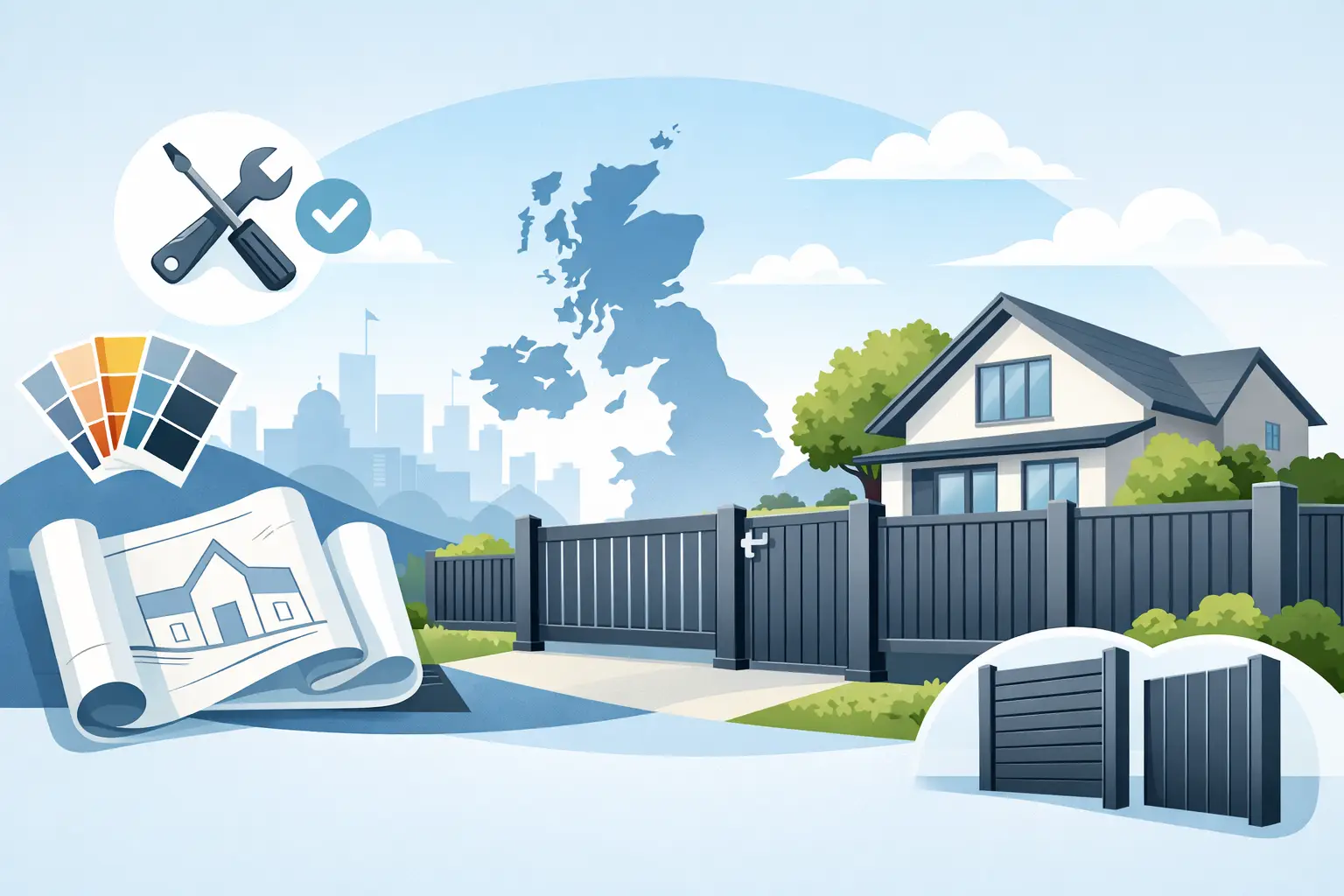
At Aluminium Gates Direct, customers can choose fencing and gate solutions with guidance on specification, bespoke design and access to nationwide installation support through trusted partners. Planning the complete perimeter together can save time and help ensure that fencing, gates and access controls work as one system.
Before making your final choice, take a few photos of the site, prepare accurate dimensions and be clear about what you want the fence to achieve. A well-specified aluminium fence should still look smart years from now, with far less upkeep than many traditional alternatives.