A commercial gate has to do more than mark an entrance. It may control vehicle access, protect stock, guide visitors, support automated entry and shape the first impression of a site. The best commercial gate materials are therefore not simply the strongest on paper. They are the materials that suit the security risk, daily traffic, exposure to weather, access system and long-term maintenance budget.
For UK commercial properties, aluminium and steel are usually the leading choices. Timber can still suit certain low-security or design-led schemes, while composite infill panels may work as part of a wider gate design. The right answer depends on how the gate will be used, not just how it looks on installation day.
What a commercial gate material needs to handle
A gate at a warehouse, office development, school, private estate or service yard is likely to work harder than a domestic garden gate. Before choosing a material, consider the size of the opening, whether vehicles need access throughout the day, the wind exposure of the site and whether automation will be fitted now or later.
Weight matters more than many buyers expect. A very heavy gate may be appropriate for a high-security entrance, but it places greater demand on posts, hinges, tracking and automation equipment. It can also increase installation complexity and ongoing servicing requirements. A lighter material can make a large opening easier to automate while still providing a secure, professional perimeter solution.
Appearance also has practical value. A clean, well-specified entrance helps a commercial site look managed and credible. For public-facing premises, flat developments and offices, this can be as relevant as the gate’s physical performance.
Aluminium: a leading commercial gate material
Aluminium is an increasingly popular choice for commercial gates because it combines strength with low weight. It does not rust, making it particularly well suited to UK conditions, including wet areas, coastal locations and sites where maintenance access is limited.
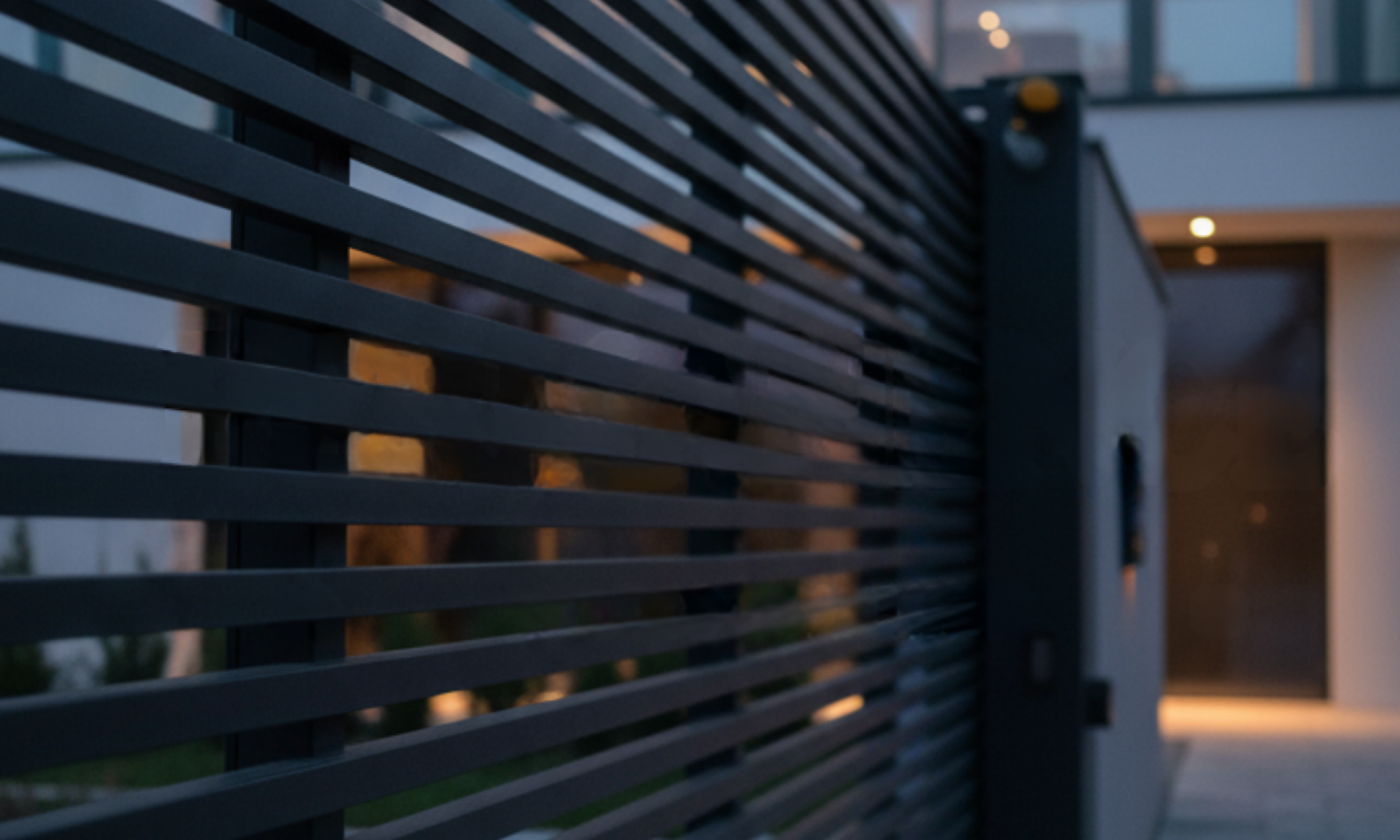
A powder-coated aluminium gate can be supplied in a wide range of colours and finishes, allowing the entrance to match fencing, railings, signage or the building exterior. It is also suitable for both modern horizontal-slatted designs and more traditional styles, so commercial buyers do not have to choose between practicality and presentation.
Why aluminium works well for automated gates
For swing and sliding gates, weight has a direct effect on the automation system. Aluminium’s lighter construction can reduce strain on motors and moving parts compared with a similarly sized solid steel gate. This is especially useful for wide driveway entrances, frequent-use staff car parks and developments where reliable daily operation is essential.
Aluminium is not automatically the answer for every high-security application. Where a site requires specialist forced-entry resistance, anti-ram protection or a particular security rating, the full gate system must be designed around that requirement. Posts, foundations, locking, access control and perimeter fencing all need to perform together. However, for many commercial entrances, a well-made aluminium gate provides an excellent balance of security, durability and manageable ownership costs.
Steel: strong, traditional and security-focused
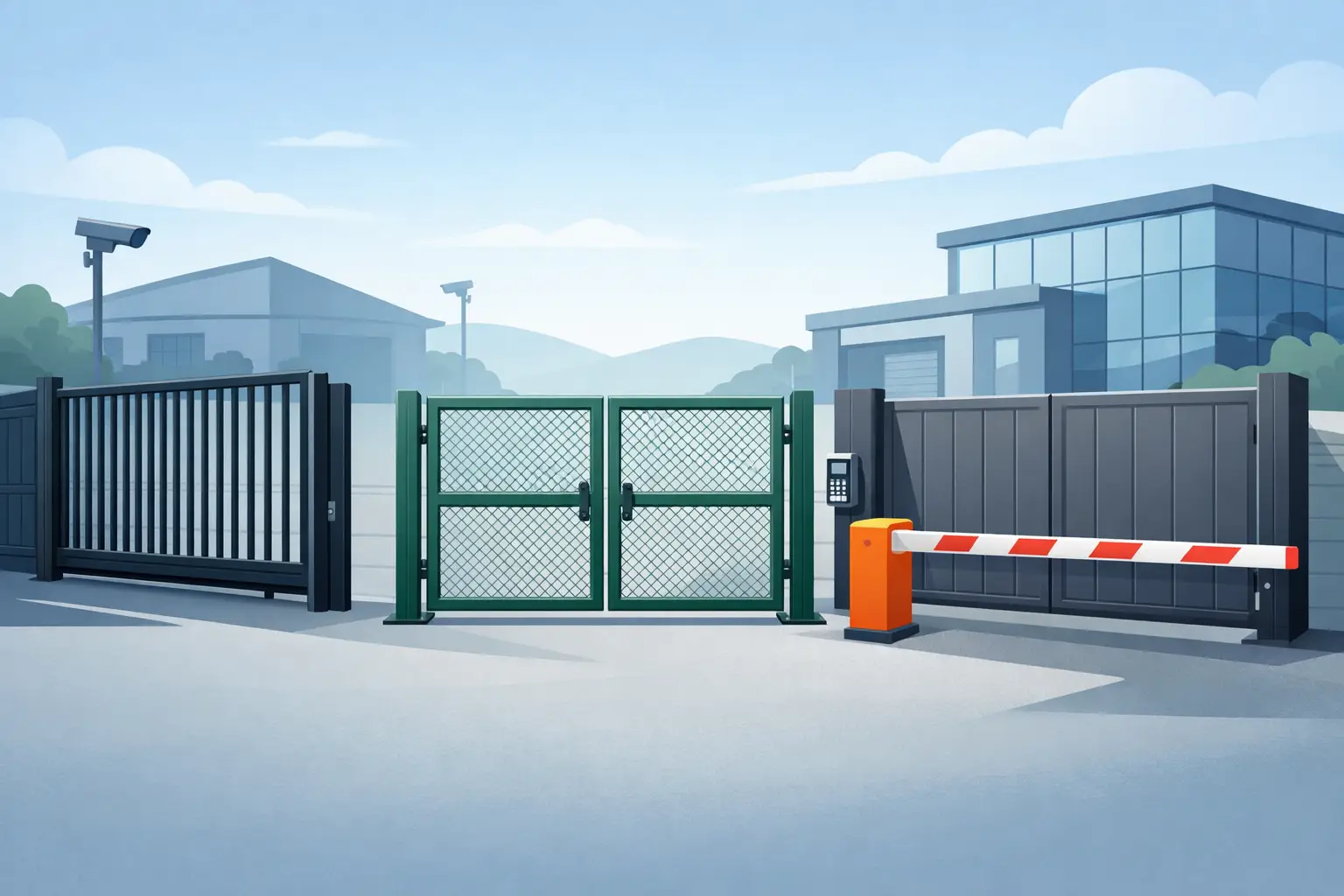
Steel remains a familiar option for commercial gates, particularly on industrial sites, utility compounds and locations where a heavier, more traditional gate is preferred. It can be fabricated into imposing designs and is often chosen for palisade-style, mesh-panel or ornamental entrances.
The trade-off is corrosion management. Galvanising and a quality protective coating can give steel a long service life, but chips, scratches and damaged finishes need attention before corrosion takes hold. This is not a reason to rule steel out. It is a reason to budget honestly for inspection, touch-up work and periodic repainting where required.
Steel gates are also heavier than aluminium. That can be beneficial where mass and a solid appearance are priorities, but it needs to be accounted for in the hinge arrangement, track, foundations and motor specification. A gate that is under-specified for its weight can become difficult to operate and costly to maintain.
Timber: attractive, but demanding on commercial sites
Timber gates offer warmth and character that metal gates cannot always replicate. They may suit rural estates, hospitality venues, heritage settings or low-traffic entrances where appearance is the main priority. Used alongside masonry or natural landscaping, timber can make an entrance feel considered rather than overtly industrial.
For most busy commercial applications, however, timber requires more commitment. It can absorb moisture, move with seasonal changes and eventually need refinishing or repair. The quality of the timber, construction method and protective treatment all make a difference, but regular care should be expected.
Timber is also relatively heavy, particularly when used for wide solid panels. If automation is planned, the gate structure must be designed to limit sagging and avoid unnecessary load on the operator. For buyers who want a timber-effect appearance without the same level of upkeep, aluminium gates in woodgrain-style finishes may be worth considering.
Composite and mixed-material gate designs
Composite boards and mixed-material gates can provide privacy and a contemporary finish. They are often used as infill within an aluminium or steel frame, rather than as the entire structural gate. This approach can work well for office developments, bin stores, flat schemes and screened service areas.
As with any material, specification matters. Check how the boards are fixed, whether they can be individually replaced and how much expansion and contraction is allowed for. A gate should remain stable and safe throughout changing temperatures, not simply look good at handover.
Choosing between solid, slatted and open designs
Material is only one part of the decision. The gate’s design affects privacy, wind loading, visibility and security.
A solid or close-boarded gate gives greater privacy and can conceal vehicles or storage areas. It also catches more wind, which may influence post sizes, foundations and automation choice. This is particularly relevant on exposed sites and for tall, wide gates.
Slatted aluminium gates are a practical middle ground. They can provide a modern, controlled appearance while allowing some airflow and partial visibility. The spacing can often be tailored to balance privacy with sightlines for drivers and pedestrians.
Open designs, including vertical bar or railing-style gates, are common where visibility is a priority. They allow staff or security teams to see through the entrance and can make it harder for someone to work unnoticed behind the gate. For some commercial settings, pairing an open gate with suitable fencing, lighting and access control provides a more effective solution than relying on a solid gate alone.
Do not specify the gate in isolation
The best commercial gate materials perform properly only when the surrounding system is right. A strong gate panel will not compensate for weak posts, poor foundations or unsuitable access controls. Likewise, a well-built automated gate still needs safety features, suitable controls and a clear maintenance plan.
When planning a project, establish the opening width and height, ground levels, vehicle types, daily usage, desired access method and any existing fencing or brickwork. Think about how delivery drivers, visitors and emergency services will use the entrance. An intercom system may be appropriate for a managed office or residential development, while keypad, fob, GSM or ANPR access may better suit a staff car park or service yard.
It is also sensible to decide early whether the gate should swing or slide. Sliding gates can be useful where space behind the entrance is limited, although they need sufficient run-back room beside the opening. Swing gates may suit more traditional entrances, but require clear space inside the property and careful consideration of slopes.
A practical choice for long-term value
For many UK businesses and developments, aluminium offers the most balanced commercial gate solution: it is strong, lightweight, corrosion-resistant and requires very little routine upkeep. Steel remains a sound choice where a heavier construction or specific security approach is required, while timber is best reserved for projects where its natural appearance justifies the additional maintenance.
At Aluminium Gates Direct, commercial gates can be tailored to the opening, design brief and access requirements, with support for bespoke manufacture, automation and installation through trusted partners nationwide. The most useful next step is to assess the site as a whole, then choose a material and gate system that will keep working reliably long after the entrance has made its first impression.